Awfis's second-quarter profit grew by 93% to 31 crore rupees, revenue reached 464 crore rupees
Read more
YourStory [india, en]
yourstory.com

Awfis's second-quarter profit grew by 93% to 31 crore rupees, revenue reached 464 crore rupees

Awfis Space Solutions Ltd, a real estate sector company, reported a significant increase in its consolidated profit by 93%. For the quarter ending in September, the profit amounted to 30.8 crore rupees, driven by increased revenues amid high demand for managed workspaces.

In the comparable period last year, the company's net profit was 15.97 crore rupees. According to regulatory filings submitted on Tuesday, total revenue in the second quarter of the current fiscal year reached 464.29 crore rupees, compared to 392.97 crore rupees the previous year.

For the period from April to September 2027 fiscal year, Awfis's net profit increased to 54.76 crore rupees, whereas in the same period last year it was 25.95 crore rupees. Furthermore, in the first six months of the current fiscal year, total revenue grew to 913.16 crore rupees compared to 746.01 crore rupees for the corresponding period last year.

Awfis has a presence in 18 cities and manages over 250 coworking spaces. Amit Ramani, the company's chairman of the board, noted that the company is demonstrating stable results for another consecutive quarter, supported by consistent demand for office space from large enterprises and Global Capability Centers (GCCs).

He also emphasized that the company continues to focus on enhancing service premiumness and operational efficiency. During September, the company added six new centers, bringing the total number to 254 centers with approximately 174,000 seats in 18 cities. The overall portfolio occupancy rate was 76.2%.
Similar stories

SBI's net profit grew by 14.3% to 23,038 crore rupees in the second quarter amid reserve reduction
Read more
business-standard.com

SBI's net profit grew by 14.3% to 23,038 crore rupees in the second quarter amid reserve reduction

The State Bank of India (SBI), the country's largest lender, reported a 14.3% year-on-year increase in its net profit for the reporting period. For the second quarter of the 2026-27 fiscal year (Q2FY27), net profit reached 23,038 crore rupees, compared to 20,160 crore rupees in the same quarter last year.

This rise in net profit is attributed to a steady increase in Net Interest Income (NII), which grew by 14.7% year-on-year, as well as a reduction in provisioning and unforeseen expenses during the quarter. The decrease in loss coverage provisions supported the financial result despite a sharp drop in other income.

Financial Indicators

Net Interest Income increased to 49,143 crore rupees in Q2FY27, up from 42,847 crore rupees the previous year. Furthermore, quarterly NII grew by 4.6% compared to 46,992 crore rupees in the first quarter of the 2027 fiscal year.

However, other income decreased by 23.8% year-on-year, amounting to 11,777 crore rupees against 15,463 crore rupees the previous year. Compared to the previous quarter, other income fell by 26%, down from 15,923 crore rupees.

Provisioning and unforeseen expenses decreased by 21.9% year-on-year, reaching 4,217 crore rupees compared to 5,400 crore rupees the previous year. Quarterly, these expenses dropped by 16.4% relative to 5,047 crore rupees.

Asset Quality

Regarding asset quality, the bank's Gross Non-Performing Assets (GNPA) ratio improved to 1.39% as of September 30, 2026, which is lower than the 1.73% recorded the previous year and 1.47% in the preceding quarter. The Net NPA ratio also improved to 0.36% compared to 0.42% in September 2025 and 0.38% in June 2026.

In absolute terms, total non-performing assets amounted to 72,529 crore rupees, which is 4.9% less year-on-year and 2.3% sequentially. Net non-performing assets reached 18,546 crore rupees, slightly higher than 18,460 crore rupees the previous year, and higher than 19,158 crore rupees in the preceding quarter.

The bank's provisioning coverage ratio stood at 74.43% as of September 30. SBI's total loan book grew by 18.2% year-on-year to 51.54 trillion rupees as of September 30, 2026, compared to 43.62 trillion rupees the previous year. Deposits increased by 12.3% to 62.78 trillion rupees from 55.92 trillion rupees.

The bank's return on assets was 1.19%, slightly higher than 1.17% the previous year and 1.11% in the preceding quarter.

IOB's profit grew by 56% to 1963 crore rupees in the second quarter due to improved asset quality
Read more
business-standard.com

IOB's profit grew by 56% to 1963 crore rupees in the second quarter due to improved asset quality

Indian Overseas Bank (IOB), based in Chennai, reported a 56% increase in net profit during the second quarter of the fiscal year 27, reaching 1963 crore rupees. This growth compared to 1259 crore rupees in the quarter from July to September of fiscal year 26, and is attributed to increased interest income and improved asset quality.

The bank's total income for the reporting period increased by 13%, amounting to 10,428 crore rupees. IOB's interest income in Q2 FY27 rose by 17% to 9,201 crore rupees, compared to 7,851 crore rupees in the same period last year.

Ajay Kumar Srivastava, Managing Director and CEO of IOB, noted that net interest income grew by 26% during the quarter. He also highlighted the good asset quality and low write-off levels in the system.

Net Interest Income (NII) for the quarter increased by 26.4% to 3,867 crore rupees, compared to 3,059.3 crore rupees a year earlier. Srivastava added that write-offs remained under control at 240 crore rupees, and the provisioning ratio was only 0.07%, which is one of the lowest in the banking system, and the bank consistently maintains this figure.

The Non-Performing Asset (NPA) ratio decreased by 64 basis points (bps) year-on-year (Y-o-Y) to 1.19%, while the Net NPA ratio fell by 12 bps year-on-year to 0.16%. Credit costs also decreased by 1 bp year-on-year to 0.17%. During the quarter, 647 crore rupees were recovered against NPAs, which is 2.95 times higher than quarterly write-offs. The Capital to Risk-Weighted Assets Ratio (CRAR) increased by 66 bps year-on-year to 18.60%. Return on Assets (RoA) improved to 1.53% from 1.20% last year, which is 33 bps higher. Return on Equity (RoE) grew to 24.58% from 19.95% last year, an increase of 463 bps.

The bank's total deposits increased by 20.16% to 4.07 trillion rupees from 3.39 trillion rupees. Current Account Savings Account (CASA) deposits also grew by 20.73% year-on-year to 1.65 trillion rupees, and the internal CASA ratio improved by 13 bps year-on-year to 41.14%. The volume of loans disbursed in Q2 FY27 reached 3.45 trillion rupees, showing a growth of 24.35% compared to 2.77 trillion rupees last year.

Srivastava stated that, according to preliminary estimates, IOB will require additional provisioning of about 2,600–2,800 crore rupees under Expected Credit Losses (ECL). He clarified that the bank has already created ECL provisions of about 2,700 crore rupees, meaning that 100% of the required amount is already secured in the balance sheet as projected ECL reserves.

Furthermore, he mentioned the successful performance of the gold loan portfolio and the development of several programs to meet the needs of various segments of society with competitive interest rates. Srivastava added that the jewelry loan portfolio is very sound, with outstanding loans amounting to nearly 1.36 trillion rupees, and shows no signs of stress. The bank maintains a Loan-to-Value (LTV) ratio of about 60–62%, which adequately accounts for price fluctuations.

Eternal's net profit grew by 92% in the second quarter of fiscal year 2027, revenue increased by 78%
Read more
yourstory.com

Eternal's net profit grew by 92% in the second quarter of fiscal year 2027, revenue increased by 78%

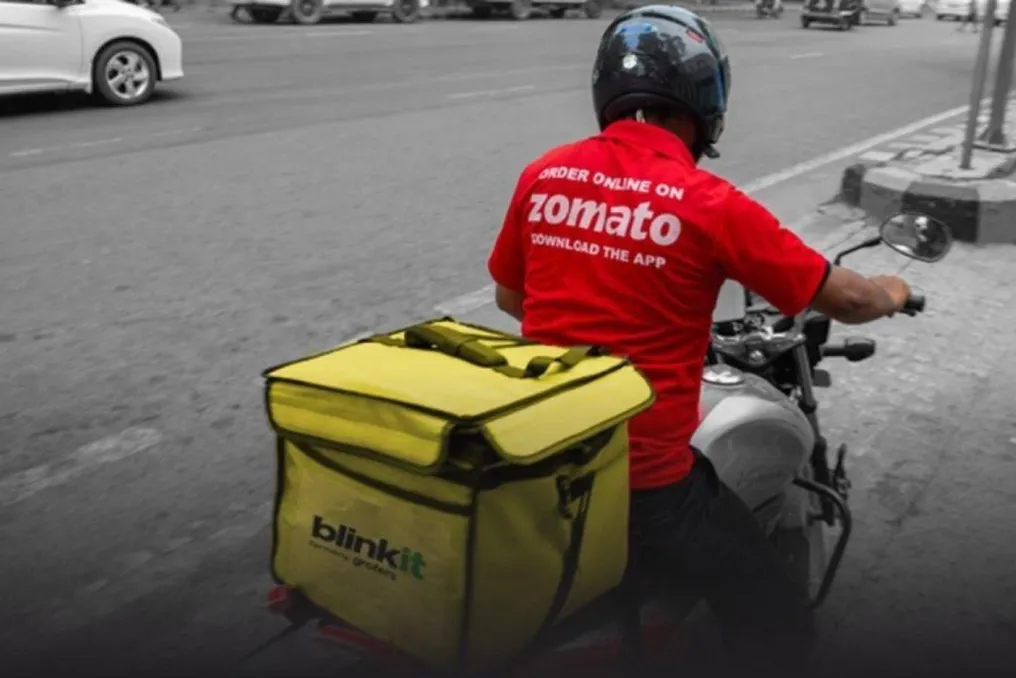
Eternal, the parent company of Zomato and Blinkit, reported significant growth in net profit during the second quarter of fiscal year 2027. The company's profit increased by 92.3% compared to the same period last year, while revenue grew by 78% year-over-year. Nevertheless, the results were below analysts' forecasts, who expected a net profit of 250 crore rupees.

Eternal's net profit for the second quarter of fiscal year 2027 amounted to 125 crore rupees, which is higher than the 65 crore rupees recorded in the same period a year earlier. Revenue reached 24,138 crore rupees compared to 13,590 crore rupees in the corresponding quarter of the previous fiscal year.

The quick commerce segment, Blinkit, remained a key source of income, generating revenue of 19,152 crore rupees in the second quarter of fiscal year 2027. According to Eternal's data, Blinkit's average order value (NOV) grew by 79.3% year-over-year. The platform added 308 new stores, bringing the total number of stores to 2,751.

Blinkit's adjusted EBITDA improved for the sixth consecutive quarter, reaching 0.9% of NOV, equivalent to a profit of 184 crore rupees, whereas the loss a year earlier was 156 crore rupees. Eternal forecasts that Blinkit's store count will exceed 3,500 by March 2027 and potentially reach 5,000 by March 2028.

Albinder Singh Dhindsa, CEO of Eternal Group, noted that in the quick commerce business, not only the growth rate but also the quality of that growth is important. He emphasized that each store has limited capacity, and customers coming only for deep discounts use the same capacity as those ordering weekly from different categories. He added that attracting customers through price reductions might be faster, but such buyers often leave after the discounts end.

Regarding the food delivery business, Zomato demonstrated a 21.5% year-over-year increase in NOV, and the company stated that the acceleration of growth has continued for the fifth consecutive quarter. Eternal's founder, Dipinder Goyal, commented on the situation in the food delivery segment, expressing satisfaction with the current state of the business. However, he clarified that they try not to draw hasty conclusions based on a single quarter. His long-term expectation for food delivery has always been over 20% annual growth, and the last two quarters have brought the company back into this range. He also noted that this view has not changed either last year when growth slowed down or now when growth has resumed.

Popular