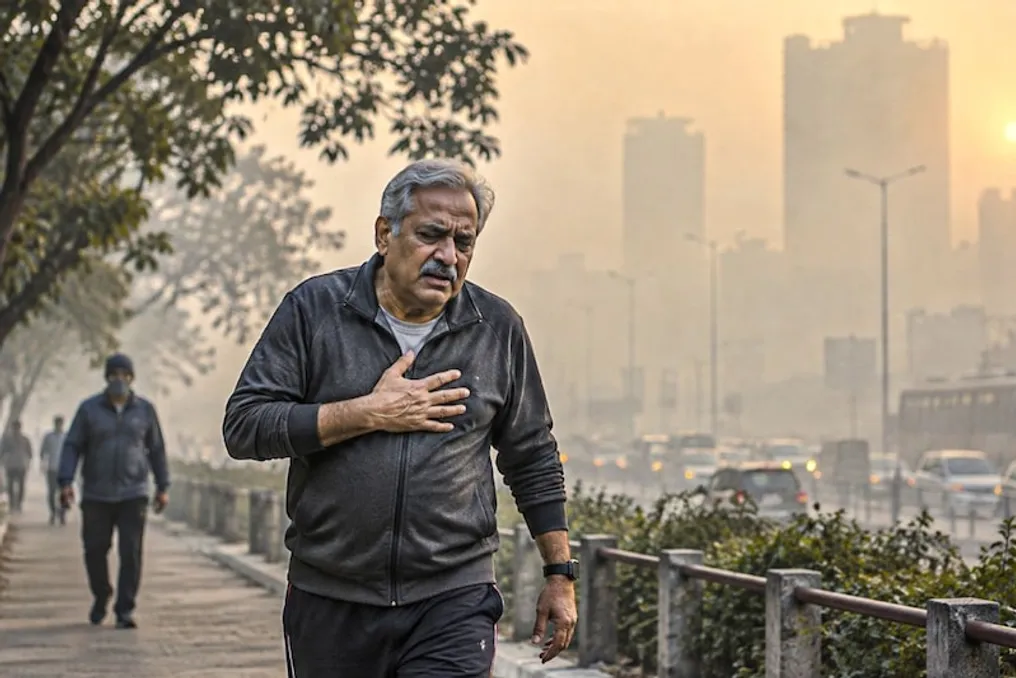
Impact of AQI above 400 on the body: Symptoms from coughing to shortness of breath
Read more
Aaj Tak
www.aajtak.in

Impact of AQI above 400 on the body: Symptoms from coughing to shortness of breath

In many areas of Delhi-NCR, the Air Quality Index (AQI) has exceeded the 400 mark. Under such conditions, the risk of health deterioration exists not only for people with asthma or respiratory problems but also for completely healthy citizens. Some people begin to experience a persistent cough, others feel a dryness in their throat, and a third complain of shortness of breath even when climbing stairs. The question arises about how the body reacts to an AQI exceeding 400, which a doctor explained.

Dr. Ankit Bhatia from the Respiratory Medicine department at Yashoda Medicity Hospital explained that an AQI level above 400 indicates extremely poor air quality. During this period, fine pollutants, especially PM2.5, can enter the body along with inhaled air. These particles reach deep parts of the lungs, causing inflammation and irritation. This manifests as various symptoms.

People suffering from diseases such as asthma and COPD may face chest tightness, wheezing, and shortness of breath; this problem can be more serious for asthma patients. However, symptoms can appear even in healthy individuals.

According to Dr. Ankit, even healthy people can develop a cough and throat irritation. Furthermore, exposure to polluted air is not limited to the lungs. Redness and tearing of the eyes, nasal irritation, sneezing, and headaches may occur. Some people also feel fatigue and anxiety. These signs can start just a few hours after contact with polluted air.

Residents are advised to avoid walks in the morning and evening. If it is not an absolute necessity, they should stay indoors. When going outside, it is necessary to use an N95 mask with a good fit. It is also important to keep windows and doors closed at home. If a persistent cough, chest tightness, or shortness of breath persists, a doctor should be consulted.
Similar stories

Expert explains how air pollution harms lungs even without symptoms
Read more
www.aajtak.in

Expert explains how air pollution harms lungs even without symptoms

In the capital Delhi and many other regions of the country, there is an increase in air pollution levels. Although some people exhibit symptoms such as coughing and throat irritation, others may have no signs of discomfort. However, this does not mean that the absence of symptoms protects against the harm caused by pollution.

Dr. Vikas Mittal, director of the pulmonology department at S.K. Bidla Hospital, commented on this situation. He emphasized that a worsening Air Quality Index (AQI) does not rule out the impact of pollution on the lungs, even if there is no cough, shortness of breath, or throat irritation.

Fine particles present in the air, especially PM2.5, are capable of penetrating deep into the lungs through the respiratory tract and causing inflammation there. Sometimes the consequences of such exposure do not appear immediately, and a person may not feel any problems. Therefore, atmospheric pollution is considered a serious threat to health.

Long-term inhalation of polluted air can negatively affect lung function. It also increases the risk of developing respiratory diseases such as asthma and COPD. For people who already suffer from respiratory diseases, problems can worsen due to pollution. The degree of influence depends on the duration of human contact with the pollution, the intensity of this contact, and the general state of their health. Consequently, even if a person feels well, the poor AQI should not be ignored.

To prevent exposure to pollution, it is recommended to avoid intense physical activity outdoors, especially during peak concentrations of pollutants. It is also advisable to minimize time spent in rooms with smoke and limit the use of pollution sources, such as cigarette smoke or incense. If necessary, air purifiers with HEPA filters suitable for the room size can be used. If persistent coughing, wheezing, or shortness of breath occurs, a doctor should be consulted. It is important to remember that protection against pollution is necessary regardless of the presence of visible symptoms.

Expert explains how to prevent cough caused by air pollution
Read more
www.aajtak.in

Expert explains how to prevent cough caused by air pollution

Due to rising levels of air pollution and changing weather, many people have started experiencing frequent coughing. Even those who usually do not have breathing problems may develop such symptoms when pollution intensifies. Although a single cough is not a serious issue, a persistent cough requires attention and should not be ignored. Doctors have provided recommendations for preventing coughs caused by pollution.

Cough triggered by pollution occurs because fine dust particles enter the lungs through the respiratory tract, causing inflammation there. In some cases, these symptoms subside within two or three days, while in others they may persist for a long time. If the cough is severe, it is recommended to consult a doctor, but there are also methods that can alleviate the condition.

Dr. Manu Madan, a specialist in respiratory diseases and sleep medicine from Medaanta Hospital in Noida, noted that if the cough arises from living in a polluted area and is not accompanied by other serious signs, it may be related to pollution. In such situations, several tips can be followed for prevention.

  1. Minimize contact with polluted air. The most effective way to reduce coughing is to breathe clean air whenever possible. It is necessary to check the Air Quality Index (AQI) daily and limit time spent outdoors when pollution levels are high. It is also advisable to avoid physical exertion outdoors, as intense breathing can lead to more polluted air entering the lungs.

  2. When going outside, use a well-fitting N95 mask. This will help prevent fine dust particles and pollutants from entering the body through the respiratory tract.

  3. Maintain clean air inside the home. Since pollution can penetrate residential premises, windows should be kept closed during bad outdoor weather. It is advisable to use HEPA air purifiers. Furthermore, smoking indoors should be avoided, and the use of incense or any other smoke sources should be minimized, as they can worsen coughing by irritating the respiratory tract.

  4. Give your throat a rest. It is important to drink enough water throughout the day. Warm water or other hot beverages can soothe irritation in the throat. Honey can be given to children over one year old and adults to relieve coughing, but honey must never be given to children under one year old.

It is necessary to contact a doctor immediately if you experience difficulty breathing, severe chest pain, coughing up blood, or blue lips. A cough caused by pollution may seem minor, but regular exposure to polluted air poses a potential danger.

Rising Air Pollution in Delhi-NCR: Should Cardiologists Advise Against Morning Walks?
Read more
www.aajtak.in

Rising Air Pollution in Delhi-NCR: Should Cardiologists Advise Against Morning Walks?

The Delhi-NCR region is experiencing a rise in air pollution levels even before the Diwali festival, with the Air Quality Index (AQI) exceeding 200 in many areas. Increased pollution poses a risk of exacerbating various diseases. This raises the question of whether people with heart conditions should engage in outdoor physical exercise during this period, as many start their day with morning walks or light exercises; however, at high levels of air pollution, the risk of negative impact on individuals with heart problems increases.

Doctors generally consider the morning the best time for workouts, but with poor air quality, outdoor activities can bring more harm than good. Dr. Nishant Tyagi from the Cardiology Department of Medanta Hospital in Noida shared his opinion on this issue. He emphasized the need to pay attention to how pollution affects the heart, as well as choosing the appropriate time and place for exercise.

Dr. Tyagi explains that atmospheric pollution contains fine particles, specifically PM2.5. These particles enter the lungs upon inhalation and can cause inflammation in the lungs, as well as other problems. In patients with heart diseases, this can contribute to increased blood pressure and the formation of blood clots, making them more vulnerable.

The answer to this question largely depends on the air quality, the individual's heart condition, and the recommendations of their treating physician. Morning exercise itself is not inherently dangerous, but one cannot assume that the morning atmosphere is always clean. If the AQI is significantly elevated and falls into the 'poor' category, it is recommended to refrain from walking or strenuous physical activity outdoors.

It is important not to ignore the following symptoms: chest discomfort, shortness of breath, dizziness, and rapid heartbeat. Patients must continue taking prescribed medication and should not independently stop taking cardiac drugs or change dosages due to pollution. Those who already suffer from heart disease must discuss their exercise regimen and any new symptoms with a cardiologist.

Popular