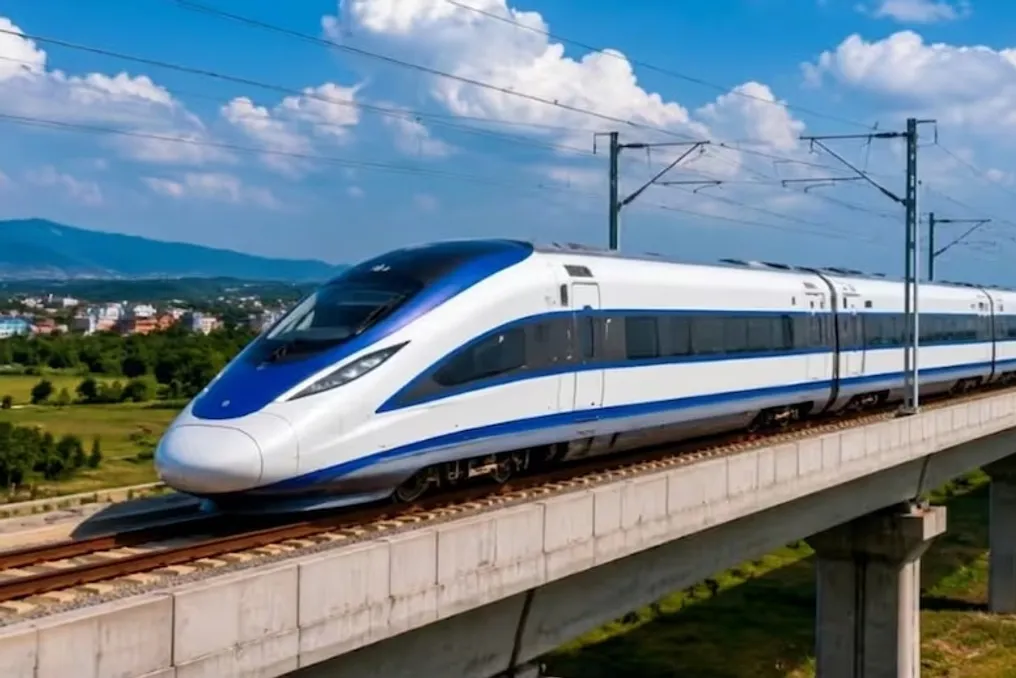
Government Approves High-Speed Railway Project Connecting Bangalore, Hyderabad, and Chennai
Read more
Aaj Tak
www.aajtak.in

Government Approves High-Speed Railway Project Connecting Bangalore, Hyderabad, and Chennai

Prime Minister Narendra Modi approved the 'Southern Corridor High-Speed Rail' project, which will connect Bangalore, Hyderabad, Amaravati, and Chennai. This information was announced by Transport Minister Ashwini Vaishnaw during his speech following the inauguration of the Vande Bharat sleeper train between Bangalore and Mumbai on November 1.

The implementation of this project aims to improve transport accessibility between major cities in South India and stimulate business development. Residents who regularly travel between these cities for work, study, or business will benefit significantly from this.

According to Transport Minister Ashwini Vaishnaw, the proposed high-speed railway will allow covering the distance of about 359 kilometers between Bangalore and Chennai in just 73 minutes. Meanwhile, the journey from Bangalore to Hyderabad will take approximately 2 hours and 10 minutes. This will substantially save passenger time on intercity journeys. The minister noted that with this connection, Bangalore and Chennai will become like two ends of one megacity.

Currently, the fastest Vande Bharat train takes about 4 hours and 25 minutes to cover this distance, meaning passengers can save over three hours by using the high-speed train.

The Southern Corridor High-Speed Rail project envisions linking Bangalore, Hyderabad, Amaravati, and Chennai. Ashwini Vaishnaw emphasized that this corridor will bring major technological and economic centers of the country closer. The government's goal is to develop these cities as a single large economic zone, significantly reducing travel time between them.

Currently, the fastest train on this route is the Chennai-Mysore Vande Bharat Express (20607/20608), which takes about 4 hours and 25 minutes between Bangalore and Chennai. Its average speed is approximately 81 kilometers per hour.

The average direct flight time between Bangalore and Chennai is about 1 hour and 4 minutes. It is projected that the journey by high-speed train will take 1 hour and 13 minutes, making the travel time comparable for both modes of transport. However, considering the time required to reach the airport, check-in, and pass security when flying, the train offers the advantage of direct arrival from one city to another.

To cover the distance of 359 kilometers between Bangalore and Chennai in 73 minutes, the average train speed must be around 295 kilometers per hour. This is 3.6 times faster than the average speed of the current Vande Bharat train, which is about 81 kilometers per hour.

The National High Speed Rail Corporation Limited (NHSRCL) announced tenders in July this year for preparing the civil engineering design project for both the Bangalore-Chennai Southern Corridor High-Speed Rail and the Delhi-Varanasi Northern Corridor High-Speed Rail. This step is considered important for advancing these two high-speed rail projects. The central government had previously announced these two corridors as part of the next phase of expanding the high-speed rail network in the central budget for 2026-27.

Additionally, five new routes have been proposed. Besides Bangalore-Chennai and Delhi-Varanasi, they include the Mumbai-Pune, Pune-Hyderabad, Hyderabad-Bangalore, Hyderabad-Chennai, and Varanasi-Siliguri routes. According to NHSRCL, the total length of these seven corridors will be about 4000 route kilometers. Four of them have already received Detailed Project Report (DPR) approval, while surveys are underway for the remaining three. Geotechnical investigations are also being conducted to assess ground conditions before inspection and tendering for the proposed route.

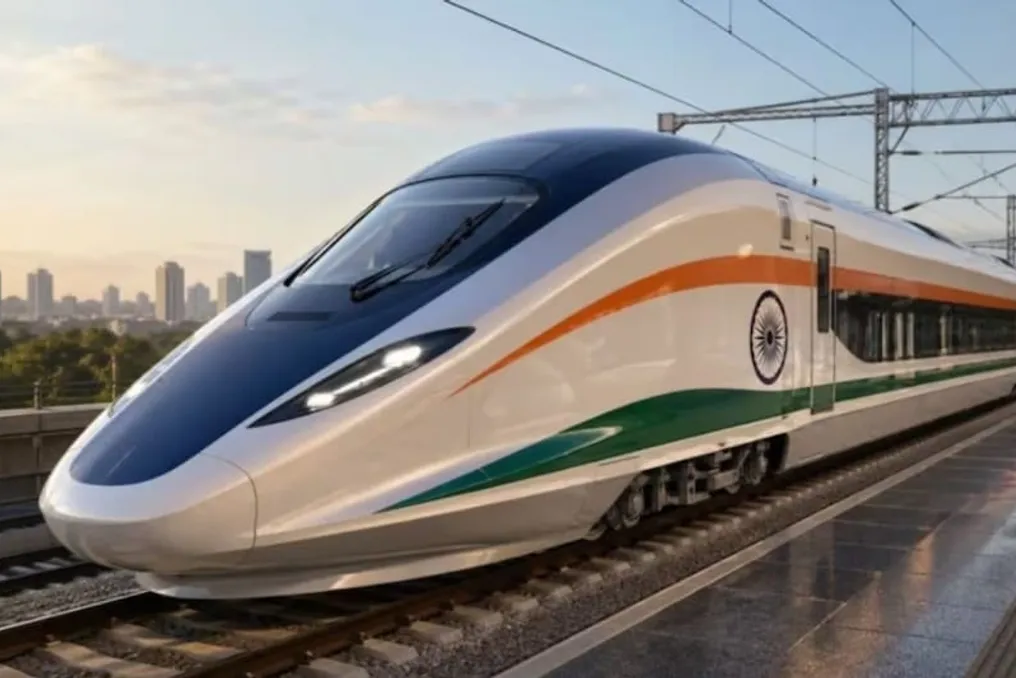
National High Speed Rail Corporation plans to refine the design and construction methods used in the Mumbai-Ahmedabad High-Speed Rail corridor to accelerate the implementation of such a large-scale railway project. In this regard, standardization of various types of structures is being prepared. For these corridors, the operational speed of the train is set at 320 kilometers per hour, and the design speed is 350 kilometers per hour. During project development, aspects such as soil condition, ecology, and construction materials must be taken into account.
Similar stories

Second High-Speed Rail Corridor Approved: Delhi-Varanasi Route and Schedule
Read more
www.aajtak.in

Second High-Speed Rail Corridor Approved: Delhi-Varanasi Route and Schedule

Approval has been granted for a second high-speed rail corridor in the country. Transport Minister Ashwini Vaishnaw announced that Prime Minister Narendra Modi approved the high-speed train project for the Northern Corridor. This high-speed train will run from Delhi through Kanpur, Lucknow, Varanasi, and Patna to Guwahati.

Ashwini Vaishnaw presented this information on Saturday, noting that this decision will significantly simplify connectivity between the capital and residents of northern regions, as well as small business owners. The government made this decision with the aim of improving travel for ordinary citizens. This step will substantially reduce travel time between New Delhi and Varanasi, Lucknow, Patna, and Guwahati, as well as between Agra and New Delhi.

He specified that after the completion of the Northern Corridor construction in the coming years, the journey from Delhi to Agra will take only 59 minutes. The travel times will be as follows: Delhi to Kanpur – 1 hour 45 minutes; Delhi to Lucknow – 2 hours 12 minutes; Delhi to Varanasi – 3 hours 33 minutes; and New Delhi to Patna will require 4 hours 33 minutes.

Ashwini Vaishnaw refuted rumors that this high-speed train is intended only for the wealthy, emphasizing that its cost will be very affordable and significantly lower than airfare. Furthermore, the train will ensure faster arrival at the destination at a lower ticket price.

Under the Central Budget for 2026-27, the construction of seven new high-speed rail corridors is planned, including the Delhi-Varanasi, Mumbai-Pune, Pune-Hyderabad, Hyderabad-Bengaluru, Hyderabad-Chennai, Chennai-Bengaluru, and Varanasi-Siliguri (via Patna) lines.

India's first high-speed train, the Mumbai-Ahmedabad project, is actively being implemented, and its operation is planned to begin next year. The Mumbai-Ahmedabad high-speed railway corridor is scheduled to start running by August 2027. These trains are designed to travel at speeds of up to 320 km/h.

Currently, there is no information regarding a specific launch year or date. However, upon receiving this approval, the mapping and site demarcation process will commence, followed by work that may take several years. Work on this major route will be carried out in phases.

High-Speed Train Works on Mumbai-Ahmedabad Route: 508 km and 14 Substations
Read more
www.aajtak.in

High-Speed Train Works on Mumbai-Ahmedabad Route: 508 km and 14 Substations

The country's first high-speed train is being prepared for launch on the Mumbai-Ahmedabad corridor. This 508-kilometer route will completely change modes of transport in India, making journeys faster and more comfortable.

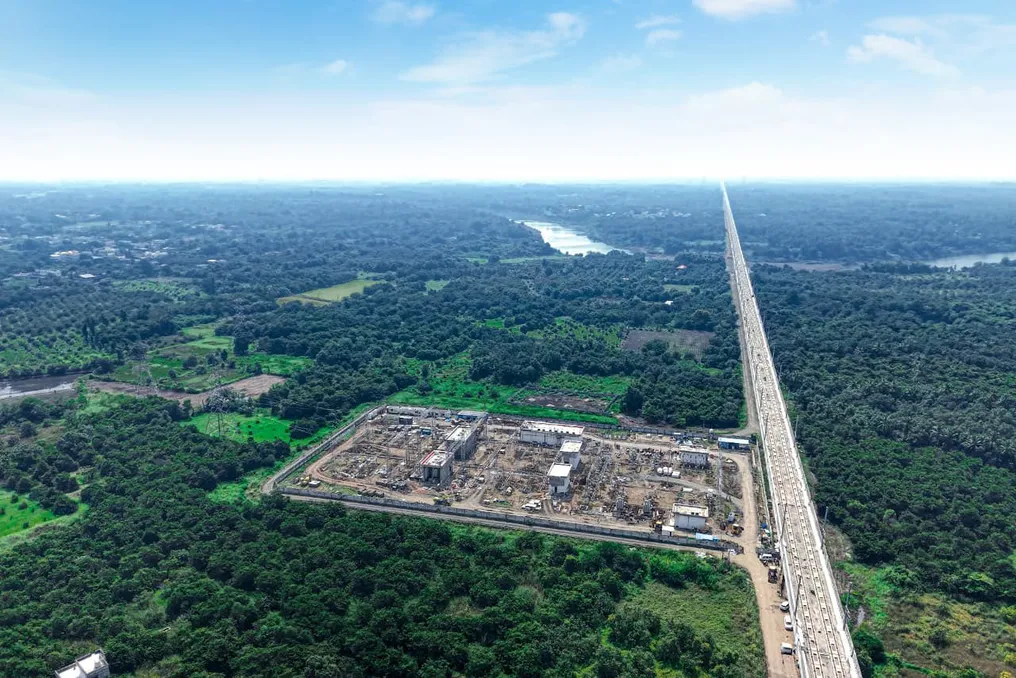
Fourteen electrical substations are being built along the track to ensure the safe and continuous operation of the train to its destination. This project will serve as a model for future high-speed trains that will be built in other cities across the country.

These substations are the main nodes for supplying electricity to the train. Their function is simple but critically important: they step down the high-voltage electricity coming from the national power grid to a level at which the high-speed train can move safely.

Since even a brief power outage can damage the high-speed train, the substations are designed so that if one system fails, a backup system is immediately activated.

The 14 substations are located along the entire 508-kilometer route at specific intervals. This guarantees an even distribution of electrical load across the entire line, providing the train with constant power on every section. Furthermore, the construction of these substations provides the country's engineers and workers with the opportunity to master modern technologies.

Modern circuit breakers and transformers are installed in these substations to promptly eliminate any technical malfunctions. The entire train will run on electricity, which will reduce the use of diesel and gasoline fuel and contribute to improving air quality.

Future high-speed train will pass through a 21-kilometer tunnel under Mumbai
Read more
www.aajtak.in

Future high-speed train will pass through a 21-kilometer tunnel under Mumbai

The dream of a high-speed train is soon to become a reality: by August 15 of next year, the high-speed train will start running on the tracks. Work is currently underway on the daytime project. The Mumbai-Ahmedabad High-Speed Rail (MAHSR) corridor, which is the first high-speed train project in the country, attracts global attention due to its outstanding engineering and technical challenges.

The most exciting and complex part of this project is the tunnel being built under the city of Mumbai. Creating a tunnel beneath such a densely populated metropolis as Mumbai proved to be a difficult task. As part of the project, a tunnel approximately 21 kilometers long is being constructed from Thane Creek to the Bandra-Kurla Complex (BKC), a significant portion of which will pass under the sea.

This tunnel is being built at a depth of approximately 25 to 40 meters below the surface of the earth so as not to cause inconvenience to residents, buildings, and infrastructure located above. Advanced global technologies, such as Tunnel Boring Machines (TBM) and the New Austrian Tunneling Method (NATM), are being used for the construction of this tunnel.

This high-speed train project will not only reduce the distance between the two economic capitals (Mumbai and Ahmedabad) to just over two hours but will also mark a milestone in the history of Indian transport. This train, which will travel at a speed of about 320 kilometers per hour, will provide passengers with modern amenities and safety comparable to air travel.

The tunnel passing under Mumbai serves as a vivid example of India's technological self-sufficiency and the strengthening of its modern infrastructure. The project not only promotes the development of environmentally friendly transport but will also give a new impetus to the country's economic growth. When this high-speed train starts running on the tracks, it will be a cause for pride for every Indian.

Popular