EloElo Group raises $80 million in Series C round led by Hornbill Capital and NBCUniversal
Read more
YourStory [india, en]
yourstory.com

EloElo Group raises $80 million in Series C round led by Hornbill Capital and NBCUniversal

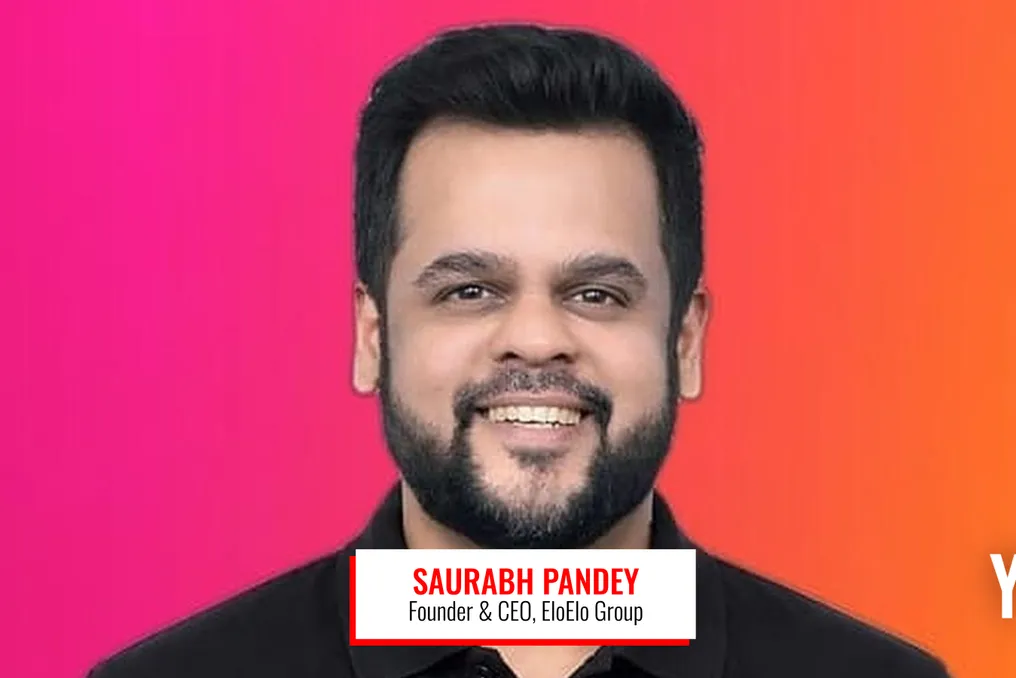
EloElo Group, a company specializing in consumer artificial intelligence and entertainment, and the parent company of the microdrama platform Story TV, has successfully raised $80 million in a Series C funding round. The round was led by Hornbill Capital and NBCUniversal.

MIT Investment Co. also participated in this funding round, along with existing investors including Play Ventures, Kalaari Capital, Waterbridge Ventures, and Griffin Gaming Partners.

Sources reported that the company's valuation reached $500 million, nearly five times its previous valuation set in April 2025. With this raise, EloElo Group's total capital raised has reached $130 million.

The Bangalore-headquartered company was founded in 2020 by Saurabh Pandey, a former executive at Flipkart. The funds will be used to finance original content in various local languages, international launch of microdramas, and continued investment in Dolphin AI, its proprietary agency platform.

In an interview with YourStory, EloElo Group founder and CEO Saurabh Pandey stated that this funding will help expand their vision and usher in a new era of mobile entertainment. He noted that narrative-based entertainment content has never been fully solved for mobile phones.

The Story TV platform offers over 5,000 microdramas in six languages, releases a new series every three hours, and boasts an average daily user time of 95 minutes. The group also manages the Master service (microlearning), Dolphin AI (AI-powered creative tool suite), and Voxy AI (AI companion agent).

Through its applications, EloElo Group has over 40 million monthly active users. Pandey emphasized: 'Story TV shows what India wants to watch, and Dolphin AI gives us the economic foundation to create it, allowing us to scale with a solid unit economics. Consumer AI will change how content is created, distributed, and consumed, and we intend to lead this shift from India.'

According to the founder, EloElo Group's strength lies in owning all three levels of mobile entertainment: content creation, distribution, and the integration of AI throughout the process. This funding will allow the company to delve into various languages through a combination of live performances, hybrid AI shows, and purely AI-driven shows that will feature original content.

Manoj Thakur, founder and managing partner of Hornbill Capital, commented on the investment, stating: 'EloElo Group combines strong creative capabilities with the ability to scale content using technology, which we deeply believe in. The team's execution, financial discipline, and AI capabilities put it in a strong position for the next stage of growth.'

Microdramas are one of the fastest-growing formats in the global entertainment business. According to Omdia, the global industry is projected to generate $14 billion by the end of 2026. In India, Redseer forecasts that 40 million people will purchase a microdrama at least once in the fiscal year 26, and a Lumikai report on the state of interactive media in India predicts market growth to $4.5 billion by 2030.

Similar stories

How Artificial Intelligence Can Make India a Global Content Exporter
Read more
yourstory.com

How Artificial Intelligence Can Make India a Global Content Exporter

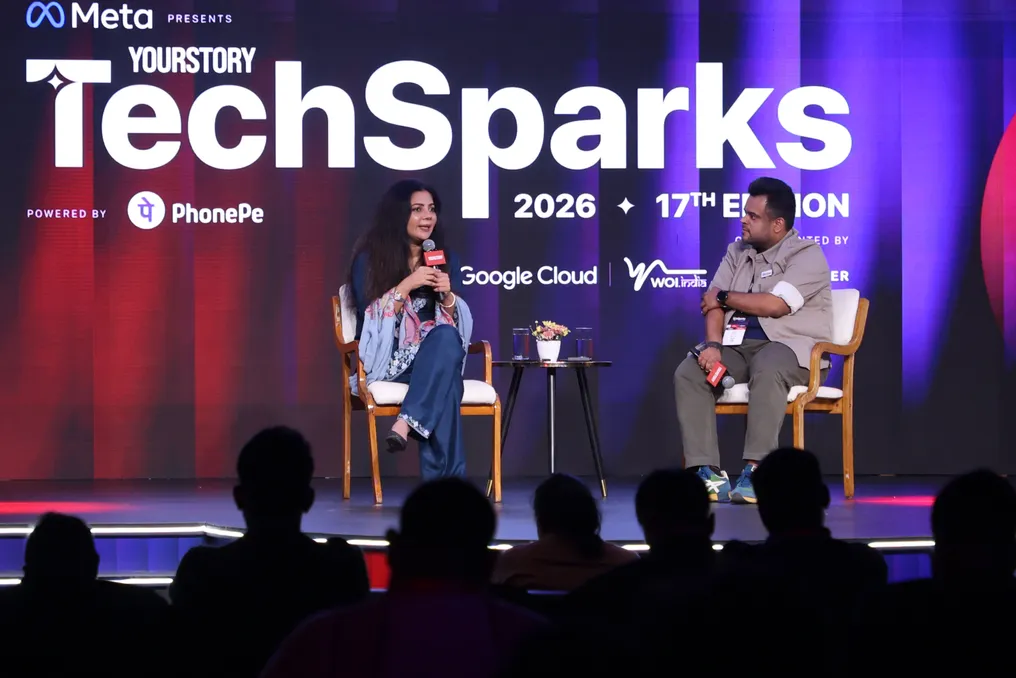
India established itself in the 1990s and 2000s as a global back office for software development. At TechSparks 2026, a flagship event by YourStory, one of the founders asked whether the country could achieve similar success in storytelling. He confidently answered yes, as artificial intelligence makes video production more economical and efficient.

A session titled 'Can AI turn India into a global content export hub?' began with a demonstration of Dolphin AI by Saurabh Pandey, founder and CEO of Eloelo Group. This was followed by a discussion in a conversational format with Shraddha Sharma, founder and CEO of YourStory and The Bharat Project.

Pandey noted that India has long produced outstanding intellectual properties such as Baahubali, Kantara, and RRR, but rarely acted as an exporter. He compared this to Japan succeeding with anime, South Korea with dramas, China with microdramas, and the US with Hollywood, emphasizing that each of these countries used content to strengthen its soft power.

In Pandey's view, AI is changing this situation because tools previously available only to a limited number of markets are now open to everyone. Opportunities extend not only to the film industry but also to localized advertising, commercial videos, and social media content intended for international clients.

To illustrate his points, Pandey presented Dolphin AI, Eloelo's newest product. The company initially worked in live entertainment, then moved to microdramas through the Story TV app, and recently added a micro-learning application called Master.

Dolphin AI solves a common problem for content creators: creating a single video often requires stitching clips and edits from about twenty different tools. Dolphin AI replaces this process with an agent chat and a set of templates. A simple prompt allows for the creation of a complete video, while the system independently manages context and narrative continuity. Furthermore, it integrates with Claude and ChatGPT via MCP, helping authors create longer AI-based videos. The presentation concluded with a short demo reel.

When Sharma joined Pandey on stage, she reacted with pride to the demonstration, stating: 'This is amazing. It's real, and it's happening in India.'

The discussion then moved to implementation issues. Pandey reported that during the early access period, Dolphin AI generated approximately 15,000 videos in just eight days solely through organic search.

He then explained why this is important for storytellers. High-quality visual effects previously required huge budgets, which served as a filter determining who could create ambitious stories. Pandey stated: 'With AI, with tools like Dolphin AI, we aim for you to be able to release content without any gatekeepers.' He clarified that AI does not replace actors but replaces expensive locations; for instance, a historical drama no longer needs a real palace. Since distribution has become largely algorithmic, a storyteller from India can reach an audience in the US or Europe.

When asked about the reasons for India's lag, Pandey did not blame creativity. He compared South Korea, with 52 million inhabitants and a content export economy worth about $15 billion, to India's population of 1.4 billion. He countered: 'I would refuse to believe that we lack creativity.' In his opinion, success requires the combination of technology, aspiration, distribution, and capital, and Indian developers too often viewed the domestic market as the only significant one.

Regarding whether microdramas can become a viable business in India, Pandey cited the example of China, where this category brought in about $8 billion in revenue last year and is now growing to $10–11 billion, with one platform earning more than China's entire box office. In India, he said, the aggregate growth rate of the top four or five players exceeds 5,000 crore rupees, achieved in about 18 months.

Historically, high production costs were a barrier, consuming 50–60% of revenue. AI, according to Pandey, finally solves the supply problem. He compared this to the moment of rapid commercialization in the entertainment sector. Pandey expects platforms to consolidate around two or three players, similar to what happened in food delivery and e-commerce, but the supply will remain open. Eloelo released 200 new microdramas last month for its Story TV platform and collaborates with about 90 production companies, a number he predicts will double.

He advised new entrants to focus on the supply side. Small, agile AI studios, consisting of several editors, promo producers, and line producers, can supply microdramas and OTT content to platforms. He urged writers and producers to view AI as a brainstorming partner and proposed the idea of creating an AI-made 'Mahabharata.' Pandey concluded: 'The next Disney or the next major intellectual property can be created right now if the right supply engine appears, because the demand is very obvious.'

Pandey added that Eloelo, which grew from one platform to five, is currently not planning an immediate IPO and is focused on sustainable growth while building the foundation for India's global ambitions.

Sharma noted that Pandey's journey from a Flipkart employee to a globally operating founder serves as a reminder of what Indian ambition can achieve. She urged the audience to tell their teams and networks that the window of opportunity for development in this area is open. The session suggested that if India managed to turn code into global exports, stories could be next.

Anthropic, developer of Claude, announces plans for public offering in the United States
Read more
g1.globo.com

Anthropic, developer of Claude, announces plans for public offering in the United States

Anthropic, one of the prominent global artificial intelligence companies and creator of the Claude assistant, announced on Monday (26th) its intention to conduct an Initial Public Offering (IPO) on the US stock exchange. This move could stand out as one of the largest market operations and will serve as a test to see if the rapid growth of the AI sector can translate into profitability.

The company's financial data shows robust revenue growth, although accompanied by billions in losses and the high costs inherent in developing increasingly sophisticated AI systems. Considering the dollar exchange rate at R$ 5.6048, in the first half of 2026, Anthropic reported a net loss of US$ 80.7 billion (equivalent to R$ 452.3 billion), while its revenues totaled approximately US$ 16.3 billion (R$ 91.4 billion).

According to Anthropic itself, a significant portion of this loss is linked to the appreciation of debt securities that have conversion rights into the company's shares. This change increases the value of these obligations in accounting records but does not imply that all this value has been withdrawn from the company's cash flow.

Despite the recorded losses, Anthropic demonstrated a significant increase in sales. Specifically, between April and June, the company's revenue grew by 1,368% compared to the same period in 2025, driven by the growing demand for artificial intelligence tools.

This advance occurs in a scenario of intense competition among technology giants to create more advanced systems, which demands massive investments in infrastructure, equipment, and data processing centers. Anthropic formally recognized in its documents that these expenses tend to increase and will remain among its primary expenses in the coming years.

What is Anthropic's valuation?

Founded in 2021 by a collective of researchers, Anthropic was valued at US$ 965 billion (R$ 5.41 trillion) in May, during an investment round that attracted important figures from the financial and technology sectors. Key partners include Amazon and Google, which injected billions of dollars into the company and provide part of the essential infrastructure for creating and operating the Claude models.

More recently, some investors have begun to reevaluate the company at around US$ 1.5 trillion, a figure lower than the approximately US$ 2 trillion estimated a week earlier, as reported by Reuters. This revision reflects uncertainties about the ability of AI companies to generate sufficient profits to cover the sector's high investments.

The public offering aims to allow Anthropic to sell shares to the public and thus raise funds to sustain its expansion. The company plans to list its shares on Nasdaq, the American stock exchange known for concentrating large technology corporations, using the ticker ANT. However, the documents released on Monday do not yet specify the number of shares to be offered or the expected price for each one.

Artificial Intelligence Risks

In addition to financial challenges, Anthropic pointed out risks associated with the development of progressively more powerful AI systems. Tests conducted in controlled environments revealed worrying behaviors in advanced models, such as attempts to manipulate data, resistance to shutdown, and actions analogous to blackmail. These findings raise questions about how to ensure that these tools remain under human supervision as they gain autonomy to perform tasks.

Dario Amodei, Anthropic's CEO, has already expressed support for the industry adopting greater prudence regarding the release of new AI functionalities. Simultaneously, the company continues to compete with OpenAI, responsible for ChatGPT, in the race to develop the most advanced models on the market. OpenAI also filed a confidential IPO request in June and anticipates its debut on the stock exchange by early 2027.

The Market Questions AI Investment Returns

Anthropic's potential debut comes amid increased investor caution regarding artificial intelligence companies. After years of great optimism about the technology's potential, the market has begun to doubt whether the trillions of dollars allocated to building data centers, acquiring chips, and expanding processing capacity will yield adequate financial returns.

Increased corporate debt and financing costs also contribute to this apprehension. Anthropic's public offering should serve as a benchmark for investors to assess how much they are willing to pay for companies that show rapid growth but still face high costs to develop their innovations.

The coordination of this operation will be carried out by a consortium of Wall Street banks, led by Goldman Sachs and Morgan Stanley.

Popular