Ahead of the APEC Economic Leaders' Meeting in Shenzhen on November 18-19, 2026, Zhou Chanzhu, President of the RoboCup Asia-Pacific Confederation (RCAP) and Vice President of the RoboCup Federation, was invited to share his vision. As one of the co-founders of the RoboCup Humanoid Football League, he draws upon years of competition-based research experience to analyze the opportunities, practical bottlenecks, and viable pathways for achieving comprehensive cross-border AI cooperation in the Asia-Pacific region, ahead of the upcoming RCAP tournament in Changsha.
As artificial intelligence (AI) transforms technology and industry globally, a key question is how economies can combine their technological capabilities and manufacturing advantages so that more people can participate in and benefit from these innovations. AI is moving beyond the digital world and penetrating the physical one. Humanoid robotics, as part of embodied AI, is advancing from laboratories and competitive arenas into factories and daily life.
However, translating technological breakthroughs into practical applications and individual innovations into international industrial cooperation remains a complex challenge. Since its first competition in 1997, RoboCup has been developing AI and robotics research through international competitions for nearly three decades.
Humanoid football provides a useful window for such cooperation. During the game, fully autonomous robots must perceive their environment, control their movements, make decisions, and work together without remote control or human guidance. Five-on-five and eleven-on-eleven formats expand the scope from individual intelligence to collective intelligence and the coordination of multiple robots.
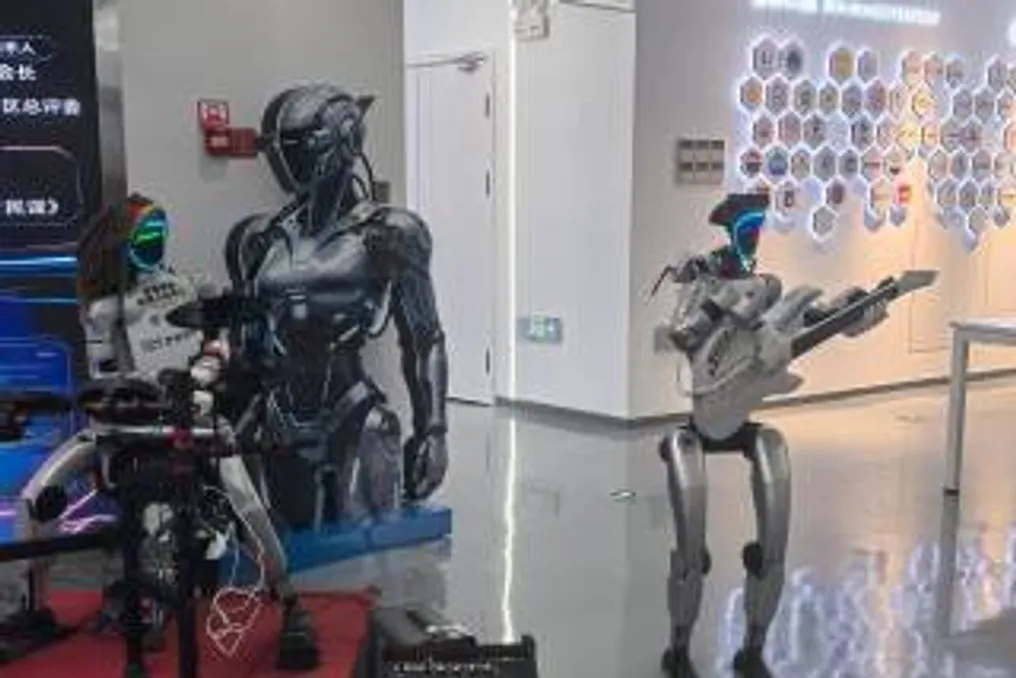
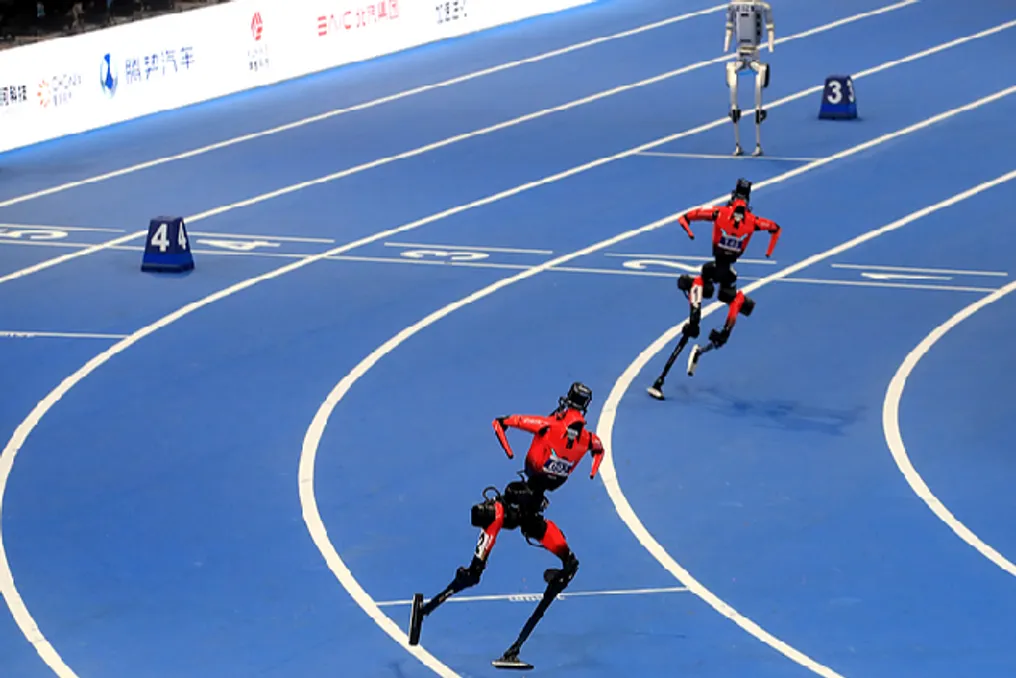
In August 2026, 24 international RoboCup teams from 16 countries and regions participated in the second World Humanoid Robotics Championship at the RCAP Beijing Masters tournament in Beijing. The teams used humanoid robot platforms provided by Chinese companies to test their AI algorithms and system integration capabilities within the common rules of the competition.
The significance of this event extended far beyond the matches themselves. Chinese companies provided robotic equipment and engineering support, while international research groups contributed AI algorithms, software, and system integration expertise. The training, testing, and competition helped both sides identify technical issues, improve hardware and software integration, and accelerate development.
RCAP is now extending this model from the competitive field to industrial applications. The RCAP Asia-Pacific Changsha Invitational 2026, scheduled for December 18-20 in Changsha, Hunan Province, will bring together teams from China, Portugal, Brazil, Thailand, Malaysia, and Singapore. The tournament will feature humanoid robots developed by a major Chinese heavy equipment manufacturer based in the host city, whose core areas include construction and agricultural machinery.
This company's expansion into humanoid robotics demonstrates how established manufacturers can leverage engineering expertise, production capacity, and real industrial conditions to advance embodied AI. Participants will use these robots for training, joint research, and international competitions while exploring potential applications in industrial manufacturing and domestic services. The event aims to connect China's robot platforms and application environments with the global RoboCup developer community and leading industrial enterprises.
By combining competitions, joint research, and real-world testing, the event seeks to create a clearer path from technical experiment to practical application. Industrial testing can also generate valuable operational data. Repeated trials can show how changes in lighting, object placement, or workflow affect robot performance, helping researchers identify weaknesses and refine their systems.
For these benefits to cross borders, partners require clear agreements on data access and reuse, backed by measures for security, privacy, and intellectual property protection. Such arrangements can help transform access to industrial environments into shared opportunities for research and innovation. China's extensive robotics manufacturing ecosystem, efficient supply chains, rapid engineering iteration, and diverse applications in smart manufacturing and services provide valuable opportunities for international researchers to develop and validate.
In turn, Chinese manufacturers can utilize diverse AI algorithms, software solutions, and technical feedback from global developers to improve their products and software ecosystems. This two-way exchange demonstrates how hardware, software, AI algorithms, and application scenarios can complement each other in global robotics value chains, creating more opportunities for collaborative innovation.
Despite rapid progress in AI and robotics, translating technology from the lab to everyday use remains difficult. Obstacles often lie not in the robot's intelligence itself, but in infrastructure, device interfaces, technical standards, and system compatibility.
Consider a simple task: how does a service robot call an elevator? Many robots can already navigate autonomously, recognize their surroundings, and avoid obstacles. Nevertheless, in some commercial buildings in Singapore and elsewhere, elevator control systems do not provide a user-friendly communication interface for third-party robots. The robot may be unable to call the elevator or select a floor digitally, and instead might require an additional mechanical arm to physically press buttons.
The contrast is striking: a robot capable of making complex autonomous decisions can be limited by something as basic as an elevator interface. Of course, elevators are safety-critical systems. Access to their control must comply with physical safety, cybersecurity, and building management requirements. Safe integration requires standardized interfaces, appropriate certification, and clear access rules.
Singapore's national standard for data exchange between robots, elevators, and automatic doors is a step in this direction, although upgrading existing buildings takes time. Similar problems arise in industrial automation. Robots from different manufacturers often use different communication protocols, software architectures, and control systems. An AI algorithm that works well on one platform may require significant software adaptation, parameter tuning, and testing before it can operate on another.
Differences in development tools, operating environments, data usage requirements, and intellectual property agreements can further complicate international collaborative research and the reuse of research findings. Technical compatibility is only part of the problem. A robot that performs well during testing may still require further evaluation or approval before deployment in another economy. Differences in certification requirements, procurement procedures, and market access can add time and cost to joint projects. Therefore, cooperation requires more than just compatible hardware and software; it also depends on transparent requirements and coordination among technology providers, regulators, and users.
These examples point to a broader lesson: technological sophistication does not automatically translate into practical applicability, let alone widespread benefits. A breakthrough in one component does not establish the maturity of the entire system, and success in the lab does not guarantee reliable operation in the real world. Therefore, wider adoption depends not only on stronger AI algorithms but also on interoperability, standardized interfaces, system security, and reliable performance in real operating conditions.
How can international cooperation reduce barriers to development and help more countries, companies, and researchers participate in AI innovation? Nearly three decades of RoboCup experience offer practical lessons. Even when teams from different countries work on the same task using identical equipment, they often choose very different technical approaches. Some specialize in motion control, others in computer vision and autonomous decision-making, and a third in software architecture or multi-robot coordination.
Common rules, shared test environments, and technical exchange allow teams to compare, verify, and improve these approaches. At international competitions, I have often seen teams fiercely competing on the field, and then, after the final whistle, exchanging AI algorithms, sharing experiences, and sometimes initiating long-term research partnerships. Common technical goals leave room for diverse development paths. This approach aligns with the principles of voluntary cooperation and APEC consensus. Economies should be able to exchange experiences and choose technologies suitable for their own needs, resources, and stages of development, rather than following a single prescribed model.
Joint research and talent exchange can support this choice by building capacity through sustained testing and adaptation. Three practical priorities stand out. First, creating open and compatible development platforms. Accessible software development kits, modeling tools, standardized interfaces, and technical documentation can reduce integration costs and encourage the reuse of algorithms and software modules. This allows developers to spend less time on routine integration work and more on core technical challenges.
Second, focusing joint R&D on real-world applications. Universities, research institutes, and companies from different countries can work on common platforms to develop and test solutions for smart manufacturing, logistics, public services, and home assistance. China's robotics supply chains and application scenarios can complement the AI algorithms and expert knowledge of developers worldwide, accelerating the transition from research to implementation.
Third, strengthening research partnerships and talent exchange in the Asia-Pacific region. Joint laboratories can bring together university teams with industrial partners to test robots on common tasks, while researcher exchange can provide practical training in deployment and maintenance. Participants can bring proven methods and engineering expertise back to their institutions and adapt them to local needs. International competitions can help initiate these relationships and support partners in working toward common technical goals.
Broader access to advanced products is as important as the ability to develop and adapt the underlying technology. Lowering barriers to innovation allows research groups in different countries to contribute according to their strengths and create long-term research and application opportunities. This capacity building is a gradual, long-term process, not a one-time transfer.