IMF forecasts 4.5% growth in Sub-Saharan Africa amid rising risks
Read more
CGTN
cgtn.com

IMF forecasts 4.5% growth in Sub-Saharan Africa amid rising risks

The International Monetary Fund (IMF) forecasts that Sub-Saharan African countries will maintain economic growth rates of 4.5% in 2026 and 2027. However, the IMF warns that intensifying economic difficulties could weaken the region's recovery.

According to the latest regional review, countries have shown resilience to disruptions related to the Middle East conflict. This resilience has been supported by adjustments in global energy supplies, higher revenues from commodity exports in some economies, and the implementation of earlier economic reforms.

However, the recovery process remains uneven. Resource-dependent economies are maintaining relatively strong figures, while growth is expected to slow in non-resource countries: from 6.4% in 2025 to 6% in 2026.

Inflation growth is also projected. The median rate in the region will increase from 3.4% last year to 4.3% in 2026 and 5% in 2027. Part of this increase is attributed to the rising cost of fuel, transport, and fertilizers.

The IMF warned that governments have limited capacity to absorb additional shocks due to high debt servicing costs, weak foreign exchange reserves, and declining international aid. Bilateral assistance to the region is expected to decrease by another 12% in 2026 after a roughly 25% drop in 2025.

Severe weather, particularly the intensifying El Niño phenomenon, poses another serious threat to food production and power supply. The IMF estimates that a major agricultural shock could reduce median regional growth by 0.5 percentage points and increase inflation by 2.6 percentage points in 2027.

The Fund also urged governments to strengthen public finances, avoid excessive subsidies, provide direct support to vulnerable households, and protect investments in infrastructure and productive sectors. Furthermore, it strongly recommended implementing reforms to improve energy supply, digital connectivity, and the business climate to bolster long-term economic sustainability.

Similar stories

Global instability creates both risks and opportunities for the South African economy
Read more
iol.co.za

Global instability creates both risks and opportunities for the South African economy

The South African economy faces a mixed picture due to rising energy prices, climate shocks, and increased demand for industrial metals amid global turbulence.

Pressure on inflation due to energy and food costs

Economist Simon Lacum of Coface warns that geopolitical tensions, reduced energy supplies, and changing weather conditions are putting pressure on businesses. However, growing demand for metals linked to the energy transition could open opportunities for parts of the mining sector.

Lacum noted that global commodity markets have entered a period of renewed volatility, observing an overall rise in prices for energy, agricultural goods, and industrial metals.

These changes directly impact South Africa, affecting inflation, export revenues, business operating costs, and economic growth prospects.

Pressure on inflation due to energy and food costs

Despite Finance Minister Enoch Godongwana's announcement of fuel price reductions under the Medium-Term Budget Policy on Wednesday, South Africa's strong reliance on imported crude oil and petroleum products makes the country vulnerable to rising international energy prices.

Lacum explained that the escalation in the Middle East and concerns over supply disruptions contributed to higher oil prices, while tighter global energy markets supported high fuel costs.

A continuous rise in energy prices typically leads to increased transportation and logistics costs, which intensifies inflationary pressure across the economy. Higher fuel bills can also reduce household purchasing power, and businesses already facing operational difficulties experience additional pressure on their costs.

According to Lacum, commodity prices affect numerous aspects—from inflation and food costs to export revenues, business operating expenses, and growth prospects.

Agricultural markets are experiencing similar uncertainty. Declining global harvests and weather problems have led to rising prices for wheat, maize, and sugar due to tightening supply conditions.

This forecast is particularly relevant for South Africa and the wider Southern African region, where projections indicate an increasing likelihood of El Niño-related weather disturbances in the upcoming agricultural season.

The analysis warns: "Reduced rainfall and rising temperatures may affect crop production, livestock, and water availability."

If agricultural output weakens simultaneously in several key producing regions, the consequences could extend beyond farming communities. Rising food prices will directly affect consumers and may intensify inflationary pressure.

Food inflation is particularly significant in developing economies like South Africa, where food constitutes a large portion of household budgets. Sustained increases in staple food prices can reduce disposable income and negatively impact consumer spending.

Positive aspects for the mining sector

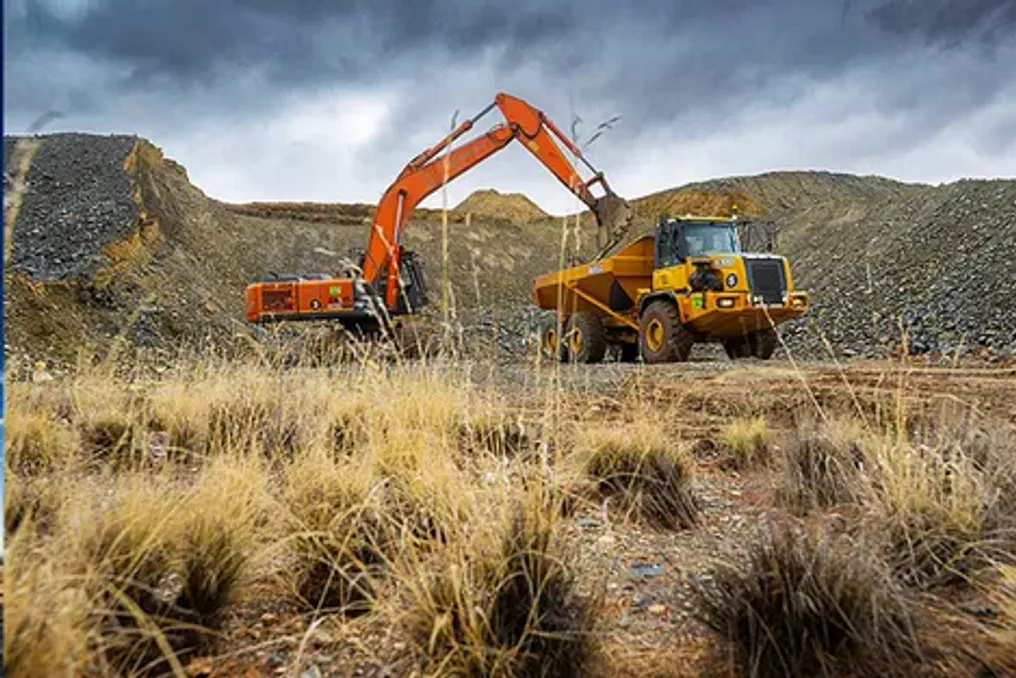
Not all trends are negative. Higher prices for industrial metals, particularly copper, which recently reached record levels, could support the South African mining sector.

According to Lacum, the demand driven by electrification, renewable energy infrastructure, data centers, and broader energy transition projects underlies the prices of several industrial metals.

As one of the world's leading producers of several strategic minerals, South Africa is well-positioned to benefit from the growing global demand for metals needed for the transition to low-carbon energy systems.

The mining sector remains a vital source of export earnings, employment, and investment. Consequently, strengthening commodity prices can support activity in specific industries, although the benefit will depend on the minerals produced and prevailing market conditions.

Businesses face more complex risks

Lacum emphasized that the current commodity rally has demonstrated how closely interconnected economic risks are. Geopolitical tension affects energy markets, climate disruptions impact agriculture, and long-term trends such as electrification and digital infrastructure development support demand for industrial metals.

All these factors are transforming commodity markets and influencing economic conditions far beyond the countries where disruptions occur.

For South African businesses, commodity price fluctuations will continue to influence inflation, supply chains, operating costs, and investment decisions across the agricultural, mining, manufacturing, and transport sectors.

Lacum concluded: "While higher prices can create opportunities for exporters and raw material producers, they also introduce additional uncertainty into an already complex operating environment."

He added that companies actively monitoring commodity markets and climate risks will be better prepared to navigate the changing economic landscape.
IMF Forecast: India Dominates Global Economic Growth, While Africa Shows Uneven Development
Read more
iol.co.za

IMF Forecast: India Dominates Global Economic Growth, While Africa Shows Uneven Development

According to the 2026 forecast presented at the IMF and World Bank Annual Meetings in Bangkok, the global economy is heavily reliant on several leading countries to maintain growth momentum. These two institutions project that global growth will reach 3.1% in 2026 and 3.4% in 2027. However, only 32 economies account for 95% of this global expansion.

This sharp imbalance is observed against the backdrop of moderate prospects for developed economies: the US maintains a pace of 2.3%, while the Eurozone fluctuates between 1.1–1.2%. The primary economic burden falls on emerging Asian markets.

The IMF specifically highlights India as the world's largest fast-growing economy, whose growth forecasts have been significantly raised to 7% for both years, far surpassing the figures of other countries. If the Indian economy were to suddenly slow down or stagnate, the global economy would face serious consequences, as India accounts for approximately 15–17% of total global growth. Without its contribution, the projected global growth of 3.1% is likely to fall to 2.5%, which the IMF historically considers a global recession.

With the US growing modestly at 2.3% and Europe nearly stagnating at 1.1%, there will be no Western drivers capable of compensating for the slowdown. The world risks entering an era of structural low growth. This is because India's massive digital infrastructure and consumer market are key sources of income for global technology, manufacturing, and service companies. A decrease in demand from India would lead to a sharp drop in multinational corporations' profits, causing global layoffs and budget cuts.

Thus, India acts as a global economic stabilizer, providing sufficient economic energy for the global system to function, which masks the slowdown and weakening of traditional Western economic powers. Within a significant global shift, India overtakes slowing China, while Europe faces an economic crisis.

This explosive momentum sharply contrasts with China, its long-time regional competitor, whose period of rapid growth is noticeably slowing down. The IMF has lowered China's growth forecast to 4.5% for 2026. While Beijing grapples with structural economic transformations and reduced export potential, New Delhi has taken the position of a main economic pole of global growth, supported by a strong service sector and stable domestic demand.

Since Asia carries the main share of global growth, Europe is experiencing a deeper economic stagnation that goes beyond protests and civil unrest. Some blame technical recession, others point to immigration. However, analysts consider structural factors to be the root problem. The Eurozone, stuck at a growth rate of 1.1–1.2%, is paying for rapid deindustrialization and flawed energy policy. Critics increasingly call this self-inflicted damage: in the pursuit of implementing strict carbon penalties, European regulators weakened their own industrial base. The forced transition to green infrastructure has made Europe dependent on inexpensive solar panels and wind turbines imported from China.

Furthermore, large subsidies for electric vehicles have allowed state-backed Chinese manufacturers to flood the market, undermining Europe's historical automotive and manufacturing industries. The result is a continent squeezed between high domestic energy costs and outsourced supply chains, while the European model faces increasing pressure due to its own flawed political frameworks.

Differences are equally apparent in Sub-Saharan Africa, where regional giants Nigeria and South Africa demonstrate divergent trajectories. Nigeria holds high positions in continental growth forecasts due to its large and growing population. Nevertheless, despite its demographic scale, Abuja has not managed to completely displace South Africa as the continent's dominant economic and industrial focus, largely due to internal budget deficits and infrastructure lag.

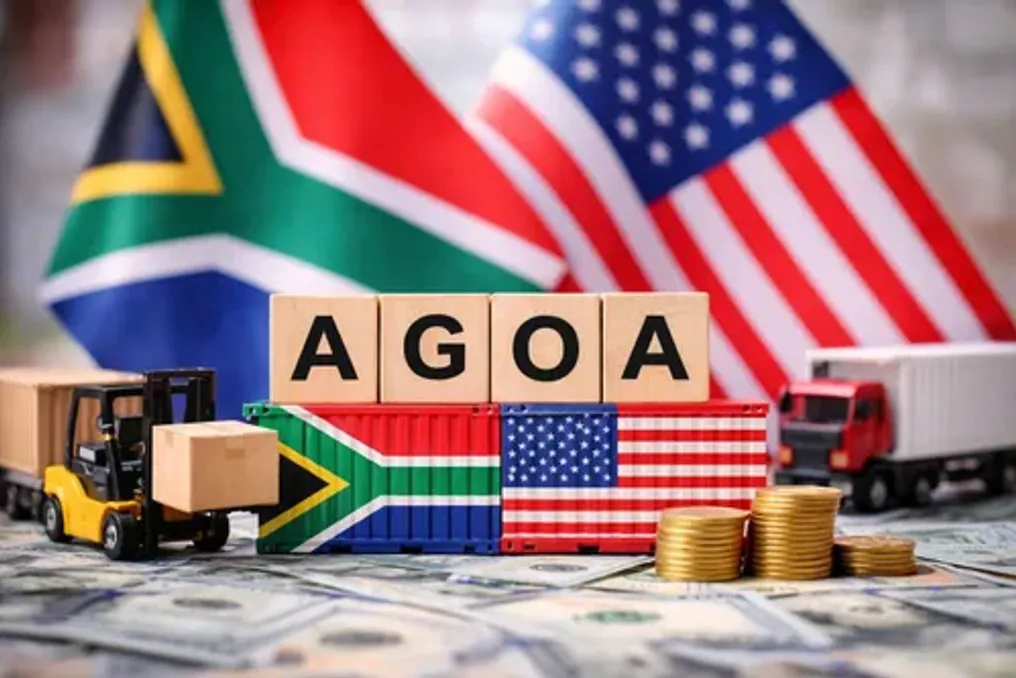
However, South Africa's position remains extremely precarious. The country faces severe economic difficulties as Washington considers revoking access to the African Growth and Opportunity Act (AGOA). As the largest beneficiary of this trade agreement, losing duty-free access to US markets threatens billions in export revenue and jeopardizes tens of thousands of local jobs. In response, Pretoria is urgently trying to reorient its trade architecture towards China. However, this strategy faces a harsh mathematical obstacle: South Africa already has a significant trade deficit with China, with Chinese imports accounting for over a third of the country's industrial goods, while South Africa's exports remain predominantly limited to unprocessed minerals.

Overall, the October 2026 forecasts indicate that India will remain the main driver of large-economy growth until 2027, and Nigeria will provide a relatively reliable anchor for a major economy in Africa. The positive adjustment to India's forecasts reflects stable domestic demand, active service sector activity, favorable demographics, a large domestic market, and structural reforms. The IMF noted India's outstanding qualities, showing growth despite increased energy prices affecting many importers. It was also noted that India is an exception among major economies that does not require additional fiscal consolidation beyond current plans to stabilize the debt ratio.

Popular