Africa's Readiness for El Niño: Transitioning from Early Warning to Timely Action
Read more
CGTN
cgtn.com

Africa's Readiness for El Niño: Transitioning from Early Warning to Timely Action

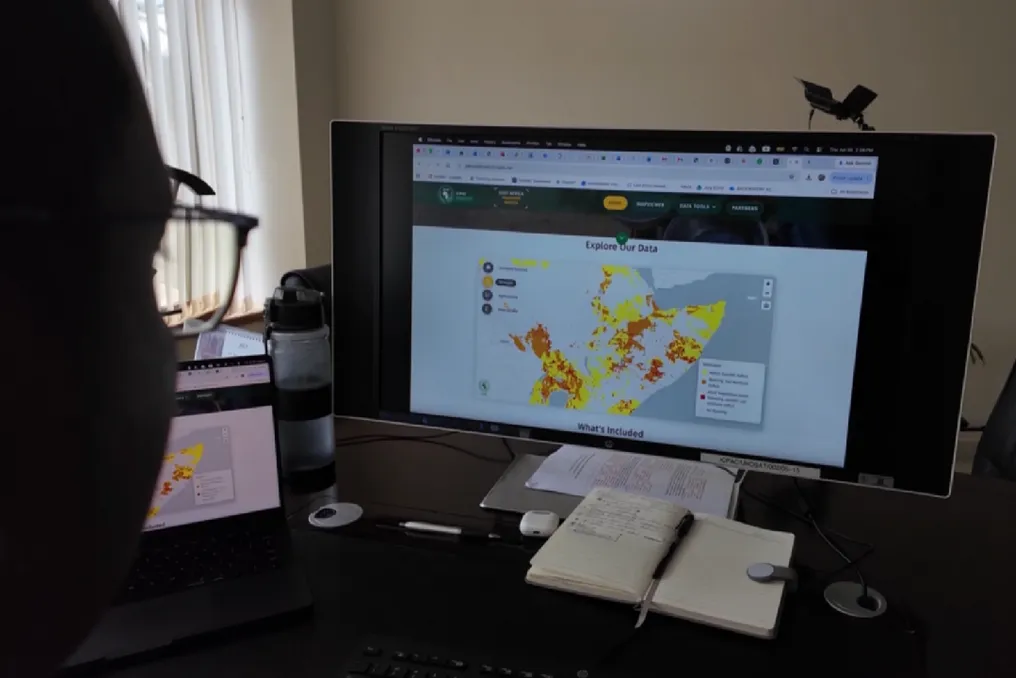
The intensifying El Niño weather phenomenon is dividing Sub-Saharan Africa into zones of extreme meteorological conditions, triggering a dual crisis: East Africa faces severe flooding, while Southern Africa suffers from drought.

Modern climate science is capable of forecasting these ecological upheavals months in advance. However, a panel discussion on Talk Africa revealed that the continent's most serious vulnerabilities are not related to the weather conditions themselves, but rather to bureaucratic, structural, and financial gaps.

Although early warnings are regularly generated, they often fail to translate into timely action. Addressing this operational gap has been recognized as an urgent task to prevent predictable seasonal hazards from escalating into major humanitarian disasters.

The primary operational deficiency lies within the current structure of regional meteorological modeling. National climate services are proficient at predicting general weather trends. Nevertheless, Eunice Koech, a climate modeling specialist at the IGAD Centre for Forecasting and Applications, noted that the lack of comprehensive socio-economic and vulnerability data creates specific challenges.

Koech explained that 'impact-based forecasting is what appears, and we have less information.' Meteorologists know whether flooding or drought is expected, but they lack details on the specific impact of these hazards on agriculture and infrastructure.

El Niño-related weather risks are dynamically forecasted from late September to January. Due to this extended period, it is impossible to provide highly specific, localized advice, leaving vulnerable populations completely unprotected during narrow windows for intervention.

This data deficit is compounded by a deep temporal and bureaucratic mismatch in the allocation of public resources. Reliable seasonal forecasts are available well in advance, up to three months. Unfortunately, the spatial window for proactive measures is constantly missed because public funds are rigidly tied to consequence management.

Koech observes that 'most of the allocated funding is primarily directed towards response and recovery.' Furthermore, administrative procedures are too slow to reallocate funds during the small available periods for action. Consequently, scientific data is widely disseminated but often lacks actionable, contextual recommendations.

Emma Mwangi, a climate scientist from the International Federation of Red Cross and Red Crescent Societies, emphasized that simply alerting communities to above-average rainfall is ineffective if people lack the capacity to respond. Mwangi questioned: 'While we provide early warnings to communities, to the government, do we know what is expected of us?' People may receive a warning, but rarely understand its practical implications or possess the financial means to act on that information.

Maintaining a reactive stance incurs extremely high economic costs. Proactive planning offers a much more sustainable path forward. The African Development Bank (AfDB) warns that these recurring climate events could permanently reduce national GDP by 1–2%, making reactive planning an unaffordable luxury.

Disaster management traditionally occurs post-factum. Breaking with this tradition, Bhekumuzi Dinn Bhebe, founder and director of Africa Change Lab, argues that governments must treat El Niño as a predictable fiscal risk in national budgets. Governments are obligated to immediately implement three fundamental economic stabilizers: scalable social protection networks, preemptive protection for the productive economy, and pre-agreed reserve financing.

Bhebe stresses that 'the choice is not whether to spend money or save money.' He clarifies that 'the choice is whether to pay a smaller bill before the crisis or a much larger one after it.'

Traditional global climate financing faces significant budget cuts. To counter this, Africa must aggressively diversify its internal sustainability financing architecture. Bhebe insists that 'we need to create our own African transformation fund that is truly deeply rooted in solving crises like El Niño.'

Ultimately, mitigating these climate changes requires rethinking the interaction between local communities and science on the ground. Mwangi notes that major structural transformations are necessary, yet people often focus only on one seasonal forecast and ignore vital updates released weekly or bi-weekly. She urges everyone to closely monitor weekly and monthly forecast updates, rather than relying solely on the initial seasonal projection.

The initial forecast establishes a baseline. In contrast, monitoring regular updates allows low-lying residents to evacuate flood zones. This simultaneously helps farmers prevent crop inundation and gives traders time to secure supplies before transport networks are disrupted.

As the panel discussion concluded, recent field studies confirm that information dissemination is no longer the bottleneck for Africa. Historical concepts blamed a lack of data for this. Correcting this misconception, Bhebe clearly summarizes the modern dilemma: 'The tragedy is that we don't know what is coming.' He concludes that 'the crisis is actually moving faster than the information... Africa does not have an early warning gap. We have a gap in early action.'

{language:

Similar stories

El Niño Phenomenon Increases Strain on South Africa's Fragile Water Supply Systems
Read more
iol.co.za

El Niño Phenomenon Increases Strain on South Africa's Fragile Water Supply Systems

South Africa is preparing for summer under conditions where El Niño increases the probability of higher temperatures and reduced rainfall, placing additional pressure on water systems. Communities are facing unreliable water supply, faulty infrastructure, and prolonged water outages.

The South African Weather Service (SAWS) has warned that from October to December 2026, many regions in the country are expected to experience above-average temperatures and below-average rainfall, while Gauteng is currently experiencing a heatwave.

These forecasts come against the backdrop of the government acknowledging deep systemic problems in water supply service provision. Concerns are rising about whether municipalities possess the necessary infrastructure, technical competence, and contingency plans to manage the increased strain on water resources.

Dr. Lester Goldman, CEO of the Water Institute of South Africa (WISA), stated that the approaching rainy season should serve as an impetus for an urgent assessment of the country's preparedness. Goldman emphasized that the value of climate forecasts depends on their effective utilization.

He noted that specialists are needed who can interpret changing conditions, assess local risks, and translate reliable information into decisions before a potential water crisis escalates into an emergency. Although El Niño does not guarantee drought in all areas, the forecast underscores the need for authorities to prepare for various scenarios, especially where water systems are already under stress.

Goldman added that climate resilience requires more than just access to information or having contingency plans. He believes that people with technical knowledge and professional judgment are needed to assess risks, work across different fields, and help decision-makers understand the practical implications of these risks.

The situation unfolds against the backdrop of a national water crisis that goes beyond mere water availability and affects the ability of municipalities to provide safe and stable water supply to households and businesses. The National Water Resources Action Plan identifies widespread deficiencies in municipal services, including deteriorating infrastructure, water losses, and inadequate maintenance.

According to the plan, 74% of water service providers received poor or critical ratings when assessing drinking and/or sewage systems, and the average non-commercial water consumption rate was 47%, significantly exceeding the target of 25%. Furthermore, the plan indicates 2,688 communities that lack formal drinking water infrastructure, or whose infrastructure is non-functional, or whose residents do not have access to basic services.

The Department of Water and Sanitation's 2023 'Blue Drop' assessment, referenced by WISA, showed that 277 out of 958 assessed water supply systems were in a critical operational state. These shortcomings call into question the effectiveness of the country's response in the event of intensified hotter and drier conditions putting pressure on water supply.

Finance Minister Enoch Godongwana also cited El Niño as a risk to the domestic economy in his Medium-Term Budget Policy Statement for 2026, warning that it could affect production costs and output volumes. Godongwana stated that 'poorly maintained infrastructure, high water losses, and weak municipal capacity undermine service delivery,' noting that 'too many households and businesses still face unreliable water supply.'

He specified that the National Water Resources Action Plan aims to address both infrastructural and institutional challenges, with priorities including improving operational performance, strengthening governance and technical capacity, reducing water losses, and reforming water infrastructure financing.

The human consequences of water supply disruptions are already evident. The South African Human Rights Commission (SAHRC), in collaboration with the Claude Leon Chair of Land Justice and Governance at the University of Witwatersrand, recently launched the 'Water Rights Tracker'—a five-year research project assessing progress in realizing the right to water across all 144 water service providers. The launch came amid reports that over 400 people fell ill with gastrointestinal disorders after coming into contact with contaminated water in the Bronkhorstspruit area. SAHRC Commissioner Dr. Henk Boshoff stated that this incident demonstrates the consequences of water quality failures, emphasizing that 'the water crisis affects lives and livelihoods. We cannot bury our heads in the sand, but we must address the water crisis openly.'

Professor Tracy-Lynn Field, Head of the Chair of Land Justice and Governance, stated that the tracker will help identify failures and strengthen accountability, asserting that 'access to sufficient water is not a privilege or a political promise. It is a constitutional right.' She added that 'the Water Rights Tracker provides a measure of whether this right is being realized, identifies where failures occur, and ensures accountability for those responsible for providing water services.'

For Goldman, the priority task is to translate warnings into practical action before conditions worsen. He concluded that 'South Africa cannot control the climate, but it can strengthen its capacity to respond. Investing in professional competence, evidence-based planning, and collaboration now will help us manage water risks more effectively in the coming season and in the years to follow.'

Strengthening El Niño raises concerns about weather conditions in India and other parts of the world
Read more
timesofindia.indiatimes.com

Strengthening El Niño raises concerns about weather conditions in India and other parts of the world

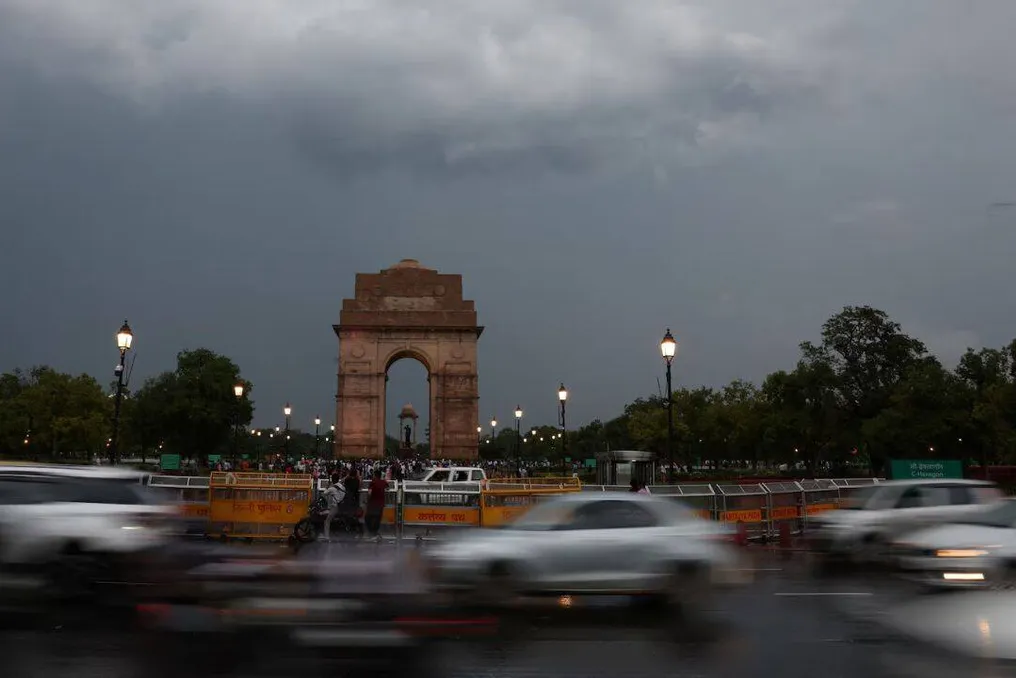
The El Niño phenomenon is causing global concern, and India may be among the countries facing a serious weather challenge. Following a monsoon season marked by a 13 percent rainfall deficit, attention is focused on whether this climatic event will lead to a warmer winter, disrupt precipitation patterns, and increase pressure on agriculture.

The consequences of El Niño are already manifesting across the globe, from raging forest fires in Indonesia to an unusually active hurricane season in the Pacific Ocean. Currently, the key question is what the strengthening of El Niño could mean for India in the coming months.

According to a BBC report, El Niño has been strengthening for several months and is affecting weather conditions worldwide. Specifically, Indonesia is experiencing its worst forest fire season since 2015, there is increased hurricane activity in the eastern Pacific, and there has been a decrease in monsoon rainfall in India.

The World Meteorological Organization (WMO) warned that this phenomenon could intensify by the end of 2026 and persist through 2027, raising concerns about its potential impact on temperature, precipitation, and extreme weather events in various regions.

For India, the immediate concern is whether the intensifying El Niño will exacerbate the effects of the deficient monsoon and affect winter temperatures, rainfall, and agricultural conditions in the near future.

El Niño is a climate pattern characterized by abnormally high sea surface temperatures in the central and eastern equatorial Pacific Ocean. It represents a warm phase of the El Niño-Southern Oscillation (ENSO), a natural climate pattern that influences atmospheric circulation, wind systems, and precipitation distribution globally.

India is closely monitoring El Niño because this phenomenon is typically associated with an increased risk of reduced rainfall during the southwest monsoon. The warming of Pacific waters alters atmospheric circulation and can weaken the conditions supporting the Indian monsoon, thereby increasing the likelihood of prolonged dry spells and water shortages.

Although central India received nearly normal rainfall, eastern and northeastern India recorded a 26 percent deficit, classified as extreme drought, while southern states received 24 percent less rain on average, according to the BBC.

The strengthening of El Niño may contribute to warmer-than-usual conditions in some parts of India, potentially increasing the strain on water resources and agriculture.

The World Meteorological Organization (WMO), citing the South Asian Climate Forum, predicted normal or above-normal maximum and minimum temperatures across most of South Asia from October to December 2026. Warmer late-winter temperatures could also threaten wheat yields if the heat coincides with the grain-filling stage, although this will depend on actual weather conditions. However, conditions in January and February will depend on developing climate patterns, including western disturbances.

Globally, El Niño is expected to raise temperatures in many parts of the world and alter precipitation patterns, increasing the risks of drought, wildfires, and floods in different regions.

In Southeast Asia, including Indonesia, hotter and drier conditions increase the risks of drought and wildfires. Conversely, some areas of East Africa may experience heavier rainfall and flooding, while other areas remain concerned about drought.

El Niño also affects tropical storms. There is increased hurricane activity in the eastern Pacific, while stronger upper winds over the Atlantic suppress hurricane development.

Its effects vary in South America: some parts of the Amazon may experience drier conditions, while some southern regions may see increased rainfall and flooding.

Popular