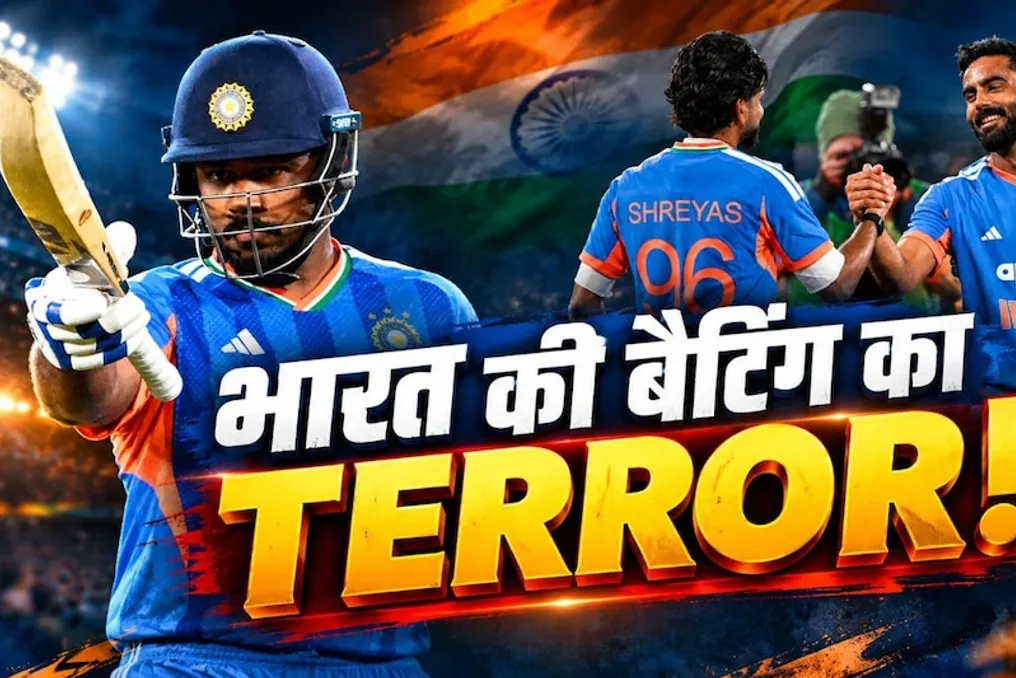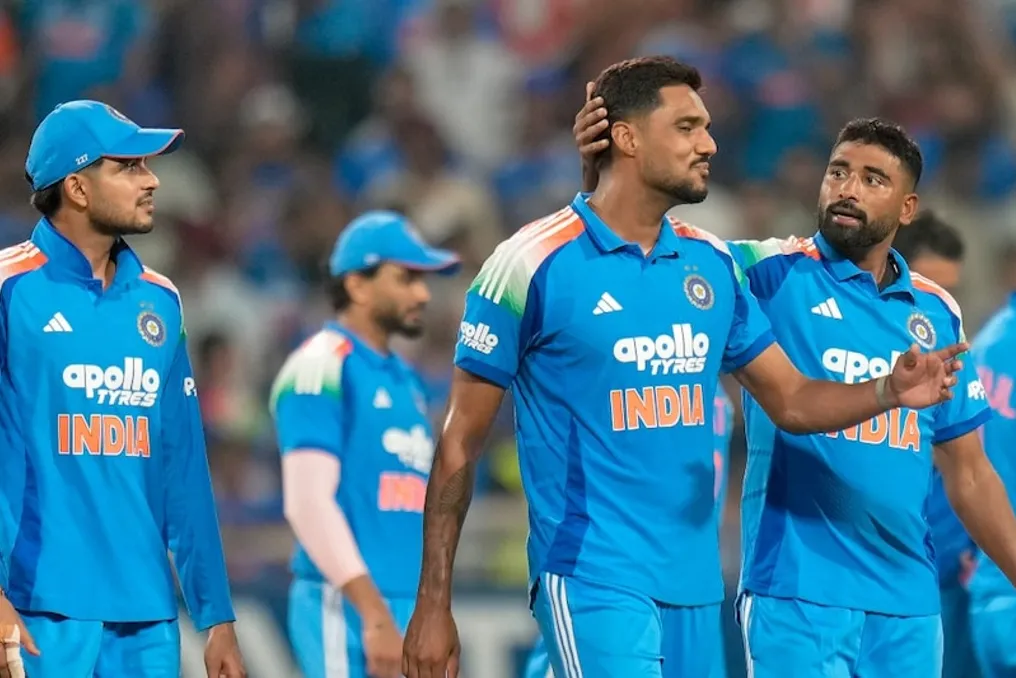
India and New Zealand Squads Ahead of First ODI in Auckland: Changes in India's Lineup
Read more
Aaj Tak
www.aajtak.in

India and New Zealand Squads Ahead of First ODI in Auckland: Changes in India's Lineup

The first ODI match between India and New Zealand will take place in Auckland. Indian captain Shubman Gill decided to win the toss and start the game with a toss. For this match, the Indian team selected four fast bowlers.

Gill explained his choice by noting that there are clouds overhead and mentioned that if the number of overs is limited due to weather conditions, having a target on the board would be advantageous. The team expressed enthusiasm and readiness for the series. Gill also suggested that the conditions in New Zealand would be very similar to those found in South Africa.

Four fast bowlers were included in the Indian squad: Anshul Kamboj, Akib Nabi, Guruveer Barar, and Arshdeep Singh. Additionally, Axar Patel and Naman Dir were part of the starting lineup. The team also includes captain Shubman Gill, Rohit Sharma, Virat Kohli, Shreyas Iyer, and KL Rahul.

It should be noted that the squad was different in the last match against West India, which took place on October 3rd in New Chandigarh: Shubman Gill (captain), Rohit Sharma, Virat Kohli, Rituraj Gaikwad, KL Rahul (wicketkeeper), Nitish Kumar Reddy, Naman Dir, Anshul Kamboj, Kuldeep Yadav, Mohammed Siraj, Guruveer Barar. In that match, Mohammed Siraj, Rituraj Gaikwad, Kuldeep Yadav, and Nitish Reddy did not get a chance.

In that match on October 3rd, the Indian team scored 351/7 runs, but thanks to Sai Hope's unbeaten knock of 162 runs, West India won by 5 wickets with 10 balls remaining. Nevertheless, the Indian team won the series 2-1.

New Zealand captain Mitchell Santner announced that Devon Conway sustained a head injury the day before and will rest, thus not participating in this match. He will be replaced by Tim Seifert. Santner discussed the top order of the New Zealand team, specifying that Tim Seifert, Will Young, and Henry Nicholls will start the game. He also touched upon player opportunities and squad depth. According to Santner, due to the tight schedule of both teams, players are rotated, giving new players a chance to prove themselves. He also noted that the New Zealand team, like India, will take the field with four bowlers.

India Squad: Shubman Gill (captain), Rohit Sharma, Virat Kohli, Shreyas Iyer, Axar Patel, KL Rahul (wicketkeeper), Naman Dir, Anshul Kamboj, Akib Nabi, Guruveer Barar, and Arshdeep Singh. New Zealand Squad: Tim Seifert, Will Young, Henry Nicholls, Daryl Mitchell, Tom Latham (wicketkeeper), Glenn Phillips, Mitchell Santner (captain), Nathan Smith, Kyle Jamieson, Jacob Duffy, and Blair Tickner.
Similar stories

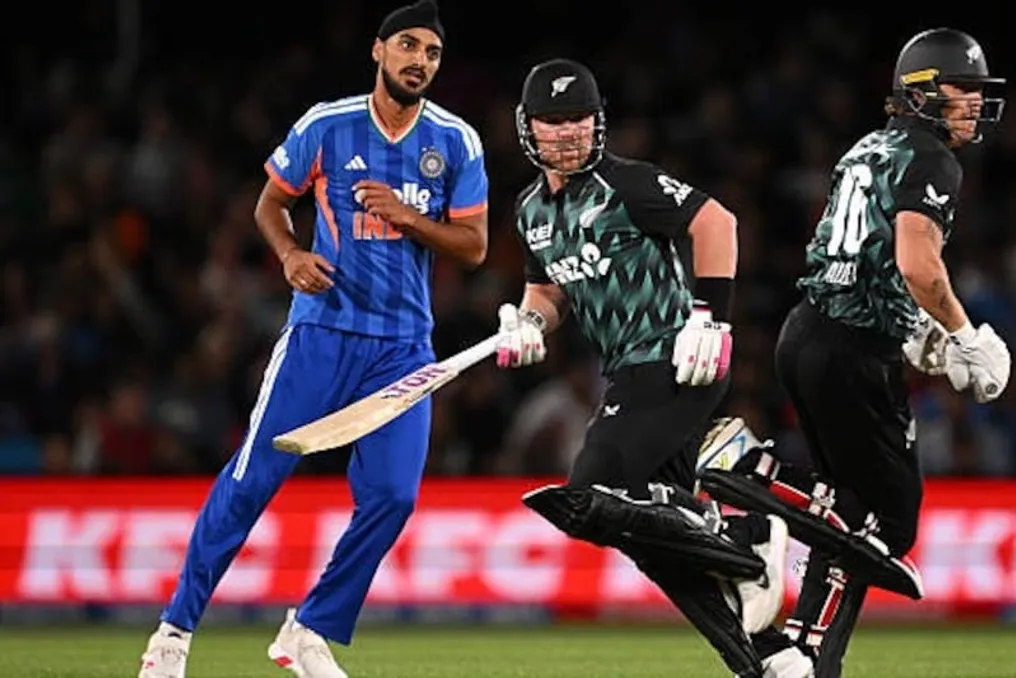
India has a chance to take the series against New Zealand by focusing on improving bowling game
Read more
www.aajtak.in

India has a chance to take the series against New Zealand by focusing on improving bowling game

Despite the Indian team demonstrating dominance in the T20 series against New Zealand, taking a 2-0 lead in the five-match tournament, there is another side to the coin. While the Indian batsmen are playing successfully, their bowlers are struggling to make an impression.

In the upcoming match on Tuesday, India will face the task not only of winning the series but also of addressing shortcomings in their bowling game. This match will start in Wellington at 12:30 Indian time. The team, led by Shreyas Iyer, intends to maintain its momentum towards victories.

However, attention will be focused on the players responsible for bowling in the absence of Jasprit Bumrah, who has been rested, and during Hardik Pandya's recovery period. Special hope is placed on Bhuvneshwar Kumar and Arshdeep Singh, who are expected to deliver better performances.

Bhuvneshwar Kumar's return to international cricket after four years away has not yet met expectations. In the first two matches played in Christchurch, he conceded 49 and 50 runs respectively for his four overs. An experienced swing bowler was expected to trouble the New Zealand batsmen with his cunning and precise line and length, but so far he has not managed this.

Nevertheless, Indian bowling coach Morne Morkel supported Bhuvneshwar, noting that there is a significant difference between local level training and the pressure of international cricket. Bhuvneshwar had to prepare for his return to the team in a short time, and even small mistakes at the international level can prove costly.

The reserve ground in Wellington will be a new test for Bhuvneshwar. The strong and variable winds blowing there can help the ball swing. Bhuvneshwar has a chance to demonstrate his strength, but India needs not only his experience but also wickets and economical bowling.

Arshdeep Singh's role will also be crucial. This left-arm fast bowler has the ability to direct the ball away from right-handed batsmen and inwards when necessary. Top-order batsmen in New Zealand include Finn Allen, Tim Seifert, and Daryl Mitchell, who have yet to show their full potential in the series.

In the hosts' batting lineup, Glenn Phillips made a significant contribution, scoring half-centuries in the middle order. Ben Vance also scored runs in the previous match. India aims to prevent New Zealand from posting a large score by taking early wickets.

The hosts may also lack fast bowlers Lockie Ferguson and Matt Henry, who were rested as part of workload management. Matt Fisher and Blair Tickner were included instead. This could be a relief for the Indian batsmen, but they will have to play according to the conditions.

Indian batsmen brought the team wins in high-scoring matches in the first two games. However, the cold evenings of New Zealand and the strong winds in Wellington will not make the game easy. Abhishek Sharma, Sanju Samson, and 15-year-old Vaibhav Suryavanshi must focus on their technique and shot selection in these conditions.

Vaibhav's performance in New Zealand conditions will be important experience for his future. The opportunities gained in international cricket at such a young age can help him improve his game.

Head coach Gautam Gambhir's strategy of using Tilak Verma, Naman Dira, and Nitish Kumar Reddy in the middle order proved effective in the first two matches. India tested 13 players in the first two games. Vaibhav Suryavanshi got a chance instead of injured Ishan Kishan, and in the second match, Prince Yadav replaced Mainak Yadav.

India won the five-match T20 series against New Zealand during the 2020 tour with a score of 5-0. In the next tour in 2022-23, the Indian team also won this match, which was not cancelled due to bad weather. Now the team has another opportunity to assert its dominance in New Zealand.

A win on Tuesday will give India an undisputed 3-0 advantage in the five-match series. However, the importance of this match is not limited to just winning the series. Batting has helped the team get through difficulties so far; now the bowlers must also justify the trust. Scoring big is good, but a strong team is one that can restrict the opponent's batsmen.

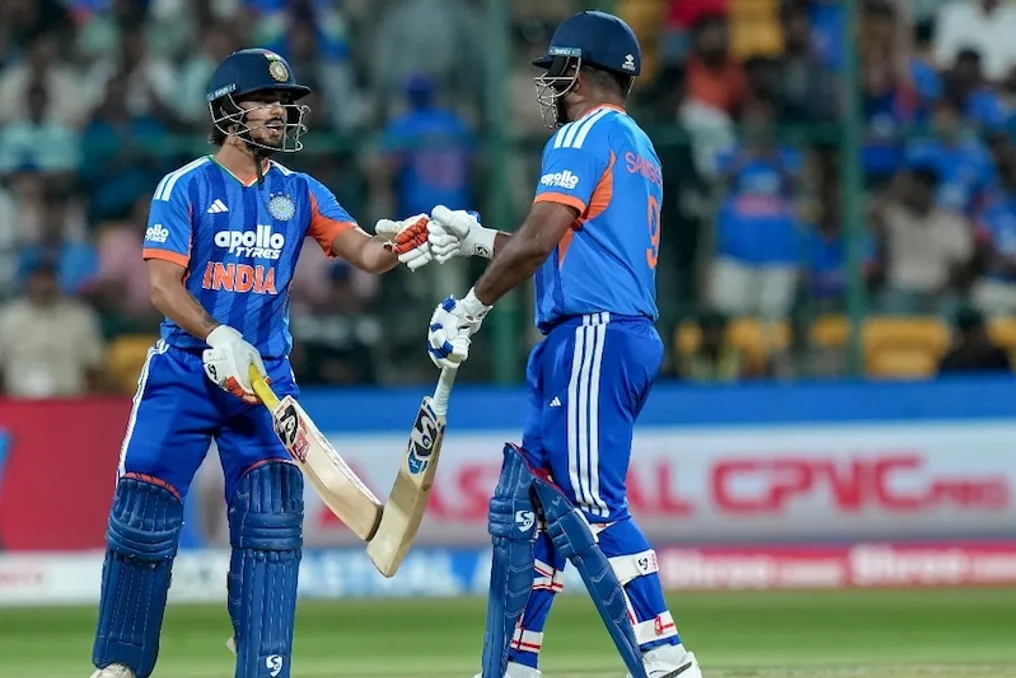
Ishan Kishan ruled out of India squad due to injury, missing third T20 match
Read more
www.aajtak.in

Ishan Kishan ruled out of India squad due to injury, missing third T20 match

Due to a muscle injury sustained during a game, vice-captain and batsman Ishan Kishan has been dropped from the Indian squad for not only the second but also the third T20 match against New Zealand.

The third match of this five-match series between India and New Zealand is scheduled for Tuesday, October 27, at Sky Stadium in Wellington. Fans were expecting Kishan's return as he was in excellent form.

The injury, which is a low-grade adductor strain in his right lower leg, was sustained by Ishan Kishan on October 22 during the first match of the series in Christchurch. The 28-year-old was advised to take a break to prevent further damage. Kumar Kushagra has been included in his place in the team.

Meanwhile, the players are ready for the second match of the series at Hagley Oval in Christchurch. India captain Shreyas Iyer decided to start the game with a coin toss and opt for bowling first. The Indian team aims to maintain its winning streak, having achieved an impressive target of 226 runs in the first T20 match.

In the first match, Sandeep Samson delivered an impressive performance, scoring 67 runs off just 33 balls, while captain Shreyas Iyer added 42 runs. Following this, young Naman Dheer secured a brilliant victory for the team, scoring 42 runs off only 15 balls without getting out.

Despite Kishan's absence, the Indian team, which currently leads the series 1-0, is fully prepared to continue its winning run. At the same time, the host side, New Zealand, will make every effort to return to the game.

India's New Philosophy in T20: Team Ready to Attack Despite Bowling Issues
Read more
www.aajtak.in

India's New Philosophy in T20: Team Ready to Attack Despite Bowling Issues

India won the first T20 match against New Zealand, achieving a target of 226 runs in 19.4 overs.

This victory was achieved not only through strong batting but also demonstrates the Indian team's aggressive approach to chasing targets, unafraid to take risks. Despite shortcomings in the bowling game, the batsmen managed to compensate for these weaknesses with their power.

India's strategy became clear: instead of restricting the opponent to a low score, the team found it more advantageous to surpass their total. However, such a tactic will only be effective if there are consistent high performances in the attack, as chasing a target of 225 runs every day will not be easy.

The target of 226 runs indicates that serious questions face the Indian bowling unit. Allowing over 200 runs in T20 itself is a signal that the strategy, length, and line of the delivery need improvement, especially towards the end of the match. Nevertheless, India's batting completely changed the course of the game.

By reaching 230/6, India proved that its batting does not depend solely on stars. The squad includes players capable of increasing aggression under the pressure of a difficult task.

This victory is more of a statement about batting strength than a success of bowling.

Sanjju Samson laid a solid foundation for the chase, scoring 67 runs off 33 balls, including eight fours and four sixes. His key contribution was preventing the pressure of a large score from overwhelming the Indian batting.

Samson showed from the beginning that simply preserving wickets is insufficient to achieve a target of 226 runs; maintaining tempo and putting pressure on the bowlers is necessary. His play allowed subsequent batsmen to play in a more open manner.

The performances of Shreyas Iyer with 42 runs and Naman Dira without getting out for 42 runs (off 15 balls) were important elements of this victory. Axar Patel also made a useful contribution of 24 runs.

The significance of these innings is not limited to the runs scored. When chasing a big score, the quick start of one batsman must be supported by others. This is where Shreyas and Naman played their role.

Naman's unbeaten knock was particularly crucial, as the match needed to be concluded even after approaching the target. India demonstrated that it has options to score runs at different stages of the match, winning in 19.4 overs.

Despite the brilliant victory, it is crucial to understand the other side of the coin. Reaching a target of 226 runs shows India's strength, but this does not allow for ignoring the bowling deficiencies.

India's aggressive strategy is its strength, but a truly strong team is one that can control the game with both batting and bowling. India has shown that a large score is an opportunity to attack, not a cause for fear.

However, to maintain this dominance in the series, the bowlers will have to raise their level. India's new T20 declaration is this: if you make 225, we will make 226. But true dominance will come when the ball rules over the opponent alongside the bat.

Popular