Lenovo unveils AI host Kaitian with Zhaoxin KX-7000 processor and Houmo LQ50 NPU for local 35B model execution
Read more
Pandaily
pandaily.com

Lenovo unveils AI host Kaitian with Zhaoxin KX-7000 processor and Houmo LQ50 NPU for local 35B model execution

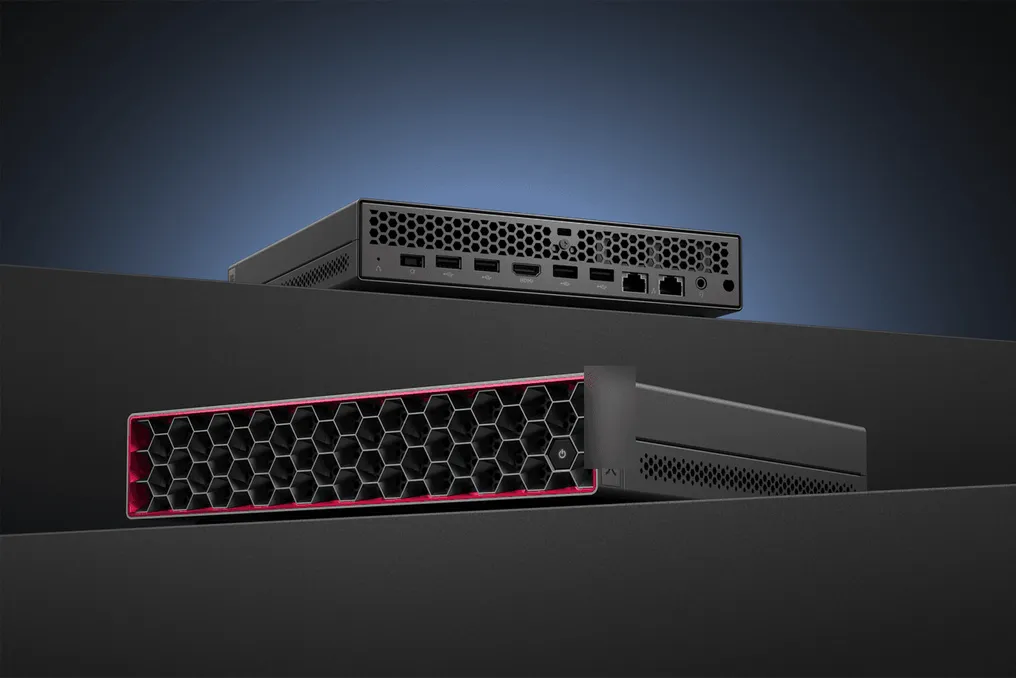
Lenovo has released the first AI host system in its Kaitian lineup, intended for China's IT innovation market (Xinchuang). This 1.6-liter desktop computer integrates a Zhaoxin processor with a Houmo AI NPU, enabling the local execution of models around 35 billion parameters.

The device is equipped with an eight-core Zhaoxin KX-7000 processor and the Houmo Liqing LQ50 NPU. In the standard configuration, the system provides 160 TOPS of computing power in INT8 format, which can reach 320 TOPS with the NPU option. The NPU features 24 GB of dedicated memory with a bandwidth of 153.6 GB/s. The host runs on Kylin OS and comes pre-installed with Lenovo's Tianxi AI Pro agent.

The company tested the device using open models, including the Qwen3.5 and Qwen3.6-35B-A3B series. When utilizing the 24 GB NPU and W4A8 quantization, the Qwen3.6-35B-A3B model generated text at a rate of approximately 28.99 tokens per second during local inference. The system supports input data up to 200,000 tokens for processing long documents and multi-turn tasks. The Houmo platform provides developers with tools for profiling, compiling, runtime management, and model quantization.

Lenovo positions this host as a perpetually active digital employee designed for round-the-clock operation. This allows agents to perform scheduled tasks such as local knowledge retrieval, document drafting, and information summarization, with output processing occurring directly on the device rather than through cloud tokens, thus keeping data local. During the event, Tianxi AI Pro testers instructed the device to check a mobile operator's application, and the device successfully executed a test call, measured the delay of a verification SMS code, and provided a report.

Regarding thermal dissipation, the processor and NPU have separate air channels behind the hexagonal front panel with high-pressure fans. Lenovo reports that at idle, the chassis temperature is about 33 degrees Celsius in a 25-degree room, and under full load, it reaches 41 degrees. In a 35-degree room, the temperature reaches approximately 46 degrees under full load. The noise level is 19.4 dB in standby mode and about 29.5 dB during full NPU inference. The device weighs about 1.5 kg and is equipped with two independent 2.5GbE ports.

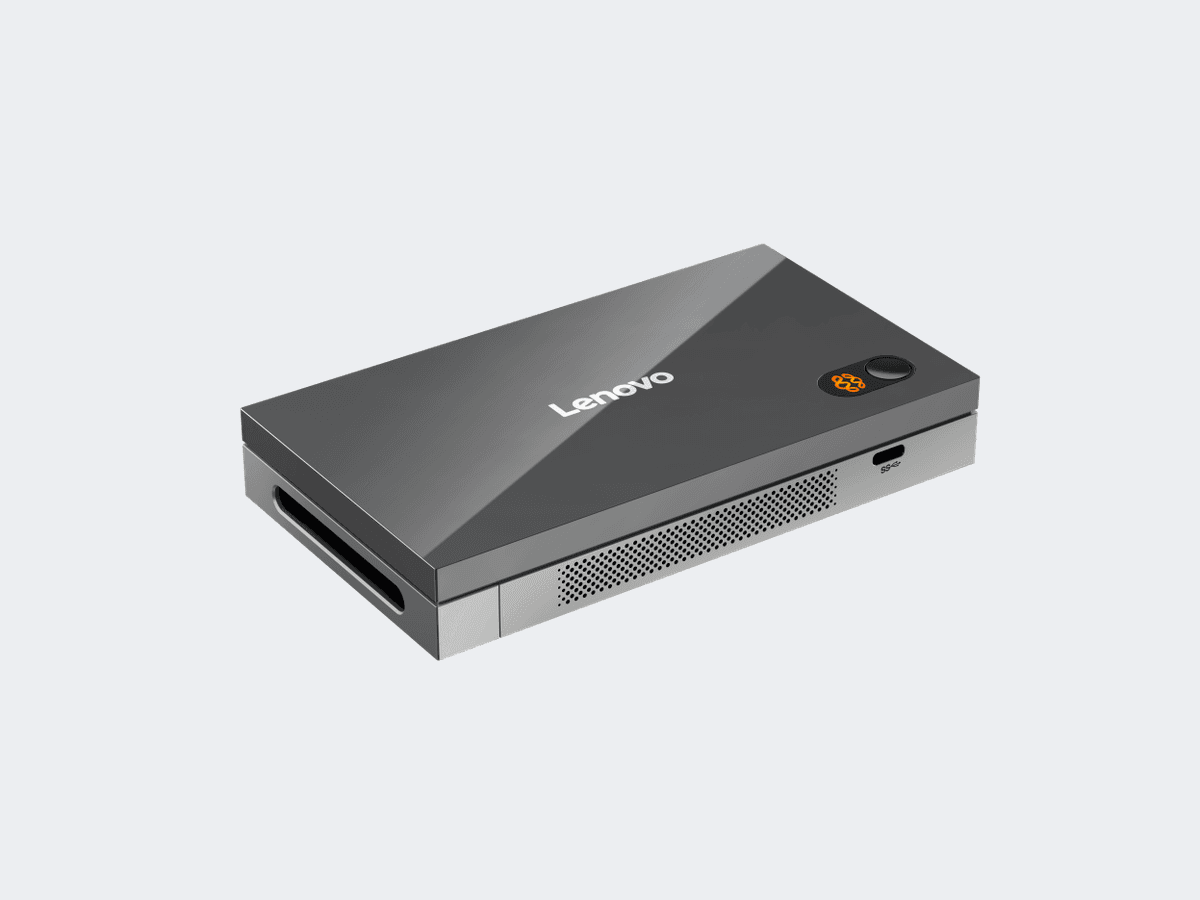
It should be noted that the Kaitian host differs from the Lenovo AI Host P7, which was introduced in October with Houmo M50 and CIX P1 chips.
Similar stories

Lenovo releases Tianxi AI 4.5 for AI PCs, allowing phones and tablets to offload tasks to desktop computers
Read more
pandaily.com

Lenovo releases Tianxi AI 4.5 for AI PCs, allowing phones and tablets to offload tasks to desktop computers

Lenovo introduced its personal AI agent, Tianxi AI 4.5, on Artificial Intelligence PCs (AI PCs) on October 30. This release followed versions for phones, launched on October 20, and for tablets, released on October 27, meaning the update now covers all three device types.

Lenovo positions this version for office workers, offering enhancements for completing work tasks, participating in meetings, and business travel. A central feature is the new Super Mode, which transforms the assistant from a question-answering tool into a task executor.

Tianxi AI 4.5 integrates connectors for Feishu, the Lenovo browser, and WeCom, linking them to a personal knowledge base. This allows for the shared use of local files and cloud documents. A user can issue a single command that prompts the assistant to break down and execute multi-step work across different applications, such as checking meeting schedules, assigning tasks, or finding material and sending a group notification.

A skills marketplace is also available, consolidating connectors, collaborative multitasking, and various skills, including enhanced slide generation. Furthermore, a system management package allows users to customize graphics, power, and system parameters upon request.

The AI note-taking function for meetings has been completely revamped. It now provides real-time transcription with subtitles and can participate in brainstorming as a participant, offering opinions and ideas. Attendees can ask the AI questions during a meeting based on the live transcript, and the system automatically highlights key moments. Upon session completion, summary cards are generated, saved to the knowledge base, and synchronized across devices.

The knowledge base now supports uploading up to 20 files, and images can be uploaded directly into the chat. All three device types support full-duplex voice input, allowing the conversation to be interrupted to add instructions mid-dialogue without repeating the activation word. When the user is away from their workstation, they can use their phone or tablet to initiate a complex task on an office or home AI PC running in Super Mode.

Task progress is visible on the phone or tablet, status notifications are received, and completed results can be previewed and managed remotely. The update also extends to Lenovo's AI Host machines. The AI Host P7 model can access cloud models or function as a local edge computing device. The new Auto mode selects between cloud and local models based on task complexity to minimize unnecessary token usage. These hosts support autonomous, round-the-clock task execution.

Lenovo unveiled preliminary version of AI Host P7 with Houmo M50 and CIX P1 chips and launched early access program
Read more
pandaily.com

Lenovo unveiled preliminary version of AI Host P7 with Houmo M50 and CIX P1 chips and launched early access program

Lenovo demonstrated the preliminary model of its AI Host P7 device at the CSDN's 2026 1024 Programmers' Day and AI Builders Conference on October 24. Additionally, an early access program was launched, inviting initial users to test the device in real coding and office tasks before its general release. Previously, the concept of this portable AI host was presented by Lenovo in May, and this preliminary version includes more detailed technical specifications and software features.

The device weighs about 300 grams and is built on two domestic chips. The first is the in-memory computing inference chip Houmo AI M50, which, according to Houmo, provides 160 TOPS performance while consuming 10 watts. The second chip is the agent SoC from CIX Technology P1, manufactured using a 6nm process and equipped with a 12-core Armv9.2 processor and a 30 TOPS NPU, enabling 45 TOPS in heterogeneous computing.

According to CIX, the P1 chip is responsible for system management, task execution, and planning, and it can interact with external accelerators to run a 122-billion parameter model with a 128K context at a speed of 50 tokens per second. Lenovo claims that the preliminary P7 version is capable of locally processing models with up to 125 billion parameters and a 256K context.

The device comes with a local model library that includes Qwen3.8-Flash-Next, Qwen3.8-27B, and Qwen3.6-35B-A3B, as well as models for speech recognition, speech synthesis, document processing, and image design. Lenovo reports that its internal AI computing architecture, which uses mixed INT4 and INT8 quantization, achieves an average of 98.3% of the baseline BF16 with full precision across four benchmarks. It should be noted that these figures are company data and have not undergone independent testing.

Lenovo positions the P7 as a personal token hub. The token manager function allows users to direct coding tools and agent applications to local models via an API address, thereby saving routine model calls on the device instead of using paid cloud quotas. The task execution mode operates around the clock, and progress can be tracked from phones, tablets, and PCs. The built-in Tianxi AI has an Auto mode that distributes requests between local and cloud models depending on their complexity.

Sun Ke, Head of AI Hosts, emphasized that true productivity should not start with counting token costs. Lenovo has not yet disclosed the price or release date, only stating that the P7 will be available soon.

Alibaba's Qoder Platform Adds Support for LoongArch from Loongson Alongside UOS and Kylin
Read more
pandaily.com

Alibaba's Qoder Platform Adds Support for LoongArch from Loongson Alongside UOS and Kylin

Alibaba's coding platform Qoder now releases builds for Linux ARM64, as well as for the Loongson LoongArch64 instruction set. Furthermore, it has been adapted for the UnionTech UOS Desktop V20 and Galaxy Kylin Desktop V10 desktop systems. The company announced that both the international and Chinese versions received this update on October 23rd, enabling the end-to-end agent workflow from demand to delivery on desktop computers, which is already used by many government and corporate users in China.

The addition of LoongArch support is a significant point in this announcement. Modern Loongson chips utilize a fully self-developed instruction set that is neither ARM64 nor x86, and is not licensed by either party. Releasing the core coding agent for this ISA represents a tangible step in the software stack: developers can invoke tools, edit files, and perform multi-agent tasks on LoongArch machines without needing to switch to a workstation with a foreign architecture.

Support for Linux ARM64 covers a wider range of Arm-based PCs and boards within the same release series. Qoder was first launched globally in August 2025 as an agent-enabled coding platform, including a desktop IDE, CLI, and JetBrains plugins. In May 2026, Alibaba Cloud transformed it from an AI-IDE into a standalone development workstation called Qoder 1.0, and the former assistant Tongyi Lingma was integrated into the productive line for China as Qoder CN. The product family now also includes a mobile client, the QoderWake digital employee tools, and Qoder Cloud Agents.

Alibaba claims that as of August 2026, the product had over 6 million users and more than 100,000 enterprise clients; these adoption figures are company data. With this release, Qoder's presence on desktops in China now covers HarmonyOS PC and HarmonyOS mobile clients, as well as UOS V20 and Kylin V10. For teams using these systems, the practical change is that agent assistance in coding no longer requires a separate x86 environment or cloud environment.

Download information is available on the Qoder website, which provides installation instructions for Linux specifying the new architectures. The essence of this event is not so much the appearance of a new model, but where the agent coding stack is ready to operate. Placing LoongArch alongside ARM64 in one announcement clearly emphasizes the distinction: one line relates to Arm, the other to Loongson's proprietary ISA, and both now receive a first-party Qoder build.

Popular