
Guoguang Quantum Unveils 25-Channel Single-Photon Detection Module for Kilocubit Optical Readout Systems
Read more
Pandaily
pandaily.com

Guoguang Quantum Unveils 25-Channel Single-Photon Detection Module for Kilocubit Optical Readout Systems

Guoguang Quantum, a Beijing-based company, has released its proprietary 25-channel ultra-low noise single-photon detector module. This module is designed for optical readout lines of superconducting quantum computers scaled to thousands of qubits, according to IT Home and ifeng Tech on November 3.

This product aims to solve a known bottleneck in scaling. As superconducting machines grow from hundreds to thousands of qubits, traditional readout using coaxial microwave equipment requires a large number of cables. These cables introduce heat into the cryogenic refrigerator, reducing its limited cooling capacity and complicating channel expansion.

An alternative solution is converting microwaves into an optical signal, which translates qubit readout signals into the 1550 nm telecommunications band. This allows the use of optical fiber instead of coaxial cable, thereby reducing the thermal load on the cold stage.

The new module acts as the receiving end of this transduction line, operating at room temperature. It is capable of simultaneously collecting numerous very weak optical signals from the refrigerator. The company asserts that the module is tuned for quantum readout, possesses single-photon level sensitivity, features an ultra-low dark count rate, low crosstalk between channels, and stable performance across all channels, enabling the detection of weak readout light after electro-optical conversion.

Each module integrates 25 detection channels in a modular, grouped architecture, and several such modules can be connected to provide parallel readout for systems ranging from hundreds to approximately a thousand qubits. The company notes that the grouped design balances integration density with the complexity of calibration and noise control.

Guoguang Quantum states that this module can be integrated with its previously released large-scale fiber optic array and QuanSi quantum computing operating system to form a complete readout chain. This chain spans from cryogenic electro-optical conversion and fiber transmission to multichannel detection, as well as high-level control and data acquisition.

According to industry sources cited in reports, similar multichannel single-photon detection products developed in China primarily offer only four channels, and high-density arrays for superconducting optical readout remain rare. The company reports that the module will be supplied to research platforms to address issues of insufficient readout channels, increasing noise levels, and integration complexity in large superconducting systems.

Guoguang Quantum was founded in 2021 by a team of doctors from the University of Science and Technology of China. The company focuses on developing photonic quantum chips for quantum communication, precision measurement, and computation.
Similar stories

China Telecom, YOFC, and ZTE Demonstrate Bidirectional 800G Transmission over Over 1007 km Fiber Optic Cable
Read more
pandaily.com

China Telecom, YOFC, and ZTE Demonstrate Bidirectional 800G Transmission over Over 1007 km Fiber Optic Cable

The research institutes of China Telecom, YOFC, and ZTE have completed the implementation of what they call the world's first real-time bidirectional data transmission over fiber optic cable spanning over 1000 kilometers, as announced by the China Telecom Research Institute on November 2, according to sources IT Home and C114.

On a line measuring 1007.48 km, the partners achieved a speed of 800 Gbps per wavelength using PCS-16QAM modulation in the extended C+L band, transmitting signals in both directions through a single optical fiber cable, resulting in a total capacity of 128 Tbps. These three organizations collaborated as joint builders of a national key laboratory.

The partners reported three significant achievements. This experiment set a record for the longest single-point, non-loop real-time data transmission over fiber optic cable while maintaining a loss margin of at least 3 dB on each segment and an Optical Signal-to-Noise Ratio (OSNR) margin of at least 3 dB for system operation. Furthermore, it became the first real-time bidirectional transmission over a single optical fiber line at the 1000 km scale.

Although reflections reduced the OSNR by between 0.5 dB and 4 dB, the team believes this proves the feasibility of long-haul bidirectional operations. Finally, the longest fiber optic line in the extended C+L band free from gas line absorption was constructed.

The last point concerns an issue specific to this technology. Since light in hollow-core fiber passes through gas rather than solid glass, traces of carbon dioxide and carbon monoxide in the core can absorb certain wavelengths and degrade transmission. To solve this problem, the team improved the manufacturing process to eliminate these absorption lines across the entire extended C+L band.

Regarding equipment, the partners eschewed high-power amplifiers and used commercial amplifiers with standard output power, matched to the fiber loss profile, to achieve optimal performance from a fully loaded 800G system. Light pre-equalization at the transmitter level maintained channel stability across the entire band. The team also developed an end-to-end model of the impact of reflections and intermodal interference on the line and tested an extreme scenario where part of the band failed without detecting any performance loss.

Operators are most interested in latency. Light in hollow-core fiber travels almost at the speed of a vacuum, approximately 30% faster than in traditional glass fiber, saving about 1.5 milliseconds in each direction over a 1000 km route. The announcement did not specify the measured latency value. Until now, hollow-core fiber in China has mainly been used for short connections, such as between data centers in Chunwei, Ningxia, whereas computing clusters in the west are often more than 1000 km away from demand in the east. China Telecom stated that the result provides a practical technical basis for creating high-capacity, long-distance, and low-latency backbone networks based on fiber optic cable.

Quantum computer assembly in Paraíba should begin in November, according to state secretary
Read more
g1.globo.com

Quantum computer assembly in Paraíba should begin in November, according to state secretary

The assembly of quantum computers intended for Paraíba is scheduled to begin in November, following the arrival of the remaining equipment parts. This forecast was confirmed by the State Secretary of Science and Technology, Cláudio Furtado, last Saturday (24).

According to the secretary, the components are expected to arrive in the state on November 17th. This receipt will be preceded by customs clearance procedures, which are scheduled to start on November 5th. Cláudio Furtado detailed that customs clearance will begin on November 5th, and all remaining parts will be in Paraíba on November 17th, the moment the computer will begin its preparation and assembly process.

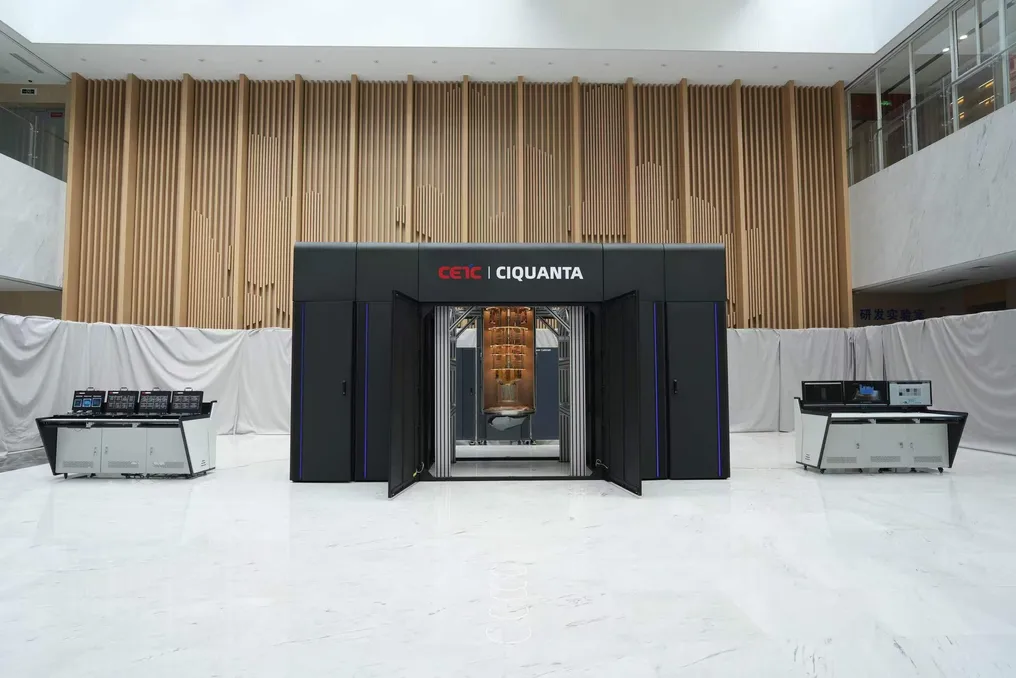
The project includes the installation of two quantum computers at the Quantum Computing Center of Paraíba (Ciquanta), located in João Pessoa. These devices were mentioned by President Luiz Inácio Lula da Silva (PT) during the presidential debate held with Flávio Bolsonaro (PL), broadcast by TV Globo on Friday (23).

Updated Schedule After Initial Forecast

Initially, in July of this year, the g1 portal had reported that the first quantum computers in Latin America would be installed in Paraíba still in 2026, with the expectation of completing the assembly by October. However, the schedule has been updated. Cláudio Furtado clarified that it is now expected that part of the Ciquanta structure will be delivered at the beginning of December.

Infrastructure and Works for the Technology

The devices will be installed on the premises of the Estação das Artes in João Pessoa, a location that is undergoing modifications to accommodate the new technology. The structure requires very specific environmental conditions, such as temperature control, environmental stability, and electromagnetic shielding. Cláudio Furtado also assured that infrastructure work is underway to ensure compliance with the installation schedule, mentioning that the electrical and logical parts will be finalized that week, and the air conditioning units are already ready to complete the installation.

The scope of the project includes two quantum computers, with capacities of 20 and 100 qubits, representing an estimated initial investment of about R$ 150 million.

Operation and Requirements of a Quantum Computer

Unlike traditional computers, which use bits to process data, quantum computers employ qubits, which are units of information based on the principles of Quantum Physics. This technology has the potential to assist in specialized research and calculations in fields such as logistics, artificial intelligence, cybersecurity, and drug development. It is important to note, however, that this does not imply they are superior to conventional ones in all activities.

The equipment demands specialized cooling systems. As explained by Cláudio Furtado, the chips need to operate at temperatures close to absolute zero, specifically around 10 millikelvin, which is equivalent to approximately -273 °C. To achieve this condition, a cooling system using helium-3 and helium-4 will be employed, supplemented by redundancy mechanisms to sustain the necessary operating conditions.

Access for Paraíba Researchers

Initial access to these computers will be granted to researchers affiliated with institutions in the state of Paraíba, such as the Federal University of Paraíba (UFPB), the Federal University of Campina Grande (UFCG), and the Federal Institute of Paraíba (IFPB). Furthermore, the project foresees the transfer of technological knowledge from the Chinese company CETC to Ciquanta, covering topics such as cryogenics, sensors, and operating systems. The greater objective is to foster the training of Brazilian professionals to work with this technology and expand the chances of developing new equipment in Brazil.

Huawei and Shaanxi Telecom implement Dual-Band Massive MIMO on High-Speed Railways
Read more
pandaily.com

Huawei and Shaanxi Telecom implement Dual-Band Massive MIMO on High-Speed Railways

Huawei, in collaboration with the China Telecom branch in Shaanxi Province, has commercially deployed 32T32R FDD Massive MIMO technology on the Shu-Lan and Yinxi high-speed railway lines. This equipment operates simultaneously on 1.8 GHz and 2.1 GHz frequencies.

Huawei states that this is the first commercial use of FDD Massive MIMO in a high-speed railway environment in China. High-speed rail networks present significant challenges for mobile coverage due to the large distance between towers, train speeds up to 350 km/h, and penetration losses caused by metal carriages.

Massive MIMO technology, which is often used to increase capacity in densely populated urban areas, forms narrower beams compared to traditional wide-beam antennas. Huawei asserts that this beam shape is suitable for a linear route: the beams can be directed along the tracks, follow the train through cells, and adapt to compensate for the Doppler effect, which could degrade the connection.

The company highlighted three key design aspects for railway application. Adaptive beams are designed to limit frequency shift effects at high speeds. Inter-cell beam tracking and coordinated planning aim to reduce the number of handovers when a train crosses multiple cells. Furthermore, broadcast beams and pilots are configured to ensure linear coverage so that energy remains within the corridor rather than scattering in open terrain.

According to the statement, measurements conducted on the Yinxi section in Shaanxi showed an approximate 200-meter expansion of cell coverage after modernization, a 24% increase in average 5G uplink speed, and an increase in average downlink speed of over 50%. User experience improvements were even more pronounced: uplink speed at the zone boundary increased by 95%, and downlink speed by over 100%.

Although FDD Massive MIMO has long served as a tool for increasing capacity in urban macrocells, deploying 32 transmit and 32 receive chains on a high-speed corridor represents an attempt to apply this urban capacity model to a fast-moving linear cell. Huawei and Shaanxi Telecom present the deployment in Shaanxi as an operational commercial network, not a laboratory experiment. It should be noted that all claimed gains in coverage and throughput are assertions made by the company and operator from the announcement in October and have not undergone independent verification.

Popular