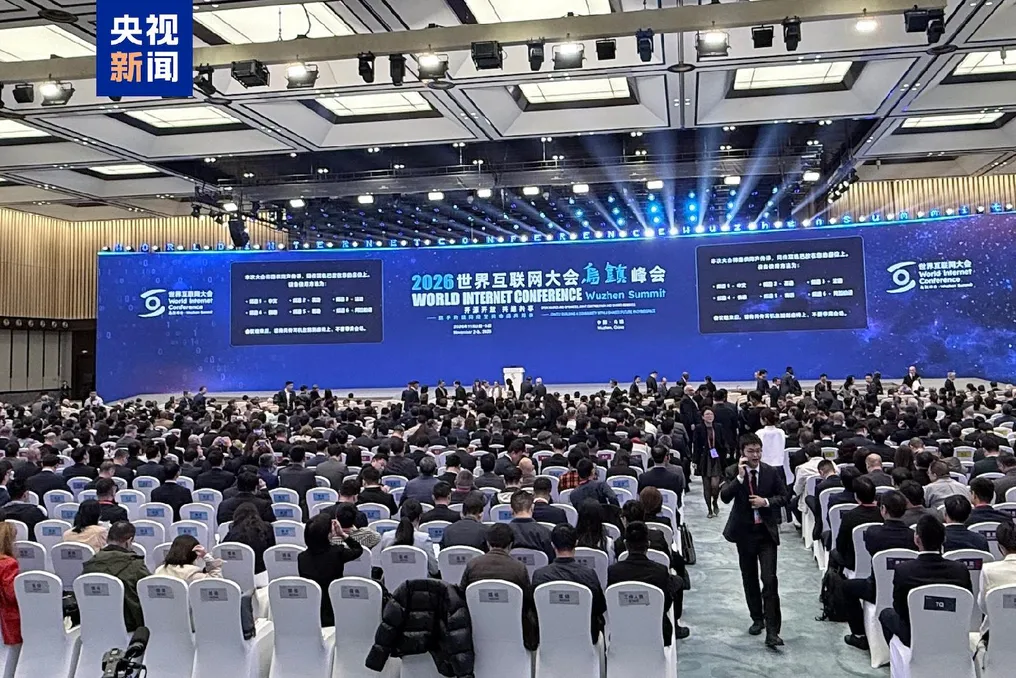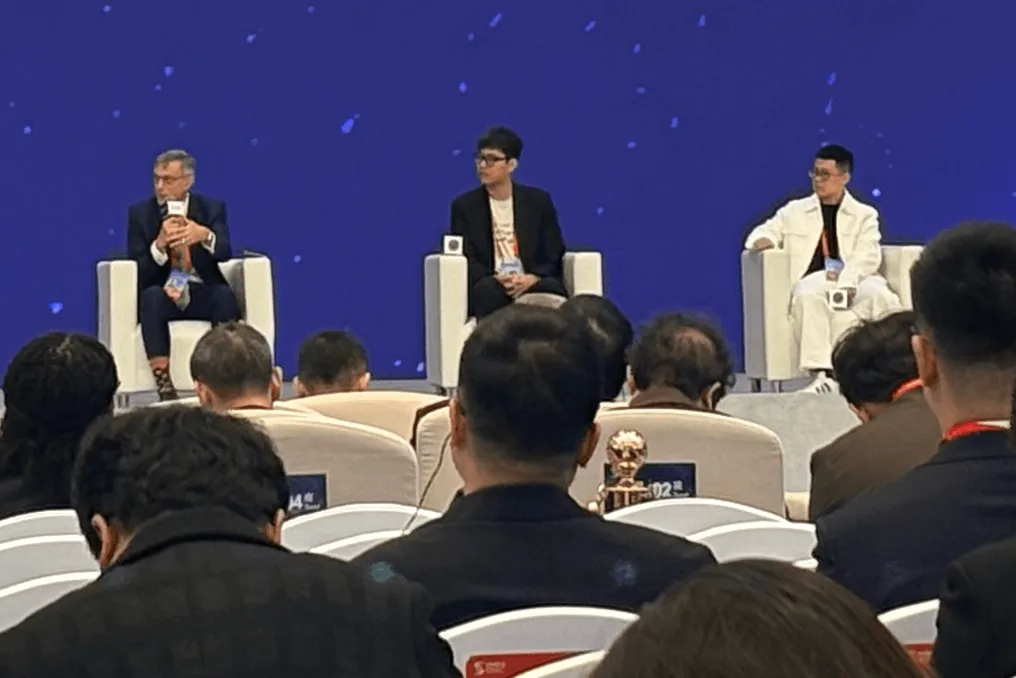
Representatives from three leading Chinese open model developers—DeepSeek, Alibaba's Qwen team, and MiniMax—participated in a discussion about the reasons for releasing their models as open source and how open models should be regulated. The event took place on November 3rd at the World Internet Conference Summit in Uzhchen.
The session, titled 'Uzhchen Dialogue on Artificial Intelligence,' was moderated by Wang Jian, an academician of the Chinese Academy of Engineering and director of Zhejiang Lab. Participants included DeepSeek engineer Si Gao, Qwen LLM project lead Daiheng Liu, MiniMax chief architect and head of the open platform Wen Feng, and John Higgins, chairman of the International AI Governance Association.
Si Gao stated that DeepSeek's goal for open access is simple: to achieve artificial general intelligence faster. In his view, time, rather than other companies, is the main competitor for AI laboratories. He noted that technical hurdles might temporarily slow down rivals, but publishing research attracts capable colleagues to build more advanced models based on DeepSeek's work.
Daiheng Liu reported that Qwen has released over 460 models since the first generation appeared three years ago, accumulating over 4 billion global downloads and more than 330,000 derivative models. He argued that open source code accelerates innovation and makes AI widely accessible, allowing not only for the use of models but also for participation in their creation.
In turn, Wen Feng explained that MiniMax aims to bring differentiated value by releasing models for various modalities and sharing engineering experience, including information on encountered problems, experiments conducted, data modifications, and tools.
Regarding risks, Liu highlighted two characteristics inherent to open models. The first is irreversibility: once released, the model spreads everywhere and cannot be fixed as easily as a deployed model. The second problem is the lack of external protection systems, as security depends on built-in precautions that third-party developers may attempt to bypass. He stressed that model limitations alone are insufficient to address governance issues, calling for the adoption of laws, industry standards, and the creation of supporting infrastructure.
Liu also added that openness contributes to security because models with transparent architectures allow a larger number of researchers to study them, and open models can be used in cybersecurity. He suggested that current capabilities might be underestimated, noting that even models with 1.5 billion parameters can be activated using new post-training methods.
Wen Feng countered that open models are often a more controlled choice for the industry, as companies can fine-tune and deploy them privately. Si Gao acknowledged that open source code can increase AI security risks and stated that DeepSeek is responsible for preventing their proliferation and is actively seeking solutions.