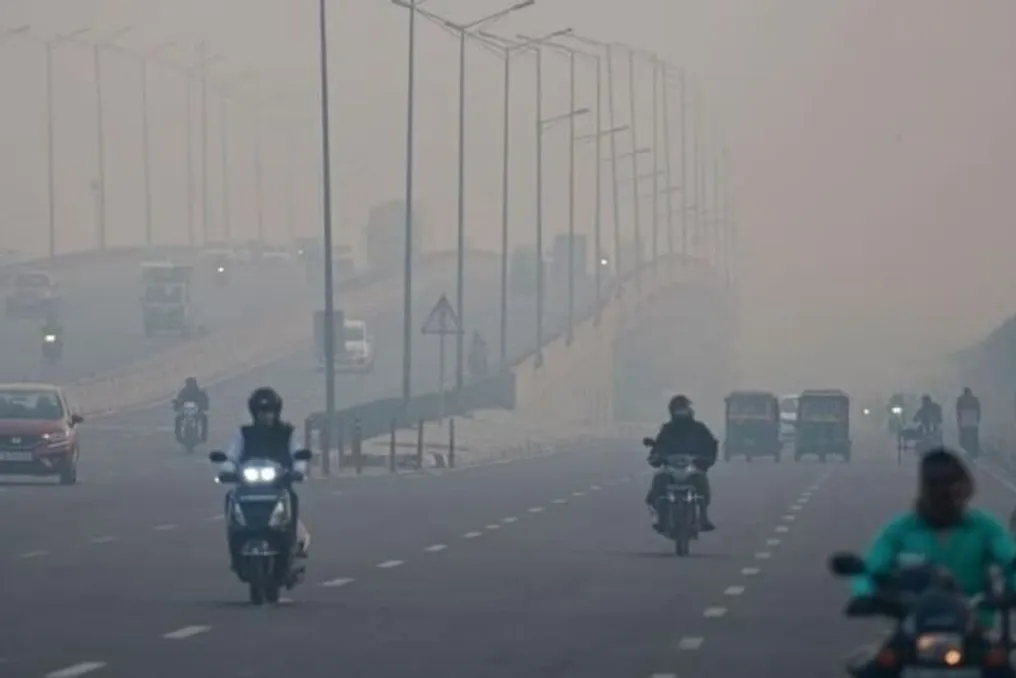
Air pollution in Delhi exceeds 400; construction ban and partial remote work introduced in Gurugram
Read more
Aaj Tak
www.aajtak.in

Air pollution in Delhi exceeds 400; construction ban and partial remote work introduced in Gurugram

A number of strict measures are being taken to reduce air pollution levels in the Delhi-NCR region. Specifically, strict restrictions have been imposed in Gurugram from November 5 to November 20 due to rising air pollution levels. During this period, construction and demolition work is prohibited in Gurugram.

This ban applies to projects such as roads, highways, flyovers, and pipelines. However, some vital infrastructure projects may receive an exemption, provided they comply with the established rules.

Furthermore, a work-from-home system has been implemented in government and private offices, stipulating that only 50 percent of employees can come to the office, while the remaining 50 percent must work remotely. Offices are required to maintain attendance records. This rule does not apply to industrial enterprises and essential service providers.

The administration has instructed daily checks to monitor compliance with the rules. Violators will be held accountable in accordance with Article 14 of the CAQM Act 2021 and other necessary provisions.

On Wednesday, the AQI in many areas of the capital, Delhi, exceeded the mark of 400. According to data from the Central Pollution Control Board (CPCB), on Wednesday, the AQI was 447 in Punjabi Bagh, 447 in Jahanpanagar, 438 in IIT Delhi, 436 in Mundka, 433 in Rohini, 432 in DTU Delhi, 428 in Vivek Vihar, 428 in Pusa, 418 in Narela, 419 in Alipur, 417 in Sonia Vihar, 417 in R K Puram, 414 in ITO Delhi, 410 in Patparganj, 408 in Bavana, 408 in Sirfort, 408 in Mandir Marg, and 407 in the DU North Campus.

The administration's goal is to eliminate pollution and clean the atmosphere of Delhi-NCR. Measures are being taken under GRAP-II and the government's action plan to combat winter pollution. Although a complete ban on all types of construction work under GRAP-II has not been established, the Delhi government's separate winter action plan introduced restrictions on dust-generating demolitions and open civil construction work from November 1, 2026, to January 31, 2027.

Moreover, the Commission for Air Quality Management (CAQM) issued an order suspending certain types of construction activities and demolitions in Delhi-NCR for 15 days, from November 5 to November 20.
Similar stories

Gurugram Administration Imposes Restrictions: 50% of Employees Work From Home, Construction Banned from November 5 to 20
Read more
www.aajtak.in

Gurugram Administration Imposes Restrictions: 50% of Employees Work From Home, Construction Banned from November 5 to 20

Due to rising air pollution in the Delhi-NCR region, the Gurugram administration has implemented several strict measures. According to directives from the Commission for Air Quality Management (CAQM), a ban on all construction and demolition work that raises dust has been imposed from November 5 to November 20, 2026.

Furthermore, it has become mandatory for both government and private offices that 50 percent of employees work remotely. These orders were issued by the Municipal Council of Gurugram.

According to the administration's orders, the ban is not limited only to the construction of ordinary buildings and demolition. It also covers all external works related to dust generation, including the construction of roads, highways, flyovers, bridges, pipelines, and telecommunication lines.

However, some vital projects are permitted to continue operations subject to certain conditions. Such projects include metro systems, railways, airports, hospitals, bus terminals, water supply systems, and specific national security-related projects. Even these projects must adhere to dust control measures.

To reduce traffic load and decrease pollution, the administration decided to limit employee presence in government and private institutions. Between November 5 and November 20, no more than 50 percent of personnel can be present in offices; the remaining employees must work from home. All offices are required to prepare a presence schedule in advance.

A limited exemption will be granted to essential services and industrial enterprises where remote work is not possible, in accordance with CAQM rules. To ensure compliance with these orders, all relevant departments have been instructed to appoint nodal officers who will oversee compliance in their respective areas, and penalties will be applied for violations.

Before the ban takes effect, all departments must submit a report on the measures taken to the Additional Chief Administrator (Headquarters). The administration emphasized that legal action will be taken against agencies and contractors who violate these rules. These restrictions are effective from November 5 to November 20, 2026.

Restrictions on transport in Delhi introduced to combat pollution: Carriers warn of traffic jams and rising prices
Read more
www.aajtak.in

Restrictions on transport in Delhi introduced to combat pollution: Carriers warn of traffic jams and rising prices

To control atmospheric pollution in Delhi, a ban on the movement of both private and commercial vehicles is planned for the period from November 1, 2026, to January 31, 2027. In this regard, the Association of All Indian Motor Transport and Goods Carriers (AIMGTA) has demanded that the government first conduct a 15-day pilot project.

The Association's Chairman, Rajendra Kapoor, sent a letter to Chief Minister Rege Gupta and Environment Minister Sardar Manjinder Singh Sirse. The letter requests a scientific assessment of the consequences before implementing long-term restrictions.

The Association emphasizes the critical importance of controlling pollution in Delhi but insists that any major decision must be based on determining a real and measurable improvement in air quality after its implementation. It is proposed to test the proposed restrictions for the first 15 days, starting November 1, while studying air quality data, and then make a final decision based on the results obtained.

According to Rajendra Kapoor, supplying Delhi with necessary goods and raw materials for industry largely depends on freight vehicles arriving from other states. If a ban is imposed on heavy trucks carrying 20 to 25 tons of cargo, goods will have to be reloaded into smaller vehicles. This could lead to increased transportation costs, time spent on loading and unloading, and delivery.

The Association expressed concerns that such a system could worsen the problem of congestion at the borders of Delhi and adjacent roads. Furthermore, disruption in the supply of goods such as fruits, vegetables, and other essential products could create an additional financial burden on consumers in the form of price increases.

The Association stated that rising transportation costs and disruptions in raw material supply could negatively affect the competitiveness of Delhi's enterprises. This, in turn, may impact production processes, business activity, and employment levels. A request was also made to assess the potential decrease in diesel fuel sales and VAT revenue.

The Association suggested monitoring key air quality indicators, including PM2.5 and PM10, during the pilot project. Factors such as weather, wind direction, and regional pollution must be taken into account. In the Association's view, if the restrictions lead to a noticeable improvement in the pollution situation, they can be continued after reviewing the economic and operational consequences. If the expected improvement does not materialize, efforts should be focused on controlling other sources of pollution, such as road dust, construction activities, industrial emissions, and waste burning.

Rajendra Kapoor noted that Delhi must ensure clean air, uninterrupted supply of necessary goods, continuity of industrial operations, and protection of jobs. The Association called upon the government to consider the interests of all stakeholders and available scientific data before making a final decision regarding these restrictions.

Popular