
Author questions the purchase of the Honda NSX by Ayrton Senna due to its investment status
Read more
FlatOut
flatout.com.br

Author questions the purchase of the Honda NSX by Ayrton Senna due to its investment status

Some people reach a social level that elevates them to near-divine figures or cult entities, where any criticism of them is seen as heresy. There is also the 'Midas touch' effect, where items linked to these figures acquire an exponentially greater value.

This was notable in the case of the Honda NSX owned by Ayrton Senna. The vehicle was auctioned by RM Sotheby’s during The London Auction event and sold for £871,250. This amount exceeded the auction house's projections, which expected an amount between £500,000 and £800,000, considering the sports car's provenance and history.

An original generation Honda NSX is already considered a valuable classic. Although the author agrees that it is an excellent sports car, he points out that its design is not strictly timeless, but rather a positive reflection of 90s cars, aging gracefully. Its naturally aspirated V6 engine, with just under 300 hp and ideally paired with a manual gearbox, offers the necessary performance, allowing for daily use or on racetracks, as the NSX combined supercar performance with the usability of a mid-sized Japanese sedan.

In the UK, prices for a classic Honda NSX range between £60,000 and £140, depending on the year, condition, and originality. Converted to reais, this represents approximately between R$ 440,000 and R$ 1 million. However, Senna's car cost almost six times the average price of the most expensive 'normal' models sold in the country, even if these values are only references and exclude special project vehicles.

The author invites reflection on the meaning of paying over R$ 6.4 million for a Honda NSX and what it implies to own such a car in 2026. The connection between Ayrton Senna and the NSX is deep; an iconic record is the shakedown conducted at the Suzuka Circuit, where his brown loafers with white socks and his meticulous work on the pedals were recorded.

Senna also contributed to the dynamic tuning of the NSX. He considered the chassis 'a bit fragile,' which motivated Honda engineers to increase structural rigidity by 50% and redesign the suspension. This influence may have reached Gordon Murray, a South African engineer, who drew inspiration from the NSX to define the basis of the legendary McLaren F1. The use of Honda engines by McLaren during Senna's time completes this ecosystem.

Senna's red NSX is a 1991 'Formula Red' model, gifted by Honda itself. The buyer acquired all the origin documentation, including a manufacturer's fax. Registered on March 22 of that year with license plate SX-25-59, the car was kept in storage and delivered to Senna whenever he visited the UK.

This NSX witnessed everyday moments in Portugal, such as a hose wash at Quinta do Lago, transforming it from mere transport or collectible into a historical artifact due to its biographical density. Despite this, the author states that he would never buy the car, even with unlimited resources, because it ceased to be a vehicle and became an investment, an asset that only tends to appreciate.

Although functional, the car has not remained stationary for the last 30 years. A collector, Robert McFagan, carried out a general overhaul and sent it to the United States in 2016. In 2019, the NSX traveled to San Marino and participated in a lap at the Imola circuit with Giancarlo Minardi. More recently, a Japanese collector acquired it in 2024, keeping it discreetly.

The value of nearly one million pounds paid to RM Sotheby’s did not secure Senna's red NSX, but rather a certified piece of the driver's aura. Philosophically, this is priceless; financially, the value is measurable and constantly growing. Putting it to run would risk the integrity of a colossal financial asset, something the buyer is likely aware of.

The author predicts that the commotion surrounding the sale will soon repeat, with news republished with doubled or tripled values. He admits that if he had money, he would buy an original NSX, but points out that Honda itself offers a more interesting alternative: the Honda Heritage Parts Program, operated by Acura in the US.

This program provides over 3,000 spare parts for the first-generation NSX (1991–2005), divided into Genuine Reproduction Parts (manufactured with original specifications for prestigious restorations) and Honda Compatible Parts (redesigned to maintain function without deterioration).

This three-dimensional factory support years after launch revitalizes the used market and enhances the brand's value. For those who appreciate cars for the driving experience, the ideal path would be to acquire a used 'normal' NSX, restore it using the Honda catalog, replacing wiring and bushings, and letting the V6 operate perfectly, without the pressure of depreciating a financial asset.

The author acknowledges that many view the transaction as a deserved tribute to a legend, but argues that automotive culture has transformed sensational cars into financial commodities. He concludes that the true essence of the NSX lies in being driven, with the V6 active on the asphalt, and not in being an untouchable relic in a climate-controlled garage.

Similar stories

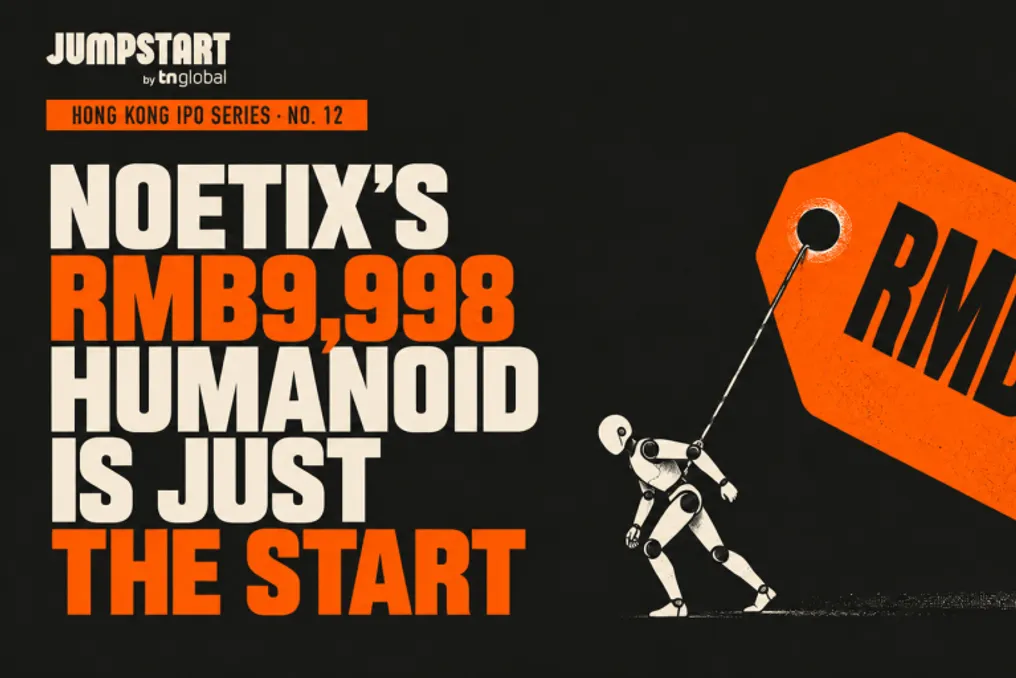
Noetix releases humanoid robot RMB9,998, marking the beginning of broader development plans
Read more
technode.com

Noetix releases humanoid robot RMB9,998, marking the beginning of broader development plans

Noetix Robotics has introduced a humanoid robot priced at RMB9,998 to buyers, offering a product previously available only in research laboratories, corporate demonstrations, or expensive technology exhibitions.

The small robot named Bumi, presented by the Chinese company in October 2025, was aimed at educational programming and companionship sectors. Its appeal lay in a simple proposition: children could program the robot's movements, watch it dance, and interact with the machine, which resembled a small human both externally and functionally.

This approach also reflected a broader vision for building a robotics company: first making the chassis affordable and sufficiently functional for sale, while more complex intelligence would be developed later. Over three years since its founding, the company has strived to turn this sequence into a large business by increasing supply volumes, investing in its own embodied intelligence models, and seeking international clients.

In October, media reports surfaced that Noetix had confidentially filed an application for listing in Hong Kong, potentially targeting an IPO in 2027. The central question linking these ambitions is whether the initially established hardware business can secure enough customers, experience, and capital to support further development.

Founder Jian Zheyuan completed his doctoral studies at Tsinghua University in 2023 and founded Noetix in September of the same year. His initial technical priority was focused on the robot's chassis and motion control—the mechanics and software allowing the robot to balance, move, and react stably.

It is important to distinguish these tasks: a robot can perform complex movements relying on external models for communication or high-level instructions, but creating an athletic machine differs from creating one capable of making autonomous decisions in an unfamiliar room. Jian's decision was to first solve the physical machine problem. He explained that in the early stages, the main bottlenecks for the company were unreliable chassis and limited production readiness. Furthermore, AI approaches were rapidly evolving, so Noetix concentrated resources on hardware, awaiting clearer direction in the intelligence stack.

Low cost was part of this engineering task. In a March interview, Jian discussed using composite materials in Bumi's chassis to reduce reliance on metal structures. The price was built into the design, not left for sales department negotiations after production. This approach allowed the company to have a product with a clear purpose: parents and schools could purchase a programmable humanoid robot for learning and interaction without waiting for general-purpose domestic robots to become commercially viable.

A narrower use case helped Noetix reach buyers faster. This also defined the next commercial objective: providing these buyers with sufficient ongoing value so that the robot became more than just an exciting first purchase.

Noetix's machines attracted widespread attention due to their performance. The N2 robot finished second in the Beijing Humanoid Robot Half Marathon in 2025. In 2026, the company's robots appeared in a sketch at the Chinese New Year Gala alongside comedian Cai Ming. This exposure linked technical demonstrations with a mass audience: the robot seen by families on television was also available through retail channels.

At the AWE exhibition in March, Jian stated that orders surged after the gala, and the company set a goal to sell over 10,000 units of Bumi during 2026. The company was transitioning from proving that people would pay attention to its robots to demonstrating the ability to supply them consistently.

Jian's description of obstacles was surprisingly practical. He cited component availability and production line management as central issues. A missing part can halt the assembly of an entire machine. As monthly production volume grows, the company must train and manage a larger staff while maintaining build quality. These issues have serious implications for a company whose market entry depends on accessibility. Every reworked unit, delivery delay, or service visit consumes some of the margin left at the low selling price.

Thus, the production goal is more significant than merely reaching a shipment milestone. It tests Noetix's ability to maintain the economy embedded in Bumi while manufacturing and supporting it in much larger quantities.

By September, Noetix made a clear next technical commitment: it launched the embodied intelligence sub-brand Scalabot and the HERON world modeling architecture, expanding its ambitions regarding how robots perceive their environment and learn to act within it. According to Jian's interview with Caijing in September, the company began assembling a specialized intelligence team back in July 2025. This work added a substantial research program to an organization already scaling physical production.

His logic connects these two activities. Cheaper and more reliable machines can be deployed more widely; these deployments can create opportunities for gathering experience to train better models. Turning this link into productive activity requires another layer of engineering. The robot in the class generates experience, but the useful training data still needs to be selected, recorded, organized, and mapped to the tasks the company wants its models to master. A large installed base provides access to potential data, and the collection and training system determines its value.

Jian told the 21st Century Business Herald that intelligence research has become a major expense item. He also noted that the hardware can serve as a source of funding for this work. This is a financial lever of Noetix's strategy. The chassis-oriented approach opened an earlier path to revenue. Now, the company wants this operational business to help sustain the more costly efforts whose commercial returns will take longer.

External capital helps bridge the time lag. Among its sponsors are Chendao Capital, an investment platform associated with CATL. A potential listing in Hong Kong will shift this financing process to public markets, where investors can examine in greater detail the relationship between hardware sales and research expenditures.

Noetix's internal path combined educational demand, accessible hardware, and unusually broad public resonance. Its overseas expansion will test how well this combination translates abroad. At the CES exhibition in January, co-founder Zhang Shipu identified five target regions: North America, Europe, the Middle East, Southeast Asia, Japan, and South Korea. He stated the aim to achieve thousands of units in overseas expansion by the second quarter, supported by local implementations, customer service, and repeatable reference projects.

This program involves more than just exporting robots. Schools require teaching materials and support. Distributors need spare parts and repair agreements. Families need an incentive to continue using the product after the novelty wears off. Noetix already has some of these connections that can be developed in China. Investor Beijing Industrial Development Investment Management reported partnerships with the coding education provider Codemao and retailer Kidswant, as well as implementations and donations in schools. These connections demonstrate how the robot can become part of an existing educational or retail system.

Overseas growth will require similar connections in markets with different curricula, languages, and purchasing habits. Product price might attract attention, but local utility and support will determine if that attention becomes a sustainable business. Noetix's first step was to make the humanoid robot accessible enough to penetrate more classrooms and homes. This choice gave it a product to sell while the broader intelligence problem was under development. Now, the company is trying to make this early foothold accomplish three tasks simultaneously: increasing production volume, enhancing intelligence capabilities, and achieving international growth. Establishing the chassis first secured Noetix's place in the market. The next stage is to make that position valuable enough to fund everything else it wants from the robot.

Star Mountains Range: Inaccessible Region with Unique Nature in Western New Guinea
Read more
www.aajtak.in

Star Mountains Range: Inaccessible Region with Unique Nature in Western New Guinea

There are places on the planet characterized by harsh conditions: snow-capped mountains, dense forests, and valleys that are extremely difficult to reach. One such place is the Star Mountains, known for its rugged geography, thick forests, and unusual natural environment. Its remoteness makes visiting practically impossible for ordinary people, although some scientists have attempted to reach it by helicopter after great effort. Reports suggest that extraterrestrial beings may reside in this region.

The Star Mountains are located in the mountainous terrain of Western New Guinea. This mountain range extends from Papua in Indonesia to Papua New Guinea itself. Here, one can see high peaks, deep gorges, and dense forests. The main feature of this area is its geographical location, which places it among the most inaccessible corners of the world.

Most of the territory here lacks roads. To reach remote villages, one must walk, and in some places, air travel is the only realistic option. This is why tourism has not developed here as much as in other popular mountain areas. According to data from the Papua Insects Fund, settlements such as Abmisibil and Mabilabol are located in the vicinity. The forests around the Star Mountains are rich in biodiversity; the structure of vegetation and forests changes at different altitudes.

According to One Earth magazine, animals adapted to the specific environment, including tree kangaroos, inhabit the high-altitude regions of New Guinea. Nevertheless, confirming the presence of each specific species in the Star Mountains requires separate scientific verification. The mountain range is also known for its high peaks, among which Mount Juliana, or Puncak Mandala, is mentioned, with an estimated height of approximately 4700 meters. The altitude, impassable trails, and complex weather make mountaineering in this area very challenging.

The report on the mountain geography of Papua also mentions glaciers and the high-altitude environment of this region. However, the assertion that no one goes there is incorrect. A local tribe resides in this area, and scientists have visited it. In fact, most of the Star Mountains is out of reach for ordinary tourists. This remoteness lends the region an air of mystery and requires constant research to understand its unique nature.

Popular