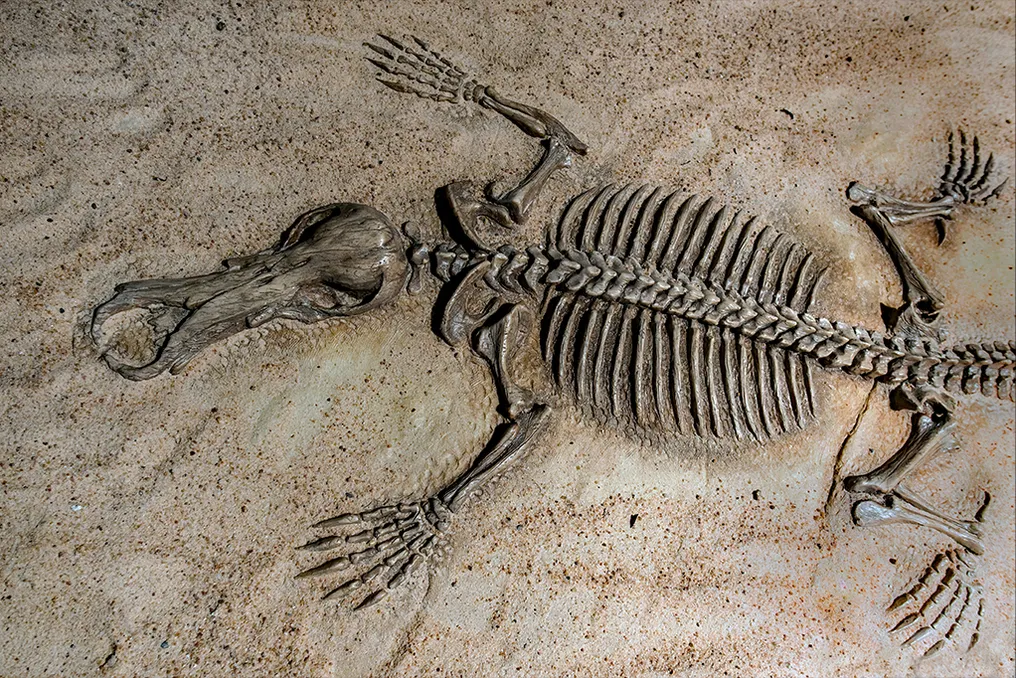
Evidence that dinosaurs inhabited Earth is abundant, ranging from massive bones and serrated teeth to feather impressions, fossilized eggs, and petrified feces. However, a crucial element for understanding the life of these animals—blood—is rarely found in fossil records.
For decades, scientists have searched for blood traces in dinosaur fossils. Such investigations require rigorous exclusion of any possibility of contamination by blood from other species or the presence of structures that merely mimic blood cells.
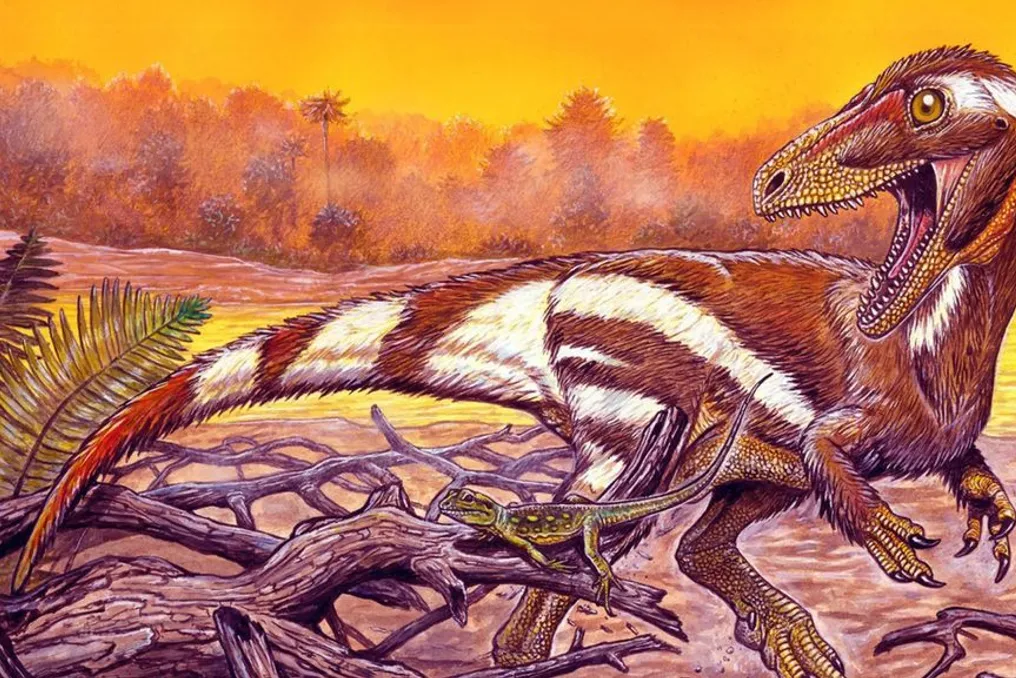
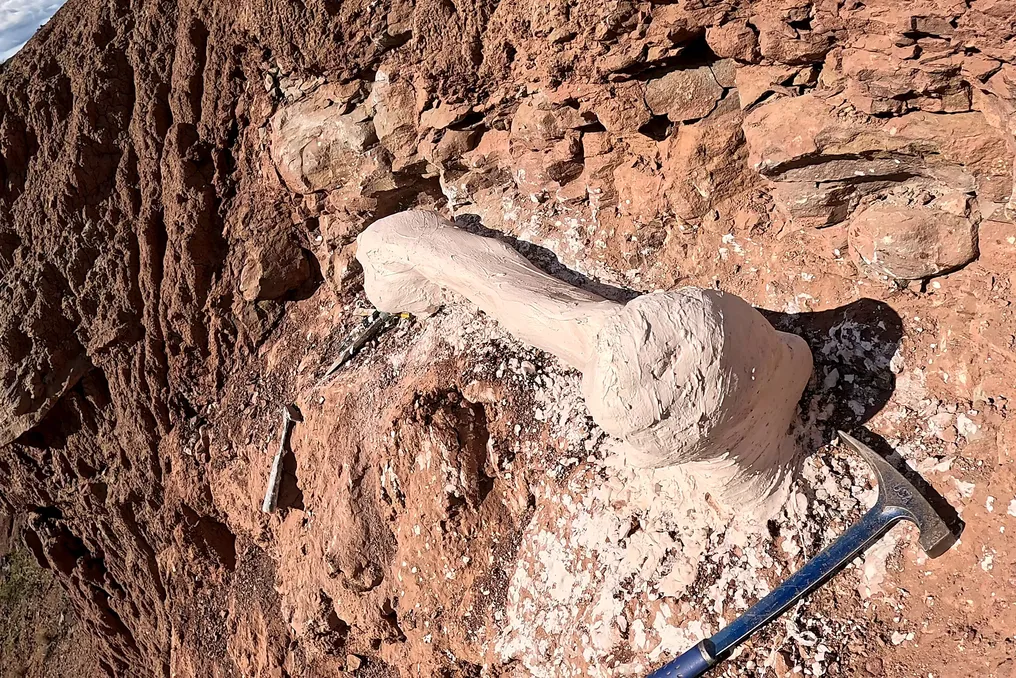
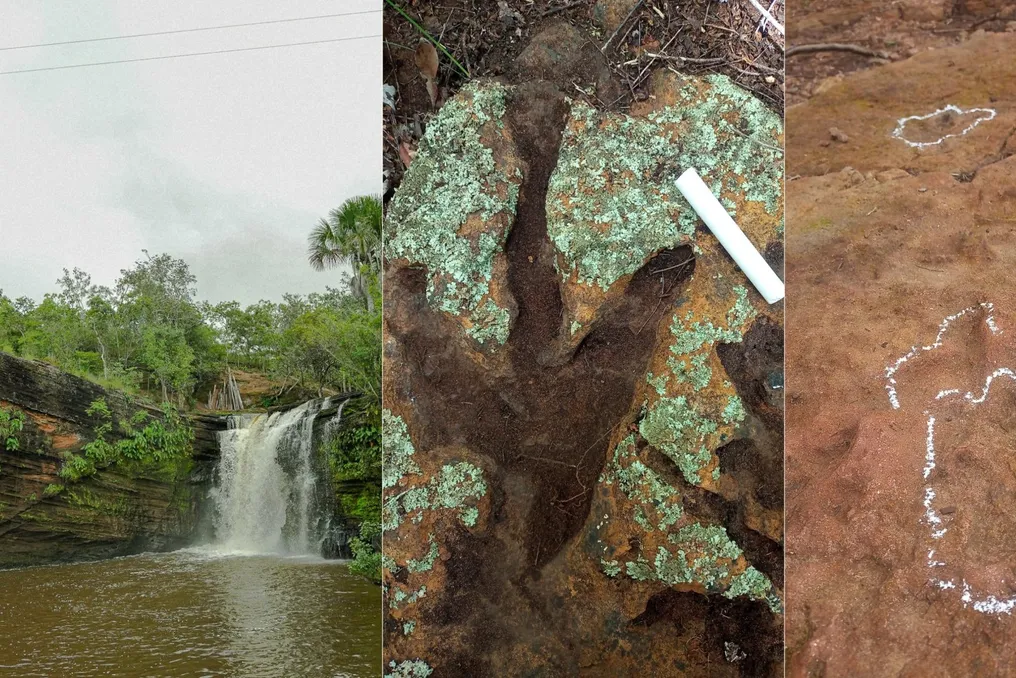
Recently, a study involving the Regional University of Cariri (URCA) and the Federal University of Rio de Janeiro (UFRJ) reported the identification of what appear to be fossilized red blood cells in a Brazilian dinosaur dated to 115 million years ago. The analyzed material comes from a leg bone of an Aratasaurus museunacionali, which inhabited the Chapada do Araripe region, on the border between Ceará, Pernambuco, and Piauí.
According to the researchers, this dinosaur was about three meters long and weighed approximately 34 kg. After its death, the body sank into an aquatic environment, where a layer of microorganisms grew over the carcass, burying it and allowing the preservation of its remains.
Paleontologist Alexander Kellner, director of the National Museum of UFRJ and co-author of the article published in the Proceedings of the National Academy of Sciences, stated that finding biochemical traces linked to biological components in a fossil older than 100 million years helps expand knowledge about what can be preserved over time. He emphasized that this offers a chance to investigate the history of these animals beyond their anatomical and skeletal characteristics.
Under the microscope, the team detected several microscopic structures located within vascular channels, which previously functioned as conduits for blood vessels in the bone. The morphology, size, and location of these structures were consistent with red blood cells.
This hypothesis gained greater support after chemical tests confirmed the presence of heme, a compound inherent to hemoglobin, the protein responsible for oxygen transport in blood.
Kliti Grice, the research author, explained to Live Science that the red blood cell-like structures were mineralized with hausmannite, a manganese oxide mineral (Mn3O4). Mineralization is the process by which fragile biological structures, which degrade easily, are replaced by more durable substances, allowing for the formation of fossils.
The researchers believe that this early mineralization contributed to stabilizing or replicating microscopic biological structures before they were completely destroyed, and that aspects of the associated chemistry survived, albeit modified.
However, not all experts agree that this discovery truly represents traces of blood. There is a reason for the skepticism: blood cells do not fossilize easily. Without the rigidity provided by bones and teeth, they decompose rapidly after death, leaving few traces for future studies.
For such cells to survive, exceptional conditions are necessary, such as anoxic environments that inhibit microbial activity, or minerals capable of stabilizing their structure. Even under these circumstances, proving their origin is a challenge, as certain minerals can imitate the rounded shape of cells under a microscope, generating distrust in any claim of 'ancient blood.'
Mary Schweitzer, a paleontologist at the North Carolina State University, USA, who did not participate in the study, raised objections. She pointed out to Live Science that the structures do not correspond to the expected appearance of red blood cells in non-mammalian animals. Unlike what occurs in mammals, birds, and reptiles, the Aratasaurus museunacionali did not exhibit this characteristic mark.
Additionally, it is possible that the microstructures found are remnants of fungi or other microbes that colonized the bones after death but before fossilization. However, if this were the case, the team found no signs of filaments, spores, biofilms, or other associated structures.
For the authors, the divergence of opinions is welcome. The Aratasaurus museunacionali fossil has been under investigation for at least 18 years, since its discovery in 2008. A notable aspect is that this specimen survived the 2018 fire that devastated the National Museum of UFRJ and part of its collection. Its name literally means 'lizard born of fire.'
Kellner informed Science that during this period, he sought a collaborator capable of analyzing the biomolecules and microstructures present in the National Museum's fossils. It was in this context that Grice emerged and accepted the challenge last year.