
New African Climate Mechanism Created with $690 Million in Funding
Read more
Noticias ao Minuto
noticiasaominuto.com

New African Climate Mechanism Created with $690 Million in Funding

The African Finance Corporation (AFC) and the Green Climate Fund (GCF) have launched the African Sovereign Climate Mechanism (ASCM), which provides $690 million to several countries, including Angola.

According to the statement, the total funding of $690 million (equivalent to 616 million euros) is intended to assist African states in countering the growing impact of climate change while promoting the realization of their economic development priorities.

Participants in the project emphasized that this represents a significant step in expanding climate finance and accelerating low-carbon and climate-resilient development across Africa.

The program will support governments in integrating climate aspects into national development planning and in accelerating the implementation of their Nationally Determined Contributions (NDCs). Initially, the focus will be on Angola, Benin, Côte d'Ivoire, and Nigeria—countries facing significant climate vulnerability, infrastructure deficits, and rising greenhouse gas emissions.

Samaila Zoubayru, President and CEO of AFC, noted in the statement that 'the infrastructure we build today must stimulate Africa's growth while simultaneously withstanding the climate pressures of the future.'

Through this partnership with GCF, AFC combines concessional financing with AFC's expertise in project development and its capital to help governments transform national priorities into reliable energy, more resilient food and water systems, and climate-resilient infrastructure.

AFC is organizing and fully financing a parallel commercial credit line with a maximum amount of $260 million (232 million euros) with a term of up to 10 years, which will be available to Angola, Benin, Côte d'Ivoire, and Nigeria.

The goal of this line is to complement the concessional climate financing, increase the available capital to support relevant investments, and simultaneously assist participating governments in incorporating climate resilience and low-carbon development into their national planning.

AFC reminds that Africa remains particularly vulnerable to the effects of climate change, including rising temperatures, increasingly unpredictable rainfall, and an increase in extreme weather events, which threatens livelihoods, food and water security, infrastructure, and economic productivity.

Furthermore, the institution points out that rapid demographic growth and urbanization create additional pressure on public services and infrastructure systems.
Similar stories

EAEU trade volume with Africa more than doubled in 10 years, reaching $25 billion
Read more
sputniknews.uz

EAEU trade volume with Africa more than doubled in 10 years, reaching $25 billion

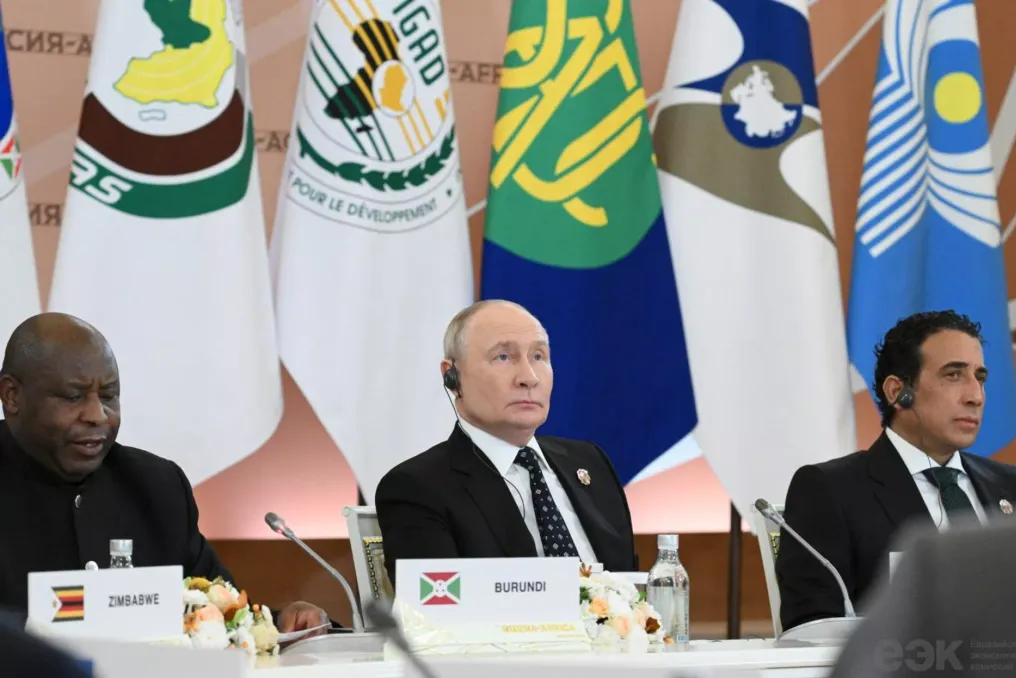
According to data from the Euroasian Economic Commission, the trade volume between the Eurasian Economic Union (EAEU) and African countries has more than doubled between 2015 and 2025, exceeding the $25 billion mark. This was reported by the Chairman of the Council of the Euroasian Economic Commission, Bakitjan Sagintaev.

Currently, 47 African states benefit from the EAEU's unified system of tariff preferences. This mechanism allows African exporters to supply certain goods to the Union's market based on preferential customs rates.

Bakitjan Sagintaev also proposed holding 'EAEU Days' within the African Union to further develop trade and economic ties. He emphasized that future cooperation areas include industrial cooperation of the EIC, simplification of trade procedures, technical regulation, transport logistics, and digitalization.

Furthermore, the Euroasian Economic Commission is working on coordinating a new draft memorandum of cooperation with the African Union Commission and is expanding contacts with other continental economic blocs.

At the meeting on October 28 in Moscow, Bakitjan Sagintaev participated in negotiations with leaders of regional African organizations under the leadership of Russian President Vladimir Putin.

Sagintaev noted that starting from 2026, the volume of mutual trade will reach almost $17 billion, representing a 9 percent growth.

The first memorandum of cooperation between the EIC and the African Union Commission was signed in 2019. The planned event aims to demonstrate the capabilities of the Union's single market, as well as prospects for cooperation in the industrial and trade sectors, although the initiative is currently at the proposal stage.

UN and African officials call for investment in Africa's data systems
Read more
cgtn.com

UN and African officials call for investment in Africa's data systems

Representatives of the United Nations (UN) and African officials called on Wednesday for a significant increase in investments in Africa's statistical and information systems. The goal of these measures is to assist continental governments in making informed decisions, forecasting emerging needs, and stimulating development.

This appeal was made during a joint meeting of the UN Statistical Commission for Africa and the Regional Committee of the UN Global Geospatial Information Management for Africa. The event took place in Addis Ababa, the capital of Ethiopia, under the slogan 'Unlocking the Value of Data in Africa: Transforming Official Statistics into a True Reflection of the Continent.'

Claver Gatete, Under-Secretary-General of the UN and Executive Secretary of the UN Economic Commission for Africa, emphasized the need for modernization and adequate funding of fundamental data and statistics systems by African governments. He noted that these systems must generate data reflecting the real state of Africa's development.

Gatete stated that Africa requires reliable, forward-looking data and statistics on productive capacity, investment opportunities, trade flows, and regional value chains to guide industrial policy and the implementation of the African Continental Free Trade Area. He warned that outdated and incomplete data could lead governments to invest in wrong priorities, ignore underserved communities, and fail to find opportunities for economic growth.

Ethiopian President Taeye Atske Selassie warned that producing high-quality data is a guarantee for Africa's development strategies and programs. He added that using low-quality data hinders evidence-based decision-making and impedes sustainable development. Atske Selassie urged governments across the continent to support the professional independence of official statistics, strengthen legal and institutional frameworks, invest in national statistical systems, and apply scientific data in the decision-making process.

Yusuf Murangwa, Minister of Finance and Economic Planning of Rwanda, pointed out that Africa's 'data problem,' which includes structural weakness not only in information accessibility but also in the ability to collect, analyze, and use reliable information, continues to hinder policy formation and informed investment decisions. Murangwa cautioned that without investment in statistics, significant value is lost, and decisions made without good evidence are very costly, urging African governments to allocate sufficient resources for statistical development across the continent.

Popular