Brazil presents two plans to reduce emissions at COP31
Read more
Noticias ao Minuto
noticiasaominuto.com

Brazil presents two plans to reduce emissions at COP31

Brazil's presidency at COP30 today presented two plans offering measures to accelerate the transition away from fossil fuels and stimulate the reduction of deforestation by 2030.

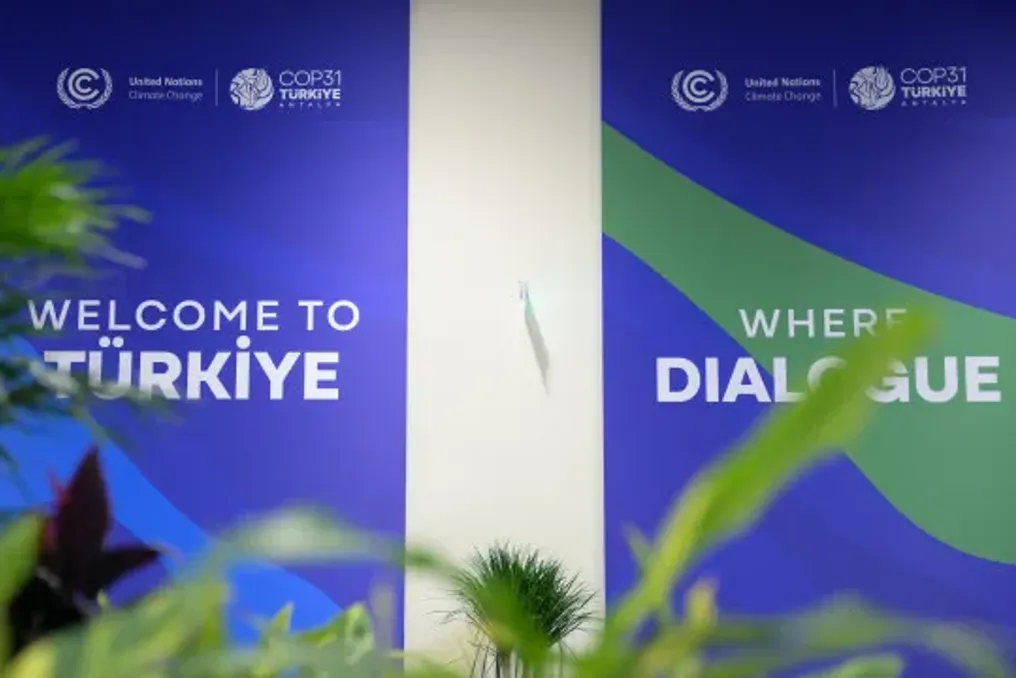
These two proposals will be presented at the meetings of the United Nations Climate Change Conference (COP31), which begins on November 9 in Antalya, Turkey.

The Brazilian diplomatic mission responsible for developing these proposals acknowledged that the documents are not intended for official inclusion in COP31, but they aim to provide governments, companies, and civil society with tools and measures to encourage countries to announce specific commitments.

Ambassador Andre Correa do Lago, the COP30 chair, stated at a press conference that ensuring increased funding from European countries to achieve goals is a 'complex' task.

The Ambassador emphasized that 'some European countries note significant domestic political resistance to increasing funding for actions in developing countries,' adding that he expects 'the fulfillment of their already adopted commitments.'

The first plan proposes actions to accelerate the move away from fossil fuels with the goal of achieving net-zero emissions by 2050. The document recommends that states begin, 'based on the current situation,' developing their own mechanisms to reduce economic dependence on this energy source.

Among other measures, it suggests that countries analyze fossil fuel consumption in transport, industry, and construction, as well as the possibility of replacing it with low-emission energy systems, and finally, reducing tax breaks and investments in fossil fuels.

The deforestation plan is based on three pillars: national forest actions, international cooperation, and financing. It also offers incentives for forestry and bioeconomy to accelerate the implementation of measures by 2030.

The objective of both documents is to consolidate long-term measures that will be assessed in the second global stocktake, scheduled for 2028—a mechanism established by the Paris Agreement to measure progress in emission reduction.

COP30 Executive Director Ana Toni stated: 'Our main enemy is time,' noting that 'countries that take the initiative will gain more advantages,' as the energy transition is 'inevitable.'

Marina Silva, former Brazilian Minister of Environment and a prominent environmental activist present at the event, noted that Brazil's actions 'stimulate the world' to avoid reaching global warming of two degrees Celsius.

Similar stories

Manaus records the most polluted air in Brazil; inland cities of Amazonas also show critical indices
Read more
g1.globo.com

Manaus records the most polluted air in Brazil; inland cities of Amazonas also show critical indices

The air in the capital Manaus was classified as the most polluted in Brazil this Wednesday, the 28th. Data obtained through real-time monitoring on the global platform IQAir placed the Amazonian capital at the top of the national ranking for poor air quality, with an Air Quality Index (AQI) reaching 148, a level considered harmful to sensitive groups.

According to the monitoring, the concentration of pollutants in the city reached 54.8 µg/m³. This atmospheric contamination poses a serious environmental and public health alert, affecting residents of the capital and various riverside localities in the state's interior.

Additionally, the Environmental Surveillance Electronic System (Selva), belonging to the State University of Amazonas (UEA), also signaled a deterioration in air quality. Around 6:20 AM, monitored points in the capital showed indices classified as 'poor' and 'very poor,' with particle concentration reaching 81.8 µg/m³ in one of these locations, in the Morro da Liberdade neighborhood.

For reference, Selva considers air quality good when particle concentration remains between 0 and 25 µg/m³. Above this limit, indicators are categorized on scales ranging from moderate to very bad, depending on the system used.

Inland cities record pollution

Air degradation is not limited to the capital, severely affecting other municipalities in Amazonas. Real Selva stations reported high levels of harmful particles spread throughout the state's interior:

  • Iranduba: Showed a concentration of 106.5 µg/m³, placing it among the most severe conditions in the state.
  • Maués: Registered 88.4 µg/m³ of fine suspended particles in the air.
  • Itacoatiara: Reached 73.4 µg/m³, maintaining its air quality classified between 'poor' and 'very poor.'
  • Urucurituba: Pointed to 60.2 µg/m³, which also demonstrates a strong compromise of breathable levels.

Fires in Pará may carry smoke to Amazonas

In a statement made on Monday, the 26th, the governor of Amazonas, Roberto Cidade, warned that the fires occurring in southern Pará have the potential to transport smoke to the state in the coming hours. He informed that the fire hotspots are mainly concentrated in the area of Itaituba, located near the border between the two states.

During a press conference, Cidade mentioned that the government of Amazonas plans to establish contact with the government of Pará to discuss strategies for containing the fires. The governor emphasized that, although the arrival of smoke is not immediate, it could reach Amazonas within two to three days.

He stated: 'A large part of where the fires are happening is in southern Pará, it is there in Itaituba, on the border with our state, there in Lower Amazonas. We are already working so that we can do our part here in our state, but I will also ask with our team to contact the government of Pará.'

New climate goals proposed predict only 6% reduction in emissions by 2035, according to UN alert
Read more
g1.globo.com

New climate goals proposed predict only 6% reduction in emissions by 2035, according to UN alert

In the run-up to COP31, the climate goals recently presented by countries indicate a possible decrease in global greenhouse gas emissions of only 6% by the year 2035. This percentage represents a reduction ten times lower than what is necessary to limit global warming to 1.5°C.

This alert was issued by the United Nations (UN), which points out that despite the commitments made since the signing of the Paris Agreement in 2015, the planet is still far from controlling its temperature increase.

The assessment, released this Tuesday (27) by the United Nations Framework Convention on Climate Change (UNFCCC), occurs shortly before COP31, scheduled to take place between November 9 and 20 in Antalya, Turkey.

The document analyzed 127 new national climate goals, known as NDCs, which were submitted between January 2024 and August 2026. These goals cover 154 participants in the Paris Agreement, including the European Union and its members, who are responsible for about 71% of global emissions recorded in 2019, excluding deforestation and land use changes.

According to the UN, even if all new commitments are fully met, global emissions will tend to be only 6% below 2019 levels on average by 2035. To keep warming within the 1.5°C limit, or with a small and temporary excess, emissions should fall by approximately 60% in the same period, according to estimates from the Intergovernmental Panel on Climate Change (IPCC).

The 1.5°C target was established by the Paris Agreement in 2015 with the aim of preventing severe climate impacts, such as droughts, sea-level rise, and glacier melt. However, recent studies suggest that the world may have already surpassed this critical point. To limit the temperature increase to less than 2°C, the required reduction would be approximately 37%.

The UN also calculated that if all actions planned in the new goals are fully implemented, including those depending on international support and funding, the reduction could reach 9% by 2035. Although these goals are the main mechanism of the Paris Agreement against the climate crisis, the document signals that global emissions may peak before 2030 and only begin to decline in subsequent years.

The projection indicates that the annual volume of greenhouse gases should be between 49.6 billion and 55.9 billion tons of CO2 equivalent in 2035. This metric allows for the summation of various gases, taking into account the warming potential of each.

However, the predicted reduction will still be insufficient to prevent the planet from exceeding the 1.5°C limit. Based on national goals and future projections, global warming could reach 3.2°C by the end of the century.

The UN report also offers a second estimate, considering countries' long-term objectives, such as the commitment to net-zero greenhouse gas emissions by mid-century. In this scenario, projected warming would be between 1.7°C and 2.3°C by 2100, provided that countries meet their long-term goals and adopt reduction measures in the coming decades.

Additionally, the report warns that the CO2 emission limit compatible with the 1.5°C goal, known as the carbon budget, may be exhausted before 2030. According to the UN, this limit is about 130 billion tons of CO2 starting from early 2026, which is equivalent to approximately three years of current global emissions. In contrast, the forecast indicates that countries will emit about 368 billion tons of CO2 between 2026 and 2035, a volume almost three times higher than the limit available to keep warming at 1.5°C.

What has changed in countries' commitments

Despite the results presented, the UN recognizes that governments have incorporated more climate change combat initiatives into their national goals. Approximately 90% of the participating countries analyzed declared that they had taken into account the conclusions of the first global stocktake of the Paris Agreement, held at COP28 in Dubai in 2023.

Furthermore, 99% of countries presented internal measures to reduce emissions, focusing primarily on the energy, transport, industry, agriculture, and waste management sectors. Energy transition is among the central priorities for countries, according to the UN analysis.

The percentage of participants who proposed modernizing electricity grids increased from 51% to 70%, while the proportion of those planning to expand energy storage rose from 33% to 56%. The report also highlights that 92% of participants included methane in their climate goals and 90% presented commitments related to land use and forests, such as reforestation and combating deforestation.

However, the advances show inequality. A second report, based on 137 national documents released this Tuesday, revealed that 61 participants progressed towards climate goals, while another 27 moved away from the objectives or showed mixed results. The UN emphasizes that such progress does not guarantee that countries are reducing their emissions at the necessary rate to meet agreements.

Adaptation and climate finance

Adaptation to the effects of climate change also gained prominence in the new goals. The UN reported that 86% of participants integrated measures in this area, aiming to protect food production, water resources, and health, in addition to preventing disasters.

Among these countries, 92% mentioned losses and damages caused by climate change, such as economic losses, infrastructure destruction, and deaths in extreme events, a number higher than the 56% registered in previous goals.

Nevertheless, the implementation of these measures faces obstacles. By October 2026, 81 developing nations had presented national adaptation plans, but 36 of the 41 plans evaluated among small island states and least developed countries were still in initial stages of implementation.

Financing remains a significant challenge. Global climate investments reached an average of US$ 1.9 trillion annually in 2023 and 2024, representing a 32% growth compared to the previous two-year period. Of this amount, only 9% was directed to international transfers to developing countries, corresponding to approximately US$ 183 billion annually.

Resources specifically allocated to adaptation totaled US$ 63 billion per year, which constitutes a 20% drop and represents only 3% of identified global climate financing. On the other hand, developed countries exceeded the promise to mobilize US$ 100 billion annually to support developing nations in 2023 and 2024, reaching US$ 132.8 billion and US$ 136.7 billion, respectively. It should be noted that this goal was originally supposed to be met in 2020.

3
Europe loosens internal combustion engine phase-out targets; 904 hp Jetour arrives in Brazil in October
Read more
flatout.com.br

Europe loosens internal combustion engine phase-out targets; 904 hp Jetour arrives in Brazil in October

The main political groups of the European Parliament reached a consensus to soften the rules regarding the end of combustion engines in new cars in Europe, revising the initially established deadline of 2035.

The original legislation, sanctioned in 2023, stipulated that the average CO2 emissions of new vehicles should be reduced by 100% compared to 2021 levels, serving as an indirect method to ban the sale of combustion engine cars. Previously, the European Commission had suggested a reduction to 90%, allowing the remaining 10% to be compensated by credits derived from the use of low-carbon steel and renewable fuels.

Recently, France and Germany agreed to lower this target to 90% without the requirement for compensation. The new agreement between the parliamentary groups proposes reducing the effective requirement to 87.5%, leaving the remaining 7.5 percentage points subject to compensation through credits linked to the use of low-carbon steel produced in Europe. This measure aims to allow manufacturers to continue selling combustion engine vehicles after 2035, including hybrid models, provided they meet their fleet emission targets.

The pact also stipulates a decrease to 80% in light commercial vehicle emissions by 2035 and opens the possibility for vehicles powered by renewable fuels to be classified as zero-emission vehicles. For the year 2030, the groups advocate maintaining the 55% reduction for passenger cars and lowering the target for light commercial vehicles from 40% to 35%.

Despite the political retreat, the agreement still requires formal approval from the three parliamentary groups and subsequent negotiation with the governments of the European Union member states. However, given the current situation in Europe and the local industry, implementing the change seems inevitable.

Jetour confirmed that it will launch the G700, its most robust and expensive SUV, in the Brazilian market this month. The confirmation occurred during the Chery Group's world convention, held in Wuhu, China. The full commercial presentation, including price disclosure and final equipment list for Brazil, is scheduled for the end of October.

This will be the fifth Jetour model introduced in Brazil and will represent the brand's new top line. The version intended for the country uses a plug-in hybrid configuration, combining a 2.0 turbo gasoline engine with two electric motors, one on each axle, resulting in 904 hp and 115.7 kgfm of torque. The vehicle has all-wheel drive and promises to reach 100 km/h in 4.6 seconds.

In addition to high power, the G700 seeks to be more than just a Chinese SUV with a powerful number; it offers six seats in three rows and reinforces its off-roader vocation thanks to its 'body-on-frame' construction, where the chassis is separate from the body. The declared combined range reaches up to 1,000 km in the WLTC cycle. The LFP battery has 34.13 kWh and, according to the manufacturer, allows for up to 100 km in purely electric mode.

Although the G700 was already displayed in Brazil in August, during the Interlagos Festival, without a defined commercial debut date, the new 904 hp specification differs from the previously mentioned 761 hp. This positions the SUV in an unusual niche: a luxury family utility vehicle with off-road capabilities, but with power exceeding many supercars.

For those seeking sound quality, even in automotive environments, Pioneer launched the Heritage Collection, ideal for those who own older vehicles and wish to add components with a period-appropriate look.

This collection includes box speaker type speakers (known in Brazil as 'overlay speakers'), model TS-X40SXT. These speakers reproduce the classic design of old acoustic cabinets and can be installed over the rear dashboard without requiring large openings. The TS-X40SXT features a square appearance, with a silver frame and black cones, containing a separate 13 cm subwoofer, a mid-range, and a tweeter, and displays the old Pioneer logo on the back, totaling 25W RMS power.

Complementing the set, Pioneer has made the SXT-C10PS audio system available since last year. This equipment faithfully replicates the look of the Pioneer KEH cassette player series, featuring an amber illuminated digital display. Despite the retro aesthetic, it incorporates modern functionalities such as digital radio, Bluetooth connectivity, and USB and auxiliary ports, the latter hidden under a cover that perfectly mimics the tape input of classic models.

However, there is a caveat: none of these products are officially available in Brazil. The radio was first launched in Europe and is now arriving in the United States for US$ 499 (approximately R$ 2,500 in direct conversion), while the speakers cost US$ 299 (about R$ 1,500), both available for pre-order. Direct purchases from Pioneer may result in a nearly doubled price due to shipping and import taxes.

An Alfa Romeo Giulia GT 1300 from 1967 suffered an accident in a race, and its owner transformed the vehicle into an almost brand-new machine, equipped with an aluminum body, customized front end, lowered roof, aerodynamic rear, and a 180 hp engine. This car, nicknamed Red Submarine, is currently for sale in the United Kingdom.

The transformation began in the early years of the Giulia's life when an incident damaged its original structure. Instead of restoring it, the owner opted to replace it with an aluminum body, which underwent modifications over the decades. The current configuration exhibits an extremely low fastback profile and a Kamm-style rear, reminiscent of 1960s endurance prototypes, although it was not developed by Alfa Romeo or Autodelta.

The original 1.3-liter engine was replaced by an Alfa Romeo Nord four-cylinder engine, with a displacement of 1,962 cm³, aluminum block and head, dual overhead camshafts, and prepared to generate about 182 hp, according to the owner's statement. The transmission system is a five-speed manual. The car also features a roll cage, a simplified interior, original instruments, and alloy wheels with a unique design.

The current owner acquired the Alfa in Belgium approximately ten years ago and has since dedicated himself to developing the mechanics and bodywork for track use. He claims the vehicle is exceptionally fast and stable, although there is no official performance or weight data. Interestingly, despite its racing appearance, the Red Submarine remains legalized for circulation on British roads and is being auctioned by Car & Classic, with the closing date set for October 25.

In the 1990s, Hans-Joachim Stuck competed in IMSA GTO using an Audi 90 Quattro. Due to its remarkable performance, the competition jokingly applied a sticker with his face crossed out by a prohibition sign. In retaliation, the driver added a small figure to the rear of his Audi simulating the act of 'mooning' (showing buttocks), with a mechanism that made the toy move, repeatedly lowering and raising the pants.

Mattel decided to replicate this joke in its miniature of Stuck's Audi 90 Quattro. This figure, known as the 'mooning doll,' is difficult to see without disassembling the model, which was done by an enthusiast. Upon disassembly, a considerable level of detail could be noted under the chassis, including a simplified replica of the five-cylinder engine with four valves per cylinder and over 700 hp.

This represents a positive point against common criticisms that Hot Wheels miniatures are becoming simpler and poorly executed. Although many current miniatures use thinly textured plastic floors, Mattel occasionally succeeds in modeling and in accurate historical references.
Popular