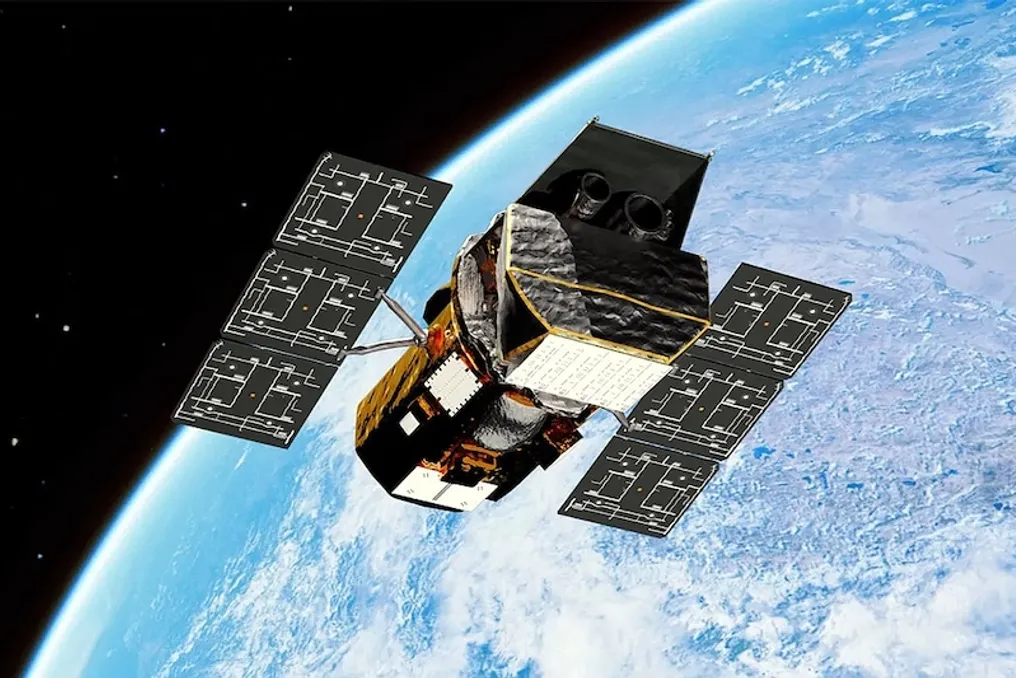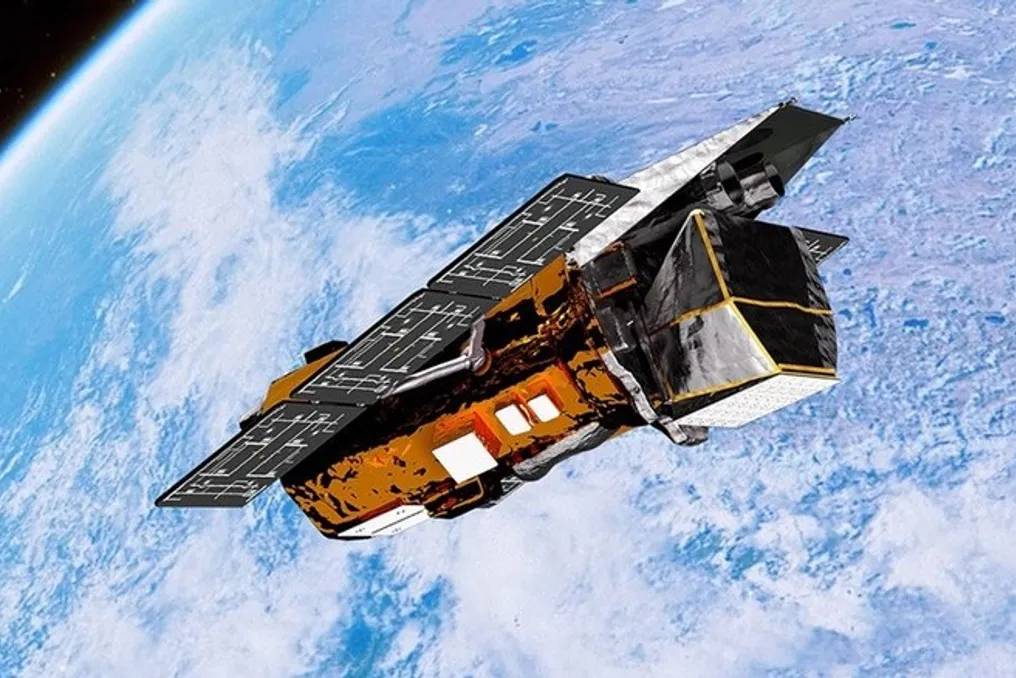
The Swift space telescope, launched by NASA in 2004, completed 22 years of service in Earth orbit, exceeding initial expectations for a mission planned for only two years.
The equipment remained operational for such a long period that it even survived its designer, astrophysicist Neil Gehrels, who passed away in 2017. The following year, the observatory was renamed in his honor as the Neil Gehrels Swift Observatory.
Swift's operations were terminated by NASA on October 20. According to the latest forecast from the U.S. Space Force, the telescope, which weighs approximately 1.5 tons, is expected to re-enter the atmosphere this Wednesday (4) at 3:30 AM New York time, with an error margin of 11 hours.
During re-entry, most of the satellite will be pulverized due to air friction, reaching speeds of about 27,000 km/h, turning it into a fireball. However, some more robust components, such as mirror pieces and tungsten materials, may reach the ground intact.
The exact location of the fall is unknown. Since Swift orbits in a restricted band near the Equator, debris could reach the surface between latitudes 20.6° North and 20.6° South, an area encompassing parts of Brazil, from Amapá to Vitória (ES). However, the most probable outcome is that everything will end up in the ocean, with NASA calculating the chance of any person on the planet being hit at 1 in 2,100.
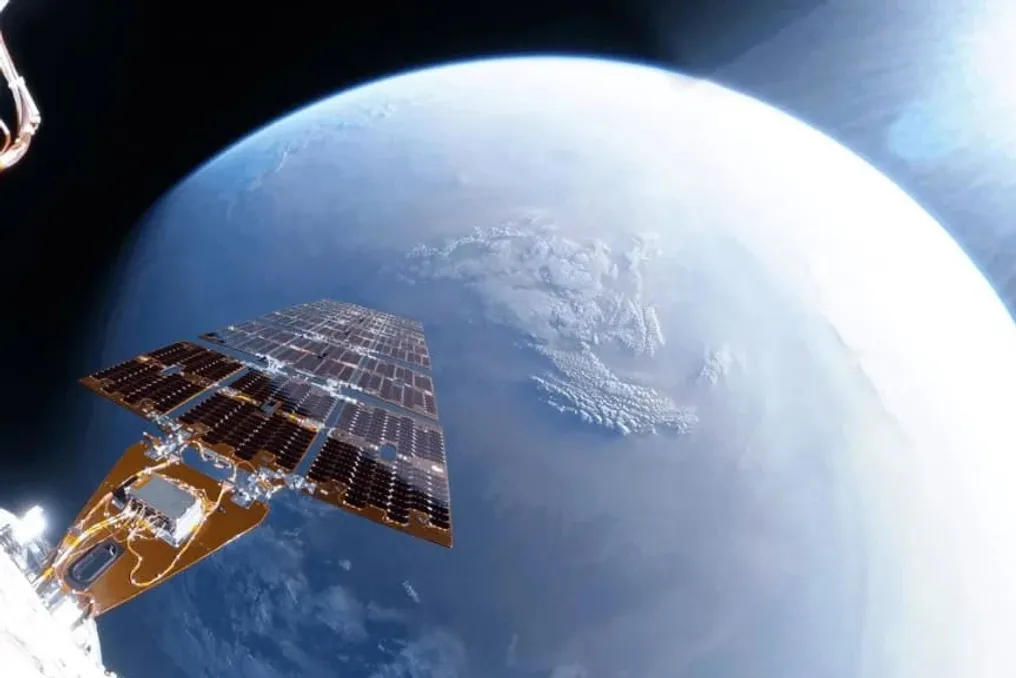
The reason Swift is falling is that, like most artificial satellites, it lacks a propulsion system to maintain its orbit. It was placed in orbit at an altitude of about 600 km, where the atmosphere is very thin, and it maintained its position thanks to a speed of almost 8 km per second, which allowed it to resist gravitational pull.
Over time, however, the satellite gradually loses speed and consequently altitude, a common process in low-Earth orbit satellites. In Swift's specific case, the acceleration of this loss was influenced by the Sun. In 2024, our star reached the peak of its activity cycle, which repeats every 11 years. Greater solar activity implies more energy released onto Earth, causing the upper atmospheric layers to heat up and swell, making the air occupy higher altitudes and forcing the satellite to collide with more molecules than expected.
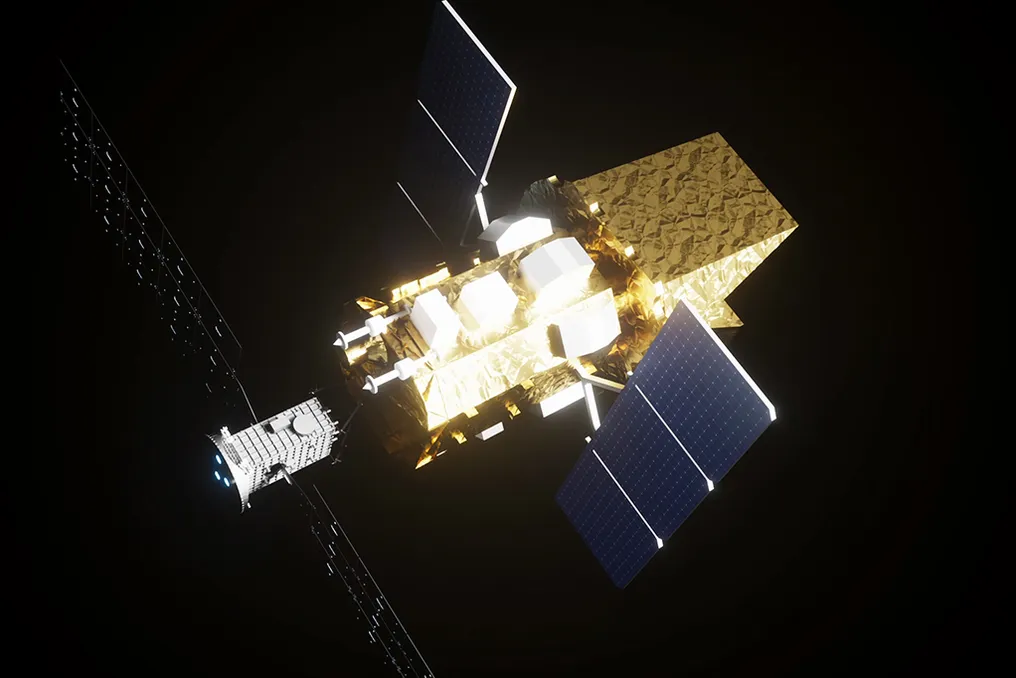
NASA attempted intervention, investing $30 million in the American company Katalyst Space to develop a rescue device: a satellite equipped with robotic arms called LINK, intended to grab and propel Swift into a higher orbit. This satellite was launched in July but faced difficulties with orientation control and consumed excessive fuel while trying to stabilize, leading to the cancellation of the rescue in August.
While awaiting assistance, the team at the Pennsylvania State University, responsible for Swift's operation, had reduced most observations and adjusted the telescope to an aerodynamic configuration, minimizing air resistance. Upon receiving news of the rescue's infeasibility, scientists reactivated the instruments to utilize the final months, which ironically accelerated the fall, as changing targets required satellite movement and worsened the friction problem.
On October 20, at an altitude of 275 km, Swift entered safe mode, and controllers issued the final command to terminate the mission.
Swift leaves a notable legacy, with its data present in approximately 7,000 scientific articles, and currently, there is no ready replacement for its functions. Its importance lies in its ability to detect violent cosmic radiation, such as gamma rays, which are blocked by the Earth's atmosphere, making it essential for detectors to be in orbit. Furthermore, Swift could observe lower-energy wavelengths, such as X-rays, ultraviolet, and visible light.
For astronomers, this multispectral capability is crucial, just as a color photograph provides more detail than a black and white one. An observation across various wavelengths offers more information about a phenomenon than one restricted only to gamma rays. Another unique feature of Swift was its ability to continuously scan the sky and automatically maneuver to focus on interesting targets.
Swift represents one of the most durable observatories of its generation, marking popular memory in the 1990s and 2000s. Hubble, another famous telescope, faces a similar situation: without a propulsion system, it loses altitude annually and is expected to re-enter around 2033. NASA opened a consultation at the end of October to see if private companies could boost or guide it to a controlled descent, and the outcome of the Swift case may offer valuable lessons for this new endeavor.