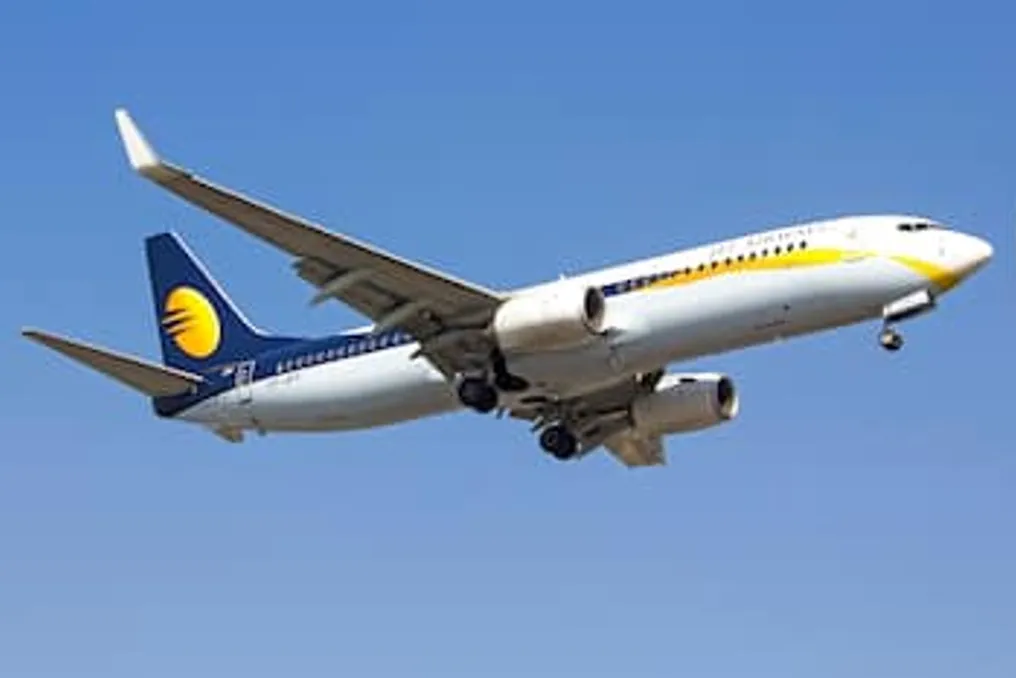
Jet Airways Liquidator Appeals NCLT Decision to NCLAT, Demanding $92 Million Return from Boeing
Read more
Business Standard
business-standard.com

Jet Airways Liquidator Appeals NCLT Decision to NCLAT, Demanding $92 Million Return from Boeing

The liquidator of Jet Airways has filed an appeal with the National Company Law Appellate Tribunal (NCLAT) seeking to recover $92.12 million (equivalent to nearly 873 crore rupees) in advance payments for aircraft from Boeing. This action follows the rejection of his claim by the National Company Law Tribunal (NCLT).

A bench comprising Judge Mohammad Faiz Alam Khan and Technical Member Naresh Saleci issued a notice to Boeing on Tuesday, acknowledging that the appeal warrants consideration. Boeing's legal counsel accepted this notice and was granted two weeks to prepare a response, while the liquidator was given one additional week to file objections. The hearing is scheduled for the first week of December.

This appeal challenges the NCLT order dated September 11, which dismissed the claim by liquidator Satish Kumar Gupta for $92.12 million from the aircraft manufacturer.

Appearing before the appellate tribunal, the liquidator's lawyer argued that Boeing withheld the advances paid by Jet Airways and subsequently claimed an unpaid contractual balance during the airline's insolvency process. The liquidator clarified that the appeal pertains solely to the return of advance payments and does not seek any interim relief.

The dispute stems from two sales agreements signed in 2013 concerning Boeing 737-8 and 787-9 aircraft. Jet Airways made advance and pre-delivery payments under these agreements but was unable to meet subsequent payment obligations due to growing financial difficulties.

Boeing sent a suspension notice in May 2019, followed by a termination notice in December 2020. None of the aircraft stipulated in the contracts were delivered to the airline.

Before the NCLT in Mumbai, the liquidator insisted that the advance payments constituted assets of Jet Airways' liquidation estate and should be returned, as he believed Boeing had neither contractual nor legal grounds to retain these sums. However, Boeing countered that the advances had already been offset against its outstanding claim against the airline. The company argued that the liquidator could not demand reimbursement for amounts credited against a larger claim recognized during the insolvency proceedings and subsequently confirmed upon liquidation.

The manufacturer also cited Rule 20 of the Indian Council of Bankruptcy and Insolvency (Liquidation Process Rules), which permits the set-off of mutual debts. The NCLT bench in Mumbai, consisting of Judicial Member Sushil Mahadeorao Koche and Technical Member Prabhat Kumar, declined to adjudicate competing claims under Section 60(5) of the Insolvency and Bankruptcy Code. The Tribunal noted that resolving the dispute would require examining the underlying sales agreements, presenting evidence from both parties, and conducting a full trial. Neither party submitted the agreements, citing confidentiality concerns.

The Tribunal ruled that 'these issues require assessment of the agreements between the parties, presentation of evidence by the parties, and a full trial.' Recognizing that the contractual dispute was separate from the insolvency proceedings, the NCLT rejected the liquidator's application without determining whether Boeing had the right to confiscate or adjust the advance payments. The liquidator has now challenged this decision in the NCLAT.
Similar stories

FAA certifies new Boeing 737 MAX 10 after three-year delay
Read more
noticiasaominuto.com

FAA certifies new Boeing 737 MAX 10 after three-year delay

The United States civil aviation regulatory agency, the FAA, has granted approval for the 737 MAX 10, the largest model manufactured by Boeing intended for passenger transport, concluding a three-year waiting period.

This certificate, released on Tuesday, allows the American company to begin supplying the aircraft, which was introduced almost a decade ago, to airlines both in the US and internationally.

During a visit to a Boeing facility in Everett, near Seattle, the Secretary of Transportation commented on the long process, stating that it was remarkable to have taken almost ten years to reach this point.

Sean Duffy stated on Tuesday that the certification was achieved after extensive safety checks, which included thousands of hours of flight testing, qualifying the achievement as a major accomplishment for the North American aeronautical industry.

For airlines, the 737 MAX 10, being larger, offers the possibility of accommodating more passengers per flight, which can result in a decrease in cost per seat.

Passengers may benefit in the future from greater availability of seats on popular routes, although the effect on fares depends on the airlines' strategy and the degree of competition faced.

Stephanie Pope, CEO of Boeing, expressed during Duffy's visit that this certification 'opens the way for the delivery of an aircraft that will set a new standard in commercial aviation.'

According to Boeing itself, the 737 MAX 10 will have a capacity for between 185 and 210 passengers in a standard configuration, surpassing the 175 to 195 of the Max 9 and the 160 to 180 of the Max 8.

Pope emphasized that the day was 'very, very special,' as it crowned years of effort and dedication from many people, and represented another important milestone in the company's recovery, opening doors for its future growth. Boeing forecasts that deliveries will begin in 2027.

The 737 MAX 10 was presented at the Paris Air Show in 2017, aiming to help Boeing compete against its rival Airbus. However, technical and regulatory hurdles repeatedly postponed the obtaining of certification.

Currently, more than 30 customers globally have ordered 1,555 units of the 737 MAX 10 that have not yet been delivered, which corresponds to over 30% of the total orders for the 737 MAX family.

This family, which is Boeing's best seller, with approximately 4,400 orders, totaling about 6,800 across all its commercial models, is also the one that has generated the most problems since its debut in August 2011.

The most serious incident occurred during the Lion Air accidents in October 2018 and Ethiopian Airlines in March 2019, resulting in a total of 346 deaths. A design flaw in the MCAS anti-stall software present in the two 737 MAX 8s delivered months earlier was the determining factor.

Consequently, the entire global fleet of the 737 MAX remained grounded for a minimum period of 20 months.

Popular