Three-day Tablighi Ijtima begins in Panipat; thousands of devotees cross the Yamuna River
Read more
Aaj Tak
www.aajtak.in

Three-day Tablighi Ijtima begins in Panipat; thousands of devotees cross the Yamuna River

In the village of Rana Majra, located in Panipat, Haryana, the three-day religious gathering of Tablighi Ijtima started on Tuesday. The event commenced with the Fajr prayer and saw participation from a large number of devotees both from within the country and from abroad.

Footage from the event showed a large number of people crossing the Yamuna River from Uttar Pradesh state and arriving in the village of Rana Majra in Haryana. Despite the risk associated with crossing the river, people headed to the Ijtima to participate and listen to Maulana Saad.

The main orator of the Ijtima was Maulana Saad from the Bangla Wali mosque in Nizamuddin Markaz, located in Delhi. He urged the attendees to observe the five daily prayers and follow the path of goodness.

In his speech, Maulana Saad emphasized that there should be no place for hatred in society. He advised responding to hatred with love, understanding, and peace. Furthermore, he addressed the youth, calling upon them to resolve disputes within the framework of the law.

During the event, photos were also captured showing a large number of Muslim devotees crossing the Yamuna River. These people crossed from the Uttar Pradesh side and reached the village of Rana Majra, which is on the border of Haryana.

Access to the venue after crossing the river was very dangerous. Nevertheless, people continued to cross the river to hear Maulana Saad's sermon and take part in the Ijtima. There are claims that millions of people arrived at the event via this route.

Infrastructure was organized for the three-day gathering on an area of about 180 acres. Of this area, 60 acres were occupied by a large tent. Provisions for drinking water, ablution, food, and accommodation were made for the participants.

Given the large number of arriving people, the police and local administration ensured robust security measures. Over the three days, devotees from various countries and overseas are participating in the event.

Similar stories

Muling in Himachal Pradesh: A picturesque remote village in the Lahaul Valley offering solitude
Read more
www.aajtak.in

Muling in Himachal Pradesh: A picturesque remote village in the Lahaul Valley offering solitude

If you wish to spend time in the quiet amidst the beautiful landscapes of Himachal Pradesh but want to avoid the hustle and bustle of Manali, you can visit this remote village in the Lahaul Valley. This village, situated among the mountains, is known for its tranquil atmosphere, traditional dwellings, and natural beauty. Here, you can enjoy time away from the city rush and also have the opportunity to get acquainted with the local culture.

Muling might appeal to travelers who value not only visiting famous photo spots but also deep immersion in the local culture. In the village, you can walk through the streets, admire the surrounding natural scenery, and spend time outdoors. It is an ideal place to relax from office routine and create unforgettable memories.

Muling is a small village located in the Lahaul Valley, Himachal Pradesh. To reach it, you need to drive through the Atal Tunnel from Manali towards Sissu. The road passes through high mountains, picturesque valleys, and changing nature, making the journey itself special. If you are planning a trip to a quiet place in Himachal, it is worth including Muling in your list of places to visit.

Muling can be reached via the road from Manali. The route includes passing through the Atal Tunnel to Sissu. According to available information, the distance from Manali to Muling is about 45 kilometers, and the journey takes approximately one and a half hours. Sissu is near Muling, and from there, you can take a local taxi to the village. However, it should be noted that the actual distance and travel time depend on your starting point, road conditions, and weather conditions. Therefore, before traveling, be sure to check information about local road conditions, weather, and available means of transport.

Firstly, you can enjoy walks through the village streets. The best way to explore Muling is by walking through its streets. Here, you can see traditional Himachali houses built from clay and wood. The architecture of these houses and the surrounding nature allow one to understand the local lifestyle of Lahaul. However, permission must be obtained before photographing anyone's house or private property.

Secondly, you should visit the apple and apricot orchards, which can be seen in the Lahaul Valley depending on the season. The view around these orchards will be especially picturesque in spring and summer. It is also a great place for photography enthusiasts.

Thirdly, you can get to know the culture of Lahaul by visiting local monasteries. The culture of the Lahaul Valley is heavily influenced by Buddhist traditions. Visiting small monasteries allows one to experience local religious customs and the peaceful atmosphere. When entering a monastery, established rules must be observed, and silence should be maintained during prayers or religious events.

Fourthly, you can go for a nature walk. If you enjoy trekking and mountain hiking, you can explore the trails and views around Muling. To enjoy the natural beauty, long hikes are not necessary; even short walks can make your trip memorable. It is important to avoid solitary walks on unfamiliar routes and always check the weather forecast.

Fifthly, you can observe the starry sky at night. Since the village is far from city lights, stars can be seen in some areas of the Lahaul Valley if the sky is clear. Under favorable weather conditions, you can also spend time outdoors in Muling. For this, choose a safe spot away from light sources and try not to stray too far from the village at night.

Sixthly, be sure to try the local cuisine of Himachal. Any trip seems incomplete without getting to know the local food. In Muling or nearby local guesthouses, you can try dishes such as thukpa, momos, and siddu, depending on availability. If you have the chance to stay with locals, you can learn more about traditional diet and lifestyle.

Before traveling to a small mountain village like Muling, it is necessary to book accommodation and transportation in advance. One cannot assume that public transport or grocery stores will be constantly available. It is also recommended to bring warm clothing to protect against the cold and plan the trip taking into account the characteristics of the mountain climate.

Ganga Aarti Returns to Dashashwamedh Ghat in Varanasi After 64 Days
Read more
www.aajtak.in

Ganga Aarti Returns to Dashashwamedh Ghat in Varanasi After 64 Days

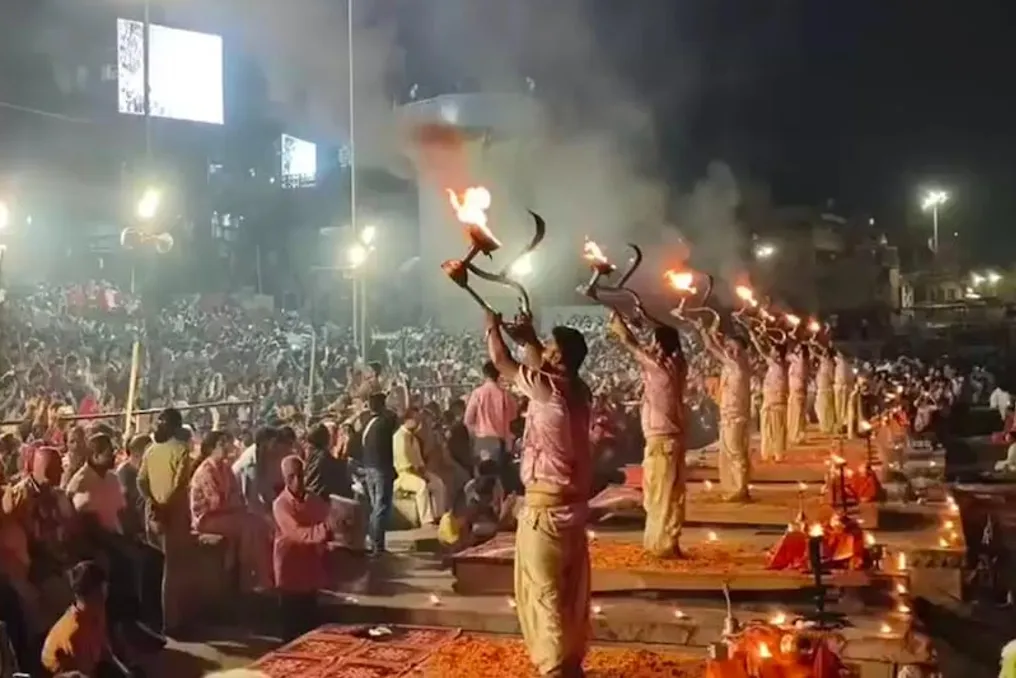
The opportunity to witness the famous Ganga Aarti of Goddess Ganga in Varanasi has reopened at the Dashashwamedh ghat. Due to flooding, the Ganga Aarti was held away from its traditional location for 64 days, but on Tuesday, October 20th, it returned to its original spot.

As soon as the Aarti began on the installed platform of the ghat, thousands of devotees gathered to witness this miraculous spectacle. The entire ghat was filled with an atmosphere of reverence thanks to the lamp lighting, chants, and worship of Goddess Ganga.

Due to the rising water level in the Ganga, the organization of the Aarti at the Dashashwamedh ghat had to be changed. Since August 17th, the Aarti was conducted in the Ganga Seva Nidhi office on the roof. Because of the floodwaters, devotees could not observe the Aarti from the traditional ghat platform. Now, after the water level dropped, the Aarti resumed in its original place.

On Tuesday, when the Aarti took place in its traditional format at the Dashashwamedh ghat, there was great enthusiasm among the attending devotees. A significant number of people participated in the Ganga Aarti. The return of this Aarti, which is the calling card of Kashi, to its old place brought renewed vibrancy to the ghat.

Sushant Mishra, Chairman of Ganga Seva Nidhi, reported that due to the rising water level of Goddess Ganga, the Aarti was held on the office roof for 64 days. On Tuesday, the Aarti took place at the traditional location of the Dashashwamedh ghat. Nevertheless, he noted that the water level in the Ganga still exceeds the norm by about 10-15 feet. He also added that the connection between the solid ghats has been restored. Cleaning of the ghats is being carried out in preparation for upcoming festivals. For the devotees, the return of the Ganga Aarti to its original place after the changes caused by the flooding was a special moment associated with relief and faith.

Digvijay Singh begins 950 km foot journey from Ujjain to Ayodhya
Read more
www.aajtak.in

Digvijay Singh begins 950 km foot journey from Ujjain to Ayodhya

The start of the journey by Digvijay Singh, former Chief Minister of Madhya Pradesh, was shown, which began on October 20 in Ujjain. This foot expedition, named 'Satya Sanatana Swabhiman,' aims to cover a distance of about 950 kilometers and reach the Rama temple in Ayodhya in approximately 70 days. On the first day of the journey, various aspects of religion, faith, and politics were evident.

After visiting the Mahakal temple, creating a party Shivling, the presence of saints, the Devi cult, and holding charitable feasts, the procession continued to the sound of hymns, drums, and religious processions.

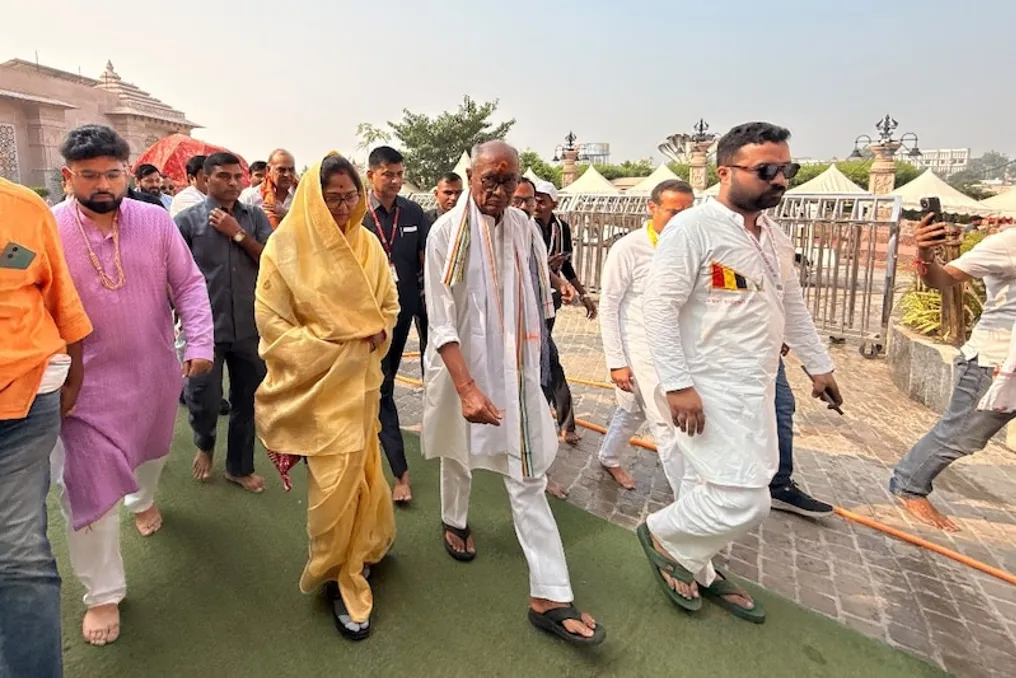
On the morning of October 20 in Ujjain, the journey started with a visit to the Mahakal temple. Then, Digvijay Singh and his wife Amrita Singh visited the Chintaman Ganesh temple. After this, upon arriving at Balaji Garden, the participants saw a large number of saints and organized the creation of party Shivlings. The area had many representatives of the religious community who collectively engaged in creating these Shivlings, while others prepared for rituals. The atmosphere was religious, accompanied by melodies of hymns dedicated to Rama and Shiva.

Digvijay Singh's son and Congress leader Jayvardhan Singh actively participated in organizing the event. After the completion of creating the party Shivlings and conducting worship, the Devi cult took place, followed by an organized feast. After all religious rituals were completed, the caravan set off from the venue onto the streets. Around noon, the official movement began for the long journey from Ujjain to Ayodhya.

In the caravan, a procession of Shiva-Parvati led the way, along with mobile vans equipped with LEDs, DJs, singing groups, and drummers. In addition to the national flag, religious banners were also visible. A group of sadhus and saints also participated in the procession. People walked carrying a portrait of Lord Rama and water from five rivers: Shipra, Narmada, Yamuna, Ganga, and Saru.

Behind the religious carriage, Digvijay Singh walked on foot with his wife Amrita Singh, hundreds of saints, and supporters. As the caravan moved through the streets, it was accompanied by the sounds of hymns and drums. This caravan, adorned with religious symbols, demonstrated the stated purpose of the trip: it is not just a path from Ujjain to Ayodhya, but also an opportunity to raise issues regarding the transparency of donations in temples and the accountability of religious institution management.

Digvijay Singh's journey name, 'Satya Sanatana Swabhiman,' reflects his stated themes, including the demand for transparency in temple donations and accountability in the management of religious institutions. He raises questions regarding the donation system in Ram Mandir and alleged misappropriation of funds. Furthermore, he touches upon the issue of vote theft. Although the journey began with religious events, such as visiting Mahakala and creating party Shivlings, it is also connected to issues concerning the functioning of temples.

Digvijay Singh intends to bring these issues to the public arena through this journey. However, accusations of irregularities in the collection or distribution of donations cannot be considered proven facts until appropriate evidence emerges. Therefore, the reaction of the relevant authorities to the issues raised during the journey will be significant.

The religious aspect in Digvijay Singh's politics is not new. His critics have often labeled him as an anti-Sanatan figure. On the other hand, his participation in religious events, such as the pilgrimage to Narmada and the visit to Lord Vitthal in Pandharpur, has also been part of his public life. Now, the 'Satya Sanatana Swabhiman' journey from Ujjain to Ayodhya has once again placed him at the center of the discussion surrounding religion and politics.

Questions arise as to whether this is an expression of religious faith, an attempt to draw attention to the transparency of temple management, or if there is a political message embedded within it. On the first day of the journey in Ujjain, all these facets were evident against the backdrop of religious events and the presence of saints. However, the true impact of the journey will become clear as it progresses and as the issues are raised in subsequent stages.

Digvijay Singh's plan involves covering a distance of about 950 kilometers in approximately 70 days to reach Ram Mandir in Ayodhya. During this journey, he will have the opportunity to interact with people at various stops and voice his concerns. In Ujjain, the journey began with a distinctly religious character: from visiting Mahakala to creating party Shivlings, the Devi cult, charitable feasts, and singing hymns; the first day was dedicated to various forms of faith. Along with this...


Popular