Johannesburg water supply improves, but residents continue to await restoration of water supply
Read more
Getaway
getaway.co.za

Johannesburg water supply improves, but residents continue to await restoration of water supply

The situation with the water supply in Johannesburg shows signs of recovery, but relief has not yet reached all households that have been living without running water for several days.

Mayor Dada Morelo reported that the city's overall water reserve has increased to 41%, up from 37% the previous day. The company Johannesburg Water continues to make efforts to restore water supply to areas affected by current disruptions.

The shortage, which began on October 19, has left some families without water for over ten days. Daily activities such as cooking, cleaning, and bathing have become difficult, forcing many residents to rely on reserves and alternative sources.

Speaking at a press briefing on Monday, November 2, Morelo acknowledged public dissatisfaction and stated that the city is working to restore stable water supply.

Improvements are being observed in various parts of the system. The Yeoville reservoir has recovered to above 40% capacity, while the Crown Gardens and Tower reservoirs are fully filled. Water supply has also improved in the areas of Brixton, Crosby, and Hursthill.

Nevertheless, the recovery process remains uneven. The Parktown reservoir is still at a low level, and parts of Sandton, Midrand, Randburg, and Roodepoort continue to experience low pressure and interruptions. The Grand Central reservoir in Midrand remains particularly low, and pumping to its tower has been suspended.

Morelo explained that water is gradually being restored to avoid putting additional strain on the recovering network. Technical teams are also working to fix leaks, pipe bursts, and pressure issues that could affect the resumption of supply.

Residents have been advised to continue conserving water while the system stabilizes. Although the rise in reservoir levels offers some hope, real relief will come when residents no longer have to plan their day around finding water. For many households, this remains the main priority as Johannesburg works to restore supply across the city.

Similar stories

NHAI to begin cleaning Bihar's rivers and use silt for road construction
Read more
timesofindia.indiatimes.com

NHAI to begin cleaning Bihar's rivers and use silt for road construction

The Ministry of Transport and NHAI plan to clean rivers and water bodies across the state of Bihar at their own expense to address the issue of annual floods, as well as utilize the extracted silt and sand for road construction needs.

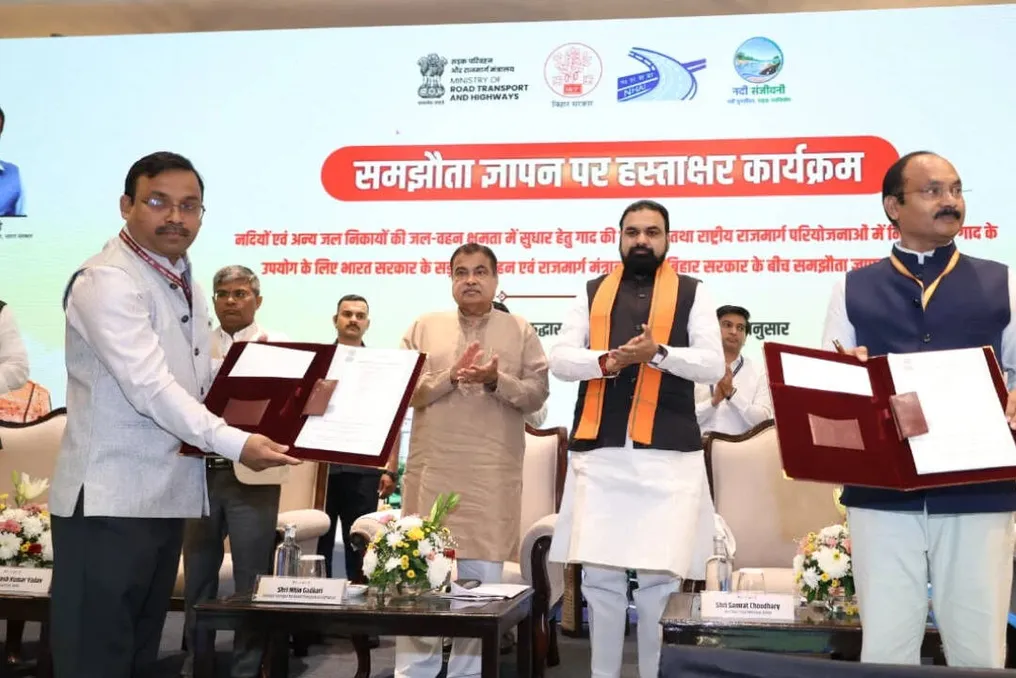
This initiative, implemented under the 'Nadi Sanjivani' (river rejuvenation) program, was signed between the Ministry of Transport and the Government of Bihar on Tuesday. This measure has a dual purpose: road departments will carry out dredging operations and receive construction material free of charge, which simultaneously improves water flow in the rivers and reduces the risk of flooding.

According to the agreement, 243 million cubic meters of silt will be used in 16 current national highway projects, and another 835 million cubic meters are planned for 27 future projects.

Annual floods in Bihar are caused by the deposition of silt in riverbeds, where turbid water from the Himalayas in Nepal flows during rains. Union Minister of Transport Nitin Gadkari stated after signing the agreement that if the plan is successfully implemented, this problem will be largely resolved. He noted: 'The silt, which until yesterday was the cause of floods, will now become the basis for development.'

Gadkari also emphasized that this approach can serve as a model for other states, allowing construction materials to be obtained through the dredging of rivers and water bodies. Currently, highway builders are forced to purchase soil and other materials from afar, leading to delays and increased construction costs.

Bihar Governor Samrat Choudhary highlighted the state's vulnerability to recurring floods, which damage farmers, agricultural land, livelihoods, and infrastructure. He explained that the destruction in Bihar is caused not by its own water, but by water from neighboring countries and other states. Choudhary added that seven major rivers from Nepal flow through Bihar, and rains in Nepal lead to destruction in Bihar. Despite receiving more than 32% less rainfall this year, the water level in three main rivers reached its maximum (HFL).

Choudhary reported that the maximum water level in the Ganges in the last 200 years has been reached, which is a clear sign of silt deposition in the rivers, prompting the state government to promptly accept Gadkari's proposal for river cleaning.

Uzbekistan explains discrepancy in electricity generation data
Read more
uzdaily.uz

Uzbekistan explains discrepancy in electricity generation data

The Ministry of Energy of Uzbekistan reported that the discrepancy between the data presented by the Ministry of Energy and the Statistical Committee is due to the fact that official statistical reports do not account for electricity generated by small solar panels installed on building roofs.

According to the ministry's data, Uzbekistan generated 69.6 billion kWh of electricity over the nine-month period (January–September 2026). Thermal power plants provided generation at a level of 49.1 billion kWh.

Additional capacity was generated by large-scale solar and wind power plants, which produced 10.5 billion kWh, while hydroelectric power plants contributed 6.6 billion kWh. Additionally, 2.5 billion kWh was obtained from small rooftop solar installations.

During the same period, block stations generated 867.1 million kWh. The ministry clarified that it was precisely the electricity produced by small solar installations that caused the differences in figures provided by the two agencies.

It is emphasized that electricity generated by solar panels installed by households and legal entities is not included in the summary data compiled by the Statistical Committee. Consequently, when comparing information from the Ministry of Energy and the Statistical Committee, differences in the methodology for accounting for small solar installations must be taken into account.

Tashkent Implements 'Green Wave' Traffic Light System on Kukcha Darvoza Street
Read more
uzdaily.uz

Tashkent Implements 'Green Wave' Traffic Light System on Kukcha Darvoza Street

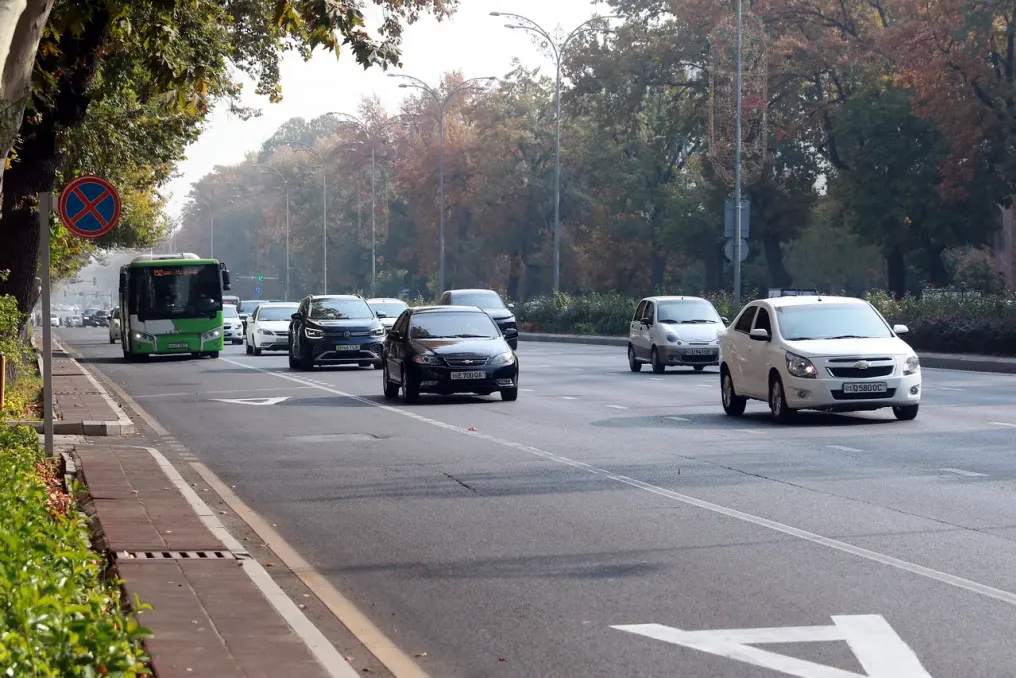
In Tashkent, Uzbekistan, the 'green wave' traffic light regulation system has been launched on a seven-kilometer section of Kukcha Darvoza Street. This system integrates sixteen traffic lights into a single coordinated network.

Preliminary calculations indicate that the average travel time has been reduced by 40% thanks to the new system, allowing for savings of about eight minutes per trip. The traffic lights are configured so that drivers traveling at the permitted speed can pass through several consecutive intersections with minimal stops. Green signals are activated sequentially in the direction of the main traffic flow.

The system operates in two modes, changing traffic priorities depending on the time of day. From 7 AM to 5 PM, the 'green wave' is set to prioritize traffic heading towards the city center. From 5 PM to midnight, the synchronization is adjusted in favor of vehicles leaving the central part of Tashkent.

The main goal of implementing the system is to reduce the number of stops, sudden braking, and acceleration. According to an official statement, this should contribute to fuel savings, reduced emissions, and improved overall road safety and smoothness of traffic.

It is important to note that the presence of the 'green wave' does not mean that the traffic lights remain green along the entire road. The system continues to account for pedestrians and traffic moving on intersecting streets. Therefore, drivers may still need to stop at a red light before entering the synchronized flow.

Drivers are advised to adhere to the established speed limits to gain maximum benefit from the system. Exceeding the allowed speed does not guarantee a faster journey, as vehicles traveling faster than the norm may reach an intersection before the green light turns on and be forced to stop.

The efficiency metrics were recorded during off-peak hours to assess the system's impact without significant influence from heavy traffic. During peak load hours, actual travel time may vary depending on road conditions.

Popular