Western Cape exporters warn that exiting the AGOA program could jeopardize 13 billion rands and 47,000 jobs
Read more
IOL
iol.co.za

Western Cape exporters warn that exiting the AGOA program could jeopardize 13 billion rands and 47,000 jobs

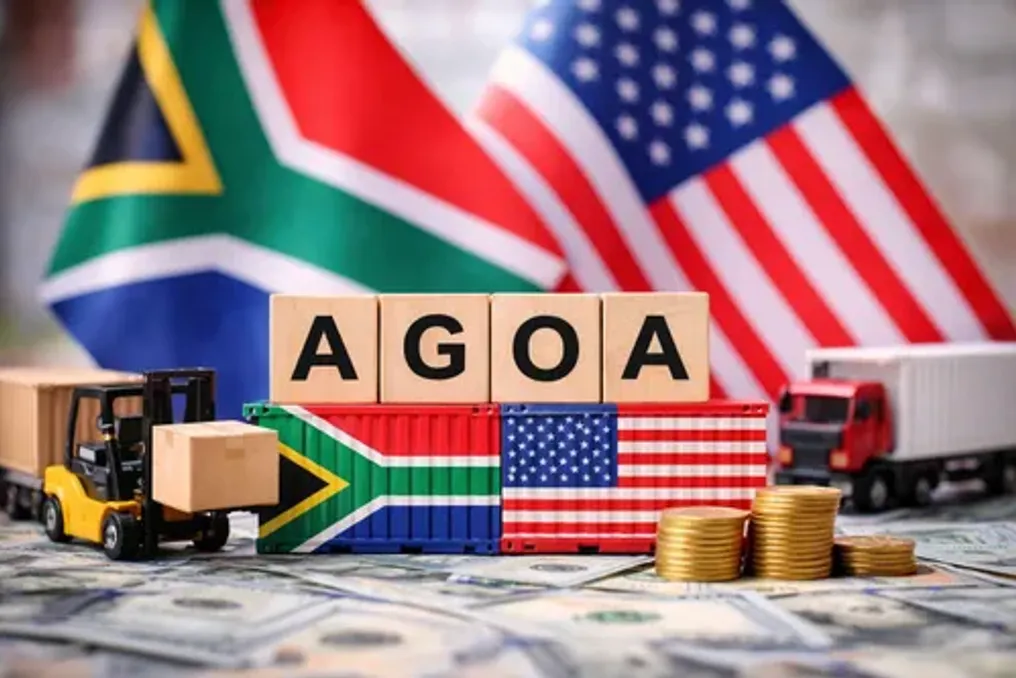
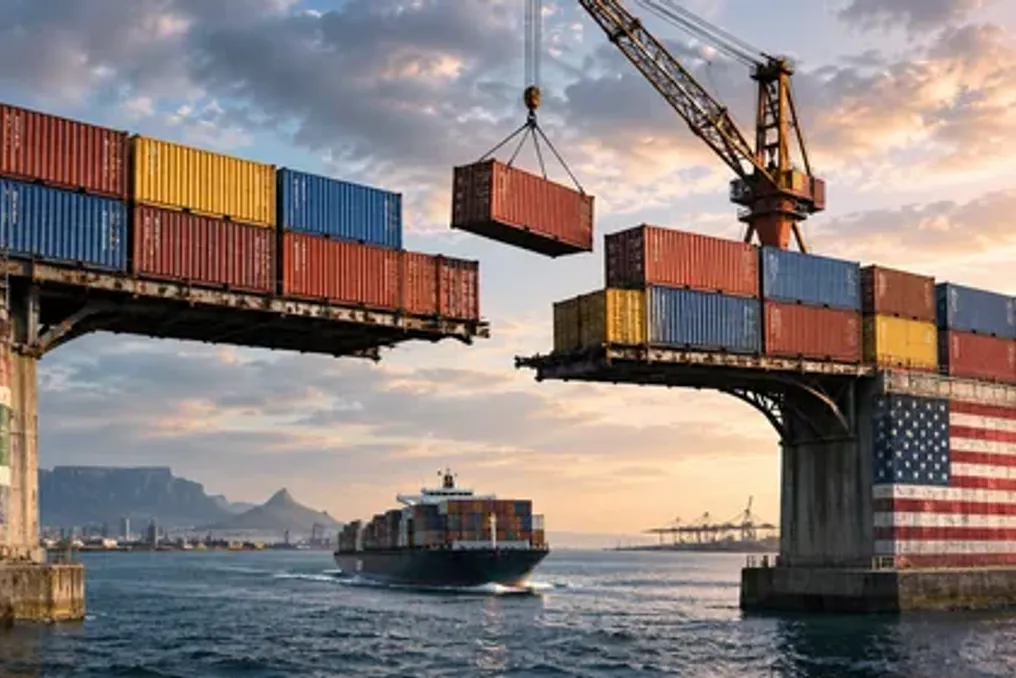
Exporters from the Western Cape are sounding the alarm, pointing out that South Africa's planned withdrawal of preferential access to the US market under the African Growth and Opportunity Act (AGOA) could create serious problems. Western Cape exports to the United States support approximately 13 billion rands in the province's gross domestic product and provide over 47,000 direct and indirect jobs.

Exporters fear that the planned cessation of AGOA benefits on January 1, 2027, could exacerbate the already observed sharp decline in US sales and intensify pressure on existing business relationships.

The Chairperson of the Western Cape Exporters (EWC), Terry Gale, stated that the priority should be assisting affected businesses in retaining American clients. He emphasized that all export markets and jobs are critically necessary for the South African economy.

Gale specified that the province's dependence on US exports extends beyond individual companies. He reported that Western Cape exports to the US support approximately 12.98 billion rands in provincial GDP, 11,914 direct jobs, and 35,467 indirect jobs, and any further reduction in orders puts these jobs at risk.

According to Gale, the value of Western Cape exports to the US has fallen by 41%: from 16.89 billion rands in the period from August 2024 to July 2025 to 10.02 billion rands in the period from August 2025 to July 2026. Significant declines were recorded in several key categories, including juices (down 86%), grapes (down 79%), yachts (down 55%), wine (down 38%), and citrus fruits (down 17%).

The loss of AGOA preferences, which has provided developing African countries access to the US market since 2000, will lead to increased costs of doing business with American buyers. However, Gale noted that the issue is not limited only to cost, but also to the fact that exporters have spent years building trade relationships with American clients.

He called on the government to work with affected industries to identify areas of greatest vulnerability and help businesses retain clients. While market diversification remains important, Gale cautioned against viewing it as an immediate solution, as finding new partners takes time.

In light of these warnings, Gale also pointed to the need to address South Africa's internal issues that increase export costs. He stated that the government cannot demand competitiveness from exporters under more difficult conditions while ignoring internal costs, such as the reliability of the logistics system.

Minister of Trade, Industry and Competition Parks Tau assured that the US decision does not define the overall relationship between South Africa and the US. He stressed that the government will support affected sectors, protect South Africa's national interests, and continue to seek opportunities for trade and investment with the United States.

Similar stories

South Africa's Loss of AGOA Access: Economic Risks May Be Wider Than Exports
Read more
iol.co.za

South Africa's Loss of AGOA Access: Economic Risks May Be Wider Than Exports

Economists suggest that South Africa's upcoming exit from the African Growth and Opportunity Act (AGOA) is unlikely to have a significant direct impact on the country's overall economy. However, according to Johann Els, a senior economist at PSG, this decision raises broader concerns regarding investor confidence and trade relations with the US.

On Monday, the US notified Congress of its intention to cease South Africa's compliance with the trade preference program starting January 1, 2027, which will lead to the cancellation of duty-free access for relevant South African export goods.

Nevertheless, the volume of trade that actually benefits from AGOA is significantly smaller than South Africa's total exports to the US. The loss of preferential access does not mean that South African goods cannot enter the American market; instead, the relevant products will lose their duty-free status and will be subject to applicable import tariffs.

Els noted that in 2025, about 7% of South Africa's goods were exported to the US, amounting to approximately $16.5 billion. Of this amount, about $1.6 billion came under AGOA preferences. This constitutes roughly 10% of exports to the US, but only 0.7% of South Africa's total merchandise exports, he added. He emphasized: 'Although the absolute figures may seem significant, the share of our total exports directly affected is relatively small.'

Not Such a Big Problem?

Els also stated that 'this does not mean that all of South Africa's exports to the US will suddenly face new tariffs or disappear. Exports will continue, but some goods will become less competitive.' He advised South Africa not to confuse its status as a major beneficiary of AGOA with the share of its own exports dependent on this program.

Annabel Bishop, Chief Economist at Investec, also anticipates a limited national economic effect but views the vulnerability differently. According to her estimates, 7% of South Africa's exports go to the US, with about half of these shipments, mainly agricultural products, being duty-free.

Donald McKay, founder and CEO of XA Global Trade Advisors, called the additional effect of losing AGOA relatively minor. McKay noted that more than half of what South Africa sends to the US consists of precious metals and minerals, which are not regulated by AGOA and are not subject to tariffs. Thus, the products affected by the loss of preferences represent a relatively small subset of exports.

McKay added that the country has already experienced a significant trade shock due to US national security tariffs imposed on certain goods. He opined: 'I do not think we will see something like mass job losses.' He also added that he would obviously prefer the continuation of AGOA for South Africa, believing that the loss of this program would not change the economy.

Investor Confidence

Despite the limited direct trade exposure, Els pointed out that the wider implications could be more significant. He noted: 'The more serious issue is the signal this sends to investors and the potential impact on confidence, investment, and our broader relationship with the US.'

Els stressed that the concern relates to the possible impact on business confidence, investment, and diplomatic ties between the two countries. The US administration cited practices by South Africa that it describes as non-compliant with AGOA eligibility criteria, including barriers to American trade and investment, corruption, and threats to US national security and foreign policy interests.

The Department of Commerce, Industry, and Competition stated on November 2 that the government had presented additional concessions to address US concerns and expressed regret that the US was now raising new issues that were not the basis for discussions since the beginning of negotiations in 2025.

Diversification

Bishop argues that disruptions caused by changes in US trade policy and geopolitical tensions have already prompted companies to adjust their trade links. Pointing to the growth in trade between developing economies, Bishop reported that South-South trade interaction is increasing by about 8% according to the United Nations Conference on Trade and Development.

Bishop also noted that the private sector has responded to tariff uncertainty by restructuring supply chains, finding alternative markets, and outpacing imports.

Dr. Ernest van Billjon, Dean of the Research Faculty at IMM Graduate School, reported that many exporters have been diversifying over the last one or two years in anticipation of exiting AGOA and have already opened markets in other regions. According to Van Billjon, bilateral trade with the US last year amounted to $24.1 billion compared to $55.6 billion with China. The Department of Commerce, Industry, and Competition estimates bilateral trade with the US in 2025 at $28.8 billion.

Keep Moving Forward

The Department stated that the government will continue to promote trade and investment with the US while accelerating the diversification of its export markets, including the African Continental Free Trade Area, India, the European Union, and China.

Van Billjon named Europe as an obvious first destination for seeking new markets, noting that total trade with the EU has grown by 44% over five years, and the African Continental Free Trade Area offers scale provided corridors and borders function. He emphasized that AGOA was a useful advantage, not the foundation of South Africa's trade. He also mentioned that this is one of several simultaneous disruptions, including tariff changes, closure of shipping routes, and geopolitical upheavals, and that firms that know their exposure and have other outlets will fare best.

Els concluded that the direct impact on overall economic growth will likely be small, but the broader consequences for business confidence, investment, and relations with the US deserve more attention.
Mozambique plans to complete 10 electrification projects by 2027
Read more
noticiasaominuto.com

Mozambique plans to complete 10 electrification projects by 2027

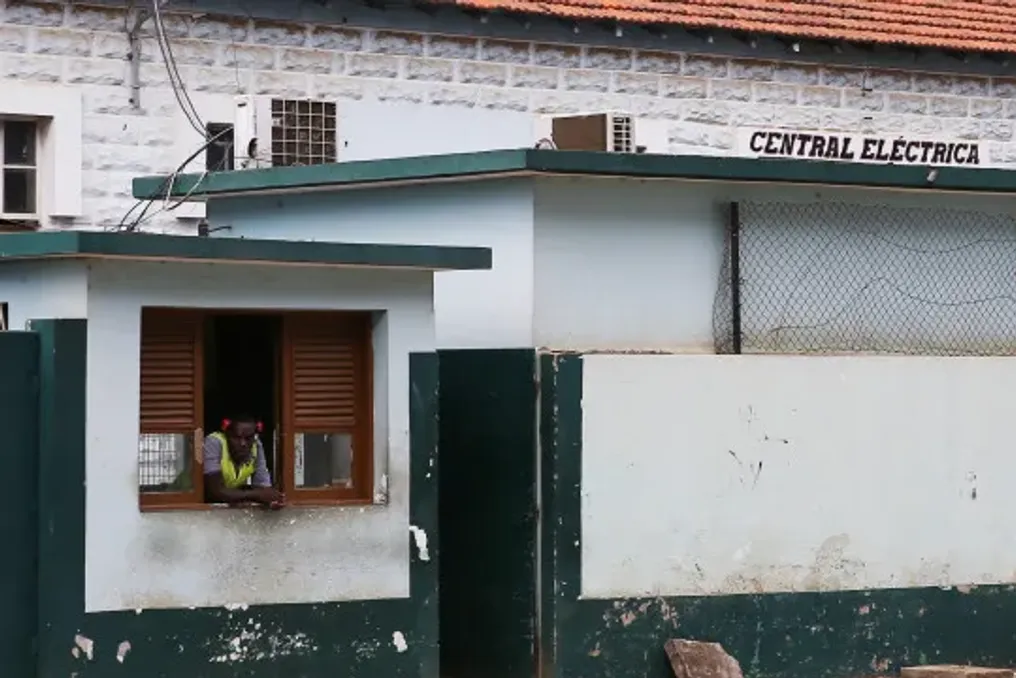
Mozambique's National Energy Fund (Funae) intends to complete ten electrification projects by the end of the first half of 2027. This decision was made after resource availability constraints affected the implementation of construction work and infrastructure maintenance.

The Chairman of Funae's Board of Directors, Mati Gondola, stated that the institution is reviewing priorities. The focus is now on projects with completion levels ranging from 60% to 70%. Additionally, another 12 projects, currently at 30% to 40% completion, are scheduled to be finished by the end of 2027.

Fundo de Energia is a state organization of Mozambique responsible for financing and implementing energy projects, particularly those aimed at expanding electricity access in rural areas. These projects include small stations, including solar ones, that operate off the national grid.

Gondola specified that the ten projects refer to those whose implementation is between 60% and 70% complete. Among the twelve projects at 30%-40% completion is the Lúrio project, located in Nampula province, northern Mozambique, where civil construction still needs to be finalized. According to Gondola, Funae already has the necessary funds, but a contract review with the contractor is underway due to disagreements over the cost of resuming work.

"But what is guaranteed is that we will electrify Lúrio. It is on our list of urgent tasks," the head stated, adding that a team will go to the site to assess the situation and ensure the project's completion.

Funae is also prioritizing the restoration of power plants that have been out of service due to breakdowns and have not supplied energy for two or three years. Restoring this infrastructure is part of Mozambique's efforts to increase electricity access, especially in rural areas and communities far from the main grid.

In October, the national director of energy, Marcelina Mataveia, pointed to demographic dispersion, vast territory, and financial limitations as major obstacles to expanding energy access. According to data from the Ministry of Mineral Resources and Energy, Mozambique has reached an energy access level of 66.9%, of which 57.9 percentage points belong to the traditional grid, and nine percentage points to off-grid solutions.

Previously, Funae presented the National Program for Accelerating Electrification through Mini-grids (Promir), which involves installing 363 such facilities across the country with estimated investments of $250 million. Funding for 148 of these facilities is secured in the provinces of Nampula and Niassa in northern Mozambique, as well as Zambezia and Tete in the center.

The institution continues to evaluate projects where grid installation has advanced, but civil works are behind schedule. Funae recognizes the possibility of either renewing existing contracts or issuing new tenders to complete the infrastructure, depending on the specific case.

"First and foremost, finding resources. So that we can resume our activities," Gondola noted, speaking about mobilizing funding to restore installations and complete current projects.

In September, Mozambican President Daniel Chapo announced the creation of a coalition to attract 966.5 million euros designated for off-grid electrification, as part of the goal of universal energy access by 2030. The government plans to achieve approximately 2.5 million off-grid connections to meet this goal.

Ramaphosa warns South Africa of possible exclusion from US-Africa trade program
Read more
iol.co.za

Ramaphosa warns South Africa of possible exclusion from US-Africa trade program

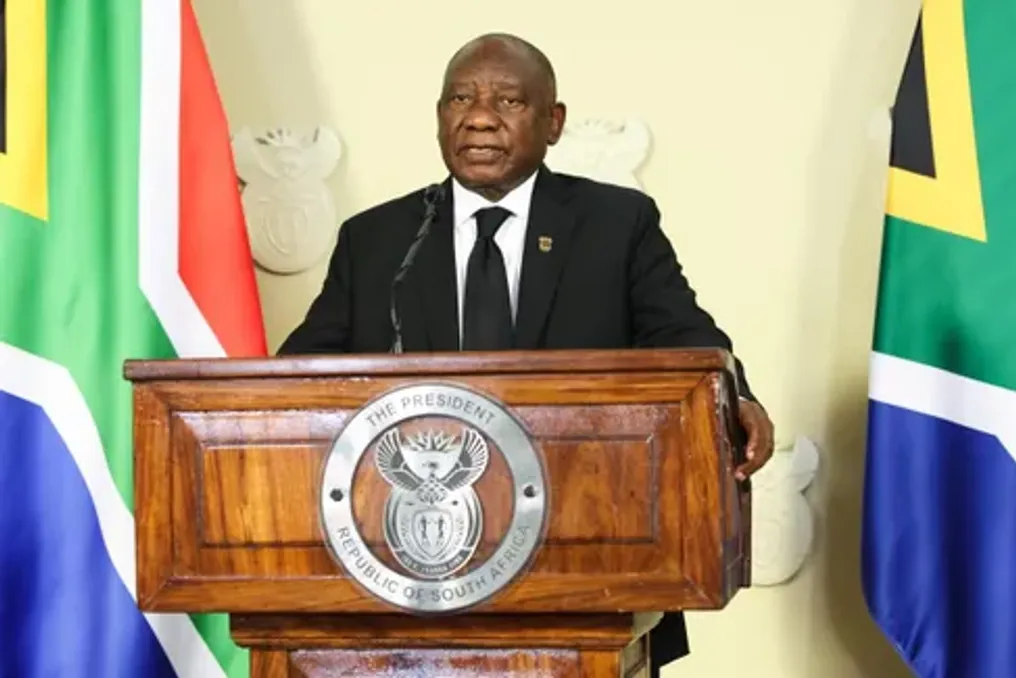
South African President Cyril Ramaphosa stated that the country should prepare for the probability of being excluded from Washington's duty-free trade program for Africa, as relations between the two states continue to deteriorate.

The African Growth and Opportunity Act (AGOA), which grants preferential access to the US market for eligible Sub-Saharan African countries, has been extended until the end of 2028. South Africa is the largest beneficiary of this scheme, but its right to participate has come under close scrutiny amid increasing criticism from Washington. This criticism includes false accusations of discrimination against white Africans, which South Africa rejects.

Ramaphosa noted that Congress has passed a resolution to keep South Africa in AGOA, and now it is up to the executive branch, as the agreement requires the signature of President Donald Trump after Congressional approval.

In response to an AFP journalist's question during a briefing, he added that by preparing for this scenario, they are not the first or only country that could be excluded from AGOA, and he believes they will not be the last.

Bilateral ties have deteriorated since Trump took office. Washington has cut aid, recalled the South African ambassador, and criticized Ramaphosa in the Oval Office over unsubstantiated claims of 'white genocide.' In mid-September, Washington imposed visa restrictions on South African citizens who promote 'racial discrimination, incitement to violence, or land confiscation in South Africa without compensation'—all issues disputed by both countries.

Last year, the United States launched a program to resettle white Africans claiming persecution and crime in South Africa. By September 30, the US accepted 16,287 South African citizens under this program in the previous year; they were the only ones to receive refugee status from Washington during this period, besides five Afghans.

The US President reviews the compliance of countries with AGOA requirements annually. Any exclusion requires notification to Congress and the relevant country 60 days in advance. To take effect on January 1st, the exclusion must be announced by November 2nd. Previously, President Joe Biden declared the Central African Republic, Gabon, Niger, and Uganda non-compliant on October 30, 2023, with exclusions taking effect on January 1, 2024.

Ramaphosa stated that South Africa will seek alternative markets to minimize the consequences of such an exclusion. He emphasized the need for preparation, saying: 'As president, I need to prepare us in case this happens. So we shouldn't go out and jump off tall buildings and think it's the end of the world,' while acknowledging that the consequences would still be 'devastating.'

Under AGOA, Washington exempts vehicles from South African customs duties. According to South African tax authorities, after precious metals, vehicles are the second most significant source of foreign currency revenue for the country from the US. In 2025, the automotive industry organization Naamsa reported that 86,000 jobs are directly linked to this agreement at automotive manufacturing plants, and this number rises to 125,000 when subcontractors are included.

Popular