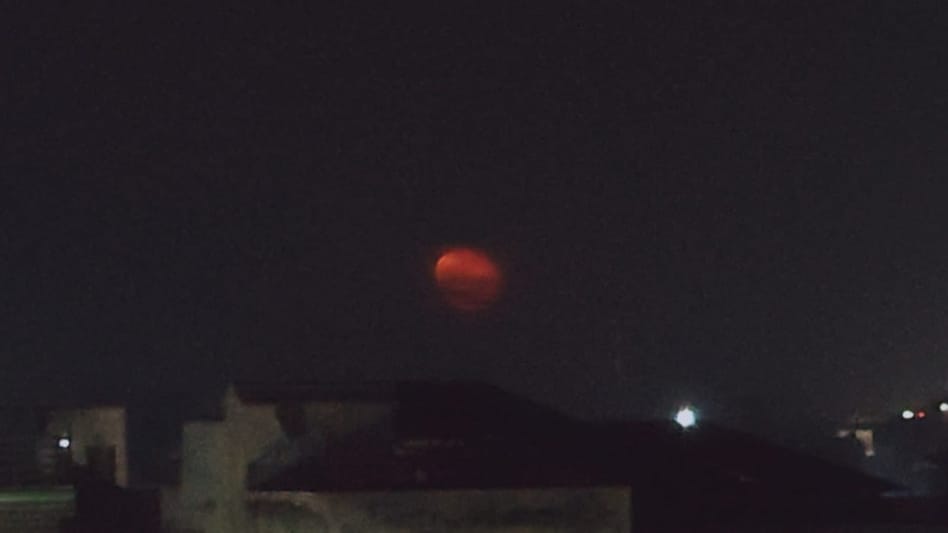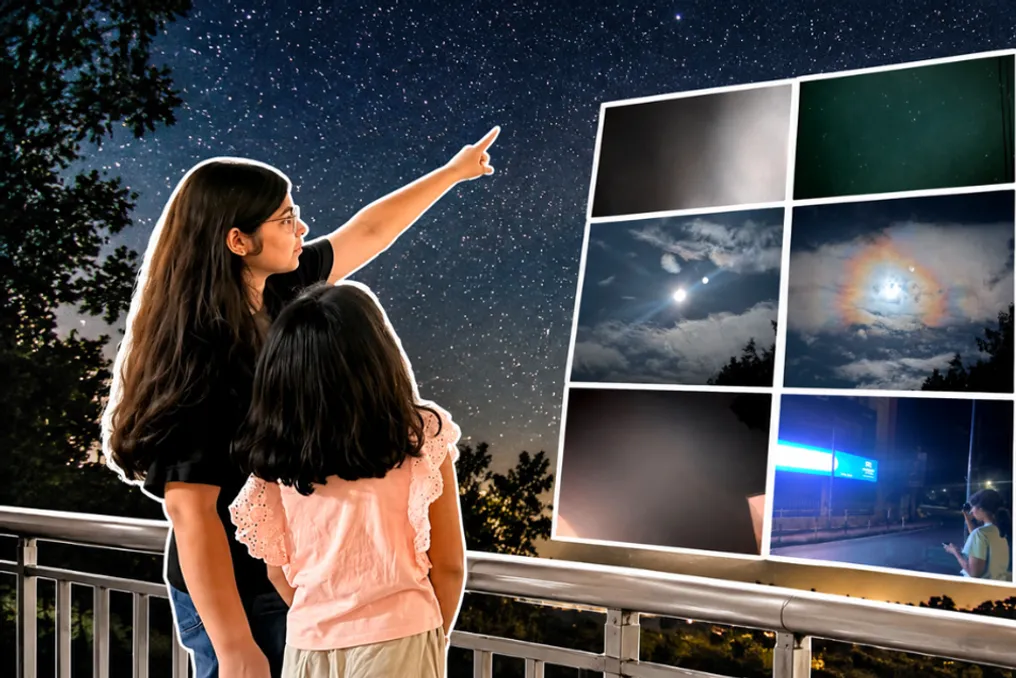
When Suhani Gupta and her sister spot more than seven stars from their balcony in Gurugram, they have cause for joy. They go outside, open the astronomical app Stellarium, and try to identify the constellations overhead. In a city where the night sky rarely offers a clear view of the stars, even a small number can turn an ordinary evening into a special moment.
Suhani told The Better India that she and her sister feel happy when they see more than seven stars in the sky. Initially, the sisters assumed the limited visibility was due to air pollution, as Gurugram is often shrouded in smog. However, trips to their grandparents' home in Udhampur, Jammu and Kashmir, gave Suhani a different perspective: the sky there seemed much more generous with stars.
She realized that the stars hadn't suddenly multiplied in the mountains, but something in the surrounding environment had changed. This observation prompted Suhani to study the issue of light pollution—the excessive or improperly directed use of artificial light that makes the night sky brighter and hinders the observation of celestial objects. Buildings, roads, commercial establishments, and other outdoor lighting sources can contribute to this phenomenon.
The consequences of this phenomenon extend beyond astronomy, affecting nocturnal wildlife, ecosystems, and the impact of darkness on humans. But how could a schoolgirl measure a problem that many adults barely notice?
In May 2025, Suhani, who was in the 12th grade at the time, began independently learning image processing and developed SkyQi—a free online platform that assesses night sky quality based on photos taken with smartphones. The project evolved into a citizen science initiative, attracting observations from users in dozens of countries.
In 2026, she deepened her research by using NASA satellite data to analyze changes in night brightness across 50 Indian cities between 2015 and 2025. Her analysis showed that the average measured night brightness across the cities in 2025 was 70% higher than in 2015, with 47 out of 50 cities recording an increase. Leh, known for its dark skies and astronomical tourism, demonstrated the sharpest rise in her dataset—546%.
These results do not directly measure how bright the sky appears to a person on the ground, but they raise questions about how urbanization, tourism, and outdoor lighting are changing nights in India.
For Suhani, the goal is to make these changes more obvious, understandable, and ultimately, solvable.
From School Astronomy Club to Pollution Problem
Suhani's interest in light pollution arose in 2024 when she participated in her school's space club. During meteor showers and other astronomical events, club members would gather in a voice chat around 3 AM to observe the sky. Stargazing required patience: participants would spend about 30 minutes outdoors, allowing their eyes to adjust to the darkness before attempting to identify celestial objects.
Suhani explained that while this is usually done to adapt to moonlight, the smog in their sky was much stronger, which is how she became interested in light pollution. She started watching YouTube videos and reading studies on the impact of artificial light on human health, wildlife, ecosystems, and astronomy.
She noted that, unlike other types of pollution such as air, water, or noise, light pollution accumulates gradually, so they didn't even realize it was capturing their skies. Unlike a polluted river or a visible plume of smoke, a progressively brighter night sky can be difficult to recognize as an environmental change. New buildings, illuminated advertisements, streetlights, and commercial spaces can create an impression of greater safety or urban development. Nevertheless, the cumulative effect of unnecessary or improperly directed lighting can diminish the darkness that previously allowed people to see the stars.
Suhani wanted to understand how to measure this gradual change. She also needed a method that did not require expensive equipment or specialized astronomical knowledge.
Can a Smartphone Measure the Night Sky?
Professional astronomers use instruments called Sky Quality Meters to measure night sky brightness. These devices provide numerical indicators that help observers assess the degree of local darkness. However, their cost can be prohibitive for students, amateur astronomers, and community groups.
Suhani began investigating whether a regular smartphone camera could offer an alternative. She already had experience with Arduinos and Raspberry Pi, and she had created visual aids for the visually impaired using computer vision and language models. Her parents helped her develop the necessary skills for the project. Both are software engineers from BITS Pilani, and her mother worked on image processing for Nokia phones.