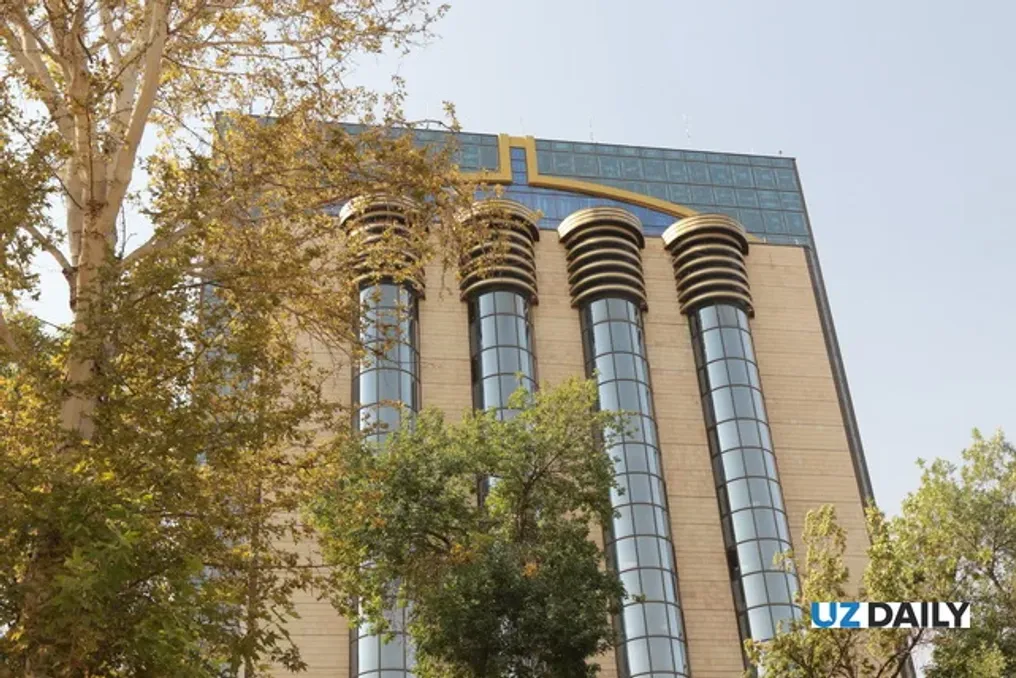
Central Bank of Uzbekistan is developing a bank rating based on financial accessibility
Read more
UzDaily
uzdaily.uz

Central Bank of Uzbekistan is developing a bank rating based on financial accessibility

The Central Bank of Uzbekistan is working on creating a rating for commercial banks. The goal of this rating is to assess the contribution of banks to expanding access to financial services for both individuals and enterprises.

When compiling the rating, the availability of banking products for individuals, as well as for micro-, small, and medium-sized enterprises, will be taken into account. Furthermore, the evaluation will be based not only on access to services but also on their convenience, security, and overall quality of provision.

Discussion of the Rating Methodology

On October 30, 2026, the Central Bank held a meeting with representatives of commercial banks. During this meeting, the methodology for forming the rating, evaluation criteria, and preliminary calculation results were discussed.

Participants reviewed the data used to calculate the rating indicators, assessed their reliability, and discussed possible ways to further improve the methodology.

This initiative aims to increase the availability of financial services for the population and businesses, stimulate healthy competition among commercial banks, and improve the quality of the banking services they provide.

Similar stories

Ministry of Economy and Finance of Uzbekistan presented nine new financial reporting standard projects
Read more
uzdaily.uz

Ministry of Economy and Finance of Uzbekistan presented nine new financial reporting standard projects

The Ministry of Economy and Finance of Uzbekistan has put nine draft national financial reporting standards (NFRS) out for public discussion. These new standards, developed taking into account international approaches, are planned to be implemented in stages starting from January 1, 2027, as announced by the ministry on October 27.

The development of these new NFRS, intended to replace the current national accounting standards, was mandated by Presidential Decree No. PP-282 dated September 15, 2025. The goal of this reform is not only to update accounting rules but also to ensure that companies' financial statements reflect their actual financial position and results in a clear, reliable, and comparable form. This is expected to improve the decision-making process for businesses, investors, creditors, and other users of financial information.

The new standards are part of the 2026–2027 program, which covers over 30 documents across eight areas. Five documents have already been registered, and the nine new projects relate to the presentation of financial statements, asset accounting, revenue and expense recognition, and the transition to the new NFRS system.

Among the presented projects are NFRS No. 5 'Fair Value Measurement'; No. 7 'Initial Application of National Financial Reporting Standards,' and No. 10 'Statement of Cash Flows.' Also included are NFRS No. 20 'Inventories'; No. 22 'Property, Plant and Equipment'; and No. 25 'Intangible Assets.' The remaining three standards are NFRS No. 50 'Accounting for Revenue and Expenses under Customer Contracts'; No. 53 'Borrowing Costs'; and No. 60 'Accounting for Foreign Currency Transactions.'

These projects standardize existing rules in line with international approaches and address issues that are not sufficiently covered by current national standards. The initial application standard establishes a general framework for transitioning to the new requirements. The other projects aim to ensure uniform accounting practices for cash flow, inventories, property, plant and equipment, intangible assets, contract revenues, borrowing costs, and foreign currency transactions.

The Ministry invited accountants, auditors, enterprises, professional associations, government bodies, educational institutions, and research organizations to review these projects on the portal regulation.adliya.uz and submit their proposals. Previously registered documents include the 'Conceptual Framework for Preparing and Presenting Financial Statements' (registration number 3854 dated June 10, 2026), as well as NFRS No. 1 'Presentation and Disclosure of Information in Financial Statements' (No. 3923 dated August 13, 2026) and NFRS No. 2 'Framework for Financial Reporting: Accounting Policies and Estimates' (No. 3810 dated April 11, 2026).

Also among the registered standards are NFRS No. 70 'Agricultural Activity Accounting' (No. 3944 dated September 28, 2026) and NFRS No. 77 'Simplified Accounting and Financial Reporting for Non-Governmental Organizations That Are Not State-Owned' (No. 3917 dated August 8, 2026).

Uzpromstroybank leads Uzbekistan bank rating for mortgage lending activity
Read more
uzdaily.uz

Uzpromstroybank leads Uzbekistan bank rating for mortgage lending activity

According to the Central Bank of Uzbekistan, as of October 1, 2026, Uzpromstroybank ranked first among commercial banks in terms of mortgage lending, rising three positions. In the housing construction financing activity rating, Aloqabank took the top spot, improving its position by seven places.

The ratings cover two areas: issuing mortgages to individuals and financing housing construction. The Central Bank emphasized that these indicators reflect the banks' activity in developing housing and mortgage markets but do not indicate their overall financial stability or business results.

In the mortgage activity rating, Uzpromstroybank advanced from fourth to first place. The National Bank of Uzbekistan maintained second place. Xalq Bank dropped two places, from first to third, while Ipoteka Bank fell one position, taking fourth place.

Agrobank rose two places, reaching fifth place, while Asakabank remained in sixth place. Microcreditbank lost two positions, dropping to seventh place. Turonbank, Orient Finans Bank, and Trustbank finished in the top ten, holding eighth, ninth, and tenth places, respectively.

Uzpromstroybank showed the greatest improvement in this rating, while Xalq Bank and Microcreditbank recorded the largest decline. Half of the banks in the top 10 maintained their positions.

The mortgage activity assessment is based on ten indicators. Three of them carry the highest weight—17% each, totaling 51% of the overall score. These include the annual growth of mortgage lending in the current year, the volume of mortgages financed by the bank's own funds, and the share of subsidized mortgages among loans financed from the state budget.

The total volume of mortgages issued in the current year accounts for 15% of the assessment. The volume of mortgages issued over the last three years and the volume financed by banks' own funds during this period are each weighted at 10%.

The quality of the mortgage portfolio is accounted for at 6%. The share of mortgages in the total volume of loans issued to individuals in the current year, the average weighted interest rate, and the average interest rate on mortgages for the year account for 5% each.

In the housing construction financing rating, Aloqabank rose from eighth to first place. Agrobank and Business Development Bank both dropped one position, taking second and third places, respectively. Uzpromstroybank improved its position by three points, taking fourth place.

The National Bank declined by two positions, ending up in fifth place, while Turonbank maintained sixth place. Xalq Bank dropped two places to seventh. Hamkorbank showed the most significant decline in this rating, losing four positions and taking eighth place. Ipoteka Bank and Microcreditbank remained in ninth and tenth places, respectively.

This rating is based on nine indicators. Five of them have a weight of 15% each, totaling 75% of the overall score. These indicators include loans issued to contractors in the current year and the previous three years, the annual growth in lending volume, loans financed by banks' own funds in the current year, and the quality of banks' housing construction portfolios.

Loans financed by banks' own funds over the last three years account for 10% of the assessment. The share of loans to contractors in the total corporate loan portfolio, the share of these loans in the total corporate lending, and the average weighted interest rate on loans financed by banks' own funds in the current year are each weighted at 5%.

Seven banks were included in the top 10 of both ratings: Uzpromstroybank, National Bank of Uzbekistan, Xalq Bank, Ipoteka Bank, Agrobank, Microcreditbank, and Turonbank. Uzpromstroybank was the only bank able to improve its position in both ratings, rising three places in each. The National Bank secured second place in mortgage lending and fifth in housing construction financing. Agrobank took fifth and second places, respectively.

Asakabank, Orient Finans Bank, and Trustbank appeared only in the top 10 of the mortgage activity rating. Aloqabank, Business Development Bank, and Hamkorbank were represented exclusively in the housing construction financing rating.

Central Bank of Uzbekistan Increases Number of Participants in Financial Experiments
Read more
podrobno.uz

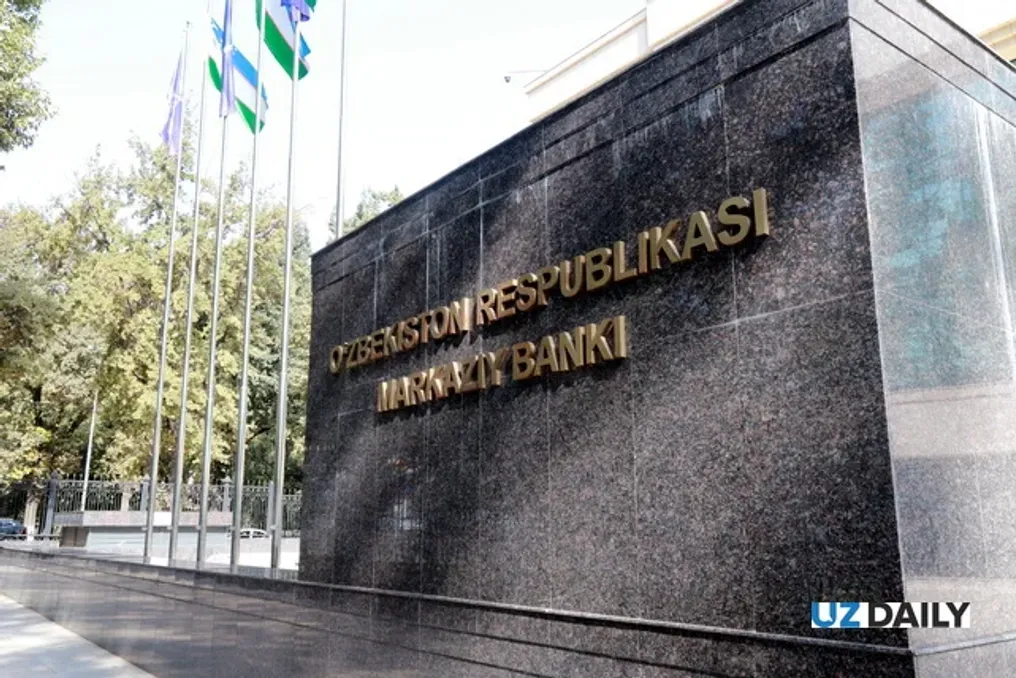
Central Bank of Uzbekistan Increases Number of Participants in Financial Experiments

The Central Bank of Uzbekistan has expanded the scope of financial experiments by providing the opportunity to participate in testing new financial services under a special experimental legal regime.

Now, non-residents and companies whose activities are under the supervision of other state bodies can join such projects. These changes were officially formalized by an administrative regulation registered by the Ministry of Justice on October 19.

Structure and Conditions of the Experimental Regime

This document details the procedures for introducing and terminating the special legal regime in the field of financial services, as well as establishing all conditions for operating within this regime. The updated concept of the 'regulatory sandbox' includes three independent pilot areas: 'Innovation,' 'Acceleration,' and 'Technological Cooperation,' the details of which will be announced later.

Furthermore, companies planning to implement a new financial product within the experiment now have the opportunity to receive preliminary consultation from the regulator. The regulation also defines the rules for maintaining a register of all participants.

An important requirement is the necessity to indicate in any advertising or informational materials about financial services provided under the 'regulatory sandbox' that these services are in an experimental mode.

Previously, there was information about the development of a new legislative act regarding the capital market in Uzbekistan. This law aims to expand business potential for attracting investments and introduce new types of financial instruments, including Islamic sukuk securities, whose yield is calculated according to the principles of Islamic finance, rather than through standard interest payments.

Popular