Inflation expectations in Uzbekistan fell to 8.7% in September
Read more
UzDaily
uzdaily.uz

Inflation expectations in Uzbekistan fell to 8.7% in September

According to data from the Central Bank of Uzbekistan, inflation expectations among the population of Uzbekistan for the next 12 months in September 2026 decreased to 8.7%, compared to 9.8% in August. A similar decrease was noted in business inflation expectations, which stood at 9.2% versus 9.6% in the previous month.

These results were obtained based on a monthly survey involving 2,726 residents and 1,043 enterprises. It is reported that the figures presented are weighted averages. The median inflation expectation among households remained unchanged at 8% in September, while the median among enterprises increased from 8% to 9%.

Perceived inflation by the population also decreased to 9.2% in September, down from 10.1% in August; the median estimate in this category was 8%.

Differences in Expectations Across Population Groups

Among various population groups, pensioners showed the highest inflation expectations at 12.4%. They were followed by in-home service employees with expectations of 10.6% and transport service workers with 9.9%. The lowest forecasts were recorded among retail workers (7.8%) and students (7.9%).

In the business sector, the highest inflation expectations were registered in the transport services sector (10.7%), crafts (9.8%), and trade (9.7%). The tourism business reported the lowest forecasts at 7.5%.

Regional Differences in Inflation Expectations

In Tashkent, residents recorded the highest inflation expectations at 11.6%. The lowest figures were noted in Khorezm region (6.8%) and Namangan region (7.1%). In the capital, 17% of respondents predict price growth of 17% or more. In Khorezm region, 70% of those surveyed expect inflation not higher than 8%.

Among enterprises, the highest expectations were recorded in Samarkand region (10.2%) and Fergana region (10.1%), while the figure in Kashkadarya region was the lowest at 7.5%.

Inflation expectations were also strongly dependent on income level. Respondents whose monthly income exceeds 30 million soums expected inflation growth up to 14.4%, while those earning between 20 and 30 million soums predicted 11.3%. Among those surveyed with a monthly income of no more than 2 million soums, the expected inflation rate was 7.6%.

A similar pattern was observed when assessing perceived inflation: this indicator reached 15.9% among individuals with incomes over 30 million soums and 7.7% among those whose income did not exceed 2 million soums.

Main Factors Causing Price Concerns

Residents continue to cite rising fuel and energy prices as the main cause of inflation, noted by 50% of respondents. The increase in utility costs was mentioned by 38%. The share of respondents naming utilities as a factor decreased from 53% in August. Meanwhile, the share of those expecting an increase in staple food prices rose from 21% to 31%.

The share of residents pointing to monopolies and artificial price increases increased from 21% to 30%, and the share citing exchange rate fluctuations rose from 14% to 22%. Businesses most often cited rising fuel and energy prices (52% of respondents) and increased utility expenses (38%) as reasons for price increases.

The share of enterprises indicating an increase in raw material prices rose from 19% to 37%. The share citing high tax burden increased from 15% in August to 29%, and concerns about deteriorating competitive conditions rose from 16% to 25%.

Most Noticeable Price Increases in Goods and Services

Among goods and services whose prices, according to residents, have risen most sharply, meat and dairy products ranked first, mentioned by 56% of respondents. Fuel and gasoline were named by 53%, and electricity and natural gas by 36%. The percentage of residents reporting an increase in transport tariffs and transport service prices rose from 13% in August to 24% in September. The share of those who noted price increases in cafes and restaurants grew from 13% to 22%.

Conversely, a smaller number of respondents reported price increases in fruits and vegetables; their share decreased to 17% from 27% in August.


Similar stories

Industrial lending in Uzbekistan decreased by 8.8% year-on-year
Read more
uzdaily.uz

Industrial lending in Uzbekistan decreased by 8.8% year-on-year

According to data from the Central Bank of Uzbekistan, the volume of bank lending to the industrial sector of Uzbekistan reached 133.4 trillion sums as of October 1, 2026, representing an 8.8% decrease compared to the same period last year. Previously, on October 1, 2025, outstanding loans for this sector amounted to 146.3 trillion sums.

This reduction occurred against the backdrop of an overall growth in the banks' loan portfolio, which increased by 13.2% to reach 659.1 trillion sums. As a result, the share of industry in the total lending volume decreased from 25.1% to 20.2%, and the industry's loan portfolio shrank by 12.9 trillion sums.

The construction sector demonstrated the fastest growth in lending, with loans increasing by 33.4% over the year to reach 22.9 trillion sums, raising its share in the total portfolio from 3% to 3.5%. Similar growth rates were observed in the trade and public services sectors, where loans grew by 31.7% to 53.9 trillion sums, and their share increased from 7% to 8.2%.

Loans for transport and communications grew by 16.4% to 37.9 trillion sums. Agriculture received 68 trillion sums in loans, which is 14.5% more than last year, while the sector's share in the total portfolio remained around 10%. Lending for material and technical supplies and sales grew slower, increasing by only 2.9% to 4.6 trillion sums. Loans for housing and communal services grew by 9.2% to 2 trillion sums.

Other sectors saw a 24% increase in loans, reaching 88 trillion sums, and their share in the portfolio rose from 12.2% to 13.4%.

Individuals remain the largest category of borrowers. Household loans increased by 19% year-on-year, reaching 248.4 trillion sums, accounting for 37.7% of the total portfolio, compared to 35.8% the previous year. The retail loan portfolio is now 1.9 times larger than industrial loans, whereas last year this ratio was 1.4.

The total volume of corporate lending grew by 9.9% over the year, amounting to 410.7 trillion sums, which is about twice as slow as the growth in retail lending. Industry accounts for approximately one-third of this corporate loan portfolio. Collectively, individuals, industry, and agriculture account for more than two-thirds of Uzbekistan's total bank lending portfolio.

policy
Uzbekistan's fruit and vegetable exports decreased by 10.9% from January to September 2026
Read more
uzdaily.uz

Uzbekistan's fruit and vegetable exports decreased by 10.9% from January to September 2026

According to data from the National Statistical Committee of Uzbekistan, the export of fruits and vegetables from Uzbekistan decreased by 10.9% year-on-year, reaching a volume of 1.299.1 million US dollars for the period from January to September 2026.

Over the nine-month period, the country exported 1,560.6 thousand tons of fruits and vegetables, which is 3.0% less than the previous year, or 48.2 thousand tons less. In the same period in 2025, exports reached 1,608.9 thousand tons worth 1.457.4 million US dollars.

Fruits and vegetables accounted for 5.0% of Uzbekistan's total exports for the reporting period. Fruit exports reached 393.0 thousand tons worth 445.2 million US dollars, compared to 413.7 thousand tons worth 489.2 million US dollars the previous year.

Grape exports brought in 123.0 million US dollars through shipments of 151.6 thousand tons. In the corresponding period in 2025, Uzbekistan exported 150.7 thousand tons of grapes worth 145.6 million US dollars. Peach exports showed growth in both volume and value: shipments increased from 111.5 to 119.9 thousand tons, and export revenues grew from 105.1 million to 116.8 million US dollars.

Export of dried grape bunches decreased to 63.2 thousand tons worth 74.2 million US dollars, and sweet cherry shipments fell to 25.2 thousand tons worth 59.9 million US dollars. Export of dried plum decreased to 20.6 thousand tons worth 38.1 million US dollars. Shipments of dried apricots also decreased to 12.5 thousand tons, although export revenue increased from 31.8 million to 33.1 million US dollars.

In contrast, vegetable exports showed growth in both volume and value. Shipment volume increased from 493.8 to 557.2 thousand tons, and export revenues grew from 172.1 million to 206.2 million US dollars. Among vegetables, onions accounted for 317.3 thousand tons, bringing in 92.4 million US dollars. Cabbage shipments amounted to 139.8 thousand tons worth 55.1 million US dollars, and tomato exports reached 34.2 thousand tons worth 35.5 million US dollars.

Carrot exports amounted to 59.8 thousand tons worth 13.4 million US dollars, and garlic shipments reached 6.1 thousand tons worth 9.8 million US dollars. Exports of melons and watermelons decreased from 229.2 to 206.3 thousand tons, but their export value increased to 64.7 million US dollars compared to 56.5 million US dollars the previous year.

Additionally, Uzbekistan exported 16.7 thousand tons of peanuts and nuts worth 38.8 million US dollars, as well as 36.8 thousand tons of mung beans worth 34.7 million US dollars. The total export of other fruits and vegetables amounted to 350.6 thousand tons worth 509.4 million US dollars, which is lower than the figure of 418.0 thousand tons worth 659.2 million US dollars in the same period in 2025.

Overall, Uzbekistan's total exports for January-September 2026 reached 25.8 billion US dollars, a decrease of 5.5% year-on-year. Nevertheless, commodity exports excluding gold increased by 31.6% to 13.3 billion US dollars for the same period.

Uzbekistan drops to 82nd place in Henley Passport Index
Read more
uzdaily.uz

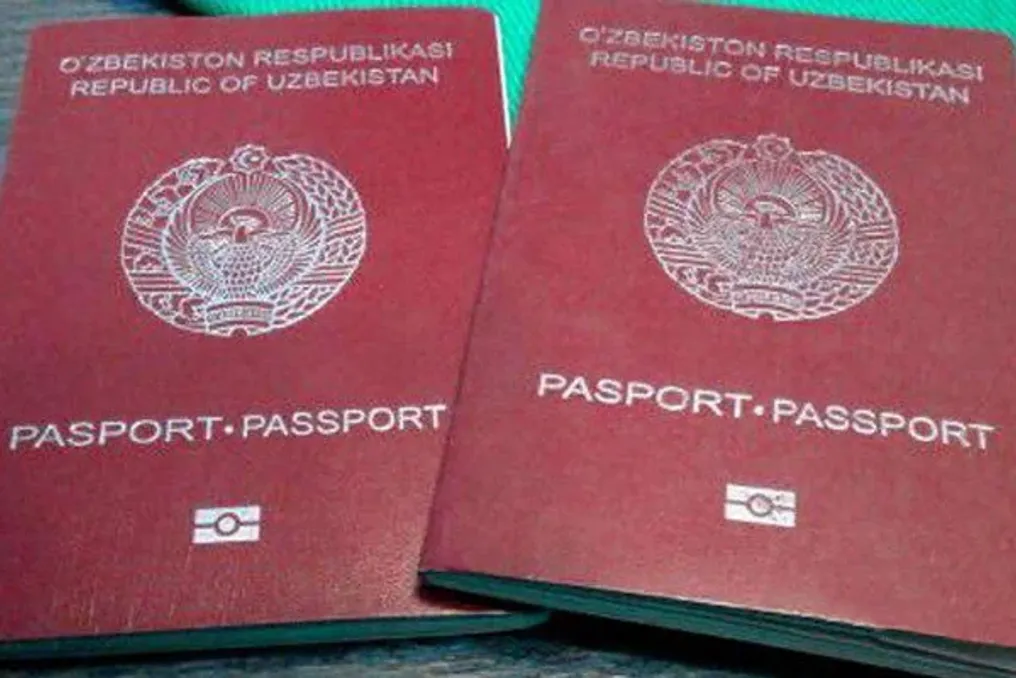
Uzbekistan drops to 82nd place in Henley Passport Index

According to the latest ranking prepared by Henley & Partners, Uzbekistan has dropped to 82nd place out of 106 countries in the Henley Passport Index. Previously, in April 2026, the country held 73rd place.

Citizens of Uzbekistan can visit 57 countries and territories without needing a prior visa or with a visa on arrival. Currently, Uzbekistan shares 82nd place with Burkina Faso and Togo.

Singapore is the leader of the ranking, whose passport allows its holders to travel to 193 destinations without a prior visa. At the bottom of the list is Afghanistan, which has access to 22 destinations under the same conditions.

The Henley Passport Index ranks documents based on the number of places their holders can visit without obtaining a visa before departure.

Popular