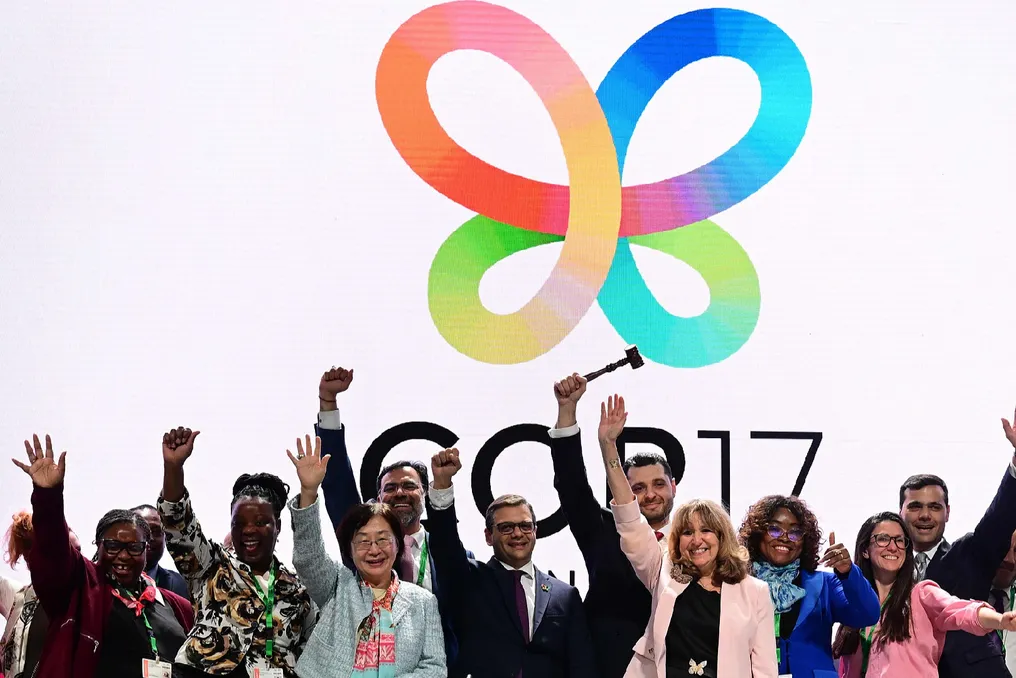
The UN Convention on Biodiversity COP17 concluded in Yerevan, Armenia, causing disappointment among many delegates as the urgency of the issue was not adequately reflected in the adopted decisions. Although the meeting was intended to be a moment to correct the course in combating the causes of species extinction, genetic diversity, and ecosystem loss, observers noted that the multilateral system still lacks the ability to solve problems, only to voice opinions about them.
Four years ago, governments agreed on ambitious goals for 2030 under the Global Biodiversity Framework. However, according to the Global Assessment presented earlier this year, none of these goals are moving in a fully positive direction. At COP17, governments adopted the 'Yerevan Pathway' to address this gap, but experts agreed that it largely relies on previously agreed text and does not provide clear practical guidelines.
Alfred DeGhemmes, Director of International Policy at Wildlife Conservation Society, stated that 'obstructionist policies of climate discussions' have emerged in biodiversity negotiations. Observers also reported that Russia repeatedly tried to weaken wording concerning indigenous peoples' rights, the open sea, and harmful subsidies, while Saudi Arabia and India resisted mentions of subsidy reform.
Negotiators excluded earlier formulations calling for the transformation of economic and financial systems and the reform of harmful practices. Instead, the text merely calls for 'enhanced action to address the root causes of biodiversity loss.' Developed countries and those 'able to do so' are 'strongly encouraged' to increase support for developing countries, but the document specifies no concrete amounts.
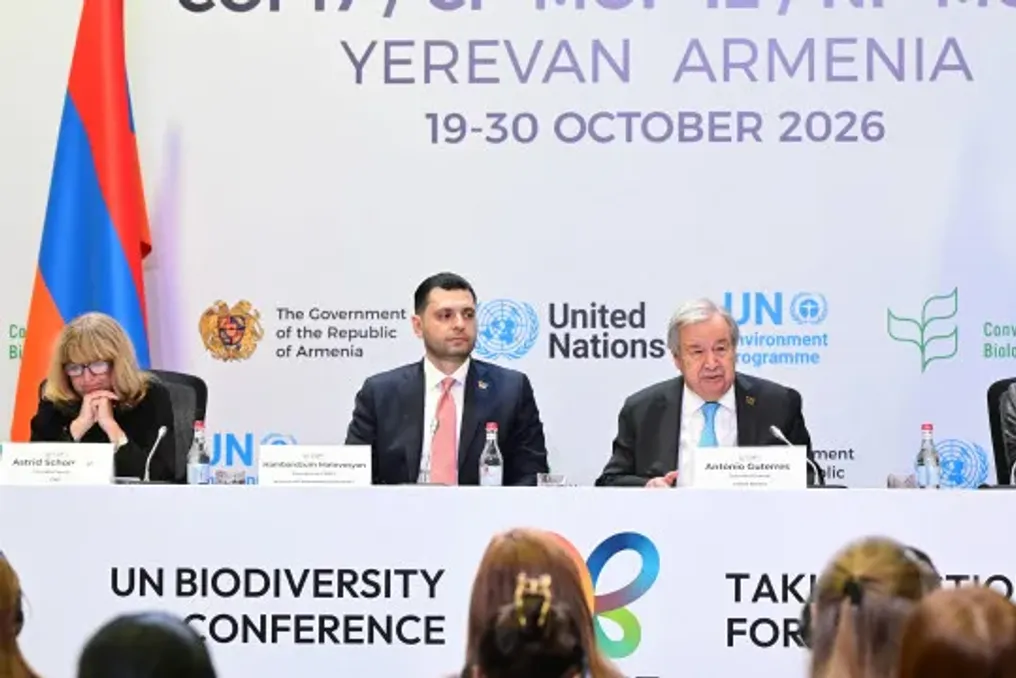
It is estimated that there is a deficit of $700 billion between what is needed to solve the biodiversity crisis and what has actually been raised. COP17 President Hambardzum Matevosyan noted at a press conference that while what was achieved is not sufficient, it exceeds expectations.
Yerevan was smaller and quieter than the previous COP16 summit in Cali, Colombia. About 9,300 people registered compared to over 23,000 in Cali, and protests were limited and held indoors. Nevertheless, the negotiations themselves were tense. In Cali, the meeting could not officially conclude after going into overtime; delegates started leaving, and a quorum was lost, requiring the meeting to resume in Rome several months later. In Yerevan, the process proceeded more smoothly, concluding early Saturday morning instead of the planned Friday evening, following a final plenary session that lasted almost 12 hours.
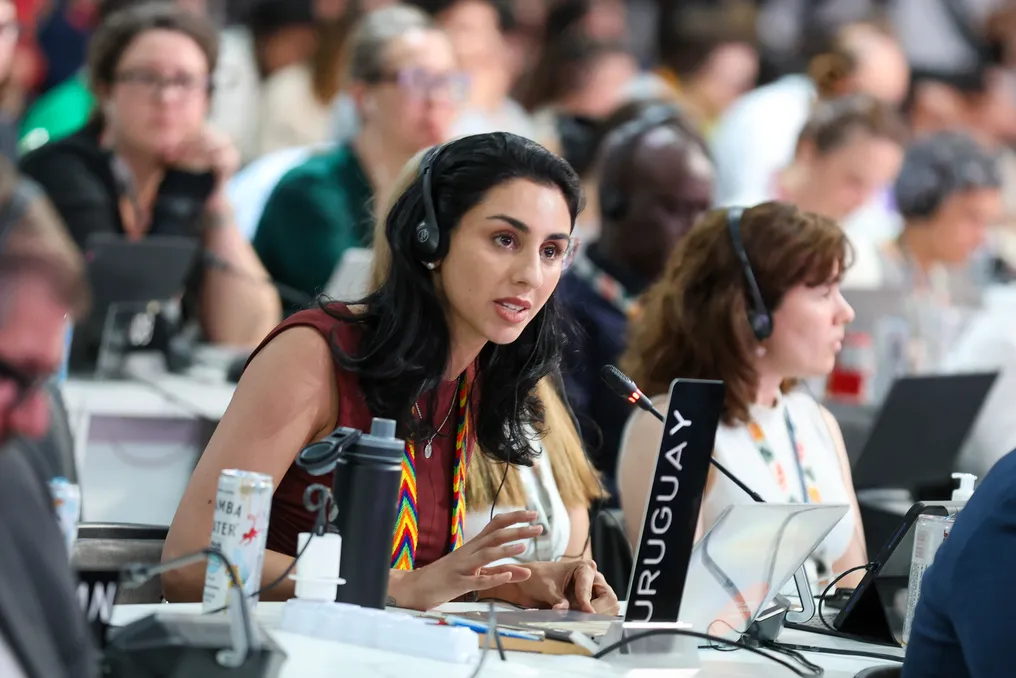
Countries spent two exhausting weeks of negotiations, facing sharp differences of opinion on how to close the gaps in biodiversity conservation efforts. Panama's Environment Minister Juan Carlos Navarro stated at a press conference that those who support forests cannot bear the burden, while high-emitting and consuming countries evade responsibility. Ireland's Minister for Nature, Christopher O'Sullivan, emphasized that some countries, still classified as developing, 'obviously must play their part' in nature protection financing.
Under the Global Biodiversity Framework, developed countries committed to allocating at least $20 billion annually from public funds by 2025, rising to $30 billion by 2030. The Global Assessment showed that this goal was likely not met. OECD data indicates that in 2024, funding reached approximately $19 billion, but averaged around $16 billion per year between 2023 and 2025.
The JUSCANZ coalition of developed countries proposed 'expanding the contribution base' to include developing economies such as China and India in the list of countries funding nature protection. Ultimately, states wishing to join the donor list were invited to express interest, while others could make voluntary contributions without being included in this list.
Debates over insufficient funding hide another problem: where existing funds are going. Governments spend about $1.8 trillion annually on subsidies that harm nature, such as those promoting deforestation. Goal 18 of the Global Biodiversity Framework calls for reducing harmful incentives by at least $500 billion annually by 2030. Progress in this area has been particularly limited. Earlier Global Assessment reports called for more decisive action, but the final text of the Yerevan Pathway only 'encourages' countries to 'accelerate' the implementation of this goal based on their 'national circumstances.'
The coalition, co-chaired by Colombia and Finland, known as Friends of Target 18, was also created to help countries find solutions. Greenpeace expert on biodiversity policy Anne Lambrechts noted that 'the prevalence of the topic [harmful subsidies] in negotiations is a positive sign,' adding that industries profiting from nature destruction should also participate.
A similar logic underlies the Cali Fund, established at COP16, which aims to make companies pay for genetic data, but after two years, it remains almost empty. According to the fund's terms, companies are asked to voluntarily contribute 1% of their profits or 0.1% of their revenue to raise $1 billion annually for nature conservation. Half of these funds are designated for indigenous peoples and local communities. However, by the end of COP in Yerevan, only about $10,500 was promised.
Countries were supposed to finalize details such as which specific companies—small, medium, or large—should contribute to the fund and how the funds would be distributed. However, decisions were postponed until the following year due to the inability of countries to reach an agreement. June Rubis, a scientist and member of the International Indigenous Peoples Forum on Biodiversity, stated that 'indigenous peoples and local communities cannot wait while companies use nature's genetic information for free.'
Nevertheless, they achieved some progress in their specific area. Countries agreed on the functioning of a permanent body for indigenous peoples and local communities, established at COP16. This body can make recommendations at COP, but final decisions remain with governments. Inara Vati Sateré-Mave, deputy coordinator of COIAB, an indigenous organization in Brazil, stated at COP: 'Yes, we are present here, but a colonial state sits at the negotiating table. We do not have the conditions for this.'
Countries also adopted a document on biodiversity and climate change, which calls on governments to consider new voluntary guidelines for expanding nature-oriented solutions. However, following objections, references to last year's advisory opinion of the International Court of Justice on climate change and the assessment of IPBES, the UN's scientific advisory body on biodiversity, were removed from the text. A representative of the European Union at the closing of the plenary session expressed 'deep concern' over attempts at 'undermining science' and the reduction of IPBES's contribution, calling it one of the 'best compasses.'
Negotiations on marine biodiversity were also contentious. Russia opposed mentions of the agreement on marine biodiversity beyond national jurisdiction, known as the High Seas Treaty, which entered into force in January and has been ratified by over 100 countries. The final Yerevan text on marine biodiversity merely noted the treaty's entry into force rather than welcoming it, although countries agreed to create an informal consultative group on the convention's work in the open sea. Brianna Fruan, a climate and ocean activist from Samoa, stated that this development is extremely disappointing: 'The world is losing time while political leaders argue over words and punctuation.'
The next opportunity to address these gaps will be at COP18 in Quito, Ecuador, in 2028, two years before the 2030 deadline. An official representative of the Ecuadorian Ministry of Environment told the plenary session that the country would work 'transparently and constructively.' For Astrid Schomaker, head of the UN Convention on Biological Diversity, the current test is what governments will change upon returning home. She stated that 'we cannot protect nature while continuing to finance its destruction. Resources must flow to the countries and communities that need them. And biodiversity must become part of everyday economic decisions.'