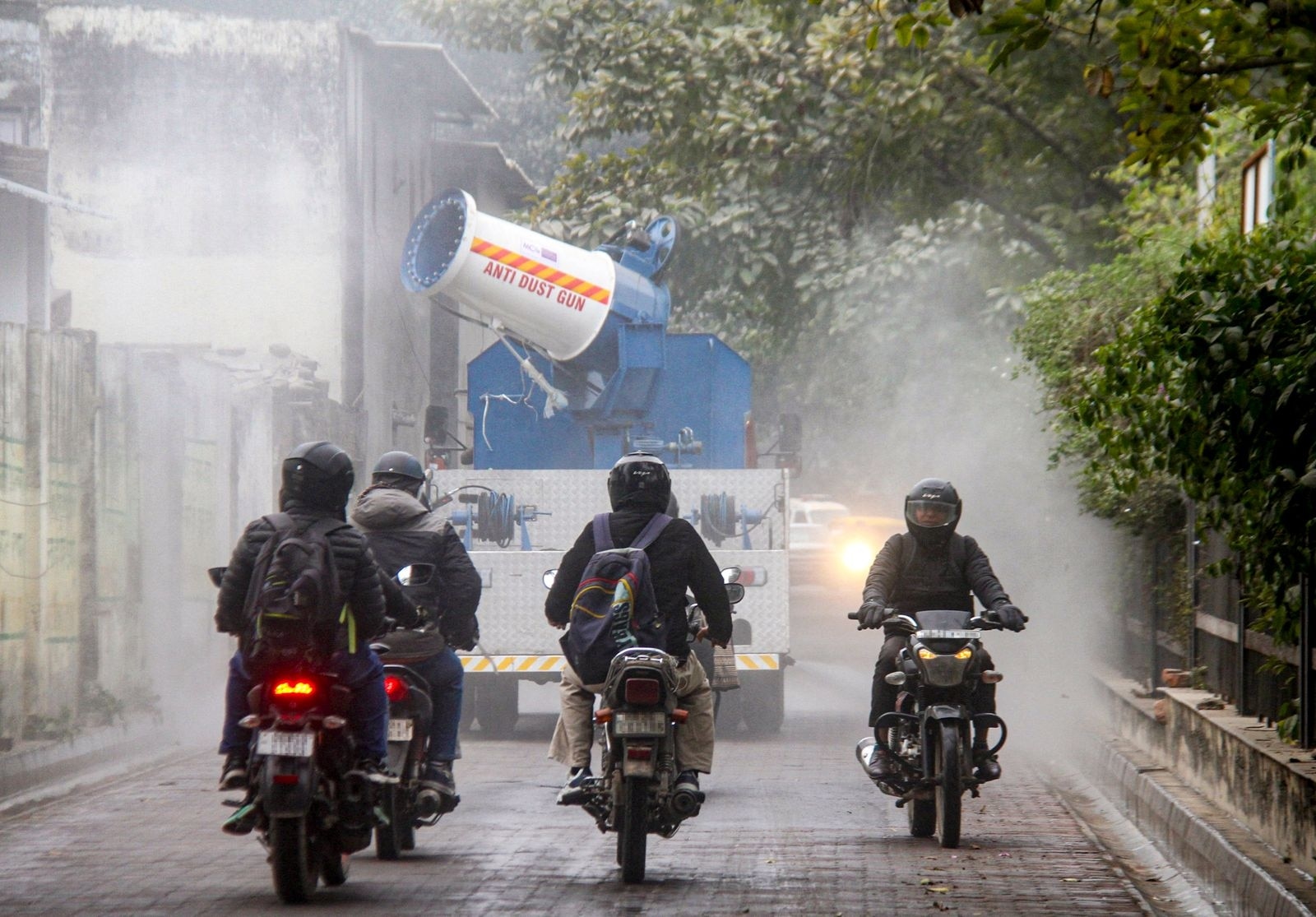
The air in the capital has once again become toxic ahead of the Diwali festival. On Tuesday, the Air Quality Index (AQI) in Delhi was recorded at 350, which is the worst air quality in the city in the last 287 days. Previously, on January 20, the AQI was 378.
The situation deteriorated to the point where air was classified as being in the 'Severe' category at 10 out of 57 monitoring stations. Furthermore, 35 stations showed extremely poor air quality, and another 12 stations showed poor quality.
The highest pollution was recorded in Jahangirpuri, where the AQI reached 462, which falls under the Severe category. The Central Pollution Control Board (CPCB) defines the categories as follows: 0 to 50 — Good, 51 to 100 — Satisfactory, 101 to 200 — Moderate, 201 to 300 — Poor, 301 to 400 — Very Poor, and 401 to 500 — Severe.
Forecast for the coming days
According to the Delhi Air Quality Early Warning System, the air may remain in the Very Poor category from November 4 to 6. The forecast for the next six days also indicates that the pollution level will fluctuate between Very Poor and Severe.
After registering an AQI of 324 on Monday, Phase II of the Graded Response Action Plan (GRAP-2) was implemented in Delhi. This season, for the first time, the air in Delhi reached a Very Poor level.
Sources of Pollution
Burning stubble and vehicle emissions contribute significantly to the air pollution in Delhi. According to the Decision Support System (DSS), the contribution of stubble burning was 15.3%, and transport emissions were 15.8%.
In addition, factories in Delhi and surrounding areas contributed 3%, domestic sources contributed 3.9%, and construction activities contributed 2.2%. Waste burning accounted for 1.4% of the pollution, power generation for 1.2%, and road dust for 1.2%. Other sources contributed 1%.
In the surrounding NCR areas, the contributions were: Ghaziabad — 8.8%, Gurugram — 4.1%, Sonipat — 2.6%, Rohtak — 2.5%, and Mewat — 2%.
Stubble Burning in Six States
On November 2, satellite data recorded 219 instances of stubble burning across six states. The highest number of cases (98) was noted in Punjab. Rajasthan recorded 67 cases, Madhya Pradesh recorded 48, Uttar Pradesh recorded 4, and Haryana recorded 2 cases. No stubble burning cases were registered in Delhi or Uttarakhand.
Between September 15 and November 2, a total of 3535 field burn incidents were recorded in these states. The largest numbers included 1612 in Punjab, 738 in Rajasthan, 614 in Madhya Pradesh, 349 in Uttar Pradesh, 176 in Uttarakhand, 44 in Haryana, and 2 in Delhi.
The stubble burning season runs from September 15 to November 30. In Delhi, the first stubble burning cases this season were registered on September 19, and the second case on October 24. PM2.5 proved to be the most effective pollutant in Delhi's air. These very fine particles are 2.5 micrometers or smaller. They can penetrate deep into the lungs along with inhaled air and enter the bloodstream, posing a serious threat to health.