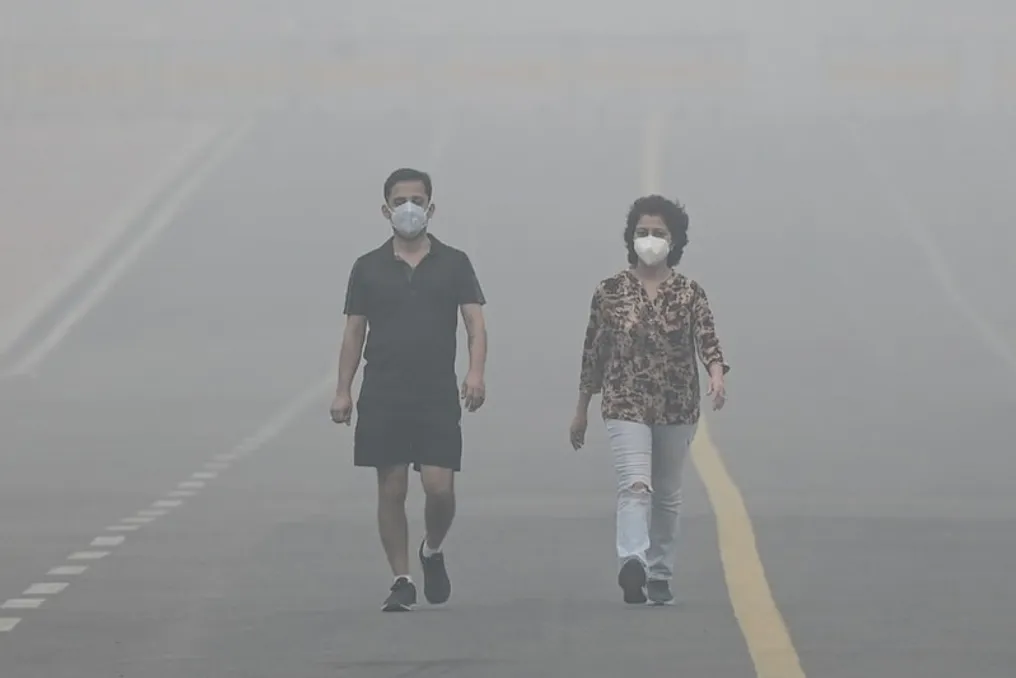
Doctors warn about risks of being outdoors and give recommendations when AQI is above 400
Read more
Aaj Tak
www.aajtak.in

Doctors warn about risks of being outdoors and give recommendations when AQI is above 400

In many areas of Delhi and NCR, the Air Quality Index (AQI) has exceeded the 400 mark. Questions arise about how dangerous such a level of pollution is for health and whether one should go for a walk. Experts explain which groups of people are at the highest risk.

Dr. Ankit Bhatia from the Respiratory Medicine department of Yashoda Medical Center explained that when the AQI is above 400, long walks in the fresh air should not be planned. He emphasized that the problem is not only the time spent in polluted air but also the duration of physical exercise outdoors. Prolonged exposure to such high levels of pollution can negatively affect the lungs, so it is recommended to refrain from long walks outdoors at this time. Going outside, both in the morning and in the evening, can worsen health conditions. Instead, one should try to engage in walking and physical exercises indoors. Going for a walk is permissible only in cases of extreme necessity.

A mask must be used

Dr. Ankit advised wearing a mask if one needs to go out for any errands. An N95 respirator that fits tightly can prevent fine PM2.5 particles from entering the lungs. However, the effectiveness of the mask directly depends on how well it seals against the nose and mouth; any gap can allow polluted air to enter. Furthermore, it is advisable to avoid using cloth or loose surgical masks.

Who is in the high-risk group

Children, the elderly, and those suffering from asthma, COPD, or heart diseases should exercise extra caution. On days with very high pollution levels, it is best to take walks indoors. This approach allows people to remain active without placing excessive strain on the respiratory system.

Similar stories

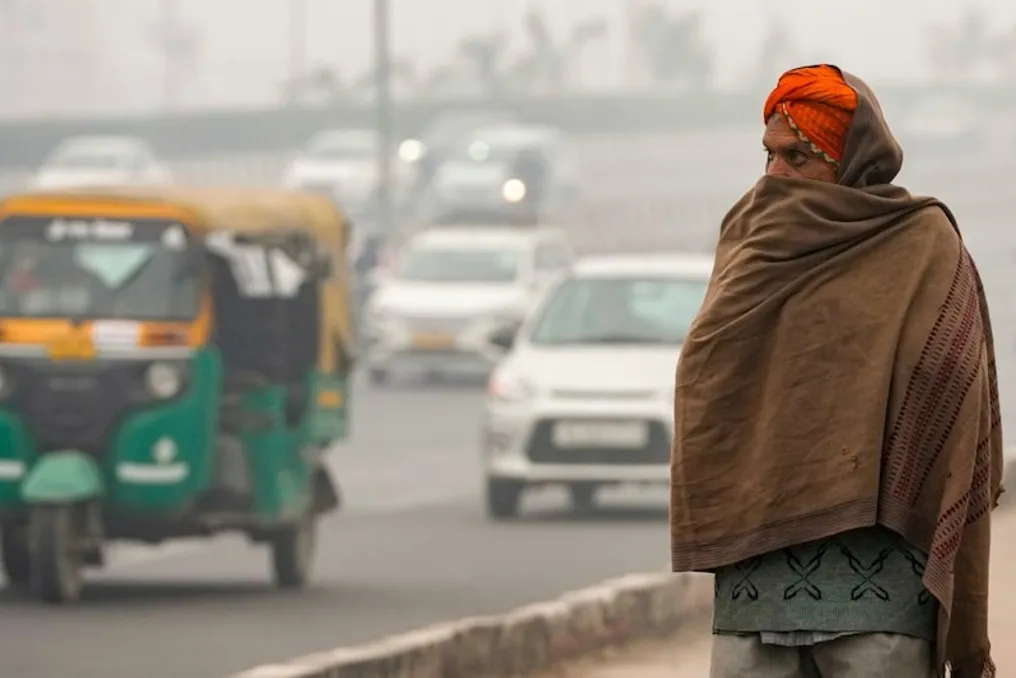
Temperature dropped and air cleared in Delhi-NCR; AQI below 100 in many areas
Read more
www.aajtak.in

Temperature dropped and air cleared in Delhi-NCR; AQI below 100 in many areas

According to the Indian Meteorological Department (IMD), Delhi-NCR is expected to have partly cloudy skies this Saturday. The maximum temperature in Delhi is forecasted to be between 26°C and 28°C, and the minimum between 15°C and 17°C. In many parts of Delhi, the minimum temperature will be close to normal, while the maximum is likely to be significantly below normal.

Furthermore, in several areas of Delhi, the Air Quality Index (AQI) is below 150, and in some places, it has even dropped below 100. The Central Pollution Control Board (CPCB) reported that on Saturday morning, the AQI in Alipur and DTU was 135. IIT Delhi recorded a reading of 73, Burari recorded 80, Ashok Vihar recorded 104, Dwarka Sector-8 recorded 86, IGI Airport (T3) recorded 83, Jawaharlal Nehru Stadium recorded 113, and Anand Vihar recorded 116.

For reference, an AQI from 0 to 50 is classified as 'good', from 51 to 100 as 'satisfactory', from 101 to 200 as 'moderate', from 201 to 300 as 'poor', from 301 to 400 as 'very poor', and values from 401 to 500 are considered 'hazardous'.

Regarding the forecast for Sunday, Delhi-NCR is also expected to have partly cloudy skies. The maximum temperature in Delhi is predicted to be between 28°C and 30°C, and the minimum between 16°C and 18°C. Most areas of Delhi will have a minimum temperature near normal on Sunday, while the maximum temperature is likely to be below normal.

The weather department warns of possible rain in various regions of the country. It was noted that on October 30, a low-pressure area formed over the southern part of the Andaman Sea and the adjacent Andaman-Nicobar archipelago. There is a high probability that by October 31, this area will transform into a depression in the southeastern Bay of Bengal and around Andaman-Nicobar and the Andaman Sea. This could lead to heavy rains on the coast of Andhra Pradesh on November 2 and 3, 2026.

It is also forecasted that from October 31 to November 5, precipitation is possible in some areas of Bihar, West Bengal, and Jharkhand, located in the Gangetic plains, as well as in some areas of Odisha. Additionally, localized light rains are expected until November 2 in Himachal Pradesh, Jammu and Kashmir, and Uttarakhand.

Air Quality Worsens in Delhi-NCR After Dasara, AQI Exceeds 300
Read more
www.aajtak.in

Air Quality Worsens in Delhi-NCR After Dasara, AQI Exceeds 300

Following the Dasara festival, pollution levels in the Delhi-NCR region significantly increased, reaching hazardous levels. The Air Quality Index (AQI) surpassed the mark of 300 due to smoke from fireworks and stubble burning.

To stabilize the situation, GRAP 1 restrictions were implemented, which prohibit construction work and open waste burning. According to meteorological service forecasts, the situation may worsen in the coming days.

Popular