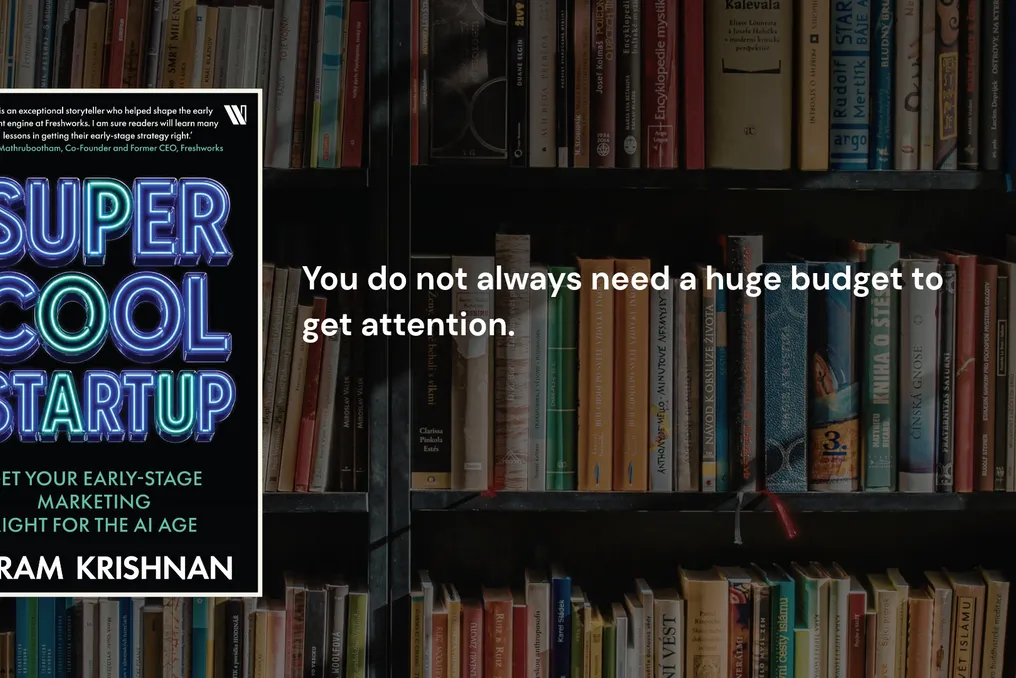
Sairam Krishnan's book 'Super Cool Startup: Get Your Early-Stage Marketing Right for the AI Age' is a practical guide for entrepreneurs, startup founders, and marketers aiming to build recognizable, trustworthy, and memorable brands.
Drawing on his experience with companies like Freshworks and Atomicwork, as well as his involvement in the startup ecosystem, Krishnan explains that having an excellent product is not enough to build a successful business. Startups also require a clear narrative, meaningful content, an engaged community, effective public relations (PR), and a strong social media presence.
The book focuses on five key aspects of early-stage marketing: storytelling, content, community, PR, and guerrilla marketing, as well as social media. It provides valuable insights into how businesses can capture attention and build a marketing engine, especially in an era where artificial intelligence has simplified content creation but increased the importance of strategic judgment.
One of the most important takeaways from 'Super Cool Startup' is that developing a good product is only one component of business success. People must also understand why the product exists and why they should trust it.
Even if a startup has an innovative product, talented founders, and a promising business model, it may face difficulties attracting customers and standing out in a competitive market if it cannot clearly communicate its purpose and value.
Krishnan emphasizes storytelling as the foundation of startup marketing. A compelling brand story clarifies the problem the company aims to solve, the people it wants to help, and what makes its approach unique.
For example, instead of simply describing the product by its features, a startup can explain the everyday problem it solves and how it makes life easier for customers.
People need a reason to be interested in the product, not just a list of its functions. A clear and understandable story helps a startup gain recognition, trust, and a stronger connection with its audience.
A strong brand story requires appropriate content to reach the target audience. This is where content marketing becomes critically important. The book highlights content as one of the indispensable pillars of early-stage marketing. Whether it's an article, a newsletter, a case study, a video, or a social media post, content allows companies to convey their ideas and demonstrate their competence.
However, simply creating content to maintain online activity is not enough. Businesses must understand what their target audience wants to learn, what problems they are trying to solve, and what information will truly help them.
For instance, a startup offering marketing software might publish practical guides, industry reviews, customer stories, and educational videos instead of constantly advertising its product. This approach helps potential buyers understand the brand even before they consider purchasing.
It is important to focus on creating useful content rather than producing content solely for visibility. When companies regularly provide valuable information, they have a greater chance of gaining authority and audience trust.
Another important lesson from 'Super Cool Startup' is that successful brands must pay attention to building communities around their products and ideas. Customers might buy a product out of necessity, but a community gives them a reason to stay connected to the brand. When people feel involved in the company's journey, they can become advocates who recommend its products, share experiences, and represent the business to others.
Krishnan defines community building as a fundamental part of early-stage marketing. Instead of viewing customers merely as buyers, startups should create opportunities for meaningful interaction. This can include organizing online discussions, hosting webinars, creating customer groups, encouraging feedback, or bringing together people with similar interests.
For example, a fitness startup could create a community where members share their progress, exchange tips, participate in challenges, and support each other. Such interaction helps businesses build stronger relationships with their audience.
The focus should not only be on acquiring customers; you must give people a reason to be part of your brand's journey. A supportive community can become one of the startup's most valuable long-term assets.
Startups often operate with limited resources, making traditional advertising and large marketing campaigns an unaffordable luxury. Nevertheless, capturing attention does not always require significant financial outlay. In 'Super Cool Startup,' Krishnan highlights public relations (PR) and guerrilla marketing as important ways to attract attention and increase brand awareness. PR helps companies build trust through media coverage, industry discussions, founder interviews, and significant announcements. Guerrilla marketing, on the other hand, involves creative and unconventional methods of reaching an audience.
A startup can use these methods to create memorable impressions and generate buzz without relying entirely on expensive advertising campaigns. For example, a small business might organize an interesting public event, collaborate with a relevant content creator, or develop a creative campaign that encourages organic sharing. The key is understanding what makes an idea interesting enough for people to talk about it.
Creativity and strategic thinking can sometimes achieve what a large advertising budget cannot. The focus should be on developing memorable ideas that give people a reason to notice and discuss your brand.
An excellent product, an interesting brand story, and valuable content mean little if the target audience never discovers them. This is why social media plays a vital role in a startup's marketing strategy. Krishnan calls social media the fifth pillar of building a super cool startup. They provide companies with platforms to disseminate stories, engage with customers, showcase products, and participate in industry discussions.
However, effective social media marketing goes beyond regular posting. Companies need to understand which platforms their audiences use, what type of content attracts them, and how to communicate in a way that feels authentic. For instance, a B2B startup might use LinkedIn to share industry insights, founder perspectives, and customer success stories, while a consumer brand might use Instagram to showcase products, collaborate with content creators, and build an engaged audience. It is crucial that social media supports the overall marketing strategy, rather than becoming an isolated activity.
'Super Cool Startup' by Sairam Krishnan offers practical knowledge in entrepreneurship, branding, and modern marketing. He shows that a strong product needs effective storytelling, clear positioning, and meaningful connections with the audience to succeed. The five lessons explore how storytelling, content, community building, PR, and social media shape a startup's marketing strategy. The book also emphasizes that while AI simplifies content creation, good marketing still relies on human judgment and understanding audience needs. Whether you are a founder or a marketer, the book offers valuable ideas for building a brand that people understand, trust, and want to talk about.