DJ Zinhle launches her own mobile network, Bestie Connect, for her followers
Read more
TechCentral
techcentral.co.za

DJ Zinhle launches her own mobile network, Bestie Connect, for her followers

One of South Africa's most famous DJs, DJ Zinhle, is launching her own mobile network. This network, named Bestie Connect, is a prepaid Mobile Virtual Network Operator (MVNO) that operates on the MTN infrastructure and is directly aimed at her audience.

This project is being implemented in collaboration with BlueStream Mobile, an MVNO consulting business led by Hymie Marnewick. Previously, Marnewick sold the payment solutions company XLink Communications to Vodacom in 2015. Zinhle is a co-owner of Bestie Connect alongside BlueStream.

Marnewick told TechCentral in an exclusive interview that it is 'the first MVNO in Africa led by a female influencer.' He noted that despite attempts by some celebrities, he has not found other influencer-run MVNOs on the continent.

The network's name comes from Zinhle's way of speaking to her audience; Marnewick explained that she often says, 'Hi, bestie' in her videos. He proposed this idea to her after observing the growth of influencer-based MVNOs in Central America, as well as the example of actor Ryan Reynolds with Mint Mobile.

In his view, since any influencer rents their audience from social media platforms, there is a risk of losing subscribers when algorithms change. The application and SIM card, according to Marnewick, provide direct contact with fans who are already 'spending hard-earned money on mobile internet and following you on social media.'

Zinhle has 5.6 million followers on Instagram. Marnewick indicated that her social media click-through rate is about 3.5%, and the business plan anticipates that Bestie Connect can capture 4% of her audience within five years.

Bestie Connect offers five different 'combo packages': they range from 59 rand per month for 1 GB of data and 20 minutes to 249 rand for 20 GB and 75 minutes. Customers can subscribe weekly or monthly. Minutes are exclusively for calls between Bestie Connect subscribers. Marnewick added that focus groups showed that data is much more important to users than voice calls. Future plans include releasing customizable packages.

Subscribers receive loyalty points that can be exchanged for tickets to Zinhle concerts, vouchers for her retail brand Era, and extra data. The app will feature a panic button linked to emergency response services, which, according to Marnewick, reflects Zinhle's support for the fight against gender-based violence. A content hub will be added at a later stage, where her music and posts will appear 30 minutes earlier than on social media.

SIM cards will be delivered by courier or picked up at Era Zinhle stores. Bestie Connect intends to offer device financing, starting with brands such as Samsung, Oppo, Honor, and Huawei, around Christmas. Financed phones can be remotely blocked if customers stop making payments.

Joining a Saturated Market

Bestie Connect joins approximately 30 MVNOs operating on the MTN network, according to MTN South Africa CEO Ferdi Mulmman. These include Pick n Pay Mobile and Melon Mobile. MTN is reviewing wholesale pricing and plans to offer cheaper access at intentionally lower quality.

Most MVNO subscribers in South Africa, including clients of Capitec Connect and FNB Connect, use the Cell C network, which serves 5.71 million MVNO lines and is estimated to hold 80–85% of the market.

Pre-registration is open on the Bestie Connect website, and the official launch of the network is scheduled for the end of this month. Marnewick hopes that other influencers, including those from West Africa, will follow Zinhle's example, and that BlueStream will assist in creating their own networks.

Similar stories

Generation Z practices digital detox to reduce social media dependence
Read more
www.aajtak.in

Generation Z practices digital detox to reduce social media dependence

Modern Generation Z spends a significant amount of time on phones and social media, often without realizing how time passes from morning until late evening. The phone has become an integral part of this group's daily life. However, some members of Generation Z are trying to change this habit by distancing themselves from social networks and reducing the frequency of checking their phones, as they are tired of using applications for many hours.

This process is called digital detox. Digital detox implies a temporary break or reduction in the use of phones and social media. The goal here is not a complete abandonment of phone use, but rather minimizing the time spent on it and preventing mindless constant checking.

According to a Guardian report from October 27, 2026, 19-year-old Nelisa Mokaunzi used the Opal app to reduce screen time. This application blocks Instagram and other distracting apps, requiring the user to solve mathematical problems to regain access to them.

Furthermore, some young people are opting out of smartphones in favor of simpler phones that lack social media and other frequently used applications. The report mentions 23-year-old Kendall Shaw, who started using such 'light' phones that only provide essential functions like calls and messages.

Another example is 19-year-old Shreya Nallamotu, who developed a device called Brick. This device allows users to block selected applications on their phone using just eight dollars worth of NFC tags.

Some young people now prefer meeting friends in person instead of spending hours on social media. Applications like People Enjoy (P.I.E.) inform about upcoming concerts, events, and other local happenings. According to the report, the number of users of this application grew from 120 thousand in July to 300 thousand in August.

26-year-old Han Choi decided to delete his social media applications to dedicate more time to training and socializing with friends. This demonstrates Generation Z's desire not to spend all their time on screens; they want to use technology while controlling how much time they spend on their phones.

MTN and Huawei introduce microwave spectrum reuse technology in the industry
Read more
techcentral.co.za

MTN and Huawei introduce microwave spectrum reuse technology in the industry

MTN South Africa, in collaboration with Huawei, successfully conducted a proof of concept demonstration and achieved the first commercial validation in the industry of enhanced microwave spectrum reuse capability. This feature is based on Huawei's CCIC (Co-Channel Interference Cancellation) microwave solution and is designed to increase capacity by more efficiently utilizing existing licensed spectrum.

The new capability allows for more efficient use of microwave spectrum, helping MTN build capacity in areas where additional spectrum is either limited or difficult to obtain. The demonstrated solution showed a significant improvement in spectrum utilization efficiency while maintaining network performance, which contributes to rapid capacity growth and accelerated deployment of 5G services.

MTN South Africa is one of the leading providers of mobile and digital services in the country, and MTN Group is the largest mobile operator on the African continent. Due to the expansion of commercial 5G services, MTN South Africa faces growing demand for high-capacity microwave backhaul networks. This has created an urgent need to maximize the use of licensed spectrum while controlling associated costs.

Obtaining additional spectrum is traditionally expensive and often requires lengthy regulatory procedures. Furthermore, strong interference in low-frequency bands can significantly degrade the quality of backhaul service. At major hub sites, further network expansion is often limited by insufficient spectrum availability and the complexity of obtaining new spectrum licenses.

To solve these problems, MTN South Africa implemented the Huawei CCIC solution. This technology continuously analyzes co-channel interference in real-time and generates compensating signals to suppress it. By overcoming the limitations of physical isolation in traditional microwave systems, this solution enables more efficient reuse of existing microwave spectrum, supporting capacity expansion where spectrum is constrained. In a deployed configuration, it demonstrated a significant increase in spectrum reuse efficiency.

This achievement allows operators to use existing frequencies for both capacity growth and targeted expansion, optimizing spectral resources and reducing operational costs.

Spectrum Scarcity

Rodni Reddy, Senior Transmission Planning Manager, Tivashan Naidu, Senior Transmission Specialist, and Rim Al Saba, Senior Transmission Specialist at MTN South Africa stated that 'the CCIC solution directly addresses spectrum scarcity issues. It enhances spectral efficiency and optimal spectrum utilization during capacity expansion, eliminating spectrum limitations that have historically constrained hub site growth. This allows us to maximize our existing spectrum assets while simultaneously improving operational efficiency and reducing spectrum-related costs.'

Nkosinathi Nzima, General Manager of Transport and OSS (Operations Support Systems), noted: 'This phase demonstrates how targeted innovations can help us effectively expand capacity in constrained areas, increase the value of licensed spectrum assets, and create a scalable, future-ready transmission network. This deployment supports our broader strategic goal of expanding network capacity while maintaining investment discipline and operational efficiency.'

Alex Singh, Vice President of Key Account Management for MTN Group at Huawei, emphasized: 'Huawei is committed to continuous innovation in microwave transmission technologies. The CCIC solution significantly improves spectral efficiency, enhances network performance, and optimizes the total cost of ownership for operators. By enabling higher capacity and more efficient microwave backhaul networks, this solution helps accelerate the large-scale deployment of 5G services.'

This implementation shows the potential of CCIC technology in helping operators maximize the value of existing spectrum assets, expand network capacity more efficiently, and support the growing demand for 5G connectivity.

About Huawei

Founded in 1987, Huawei is a leading global provider of Information and Communications Technology (ICT) infrastructure and intelligent devices. With 213,000 employees working in over 170 countries, the company serves more than three billion people worldwide.

Huawei strives to enable digitalization for every person, home, and organization towards a fully connected, intelligent world. In 2025, Huawei achieved revenue of C¥880.9 billion, reinvesting 21.8% (C¥192.3 billion) in Research and Development (R&D), with approximately 53.7% of its employees working in R&D. As a private company wholly owned by its employees, Huawei focuses on customer-centric innovation and open collaboration to create long-term value and drive technological breakthroughs globally.

First Lady of Uzbekistan Ziroat Mirziyoyeva Heads Global Network for Support of Seriously Ill Children
Read more
uzdaily.uz

First Lady of Uzbekistan Ziroat Mirziyoyeva Heads Global Network for Support of Seriously Ill Children

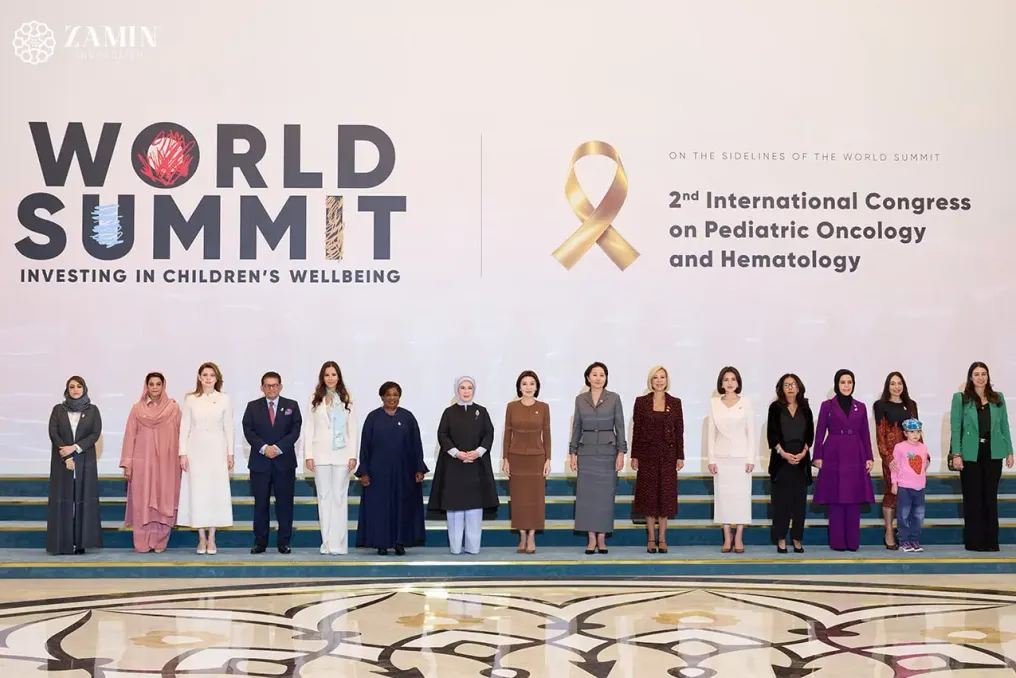
The First Lady of Uzbekistan, Ziroat Mirziyoyeva, has been appointed as the chairperson of the Global Network for Support of Children with Serious Illnesses for a two-year term. This international initiative was announced during the Second International Congress on Childhood Cancer, held in Samarkand as part of the World Summit on Child Well-being, according to the press service of the Zamin Foundation.

The new network will unite first ladies and spouses of heads of state to promote international cooperation, exchange experiences, and provide assistance to children suffering from serious and life-threatening diseases, including cancer.

The initiative was presented by Carlos Rodriguez-Galindo, Vice President of St. Jude Children's Research Hospital and Director of St. Jude Global in the United States. Mirziyoyeva's appointment to the chairmanship was officially formalized during the congress.

Addressing the event, the First Lady of Uzbekistan called on the international community, governments, scientists, and humanitarian organizations to join forces to meet the needs of children requiring medical care.

Mirziyoyeva stated: 'Illness and suffering do not recognize political borders, nationality, or income level. Let us unite for the future well-being so that no child and no family is left alone with their pain.'

The Second International Congress on Childhood Cancer was held under the slogan 'From Treatment to Quality of Life.' Participants included representatives of healthcare bodies from Uzbekistan, Azerbaijan, Kazakhstan, Kyrgyzstan, Tajikistan, and Russia, as well as the World Health Organization, the International Society of Pediatric Oncology, the European School of Oncology, foreign university hospitals and medical centers, research organizations, and civil society groups.

The network is intended to strengthen international cooperation in the field of supporting children with severe ailments. Mirziyoyeva's appointment underscores Uzbekistan's efforts to develop services in pediatric oncology and expand children's access to quality healthcare.

Popular