Uzbekistan may reduce the fee for accrediting educational institutions by fourfold
Read more
UzDaily
uzdaily.uz

Uzbekistan may reduce the fee for accrediting educational institutions by fourfold

Uzbekistan has expanded the conditions under which educational institutions can receive a reduction in the state accreditation fee, allowing the basic rate to be reduced by four times.

According to amendments registered by the Ministry of Justice, the fee can be reduced upon application from an educational institution if at least one of five established conditions is met.

These changes were introduced into the Regulation on Tariffs for Comprehensive and Special State Accreditation of Educational Institutions and the Procedure for their Calculation. The amended document was officially registered on October 31, 2026, under number 3739-1.

Conditions for Fee Reduction

The first basis for reducing the fee arises when the accreditation of relevant educational programs is necessary to implement directives issued by acts of the President of Uzbekistan, the Head of the Presidential Administration, or the Cabinet of Ministers.

The second condition applies to institutions whose active educational programs have already been accredited by organizations included in the Register of Recognized Accreditation Organizations of Uzbekistan, provided that at least 50% of such programs are already accredited. In these cases, a discount may be granted if the results of previous assessments can be used to reduce the scope of further inspection work.

The third basis is related to the possibility of conducting special state accreditation remotely.

The fourth condition applies when an institution simultaneously applies for special state accreditation for ten or more educational programs.

The fifth basis concerns situations where the actual volume of accreditation work can be reduced because there is no need to re-evaluate infrastructure used by several related educational programs, including premises, personnel, and other resources.

Thus, the new provisions allow for the regulation of the size of accreditation fees depending on the type of accreditation, previously conducted assessments, and the actual volume of required work.
Similar stories

Fees for state accreditation of educational programs in Uzbekistan may be reduced by fourfold
Read more
podrobno.uz

Fees for state accreditation of educational programs in Uzbekistan may be reduced by fourfold

Educational institutions in Uzbekistan now have the opportunity to pay for state accreditation significantly cheaper, provided that a number of established requirements are met. According to the innovation, instead of the full amount of the basic fee, only 25% can be paid.

This change applies to both comprehensive and special state accreditation. The Ministry of Justice has officially registered amendments to the regulations governing the amounts and procedure for calculating these fees for educational organizations.

The new rules stipulate that when an educational institution applies, the basic accreditation fee can be reduced to one-fourth of the initially established amount. This benefit is provided if the institution meets at least one of the five listed criteria.

Conditions for receiving reduced fees

The first condition is compliance with state assignments. Accreditation is required if it is necessary for implementing tasks outlined in the documents of the President of Uzbekistan, the Head of the Presidential Administration, or the Cabinet of Ministers.

The second condition relates to having international accreditation: if at least half of the active educational programs have already been accredited by organizations included in the registry recognized in Uzbekistan, this allows for a reduction in the scope of additional evaluation work.

The third option is conducting remote accreditation, which is possible for special state accreditation. The benefit is also available if the organization simultaneously applies for special state accreditation for ten or more educational programs.

The last condition concerns the assessment of similar programs: if related programs do not require re-verification of the general material and technical base, personnel resources, and other infrastructure during accreditation, the scope of work is reduced.

It should be noted that a unified Ministry of Education and Science operates in Uzbekistan, which is responsible for administering the activities of all types of educational institutions—from kindergartens and schools to colleges and universities. This department also establishes standards for educational activities and handles licensing and accreditation.

Uzbekistan Discusses Educational Projects with International Partners in Samarkand
Read more
uzdaily.uz

Uzbekistan Discusses Educational Projects with International Partners in Samarkand

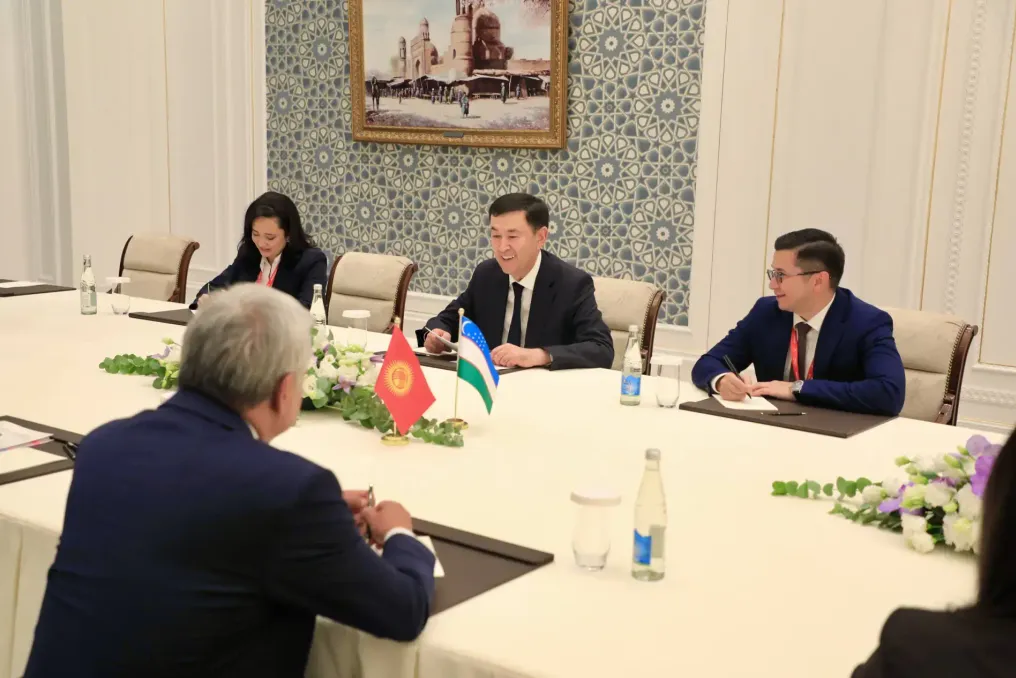
The Minister of Education and Science of Uzbekistan, Erkinjon Turdimov, held a series of meetings with international partners in Samarkand. The goal of these negotiations was to discuss cooperation in the field of education and find ways to improve the quality of learning.

The dialogues took place on the sidelines of the World Summit 'Investment in Children's Well-being: Towards Sustainable and Equitable Development for Future Generations.'

Discussion of Cooperation with Kyrgyzstan

During the meeting with the Minister of Education and Science of Kyrgyzstan, Dogdurkul Kendirbaeva, the parties discussed the preparation of textbooks for schools teaching in the Kyrgyz language, as well as improving teachers' qualifications and exchanging experiences. Furthermore, they considered the possibility of joint educational programs and student exchange between higher education institutions of the two countries.

Meeting with French Representatives

During discussions with the High Commissioner for Children's Affairs of France, Sarah El Khairi, participants focused on developing preschool education, supporting inclusive learning, and the professional growth of educators. Opportunities for experience exchange and the implementation of joint initiatives aimed at improving children's well-being were also discussed.

Joint Projects with the World Bank

The meeting with Aparna Somantan, Regional Director of the World Bank for Human Development in Europe and Central Asia, was dedicated to improving the quality of school education, modernizing educational infrastructure, and strengthening teachers' professional skills. The parties also studied the prospects of implementing the 'Bilim' project.

These meetings were organized with the aim of expanding international partnerships, introducing advanced educational practices, and creating additional opportunities for children to receive a quality education.

Uzbekistan reduces employment commissions in South Korea by fivefold
Read more
uzdaily.uz

Uzbekistan reduces employment commissions in South Korea by fivefold

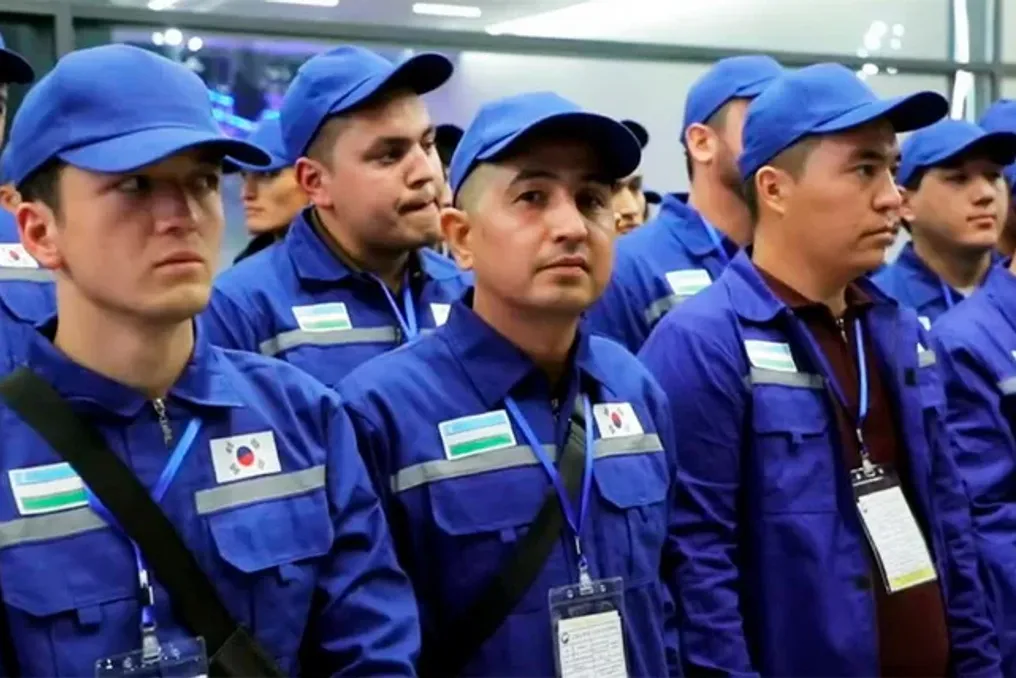
The Migration Agency of Uzbekistan has announced a fivefold reduction in fees for employment services for citizens heading to South Korea. The new fee is set at 4.4 million soms, equivalent to 10 basic calculation units.

These new tariffs came into effect on October 20, 2026, according to the Agency Director's Order No. 114 dated October 19. They apply to pre-departure adaptation services, training, and assistance with overseas employment. It is important to note that the rules do not apply to contracts signed before the specified date.

For citizens obtaining E-9 visas for travel to South Korea, the commission has been reduced from 22 million to 4.4 million soms (correspondingly, from 50 to 10 basic calculation units), resulting in savings of 17.6 million soms per person. The same amount of 4.4 million soms applies to employment under E-7 visas.

Until December 31, 2026, the agency will provide its services free of charge for citizens placed through organized recruitment programs in European, Russian, and Arab countries. In cases stipulated by agreements, the costs for services may be covered by foreign employers.

New fees have also been introduced for other destinations. Employment services in Belarus cost 44,000 soms; for other CIS countries besides Russia and Mongolia, it is 440,000 soms; for Georgia, it is 880,000 soms; and for Turkey, it is 1.32 million soms.

For university graduates going to Japan to work in technology, humanities, and international relations fields, the commission is 440,000 soms. Specialists with qualifications and participants in technical internships going to Japan must pay 4.4 million soms.

The mentioned fees cover exclusively the services of the Migration Agency. The cost of visas, air tickets, medical examinations, and other expenses can be paid separately, depending on the program and the terms of the employment contract.

The tariff revision is part of Uzbekistan's efforts to reform the labor migration system. Presidential Decree No. PF-162 of October 17, 2024, and Resolution No. PQ-367 defined measures to improve migration management, expand opportunities for legal employment abroad, and enhance the quality of services for citizens.

The agency stated its intention to continue attracting foreign employers, creating new jobs, providing vocational and language training, and protecting workers' rights.

Information on the new tariffs is available on the official website and social media pages of the agency, as well as via the short number 1282. Citizens are advised to check official sources and verify service conditions and employment contract provisions in advance.

Popular