
Tashkent Metro plans expansion to 103 kilometers and opening of 29 new stations by 2030
Read more
Sputnik Uzbekistan
sputniknews.uz

Tashkent Metro plans expansion to 103 kilometers and opening of 29 new stations by 2030

According to information provided by a representative of the Tashkent Metro management, by 2030 the metro network will be expanded to a total length of 103 kilometers, and the number of stations will increase to 79. It is planned that the daily passenger flow will reach 1.8 million people.

This was reported by Yuldash Yusupov, Deputy Chairman of the Board of AJ 'Tashkent Metro,' at a press conference, according to Sputnik Uzbekistan correspondent.

Yusupov emphasized that in recent years the metro network has significantly expanded. Over almost 40 years, the metro consisted of 29 stations and 38 kilometers of tracks; in the last seven years, 21 stations and 33 kilometers of new lines were added. As a result, 50 stations are currently in operation, and the total length of the network has reached 71 kilometers.

Passenger flow is also showing growth: if in 2021 the metro served an average of 280–300 thousand passengers per day, by 2026 this figure will exceed 1.2 million people.

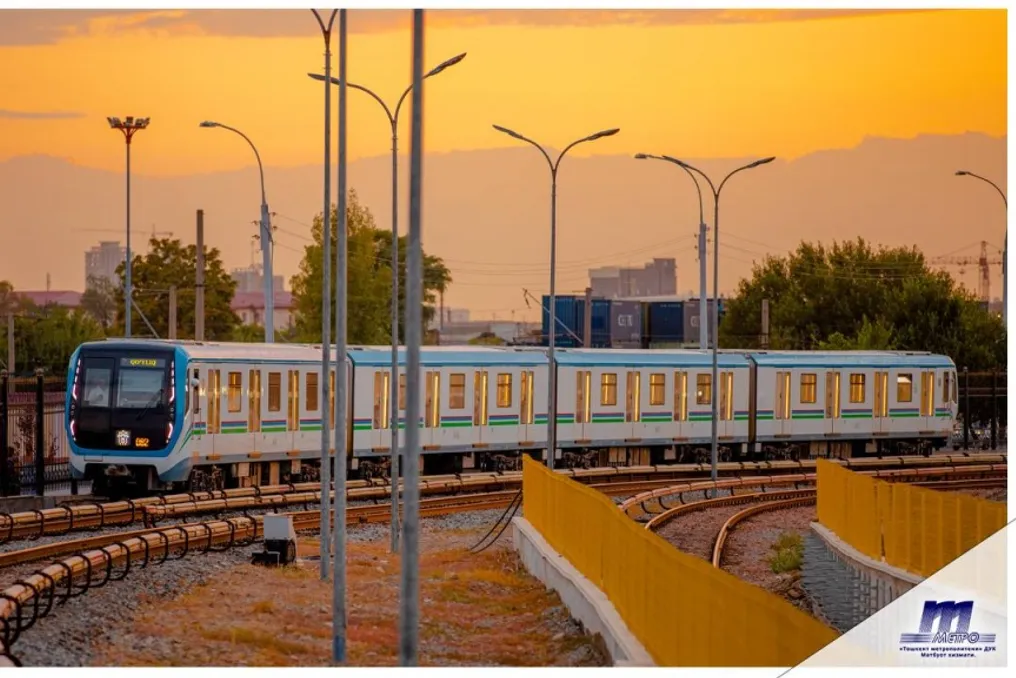
Due to the increase in the number of passengers, the train fleet is being expanded. In particular, the purchase of another 14 modern five-car trains is planned for 2027.

In addition, the capacity of the stations is being improved. For example, at the 'Chinor' station, the number of turnstiles has been increased from six to thirteen, which has allowed the daily throughput to increase from 15–20 thousand to 35–40 thousand people. Four high-capacity elevators have also been installed at this station.

Digital services in the metro are also being developed: Wi-Fi access at stations and mobile communication in tunnels are being improved. Fares can be paid by bank cards, through mobile applications, as well as via ATTO, Face Pay, and Palm Pay systems.

To achieve the goals set for 2030, work continues on expanding the metro infrastructure, purchasing new rolling stock, and attracting private investment.
Similar stories

By 2030, Tashkent plans to expand its metro system to 79 stations and 103 kilometers of lines
Read more
podrobno.uz

By 2030, Tashkent plans to expand its metro system to 79 stations and 103 kilometers of lines

The Tashkent Metro intends to significantly expand its network by 2030. According to the plans, the number of stations is expected to grow to 79, and the total length of the lines will reach 103 kilometers. Additionally, the daily number of passengers is anticipated to increase to 1.8 million people.

Information about these plans was announced during a press conference dedicated to the development of the capital's metro system. Currently, the Tashkent Metro operates with 50 stations, and the total line length is 71 kilometers.

As part of the modernization, it is also planned to reduce the intervals between passing trains to two or three minutes. It is projected that passenger traffic will increase from the current more than 1.2 million people per day to the planned 1.8 million.

The reasons for such a large-scale expansion are linked to the growing population of the capital, the active development of urban infrastructure, and the emergence of new industrial and residential areas. The development program includes the construction of new track sections, renewal of rolling stock, integration of digital technologies, and improvement of the management system.

Over the past seven years, the capital's metro has been supplemented with twenty-one new stations, and the length of its lines has increased by 33 kilometers. Meanwhile, the daily passenger flow has shown growth: in 2021, it was 280–300 thousand people, and by 2026, it exceeded 1.2 million people.

High-speed Vande Bharat Sleeper train starts service between Varanasi and Delhi tomorrow
Read more
www.aajtak.in

High-speed Vande Bharat Sleeper train starts service between Varanasi and Delhi tomorrow

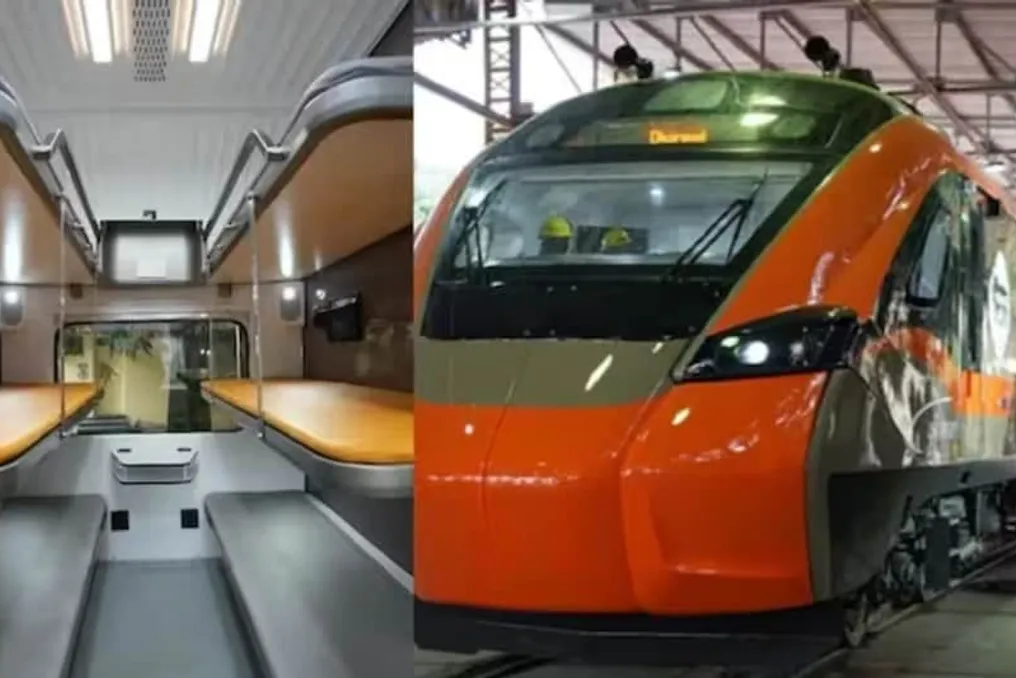
Indian Railways is launching another new Vande Bharat Sleeper train. Its commencement is scheduled for tomorrow, October 31. This route will connect several major cities, running between Varanasi and Delhi.

The train's speed is 160 kilometers per hour, which will allow it to complete the journey faster than other trains. According to Indian Railways information, the trip on the Vande Bharat Sleeper from Baba Vishwanath city to the nation's capital will mark the beginning of a new experience in modern rail travel.

Dr. Shivam Sharma, CPRO of Central Broad Gauge Railway, provided details about the Sleeper Vande Bharat. He stated that the opening of this train will take place on Saturday, October 31, 2026, at Varanasi station as a special train number 02527. This special service will provide passengers from Kashi, Sangam Nagari Prayagraj, the industrial city of Kanpur, historical Aligarh, and Ghaziabad with a new mode of connection to the national capital.

This special train, connecting Kashi and the national capital with modern railway amenities and sleeping experience, will add new significance to the link between these two points. Dr. Sharma specified that the special train number 02527, operating on the Banaras–New Delhi Vande Bharat Sleeper route, will depart from Banaras (BNRS) after noon at 16:15. It will arrive in Prayagraj at 18:00, at Kanpur Central station at 20:05, at Aligarh station at 23:20, depart at 23:22, arrive in Ghaziabad at midnight at 01:10, and reach New Delhi station at 2:00 AM.

The article does not contain detailed information about the train's specifications.

Girls are interested in entrepreneurship, what is hindering them?
Read more
uza.uz

Girls are interested in entrepreneurship, what is hindering them?

There is a desire among women in Uzbekistan to be entrepreneurs, but questions are arising about what is hindering them.

According to data, the share of women in the total workforce of Uzbekistan in 2025 will account for 43.1 percent. This indicator has increased by 0.4 percent compared to 2024.

Popular