Explanation of Symbolism: Why Kubera's Vehicle is Human, and How Money Can Make a Person a Slave
Read more
Aaj Tak
www.aajtak.in

Explanation of Symbolism: Why Kubera's Vehicle is Human, and How Money Can Make a Person a Slave

The festival of Dhanteras, celebrated annually on Kartik Krishna Trayodashi, is known as Dhanteras. This year it will take place on November 6th. On this day, worship is performed to the god Dhanvantari and the god of wealth, Kubera. According to sacred scriptures, Kubera Maharaj is considered the treasurer of the gods.

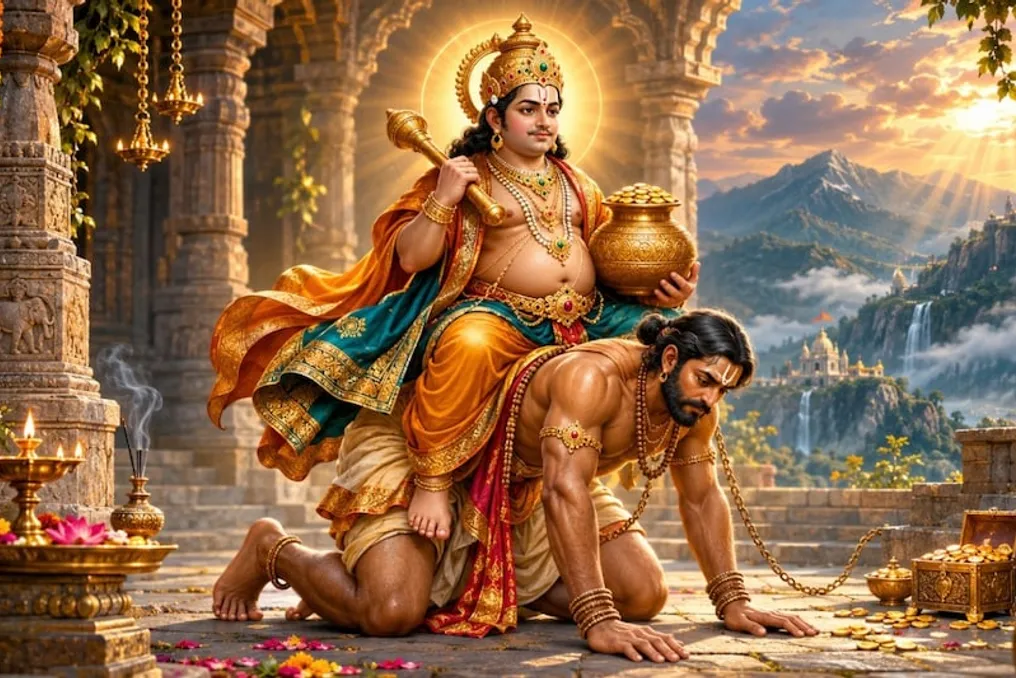
There is a special religious and symbolic belief that the vehicle of the god Kubera is a human being. The gods Kubera are considered the lords of wealth, property, and luxury, as well as the king of Yakshas. According to the Padma Purana and Linga Purana, a human being, that is, a man, is the mount of Kubera Maharaj. There is an important message hidden behind this.

Although Kubera Maharaj is the master of wealth, the most real use of money is possible only for a human. Therefore, money holds the greatest significance in human life. Regardless of how powerful the gods or demons are, the control and importance of money in human life remain the highest.

A person spends their entire life earning money and then spends it on supporting their family. Over time, they become ambitious, and their needs and desires grow. In the race for money, everyone strives to move forward, but sometimes this greed for money turns a person into a slave. As a result, the demand for money completely takes control of the person and can make them do anything.

The fact that Kubera's vehicle is a human indicates that one who chases money too much becomes a slave to that money themselves. If a person does not control their need for money, then money will begin to control them. Consequently, it is important not only to earn or accumulate money but also to control its use and needs.

In folk traditions, there is a widely circulated story concerning the transport of the god Kubera. It is said that when Lord Shiva appointed Kubera as the king of Yakshas and lord of wealth, the question arose about what would be the most suitable vehicle for him. According to this legend, it was understood that people living on the earthly plane use money the most. It is humans who earn, collect, and spend it according to their needs. Based on this, a human being, that is, a man, was accepted as the vehicle of Kubera.

Similar stories

Manual gearbox oil change is controversial, but it can prevent vehicle damage
Read more
autopapo.com.br

Manual gearbox oil change is controversial, but it can prevent vehicle damage

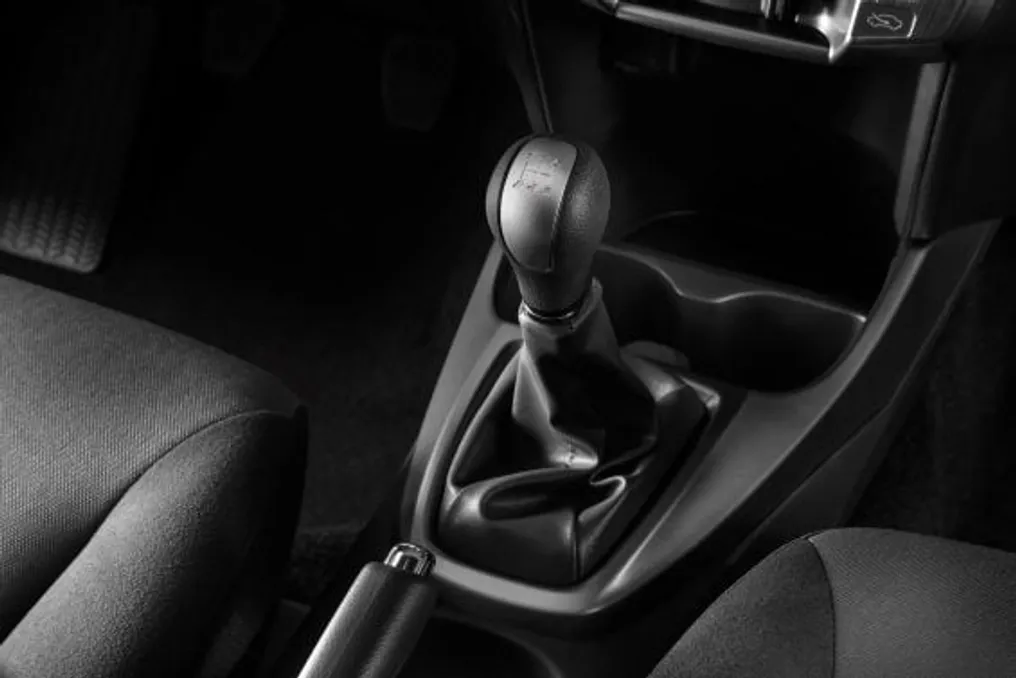
With the growing popularity of automatic transmissions, the lubricant for these systems has become a major concern for those buying used cars, especially due to the high cost of replacement. However, vehicles with manual gearboxes also rely on oil, and the owner must take precautions to ensure the lifespan of this component.

Transmission mechanisms function through a set of gears and other elements, such as synchronizers, all immersed in oil. Normal use generates heat, and certain extreme conditions intensify this heating, which accelerates the wear of the lubricant.

Different opinions on oil changes

The issue of changing gearbox oil is frequently debated. Just as with automatic transmissions, some manufacturers claim that the lubricants used in manual models possess 'long life' technology and therefore do not require changing. However, there are specific scenarios where replacement becomes necessary.

To know which procedure to follow, the owner's manual is the correct reference, as each manufacturer establishes its own guidelines. For example, Fiat suggests changing every 120 thousand kilometers; Honda recommends 120 thousand km for newer models and 80 thousand km for older ones; Toyota adopts a more cautious stance, indicating maintenance every 40 thousand km; Chevrolet advises changing only in cases of leakage; and Nissan only lists inspection procedures in its manual.

Warning signs and maintenance costs

The vehicle itself can indicate the need to change the gearbox oil. According to mechanic Ludovico Ballesteros, owner of Pitucha Centro Automotivo, signs such as harder shifting and noises coming from the component are important indicators.

The same mechanic informs that the cost of this change varies between R$ 150 and R$ 600, depending on both the car model and the type of lubricant used. Driving for long periods with old oil accelerates the deterioration of the component, which, according to Ludovico Ballesteros, can damage the synchronizers and gears.

If leaks occur and the vehicle runs with little or no oil, the gearbox risks melting due to excessive friction. The mechanic points out that in these situations, the parts may have a bluish coloration. Furthermore, periodic changes help prevent larger future losses; the presence of filings indicates internal wear in the parts.

Ludovico Ballesteros adds that an experienced professional can diagnose gearbox problems by analyzing the oil's odor.

Types of lubricants: Conventional versus Long Life

In the market, there are vehicles that use oils requiring more frequent changes and other models equipped with the 'long life' type, which offers greater durability. Leandro Grizzo, a global lubricant specialist at Eaton and a member of the SAE Powertrain and AEA Lubricants and Fluids technical committees, clarifies that the fundamental distinction lies in their bases.

Fluids intended for traditional manual gearboxes use mineral or semi-synthetic base oils, supplemented by appropriate additives for the application and change interval. In contrast, 'long life' oils use synthetic base and a set of additives designed to provide greater stability, allowing for a longer service life.

The specialist details that 'long life' oil can have a durability ranging from 100 to 150 thousand kilometers in automobiles, compared to 40 to 80 thousand kilometers for conventional ones. In heavy vehicles, such as trucks and buses, this durability can reach between 150 and 300 thousand kilometers. Leandro Grizzo exemplifies this special formulation of 'long life' oil by citing the higher concentration of antioxidants, corrosion inhibitors, anti-foaming agents, viscosity modifiers, anti-wear, and extreme pressure (EP) additives.

Bugatti Veyron is pointed to as responsible for transforming supercars into excessively powerful and complex machines
Read more
flatout.com.br

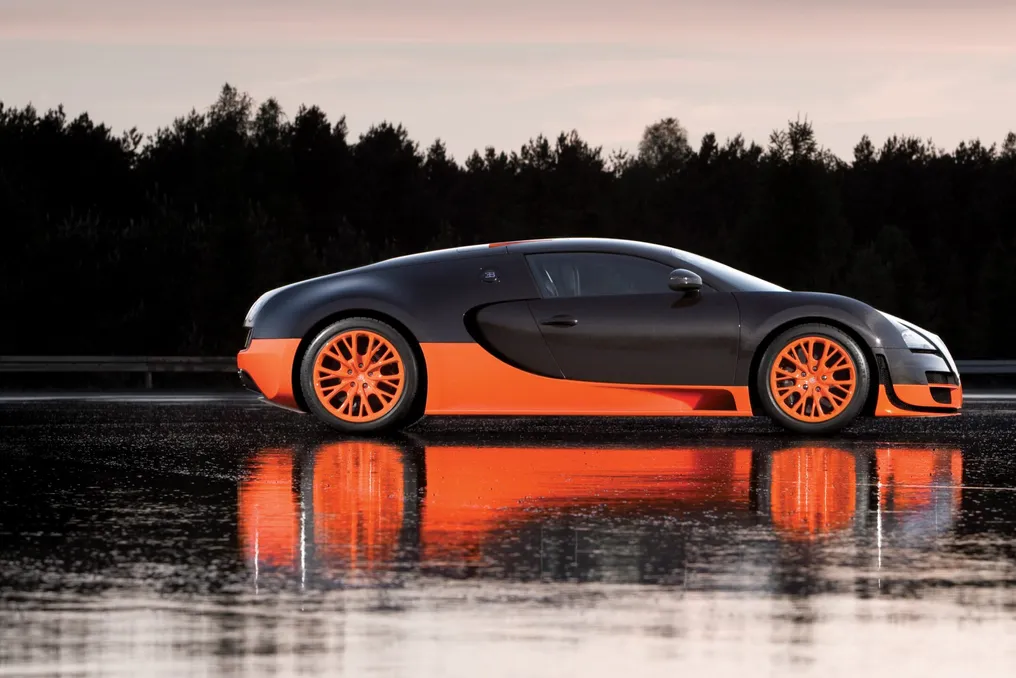
Bugatti Veyron is pointed to as responsible for transforming supercars into excessively powerful and complex machines

A notable aspect of the human condition is the concept of free will, which allows individuals to act within the law and respect others, even if their actions have no apparent utility or logic. This principle also applies to opinions, challenging the notion that all human thought must be coherent.

Consciousness is described as something extremely complex and ineffable, something that science has not yet been able to fully explain. Therefore, the requirement that all a person's ideas, tastes, and subjective issues be perfectly organized and free of contradictions is questioned, raising the possibility of disagreeing with oneself.

The ability to form and defend an opinion and subsequently criticize it is a human characteristic that distinguishes humans from animals, which act by immediate instinct or survival. Humans, on the other hand, are complex, constantly reflecting, even if this is not always useful for basic survival.

The author mentions an apology before the Bugatti Veyron, initially seeing it as an exaggeration of waste. However, he began to perceive it as an engineering statement. Although it is known that it is possible to exceed 1,000 hp and 400 km/h with less than eight liters, sixteen cylinders, and four turbos, Volkswagen demonstrated that by pushing its standard components to the limit, it managed to revitalize a brand and create a model of unnecessarily absurd opulence and performance.

Despite recognizing the thermodynamic achievement of the Veyron, the author argues that this vehicle is the main cause of the current state of the industry. The Veyron is seen as the 'patient zero' of a plague that transformed the pursuit of dynamic engagement into an arms race focused solely on technical numbers, acceleration, and metrics that serve the vanity of engineers and owners.

Before the Veyron, the supercar market followed more human rules. When Gordon Murray designed the McLaren F1 in the 1990s, the focus was on weight, throttle response, and central driving position, with the 386 km/h achieved being a consequence of the search for aerodynamic efficiency and lightness, driven by a naturally aspirated V12.

Ferdinand Piëch, in contrast, defined the Veyron with specific numerical goals: '1,001 hp, over 400 km/h top speed, and daily usability to take the wife to the theater.' Bugatti engineers were forced to adapt physics to meet this bureaucratic ultimatum, resulting in the use of four turbos, ten radiators, and a heavy W16 engine.

Although the Veyron won the battle against physics, it permanently changed the mindset of the sector. The car's value shifted from the delicacy of contact with the driver or the chassis balance in corners to scale, brute force, and the ability to impress with grandiose numbers.

This breaking of the four-digit power barrier triggered an uncontrolled spiral. Manufacturers realized they could simply add larger turbos or auxiliary electric motors instead of spending years perfecting suspension geometry or reducing chassis weight. This led to the emergence of the 'Holy Trinity' of hybrid hypercars – LaFerrari, McLaren P1, and Porsche 918 Spyder – where weight increased and electronics began to control every millisecond of dynamics.

The peak of this trend is represented by full electrification, with Mate Rimac as a central figure. Rimac began his journey by converting a BMW M3 E30 in Croatia, seeking electric performance. Later, he presented the Rimac C_Two (future Nevera) at the Geneva Motor Show, promising 'Almost 2,000 hp. 0 to 100 km/h in 1.8 seconds.'

The Nevera is seen as a direct descendant of the Veyron, adopting the premise of seeking shocking numbers but replacing gasoline with lithium ions. To achieve 2,000 hp, four electric motors and a battery pack resulting in a weight of 2,300 kg were used.

Recently, Mate Rimac, who now has a stake in Bugatti, expressed that he considered the Tourbillon 'too much car.' He commented that the 8.3-liter naturally aspirated V16 engine, developed with Cosworth, already delivered almost 1,000 hp on its own, without the need for the trio of electric motors and battery added to reach 1,800 hp. Rimac admitted that, personally, he would prefer a simpler, lighter version with a manual gearbox and purely analog.

The author criticizes this stance, reminding that it was the Veyron that initiated this escalation. After the 1,500 hp Chiron, the arrival of the Nevera proved that electricity could surpass combustion. Now, with technological saturation, the creators of chaos suggest a return to light cars with manual gearboxes.

This demonstrates that the Bugatti Veyron corrupted the market, addicting the world to a dependency that no longer generates pure pleasure. In the past, having 400 or 500 hp in a rear-wheel-drive manual required skill and respect. Today, 2,000 hp or 1,800 hp are accessible to those who can afford it, without the need for skill, as control is done by torque vectoring via software. The supercar has become an ultra-fast luxury appliance, killing the need for purist refinement at the top of the market.
Popular