Anju Kalhan's journey to creating a healthy snack brand was unconventional, despite her twenty-year career in the corporate sector, experience in events, and participation in eight marathons.
A graduate of Delhi University with a degree in business economics, Anju spent two decades working in various industry and corporate structures. She held positions as a senior economist at ASSOCHAM and deputy director at the Hotel Association of India, where she also collaborated with SSH Rehman, former CEO of ITC Hotels.
Ultimately, she left the corporate world to establish her own event management company, organizing FICCI events and corporate seminars. Alongside her professional duties, she focused on fitness, running eight marathons, and completing training as a yoga specialist and fitness trainer.
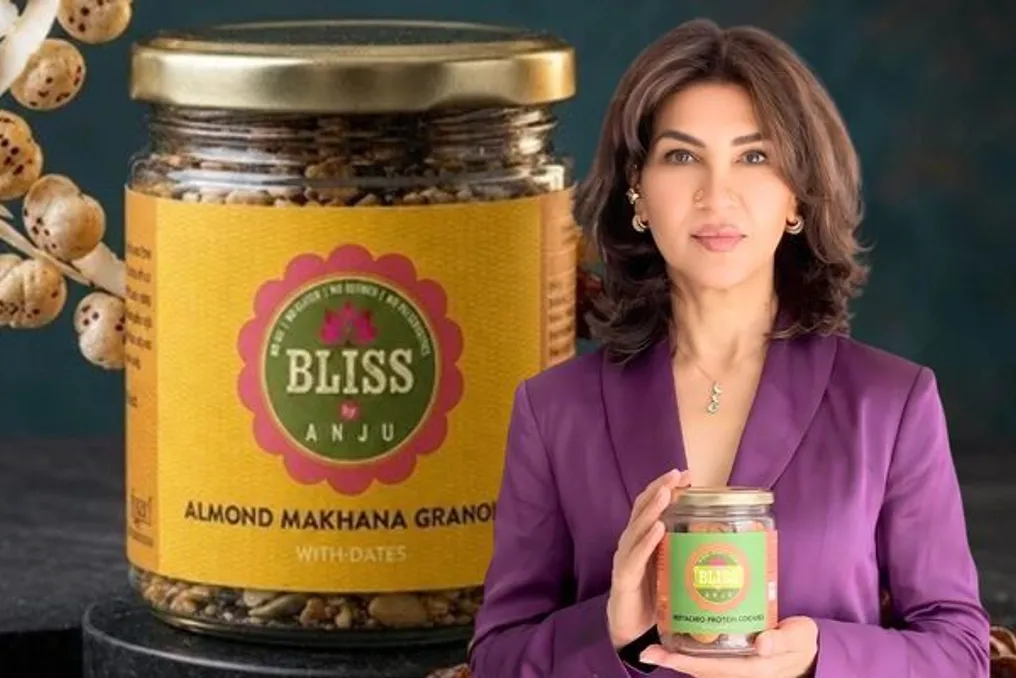
However, it was personal health experiences that propelled her into the food business. Today, she is the founder of Bliss by Anju—a food brand producing plant-based snacks without added oil, ghee, dairy, or refined ingredients.
What began as home cooking experiments transformed into full-scale operations with its own production unit and a retail network covering 41 stores across India.
Anju shared that she suffered from high blood pressure for almost 30 years, along with severe migraines and sinusitis. Family health issues, including diabetes and high blood pressure in her parents, prompted her to reconsider her family's dietary habits.
During the Covid-19 pandemic, she began studying whole-food-based diets, consulting trainers and researching the impact of food on health. Gradually, she eliminated ghee, vegetable oil, and heavily processed packaged foods from her diet. According to Anju, within 90 days, she noticed a significant improvement in her blood pressure readings and a reduction in migraine frequency. She also noted that her mother, who was over 80, felt an improvement in her condition after changing her diet.
This experience motivated Anju to look beyond the household and explore market product ranges. She visited organic stores, large retail outlets, and artisan shops searching for snacks that aligned with her new dietary principles. Nevertheless, she discovered that many products marketed as healthy still contained palm or other added oils.
This revealed a gap that she decided to fill. Anju described the problem as: 'Healthy food is not tasty, and tasty food is not healthy.' Therefore, she decided to create snacks that could combine both qualities. Instead of relying on oil and ghee for flavor, she started experimenting with Indian spices, nuts, and seeds.
The first phase of the company's development began with home experiments between 2018–2019, followed by sales at farmers' markets from 2019–2020. As her understanding of whole nutrition deepened, in 2023–2024, she adjusted the product line to exclude ghee and added oils.
Building a food business without experience in professional culinary or baking operations required Anju to master numerous skills. Anju emphasizes that she is neither a trained chef nor a nutritionist; instead, she approached product development through research, experimentation, and a willingness to learn.
The brand's philosophy is based on whole plant-based foods and familiar ingredients. The assortment includes nut and seed granola, cookies made from chickpea flour, jaggery, and almonds, biscotti, sweets, and savory snacks like matti. One product, 'tangy dates,' uses dates, spices, and lemon, offering an alternative to traditional aam papad.
For Anju, spices play a central role in flavoring products without using fats. She explains that cinnamon, cardamom, and nutmeg can give snacks aroma and taste without dependence on oil or ghee.
The company also pays attention to the ingredient preparation process. Anju reports that nuts and seeds are washed, soaked, and dried before being used in the products.
What started in the kitchen has now moved to production. The company operates its own factory in Otala, where it manufactures its products. Her approach is to cover various snacking moments throughout the day: from morning granola to tea cookies, coffee biscotti, and evening savory snacks.
Bliss by Anju has expanded its reach to 41 stores across India and is also available on Amazon and Blinkit. According to Anju, the company entered its third year of operation in its current growth phase. It remains self-funded and is seeking investment to support the next stage of business development.
Maintaining awareness remains one of the challenges. As a relatively small brand, Anju says she cannot afford large advertising campaigns or Hollywood contracts. She strives to convey the philosophy behind the products and information about the ingredients to consumers.
Due to the use of nuts, seeds, and other whole ingredients, the brand's products can be quite expensive. Anju believes that consumers should be able to read labels and make informed decisions about their nutrition.
Her efforts extend beyond selling packaged snacks. Through her work with the SHARAN community, she conducts demonstrations and cooking classes, teaching people how to cook meals without oil and ghee. Many of these sessions are held free of charge or for a small fee.
She is also meticulous about product positioning. Anju asserts that these snacks are not intended to replace full meals. They are aimed at people who need convenient options while traveling, working in the office, or packing food for children.
At age 60, Anju built a food business around an idea born from her personal experience. Transitioning from a corporate career to entrepreneurship, and then to food production, she is now seeking investment and opportunities to expand Bliss by Anju. For women considering entrepreneurship, her advice is simple: realize the idea, even if circumstances are not ideal. As she says, one should not be afraid to take a decisive step; something valuable can emerge from effort.