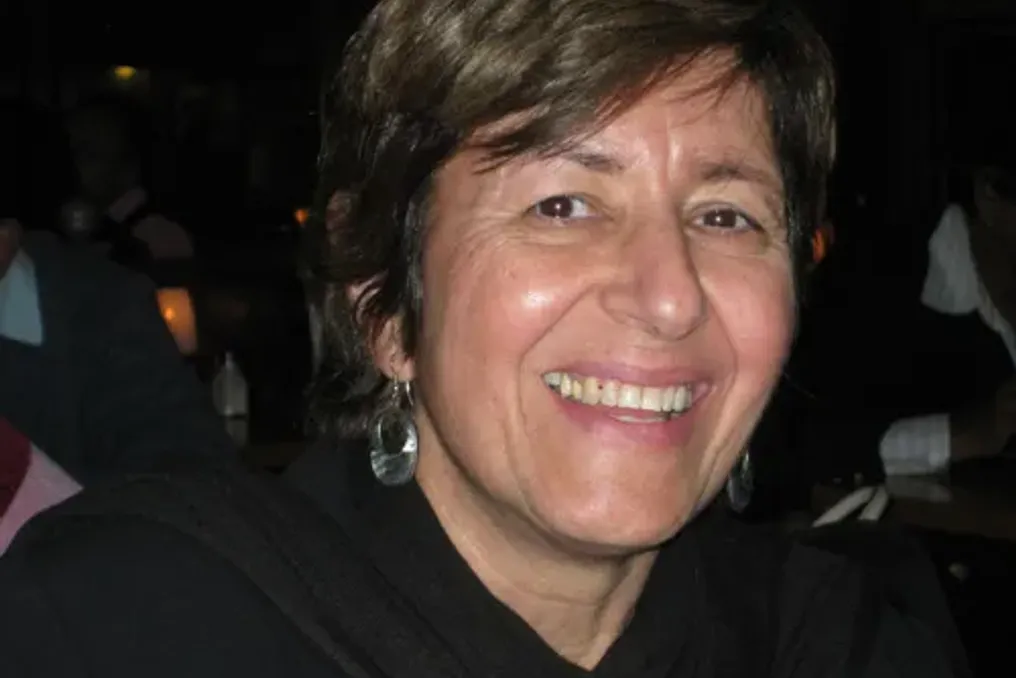
The Importance of Protecting Children's Rights, Dignity, and Well-being
Read more
IOL
iol.co.za

The Importance of Protecting Children's Rights, Dignity, and Well-being

The international community recognizes the critical necessity of protecting the younger generation and ensuring their ability to participate in building more advanced societies and a peaceful world. National Children's Day, celebrated on November 7th, and World Children's Day, which falls on November 20th, serve as reminders of this task.

Since the adoption of the Declaration of the Rights of the Child in 1959, international recognition of the importance of human rights concerning children has grown. Nevertheless, a significant amount of work remains to ensure respect for and protection of children's rights, dignity, and well-being.

According to the Baháʼí World Centre, the international guiding council, children are the most precious treasure: 'in them lies the promise and guarantee of the future. They carry the seeds of the character of the future society, which is largely shaped by what adults in the community do or do not do regarding children.'

Realizing this potential depends on close attention to protecting children's rights and expanding their opportunities through balanced education. A caring and supportive home environment is necessary for the full and harmonious development of a child's personality. It is extremely important how we treat children, the quality of our attention to them, and the love with which we regard them.

Baháʼí writings assert that 'a child should not be oppressed or criticized because of their incompleteness; they should be patiently nurtured,' and also emphasize that 'the education of every child is obligatory. In addition to broad education, every child should be taught a profession, art, or craft so that every member of the community can provide for themselves.'

Children must be aware of both their rights and responsibilities. They must be given the opportunity to actively participate in their own development and become participants in the development of their communities. Baháʼí writings state that 'children are like fresh and green branches; they will grow as you nurture them,' and call upon parents and educators to 'exercise maximum care to give them high ideals and goals so that, upon reaching adulthood, they may radiate their light like bright candles in the world, and not be defiled by lusts and passions... but instead focus their hearts on achieving eternal honor and acquiring all human virtues.'

Children should be encouraged to explore and reason about all issues independently, rather than merely imitating adults. They can be guided toward setting high goals and contemplating the consequences of their decisions and actions.

Our children have the right to live in a unified and peaceful world, and they can be directed to play a role in building such a world. Through education that promotes peace—based on recognizing the unity of humanity and justice for all—the ideal of 'human unity' can become a reality.

From a Baháʼí perspective, 'children should be raised to view every soul, regardless of religion, ethnicity, or any other affiliation, as a fellow human being and value the words of [Baháʼu'lláh] that reflect the spirit of the age: 'The Tabernacle of Unity is erected; do not consider each other strangers. You are the fruits of one tree and the leaves of one branch.' When children receive proper care, education, respect, and opportunities, they can grow into adults capable of helping to build communities characterized by justice, unity, compassion, and peace.
Similar stories

How to lead a meaningful life with nobility according to the Baháʼí perspective
Read more
iol.co.za

How to lead a meaningful life with nobility according to the Baháʼí perspective

People around the world strive to improve their lives, contemplating what changes can bring long-term joy and satisfaction. The question arises whether there is a higher, deeper, and nobler purpose than complete dedication to achieving material goals.

However, the pursuit of a higher and nobler purpose does not mean neglecting the material aspects of existence. On the contrary, it requires simultaneous progress in both material and spiritual spheres, as these two aspects complement each other and must develop in parallel.

From the Baháʼí point of view, one of the fundamental tasks of human life is to contribute to the development of civilization. Baháʼu'lláh, the founder of the Baháʼí Faith, asserted that all people are 'created to advance a constantly developing civilization.' Consequently, every individual plays a role in building a unified, peaceful, and prosperous global society.

A life filled with meaning and nobility must include two components: the development of individual intellectual and spiritual capacities, and contribution to the improvement of society. Education serves as a powerful tool for achieving both these goals.

Nevertheless, educational approaches must be evaluated based on their contribution both to personal growth and to societal transformation, which is critically important for forming just, peaceful, and harmonious communities. Baháʼu'lláh compares people to a mine containing priceless gems waiting to be discovered. He says: 'Consider man a mine rich in gems of immeasurable value. Only education can make him reveal his treasures and allow humanity to benefit from them.'

Thus, the goal of education should be to identify and develop innate abilities while simultaneously instilling the desire and discipline to serve the best interests of communities and all of humanity. Motivation and willingness to participate in endeavors that benefit all of humanity are among the most pressing needs of modern times.

Through adequate education, individuals gain the ability to participate in their own development and become participants in the development of their communities. They can learn to uphold universal values, including the ethic of service to the common good, and pay attention to the needs and aspirations of their communities.

Service to others must become an integral part of education; learning should not be limited only to book knowledge. When service becomes the arena where knowledge is applied and intellect is developed, we will begin to see service to humanity not merely as a part of education, but as a central element of any preparation for a noble and meaningful life.

An important aspect of serving humanity is contributing to global peace and unity. Baháʼu'lláh notes that civilization has reached a level of development where the unity of humankind has become a paramount necessity. Therefore, an important goal in our own lives should be to promote the unity of humankind, upon which our collective well-being, peace, and security depend. As Baháʼu'lláh states: 'The welfare, peace, and security of mankind are unattainable until its unity is firmly established.'

The Importance of Youth in Shaping a Unified Society
Read more
iol.co.za

The Importance of Youth in Shaping a Unified Society

Young people play a key role in creating progressive, viable, and cohesive societies. Provided they receive proper education, support, and opportunities for service, youth can become the driving force for constructive change in their communities.

Given that half of the world's population is under 30 years old, it is necessary to consider how the immense potential of youth can be utilized for societal development and how to give them the opportunity to actively participate in building a better and more unified world.

The Baháʼí International Community asserts that 'the rising generations will play a vital role in weaving a new tapestry of social life that can contribute to the evolution of humanity toward a period of maturity and collective prosperity.'

The Community also notes that 'young people play a significant role in transforming society. When youth are taken seriously and resources are directed towards various programs that enhance their capacity to become meaningful agents of social change, the results can be astonishing.'

Youth aspire to be partners in improving the lives of their communities, yet modern approaches to youth development often view them as passive recipients of information rather than active participants in shaping their community.

Education is the most effective way to shape the values, attitudes, behaviors, and skills necessary to create a better world and a unified society. Therefore, education must address not only intellectual development but also the moral formation of young people.

Academic knowledge and professional skills, however important they may be, cannot compensate for the absence of qualities such as honesty, kindness, generosity, compassion, and a sense of responsibility towards others.

Thus, preparing youth to build a better world requires an educational approach that develops both mind and character. It must instill in them an awareness of human unity and a sense of responsibility as citizens of an interconnected world.

The Baháʼí International Community emphasizes: 'To serve their communities effectively, young people must strive to understand with increasing clarity the implications of the principle of the oneness of humankind. For too long differences between people, both real and imagined, have served as obstacles hindering the progress of entire peoples and nations. This planet is our common home. We must all care for it. We must all have the opportunity to flourish in it. Regardless of differences in class, culture, ethnicity, religion, nationality, and gender, we share a common identity at our core—we are all human.'

In an interdependent world, it is necessary to cultivate in our youth an appreciation for the richness and significance of the world's diverse cultural, religious, and social systems.

Encouraging youth to seek truth independently leads them to personal conviction rather than mere imitation. This strengthens their ability to question prejudices and biases that divide people and impede constructive relationships.

Service to humanity is another important path through which young people can develop their abilities while contributing to the well-being of their communities. According to the Baháʼí International Community, 'service draws young people deeper into the lives of members of their communities; they strengthen bonds of trust and feel genuine care and involvement in all aspects of each other's lives, rejoicing in each other's achievements and offering support in difficult times.'

When youth are given the opportunity to serve, collaborate, overcome differences, and work for the common good, they become agents of constructive change, helping to build cohesive, harmonious communities and a world.

Popular