Google launches experimental app Dreambeans in India
Read more
YourStory [india, en]
yourstory.com

Google launches experimental app Dreambeans in India

Google has introduced Dreambeans in India—an experimental artificial intelligence-based product that generates personalized daily story collections.

Starting today, this application is available to users over 18 years of age in the country. The app was developed by the Google Labs team.

Dreambeans transforms a user's digital activity into personalized and illustrated stories based on the individual's interests and life experiences. As stated in the official Google blog, this can include information about places to visit, new crafts, or reminders about upcoming local events.

Users can delve deeper into any story to learn more, save it for later viewing, or easily share it with others for inspiration. The goal of the app is to connect users with things important to them, bypassing the need for endless scrolling.

The Dreambeans app is available for both Android and iOS operating systems and supports 14 languages. These languages include Hindi, Bengali, Telugu, Marathi, Tamil, Urdu, Gujarati, Kannada, Punjabi, Assamese, and Nepali.

The creation of curated stories is done using data from specific Google applications such as Calendar, Gemini, Gmail, Photos, Search, and YouTube. Google also encourages users to share feedback for continuous improvement of the story quality.

Similar stories

Dreamina от ByteDance запустила студию коротких драм с собственными моделями для сценариев, изображений и раскадровок
Read more
pandaily.com

Dreamina от ByteDance запустила студию коротких драм с собственными моделями для сценариев, изображений и раскадровок

Generative media application Dreamina from ByteDance announced on October 26 that its dedicated short-drama studio is now operational. This studio integrates three proprietary models into a unified production workflow designed specifically for the vertical-video drama format.

The first component is DreamScript, a script generation model. It is capable of creating scripts across various dominant genres, including original narratives, adaptations, international versions, and commentary-style segments. Furthermore, the system provides a feature called 'hit diagnosis,' which compares a draft against current platform trends to recommend structural improvements, and it can process and analyze texts up to 100,000 characters in length.

The second model, Anycook, functions as an image generator tailored for the artistic direction of short dramas. Dreamina states that Anycook is calibrated to ensure that characters maintain visual consistency throughout the production and to construct scenes in diverse visual styles suitable for different narrative environments.

The third model, DreamShot, serves as a storyboard model. It operates in two configurations—a free canvas or a structured storyboard—and supports global modifications, meaning any adjustment made via interaction with the tool updates the entire board instead of requiring frame-by-frame changes. A 3D director's table allows creators to position a virtual camera, define its movement, and preview the resulting shot before rendering; the system can also link key shots together to create a preliminary animated sequence for checking pacing and continuity.

A post-production layer surrounds these three core models. Individual shots can be re-shot in situ without needing to regenerate the entire piece. An integrated audio tool enables the separation of dialogue from ambient sound, allowing scenes to be redubbed. Additionally, a shot-splitting function automatically divides lengthy sequences into manageable, editable units. Assets created elsewhere within Dreamina flow into the studio, and any edits applied follow this established chain.

The feature most geared toward distribution is the remake mode. Users can upload an existing short drama, and the system will identify its characters, settings, props, and shot structure. It then regenerates the visuals according to a selected style, aspect ratio, and target region, all while preserving the original pacing and camera language. This effectively creates a localization pipeline for a format that Chinese studios have been actively exporting.

ByteDance has pursued this market through multiple strategies, ranging from developing video models to offering platform incentives for AI-generated dramas. The integration of script, image, and storyboard models into a single studio marks the first time the company has provided the complete production chain within one product.

ByteDance launches artificial intelligence studio for creating short dramatic series
Read more
technode.com

ByteDance launches artificial intelligence studio for creating short dramatic series

ByteDance has introduced its artificial intelligence studio, Jimeng AI, designed for producing short dramatic series. This platform integrates the entire production cycle: from script development and character and scene creation to storyboarding, video shooting, and post-processing.

The studio utilizes three proprietary models: DreamScript, which is responsible for writing scripts; Anycook, used for image generation; and DreamShot, intended for creating storyboards.

The DreamScript tool can work with original stories, adaptations, and also create scripts targeted at foreign audiences. Meanwhile, the tools for image and storyboard work help creators form visual elements and plan shots.

Furthermore, the studio allows for replacing individual frames, restoring audio tracks, and redoing existing dramas in a visual style suitable for various markets. Thus, the launch of this studio expands Jimeng's capabilities beyond simple tasks of generating individual images or videos, elevating them to the level of coordinated production of short dramatic projects.

Dream Labs raises $90 million to develop artificial intelligence for domestic robots
Read more
ventureburn.com

Dream Labs raises $90 million to develop artificial intelligence for domestic robots

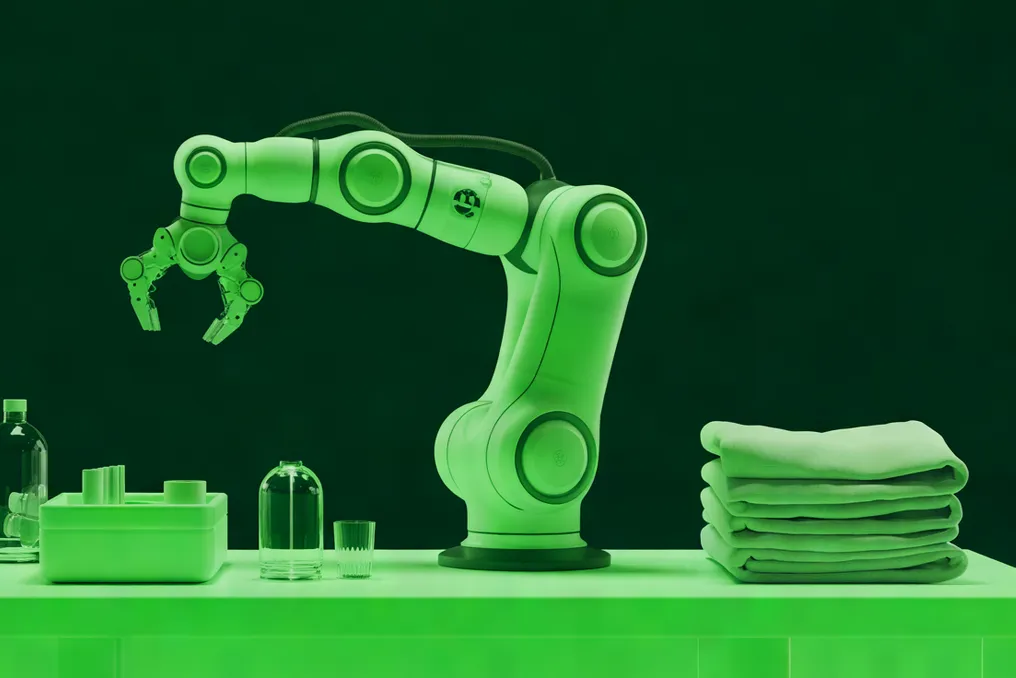
Dream Labs has raised $90 million in seed funding to create artificial intelligence intended for use in everyday robots. The San Francisco-based startup was founded in 2026 by former leaders of NVIDIA's GR00T research group.

The funding round was led by B Capital and Kindred Ventures. Other investors included A. Capital, Unusual Ventures, SV Angel, Wing VC, Scribble VC, and Adrian Aoun. The company believes that robots often face a problem similar to humans: they are trained for one specific task but cannot apply the acquired skills in other areas.

Dream Labs aims to create more flexible robots using a unified AI model. Such a system would allow it to perform new tasks or work with new equipment while requiring less expertise. CEO Joel Zhang noted that there is sufficient capable hardware in the industry, but there is a lack of intelligence that could function across different robots.

In addition to raising funds, Dream Labs introduced Dream API. This service converts video streams from a robot's camera and instructions given in simple English into motor commands. Developers can use this service to program supported robots without needing to build their own AI.

Furthermore, the company launched Fine-tuning as a Service. Developers and robotics manufacturers can upload demonstration data to receive a custom-tuned model for unequipped or new functions. The technology can also be tested via Robot Playground.

Any user with a browser can send commands to a physical robot at Dream Labs' office in San Francisco and observe the reaction in real time. These products aim to make robotic AI more accessible to developers and manufacturers, and also give potential users the opportunity to test the technology before large-scale implementation.

The company's flagship model, Dream-1, is trained on videos of people performing routine actions. It uses visual information to predict subsequent events and determine the robot's action. Dream-1 is designed to transfer capabilities between different hardware.

The company claims it can control compatible robots equipped with grippers without additional task-specific training. Dream Labs currently collaborates with over 20 hardware partners. The model is capable of performing desk tasks such as picking up items, placing objects, and folding laundry.

Support for wheeled mobile robots and more dexterous robotic arms is planned. General Partner Daisy Kai of B Capital stated that the reduction in equipment costs opens up opportunities for the development of robotic intelligence. She believes that accessible software will help developers create more useful applications on existing machines.

Dream Labs plans to direct most of the new capital toward developing computational infrastructure. These investments will support more users and expand the range of tasks and types of robots that Dream-1 can handle. Although the potential is significant, the researchers' approach still requires validation in real-world conditions.

Hundreds of millions of industrial robots operate worldwide, but most of them are limited to only a few tasks in specific environments. If the model works reliably with all machines, it could simplify production automation and other processes for companies. Furthermore, it could reduce the number of systems firms need to develop to accommodate various robots. However, Dream Labs' technologies must demonstrate their functionality in diverse conditions, as well as with different types of equipment and more complex applications.

Popular