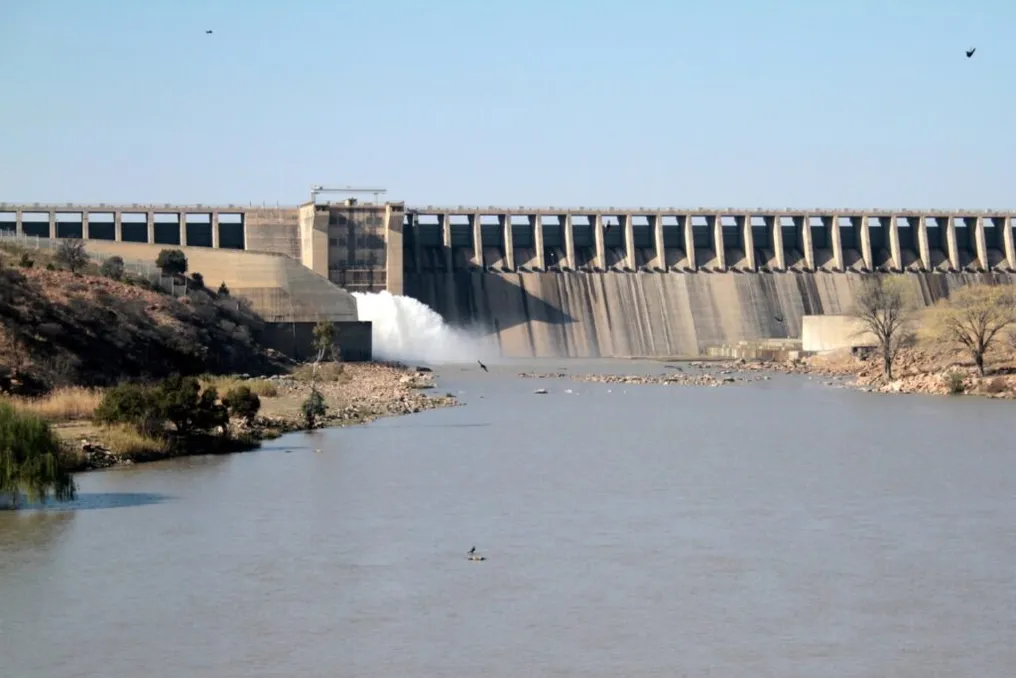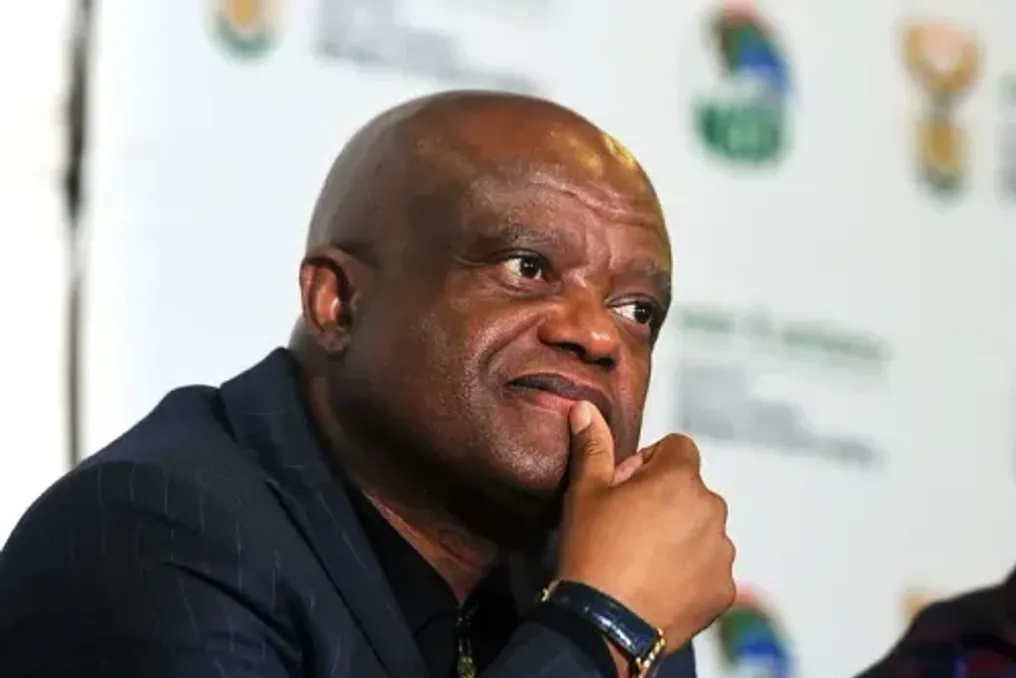
Johannesburg residents demand measures to resolve the city's protracted water deficit
Read more
IOL
iol.co.za

Johannesburg residents demand measures to resolve the city's protracted water deficit

Residents of Johannesburg are demanding urgent intervention and accountability due to ongoing water supply disruptions, low pressure, and restricted water access, which are disrupting the lives of households and businesses. Some communities have not received water for more than ten consecutive days.

Growing dissatisfaction has prompted community organizations and resident associations to call for transparent communication and a reliable plan to stabilize the city's water supply.

The People’s Water Forum, comprising residents and civil society organizations, held a protest yesterday outside Johannesburg Water offices in Newtown, demanding immediate action and responses from the government. This protest followed demonstrations in the areas of Brixton, Kensington, Mayfair, Mayfair West, Melville, Nanas Farm, Robertson, and Parktown West over persistent failures.

The Forum reported that some communities faced outages lasting ten days or longer, while areas on the hills experienced unreliable and intermittent supply for over 210 days. The organization stated: 'We are protesting not because we do not understand the water crisis. We are protesting because the government has known about this crisis for many years and has failed to act with the necessary urgency.'

It was noted that the crisis has negatively affected households' ability to cook, clean, and maintain basic hygiene, while businesses have incurred losses, forcing residents to spend their own money to secure water. The Forum demanded the development of an emergency plan detailing affected areas, measures being taken, responsible bodies, and recovery timelines. Among the eight demands were the immediate restoration of water supply, accountability of political and administrative leadership, significant community involvement, and fair water consumption restrictions.

Furthermore, the forum called for the introduction of second-tier restrictions, arguing that large water consumers, including golf courses, elite estates, and high-consumption commercial enterprises, should face limitations before households already experiencing shortages.

'Water is not a privilege. It is a constitutional right. We are not asking for favors. We demand that the government fulfill its obligations,' the forum stated.

Meanwhile, the Randpark Ridge Village Association (RRVA) reported that communities without a complete lack of water are also suffering from prolonged supply restrictions and low pressure. Chairman Inderan Govender noted that residents, especially in elevated areas and homes with limited reserves, are struggling to fill tanks, operate appliances, and maintain hygiene. He emphasized: 'Residents are demoralized, angry, and frankly fed up.'

Govender questioned why the city continues to rely on reactive measures instead of proactive infrastructure maintenance. He added that residents deserve more than just assurances that technical teams are present; they deserve transparency, accountability, clear communication, and a reliable plan to restore stable supply and prevent such failures.

These concerns arose against the backdrop of the South African Human Rights Commission's report, which examined the issue of water supply and sanitation in Gauteng on Monday. The Commission identified failures throughout the water supply chain, including outdated infrastructure, inadequate maintenance, water losses, power outages, and wastewater treatment failures. The report warned that meetings, working groups, and monitoring structures are insufficient to solve the crisis, noting: 'Simply put, another meeting will not fix the pipe.'

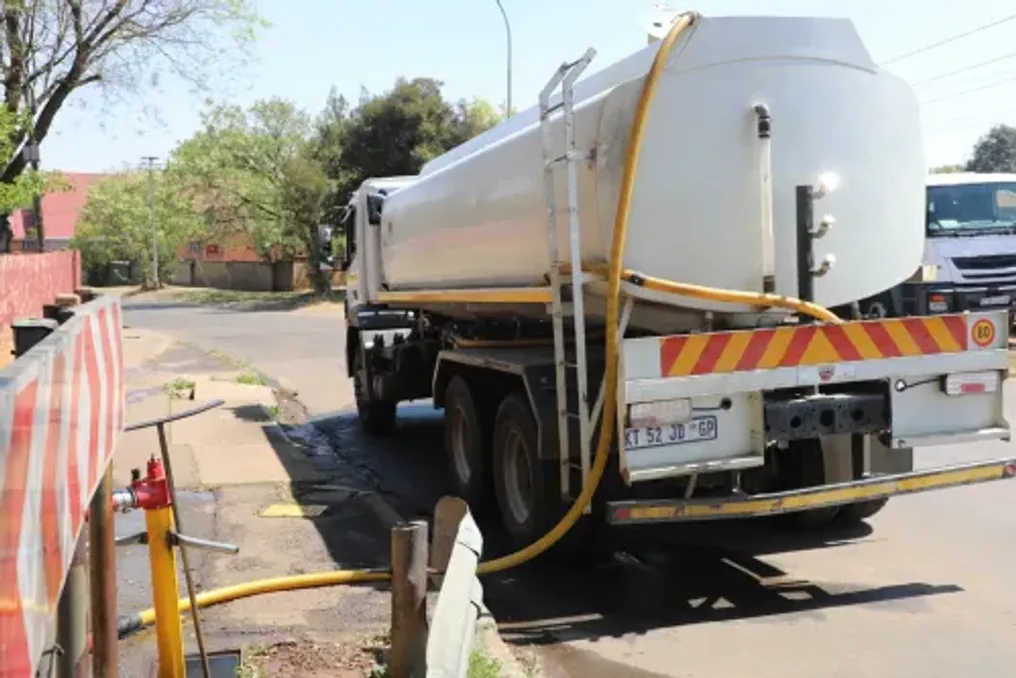
The Commission also cautioned against turning water tankers, especially in informal settlements, into a permanent replacement for traditional infrastructure.

Johannesburg Mayor Dada Morelo acknowledged residents' frustration, noting that some households had not received water for over ten days since October 19. He attributed the strain on the system to the full operation of Rand Water pumps, difficulties in restoring reservoir levels, leaks, and acts of industrial action at Johannesburg Water. Morelo reported that the overall water reserve in the city's supply system improved to 41% from 37% the previous day, but admitted that increased reservoir levels do not always mean water reaches residents. He added: 'In conclusion, we acknowledge that the improvement in reservoir levels offers little comfort to residents whose taps remain dry.'

The Mayor welcomed the recommendations of the SAHRC and stated that the city would engage with Johannesburg Water on their implementation.

Similar stories

Water crisis in South Africa: communities suffer due to water losses in outdated infrastructure
Read more
iol.co.za

Water crisis in South Africa: communities suffer due to water losses in outdated infrastructure

Millions of liters of water are being lost in South Africa due to aging and leaking infrastructure, while communities face prolonged water supply interruptions. Municipal systems are experiencing growing difficulties maintaining water supply amidst dwindling reservoirs, increased demand, and heightened strain on existing reserves.

This crisis affects major urban centers. In Gauteng, supply issues are observed in Johannesburg, Tshwane, and Ekurhuleni, while in some areas of Pinetown East in KwaZulu-Natal, interruptions have persisted for nearly two weeks.

The worsening situation has once again raised questions about the long-term deterioration of infrastructure, water losses, and the ability of municipalities to manage increasingly strained supply systems.

Johannesburg Water reported that several systems, including Sandton, Midrand, Randburg, Roodepoort, Kommandō, and Central, have faced supply restrictions. Midrand was particularly affected due to low inflow volume and high demand; some systems received small volumes, while others had no water supply at all.

Representatives from Johannesburg Water and the major supplier Rand Water are assessing the affected systems and implementing measures to improve supply. However, the DA party warned that Gauteng is entering a period they call a 'water deficit,' accusing municipalities of restricting water supply to prevent reservoir depletion.

DA's spokesperson for water resources and sanitation, Steven Moor, stated that the party received confirmation that Rand Water is limiting water supply to Johannesburg after the city allegedly exceeded its quota. Moor referenced the Department of Water and Sanitation dashboard from October 30th, which showed the overall storage level of Rand Water reservoirs at 31.1% against a target of 60%. He also noted that the Ikemhof system was at 7%, Zwartkops at 16%, Palmier at 28%, and Marlton at 34%.

The Ikemhof system is critical for parts of Johannesburg, including the Kommandō system, which supplies water to reservoir complexes serving areas such as Crosby, Brixton, and Hursthill. According to DA estimates, Johannesburg, Tshwane, and Ekurhuleni collectively lose about one billion liters of treated water daily due to physical losses.

The department separately reported significant losses in Gauteng. Deputy Minister of Water and Sanitation Jack Bloom stated that in Johannesburg, the proportion of unpaid water was about 49%, including physical losses of 26%. In Tshwane, this figure reached 45% (with physical losses at 34%), and in Ekurhuleni—about 30% (with physical losses at 22%).

Bloom specified that physical losses through pipe bursts and leaks across Gauteng are estimated at approximately 431 billion liters annually. He emphasized that 'every leak fixed and every correctly registered meter delivers water to people who currently do not have it.'

WaterCAN's coordinator for civil science and education, Nomsa Daele, noted that the interruptions reflect years of insufficient investment in municipal infrastructure. She reported that various areas went without water for over a week, and in informal settlements, water was not delivered to community tanks for several days.

Daele stressed that the water problems in Johannesburg did not arise overnight and will not be solved instantly, as 'years of infrastructure aging worsened while necessary replacement investments lagged.' WaterCAN also mentioned that areas such as Nanas Farm, Lowlie, Ivory Park, and Crosby experienced outages, as did Brainstown, Morningside, Sunninghill, Woodmead, and parts of Randburg and Northcliff.

Daele added that reducing unnecessary consumption is important but cannot replace infrastructure investment. She also demanded transparency regarding the revenue collection scheme for Johannesburg Water. 'We need clarity on the collection and the total bill. The city must openly and transparently explain how the revenue designated for Johannesburg Water is managed. We cannot fix a broken system without investment.'

In KwaZulu-Natal, the municipality of Ethekwini reported that reduced supply from the major supplier uMngeni-uThukela Water at the Durban Heights water treatment plant led to a decrease in flow through the Southern Aqueduct, lowering the levels in the Nordend and Shalcross reservoirs. The municipality confirmed that the Pinetown East reservoir system is entirely dependent on the Shalcross reservoir for its water supply. It was confirmed that the Washington Heights and Intake reservoirs are empty, and the municipality could not provide exact timelines for restoring normal supply, organizing water delivery via tankers for affected communities.

Johannesburg Water also cautioned residents against purchasing water from private tankers in affected areas, as the company cannot guarantee the source or quality of the water, nor its compliance with the SANS 241 drinking water standard.

At the national level, Deputy Minister David Makhubo stated that the Water Crisis Committee will work to resolve water issues across the country, including supply interruptions and lack of access to clean water in communities. Furthermore, the Provincial Office of the South African Human Rights Commission in Gauteng is preparing to release its report on the investigation into the provision of water and sanitation services on Monday. The investigation examined 'persistent water and sanitation challenges across the province, including supply interruptions, inadequate infrastructure, wastewater treatment failures, and pollution.' The Commission considered how these issues affect the constitutional rights of communities to water, health, and dignity.

Johannesburg needs systemic changes, not just promises, to solve its income crisis
Read more
iol.co.za

Johannesburg needs systemic changes, not just promises, to solve its income crisis

The city of Johannesburg is facing a serious financial crisis that requires deeper solutions than mere political promises. In July, the city, along with 69 other municipalities, received notification of the suspension of the Equity Distribution tranche from the National Budget. According to the Minister of Finance, the reason was financially inefficient management, adoption of an unjustified budget, failure to repay debts to creditors (mainly Eskom and Water Boards), and a R10 billion deal with staff, which the Minister deemed 'unacceptable.'

This incident is considered one of the worst possible for the municipality five months before municipal elections. Although the city began addressing problems, including repaying debt to Eskom, and eventually received the allocated funding, claiming that the economic capital of Mzansi has completely emerged from the crisis would be an exaggeration.

The question arises as to what the new mayor and their Mayoral Committee will do, given that infrastructure debt exceeds R200 billion, the city collects less than 95% of due rates and fees, and the population continues to grow while being ambitious yet under economic pressure.

The article's author suggests considering these issues collectively to assess whether the city possesses sufficient resources to fulfill its duties to residents, whether it has enough capacity for effective governance, and if political parties and candidates have convincing answers for voters.

Analyzing the situation reveals a tension between the issue of management and accountability on one hand, and a structural fiscal problem on the other. This problem is characteristic of most municipalities, with 66% in financial difficulty. Add to this a decade of leadership instability in Joburg, constant billing crises, frequent power and water outages in the same areas, and the problem of cross-subsidization, which is difficult to solve without creativity. Therefore, voters demand better leadership.

Any candidate who promises to solve the financial crisis without fundamentally altering the financing model offers only a partial solution. The author believes that beneath the loud headlines about mismanagement, looting, 'state capture,' and incompetence lies a deeper problem: in 1998, a municipal financing model was developed for a dream society, not for the existing society.

The reality is that 35.9% of the city's workforce is unemployed, which is higher than the national rate of 33.6%; 40% of the population lives on meager social benefits, and two out of three residents earn less than R3000 per month. The question arises as to where residents will get the money for the services they consume. It is also noted that over 76.6% of surveyed residents reported unreliable water supply, and 70.3% reported poor road and drainage conditions.

It cannot be assumed that neighbors are not using municipal services due to payment problems. It must be remembered that you and I together owe 70% of the R484 billion owed to municipalities. Furthermore, in the financing model of provinces and municipalities, the same resident is viewed differently: 95% of provincial budgets are financed from the national fund, most healthcare and education expenses are subsidized, whereas municipalities receive less than 10% of expenses from the same source, requiring residents to cover the remaining 90%.

In light of this, the author suggests that candidates answer five key questions: what is the plan to repay debt to Eskom, how will the billing crisis be resolved, what is the position on increasing transfers from the national fund (additional discretionary funding or targeted grants), how to protect residents from the rising cost of living without additional transfers, and what is the plan for sustainable servicing of both solvent and insolvent residents.

Previously, during a survey before the presentation of the White Paper on Local Government, 80% of residents stated that municipalities should improve billing, debt collection, and cut wasteful spending, while 37% supported an increase in national transfers. The author concludes that residents best understand their problems and have solutions, and the task lies with the leadership, which is ready to make difficult decisions.

Rand Water warns of potential supply cuts due to record demand growth
Read more
www.2oceansvibe.com

Rand Water warns of potential supply cuts due to record demand growth

Rand Water has issued a warning about the possibility of reducing water supply volumes for municipal consumers if they exceed established limits, as rising demand is placing a serious strain on the entire supply network.

In a statement published on Tuesday, October 20th, the major supplier reported that pumping stations are currently operating at maximum capacity while consumption continues to reach record levels. Both SABC News and eNCA reported this warning, urging municipalities to immediately reduce water usage.

Potential reductions will be directed at municipal clients who consume water above the norm. The Rand Water statement does not mention a complete water shutoff or provide a schedule of reductions by specific areas.

Residents of Johannesburg, where first-level restrictions are already in effect, do not need to wait for notification of new restrictions; they should immediately reduce consumption and comply with current city rules.

Rand Water notes that system strain complicates balancing supplies across the network, and continued high consumption increases the likelihood of supply interruptions. The company stated: 'Constant excessive consumption complicates the balancing of supplies across the network and increases the risk of failures if demand is not controlled.'

According to Rand Water, which has repeatedly warned about high consumption, discussions on mitigation measures are ongoing. The company is now calling for consumption to align with allocated volumes to ensure continuous water supply.

The municipalities of Johannesburg, Tshwane, and Ekurhuleni are among the serviced networks, but this warning should not be interpreted as a planned shutdown for every household in these metropolises.

The current Johannesburg Water first-level restriction notice is valid from September 1, 2026, to March 31, 2027—a period of hotter months of the year when, according to the company, demand rises, and reservoirs and towers can lose stored water more quickly.

Under these rules, it is prohibited to water gardens and fill pools between 6 am and 6 pm. It is also forbidden to wash paved surfaces and driveways with hoses, and this ban is not limited to daytime watering.

Johannesburg Water recommends that residents take action independently, without waiting for municipal supply cuts: take shorter showers, fix leaks in taps and toilets, and turn off the tap while brushing teeth instead of leaving it running.

The company itself monitors reservoir and tower levels, repairs leaks and burst pipes, manages pressure, and addresses illegal connections. Rand Water's appeal is addressed not only to residents but also to municipalities and businesses.

Popular