Impact of PM2.5 and PM10 Pollutants on Air Quality Index in India
Read more
The Better India
thebetterindia.com

Impact of PM2.5 and PM10 Pollutants on Air Quality Index in India

India's Air Quality Index (AQI) converts complex pollution readings into a single number ranging from 0 to 500 using color coding. The Central Pollution Control Board introduced this system in September 2014 so that citizens can quickly assess the air quality.

Six categories define the AQI scale: Good (0–50); Satisfactory (51–100); Moderate (101–200); Poor (201–300); Very Poor (301–400); and Severe (401–500). The health risk increases gradually.

The AQI scale covers a range from 0 to 500. The Poor, Very Poor, and Severe categories correspond to values of 201–300, 301–400, and 401–500, respectively. This can be visualized as a ladder: the higher the number, the sooner even healthy people begin to feel negative effects, not just those suffering from asthma or heart problems.

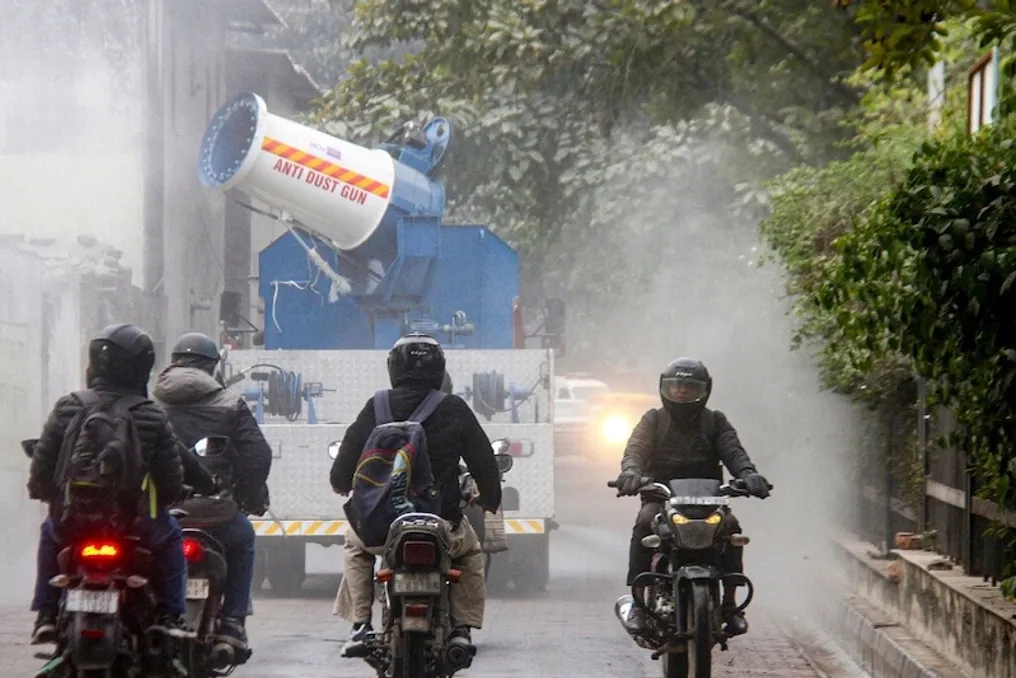
Constant sources of pollution include vehicle exhaust fumes, dust from construction sites and roads, and smoke from waste burning. When combined with cooler evenings and weak winds, these pollutants accumulate. It was under such conditions that Delhi's AQI rose from 179 to 244.

The combination of stubble burning after harvest in Punjab and Haryana, fireworks during festivals, and cold, stagnant air contributes to trapping pollutants over Delhi. However, agricultural fires are not the sole cause. CREA analysis showed that in October, they contributed less than 6% of the fine particulate pollution in the city.

Days with Severe Pollution

Days with severe pollution levels are rarely caused by a single factor. A combination of intense agricultural fires, Diwali celebrations, and ground-level air stagnation leads to deterioration. On one occasion, Delhi's AQI reached 418, with only stubble burning accounting for over 22% of the fine particulate pollution in the city.

It is important to understand that the AQI is not an average; the index is determined by the strongest pollutant. Thus, one smoky and dusty day can push a city into the 'Poor' category, even if all other indicators look normal. Typically, PM2.5 is the main culprit—particles that are about 30 times thinner than a hair.

With prolonged exposure, 'Poor' levels cause breathing discomfort; 'Very Poor' can trigger respiratory illnesses; and 'Severe' affects healthy individuals and seriously impacts those already suffering from lung or heart diseases.

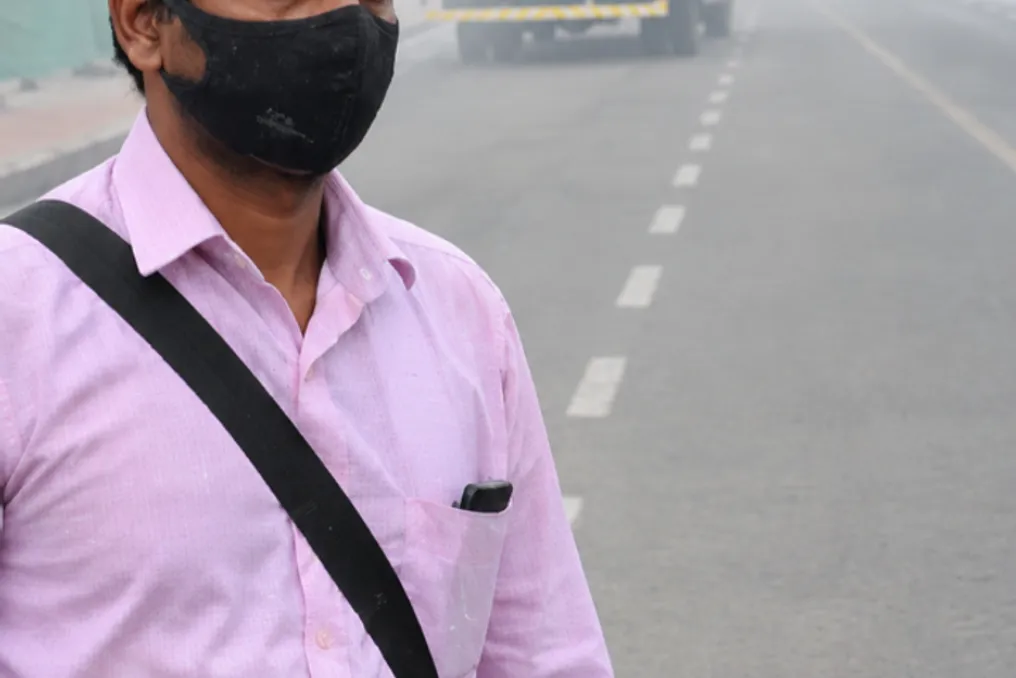
Citizens can check the AQI through the CPCB's Sameer app and monitoring dashboard. Since the number reflects the worst pollutant, knowing which specific pollutant is causing the reading helps decide whether to use masks, air purifiers, or stay indoors.

India's AQI is a summary of the worst-case scenario compiled from eight pollutants and health-based established limits. Knowing this allows for an accurate understanding of why the air becomes Poor, Very Poor, or Severe. Which pollutant determines the reading in your city today?
Similar stories

Air pollution has become a national crisis; long-term policies and strict action are required
Read more
www.aajtak.in

Air pollution has become a national crisis; long-term policies and strict action are required

Air pollution is no longer merely an environmental issue; it has become a national crisis linked to public health, economic productivity, and the future of coming generations. Solving this problem requires not just seasonal restrictions, but long-term strategies based on scientific facts, effective monitoring, and control over emission sources.

Breathing is the most natural function of life, but polluted air is making this process dangerous for health. The impact of air pollution is not limited to coughing, eye irritation, or difficulty breathing; exposure also increases the risk of heart disease, stroke, lung cancer, and premature death. Therefore, ensuring clean air is not just a matter of environmental protection, but also a constitutional and administrative responsibility to protect the lives and health of citizens.

A study published in 'The Lancet Planetary Health', led by researchers affiliated with Karolinska Institute in Sweden, presented a grim picture of the health effects of air pollution in India. This study analyzed data from 655 districts across the country between 2009 and 2019. According to the findings, every increase of 10 micrograms per cubic meter in the annual average concentration of PM2.5 was associated with an 8.6 percent rise in mortality risk.

The researchers estimated approximately 3.8 million deaths during this period based on exposure to PM2.5 exceeding the Indian National Ambient Air Quality Standards. However, when based on the stricter guidelines of the World Health Organization (WHO), this estimate rose to 16.6 million. It is important to note that these figures are estimates based on statistical models, not individual confirmations of every death. Nevertheless, these statistics highlight a deep link between long-term pollution and mortality risk.

PM2.5 particles are ultra-fine particles with an aerodynamic diameter of 2.5 micrometers or less. Due to their small size, they can penetrate deep into the lungs. Exposure to these particles can affect processes such as inflammation and oxidative stress in the body. Scientific research links long-term exposure to increased risks of cardiovascular and respiratory diseases, as well as premature death.

In 2021, the WHO set the guideline for the annual average of PM2.5 at 5 and the 24-hour average at 15 micrograms per cubic meter. In contrast, India's National Ambient Air Quality Standards set the annual limit at 40 and the 24-hour limit at 60 micrograms per cubic meter. There is a significant difference between the two standards; Indian standards are limits set for regulatory compliance, while WHO guidelines are recommendations based on scientific health evidence. This does not mean that there is no health risk from pollution within the national limit.

WHO guidelines also indicate that the risk of pollution can persist even at low levels. Therefore, the goal should not just be to enforce adherence to the prescribed limit, but to continuously reduce pollutant concentrations.

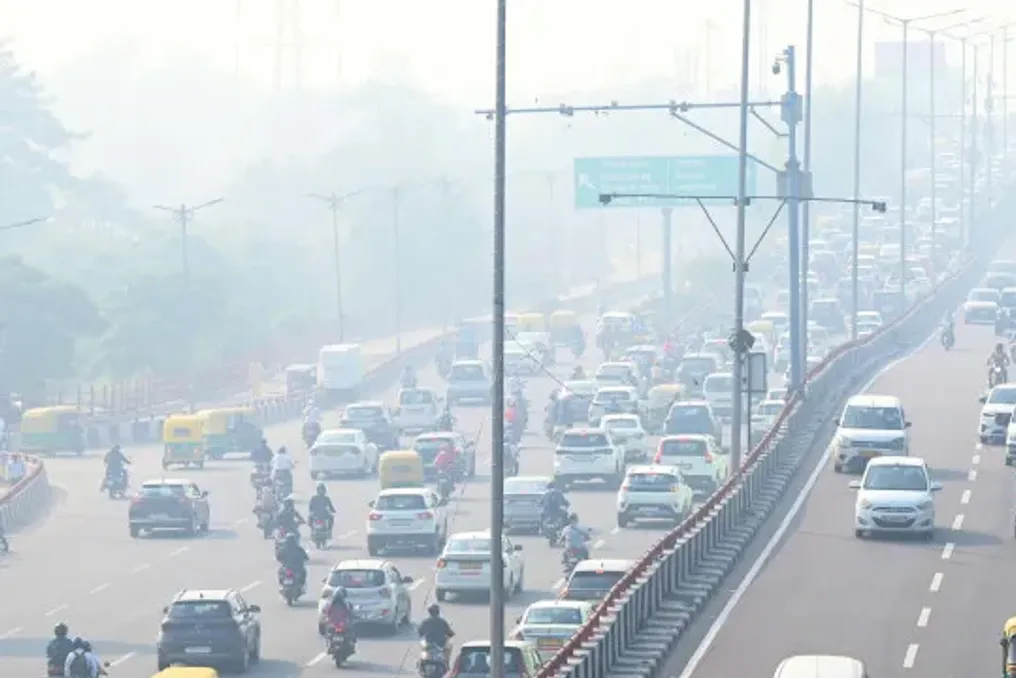
It is no longer appropriate to consider air pollution solely an issue of Delhi-NCR. Industrial emissions, vehicle smoke, construction work, and road dust are affecting smaller cities as well. The poor air quality in the industrial area of Barniahat, located on the Assam-Meghalaya border, points to this broader challenge.

According to a report released by the Centre for Science and Environment (CSE) in March 2025, the PM2.5 pollution problem was observed in Delhi, Mumbai, Kolkata, Bengaluru, Hyderabad, and Chennai between October 2024 and January 2025. During this period, Delhi recorded an average level of approximately 175 micrograms per cubic meter. The report also mentioned that in cities like Mumbai, Chennai, and Bengaluru, local pollution increased sharply in several places during the winter. In some areas, pollution levels were found to be about 60 percent higher than the city average.

These findings make it clear that a city's overall average figure does not reflect the actual situation in every area. The risk may be higher near industrial zones, busy roads, and construction sites. Therefore, expanding monitoring centers and ensuring the availability of localized pollution data is essential.

The effect of polluted air affects all sections of society, but the risk and the ability to avoid it are not equal for everyone. Children, the elderly, pregnant women, and people with pre-existing heart or lung diseases are particularly vulnerable. Since children's lungs are in a developmental stage, prolonged exposure to pollution is considered a serious concern for their respiratory health.

Furthermore, construction workers, street vendors, rickshaw pullers, and traffic police officers spend most of the day in open environments. For economically weaker families, installing air purifiers or opting to stay indoors when pollution rises is limited. For individuals dependent on daily wages, absence from work due to pollution can lead to loss of income.

India implements new measures to control air pollution in New Delhi
Read more
noticiasaominuto.com

India implements new measures to control air pollution in New Delhi

India has initiated its annual actions aimed at combating toxic air pollution in the city of New Delhi, a metropolis of 30 million inhabitants classified among the most polluted capitals on the planet.

On this day, monitoring stations recorded 233 micrograms of pollutant particles per cubic meter, a value that represents approximately 15 times the established limit. The Governmental Commission for Air Quality Management predicts that air quality will remain in 'poor' condition in the coming days.

The deterioration of air quality is more pronounced during the winter period in the Indian capital, as colder air tends to trap pollutants near the ground. The main causes of this pollution include coal-fired thermal power plants, vehicle traffic, construction sites, and the burning of agricultural waste in adjacent regions.

The government of the National Capital Territory of Delhi decreed on Wednesday the ban on open burning of garbage and required stalls and food establishments to cease using firewood or charcoal.

Last year, pollution levels reached a peak of 846 micrograms per cubic meter, exceeding the World Health Organization (WHO) recommended limit by 56 times.

The United Nations Children's Fund (UNICEF) issued a warning, indicating that exposure to polluted air puts children at a higher risk of developing acute respiratory infections.

New regulations will come into effect on November 1st, covering the doubling of parking fees and the implementation of remote work for public servants, aiming to reduce emissions generated by vehicular traffic. Furthermore, stricter construction rules will be applied on the same date, followed by a total suspension of construction and demolition activities between December 10th and January 20th.

Air pollution concern grows in Delhi and NCR due to cold weather and weak winds; AQI rises
Read more
www.aajtak.in

Air pollution concern grows in Delhi and NCR due to cold weather and weak winds; AQI rises

As the second period of October begins, various weather phenomena are observed across different parts of the country. Heavy rain is forecast in some regions, while others expect strong winds with thunderstorms. In South India, the rainy season may intensify, while a low-pressure area in the Arabian Sea is activating sea weather.

Conversely, in the northern states of India, including Delhi, the cold has intensified in the morning, evening, and night. On Monday morning, Delhi recorded the coldest night of the month. The minimum temperature at the Safdarjung weather station was 17.1 degrees Celsius, which is 1.3 degrees below the average. Meanwhile, the daytime maximum temperature reached 31.7 degrees Celsius. According to the Meteorological Department (IMD), the minimum temperature recorded in Safdarjung is the lowest for the current month. In Delhi, as in other northern Indian states, light cold has begun to be felt during the morning, evening, and night hours.

The problem of air pollution may increase in the capital region in the coming days. According to the Central Pollution Control Board (CPCB), on Monday at 16:00, the average daily Air Quality Index (AQI) in Delhi was 139, which falls into the moderate category. Out of 58 monitoring stations, two were in the poor air quality category, six in the satisfactory category, and the rest in the moderate category. The worst situation was recorded in Pusa, where the AQI reached 281. Early warning system forecasts show that the air in Delhi may remain in the moderate category on October 20. However, pollution could rise to the poor category on October 21 and 22. There is a possibility of poor air quality persisting for the next six days. Adverse weather conditions can hinder the dispersion of pollutants. Pollution can accumulate in the air when the ventilation index is below 6000 square meters per second and the average wind speed is less than 10 kilometers per hour.

Amid concerns about air quality in Delhi, instances of stubble burning are also being recorded. Satellite data from the CREAMS laboratory of the Indian Council of Agricultural Research (ICAR-IARI) registered 98 cases of stubble burning in six states on October 19. Among these, there were 27 cases in Uttar Pradesh, 25 in Punjab, 24 in Rajasthan, 18 in Uttarakhand, and four cases in Madhya Pradesh. On Monday, no cases of stubble burning were registered in Haryana and Delhi. From September 15 to October 19, the total number of incidents was 1171. These incidents included 370 in Madhya Pradesh, 368 in Punjab, 197 in Rajasthan, 175 in Uttar Pradesh, 51 in Uttarakhand, 9 in Haryana, and 1 case in Delhi. CPCB classifies AQI categories as follows: good - 0-50, satisfactory - 51-100, moderate - 101-200, poor - 201-300, very poor - 301-400, and hazardous - 401-500.

In the northwestern part of Uttar Pradesh and surrounding areas, there is cyclonic rotation in the upper layers of the atmosphere at an altitude of about 1.5 kilometers above sea level. Nevertheless, the meteorological department does not predict major weather changes in North India different from the forecasts given for various states this week. A cyclonic rotation has formed over Himachal Pradesh and adjacent Punjab, associated with a western disturbance, at an altitude of about 3.1 kilometers above sea level. The corresponding trough line extends to an altitude of about 5.8 kilometers in the middle troposphere. Cyclonic rotation is also present in southern Rajasthan and surrounding areas. The trough line originated from southwestern Rajasthan to northeastern Arabian Sea. Despite these weather systems, the meteorological department does not forecast large-scale weather activity for North India.

Weather in some parts of central and western India may change after North India. In Madhya Pradesh, winds of 30-40 kilometers per hour with thunderstorms are expected in some places on October 20, with gusts potentially reaching 50 kilometers per hour. In Konkan and Goa, winds of 40-50 kilometers per hour with thunderstorms are possible on Tuesday, with gusts potentially reaching 60 kilometers per hour. Similar weather may be observed in central Maharashtra.

An increase in rainfall activity is expected in South India. IMD warned of heavy and very heavy rainfall in some areas of Tamil Nadu, Puducherry, and Karaikal on October 20. Heavy rains may also lash Kerala, Maharashtra, and coastal Andhra Pradesh. K.A. Sangothaiyan, Minister of Revenue and Disaster Management of Tamil Nadu, reported that an orange alert has been issued in six districts: Tiruvur, Mayiladuthurai, Thanjavur, Pudukkottai, Coimbatore, and Nilgiris. The minister told journalists at the emergency control center in Ajilagam, Chennai, that the district administration has been instructed to be prepared for heavy rains. District directors and officials from relevant departments are monitoring the situation and are ready to take immediate action if necessary. In Tamil Nadu, Puducherry, and Karaikal on October 20-25...

Popular