In Cape Town, water meter size now determines fixed water and sanitation fees
Read more
IOL
iol.co.za

In Cape Town, water meter size now determines fixed water and sanitation fees

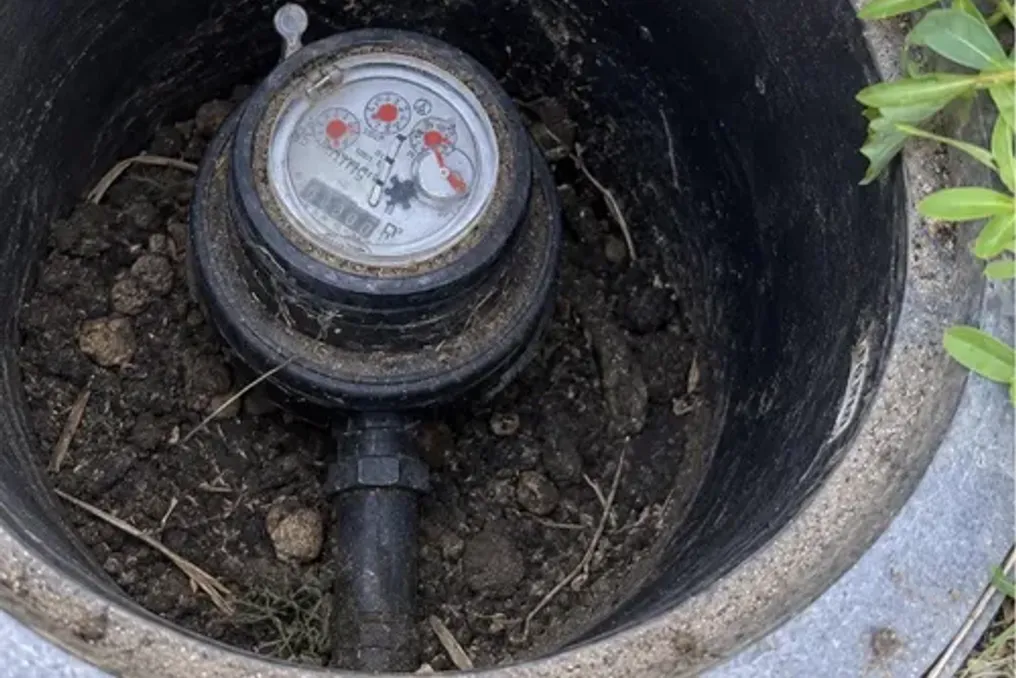
Homeowners in Cape Town may face an increase of hundreds of rand in their monthly water and sanitation bills as the City's billing system has been changed. The fixed portion of the payment is now dependent on the size of the water meter, rather than the municipal property value.

Plumber Etienne Krige from Fish Hoek expressed concern that residents may not realize that the size of their water meter has become the determining factor for the fixed part of their monthly bills, instead of their property value.

Since July 1st, the City began basing the fixed portion of residential water and sanitation charges on the nominal diameter, or size, of the property's water meter. This change followed a High Court ruling made in April concerning previous fixed charges based on property value.

Zahid Badroodien, a member of the City's Water and Sanitation Committee, confirmed that tariffs for 2026/27 are based on the water meter size. Under the new tariffs, properties with water meters ranging from 12 mm to 22 mm will be subject to a combined fixed monthly charge for water and sanitation of 160.21 rand, including VAT.

For properties with 25 mm or 32 mm water meters, the total fee will be 446.59 rand per month. A 40 mm water meter will cost 1145.09 rand, and for properties with 50 mm water meters, the fee will reach 1789.19 rand. These fixed charges are levied regardless of the volume of water consumed and are separate from consumption-based charges.

During the 2026/27 financial year, the following monthly fixed charges apply: Badroodien noted that approximately 97.5% of residential water meter records fall into the lowest fixed charge category, which covers water meter sizes smaller than 25 mm. Furthermore, fixed charges do not apply to approved needy properties.

All stated amounts include VAT and represent monthly fixed charges. The tariffs apply to 'Full Residential' and 'Residential Cluster' categories and exclude consumption-based charges. Badroodien explained that these fixed charges are intended for the maintenance, operation, replacement, and modernization of the City's water and sanitation infrastructure. Separate fixed charges are necessary because water and sanitation utilize different infrastructural networks and associated service costs. Residents also pay for the water they consume and the related sanitation service.

According to Badroodien, owners of standalone properties can check their water meter size in the 'Water' section of their municipal tax bill. Residents of sectional properties, including apartments and housing complexes, must contact their corporate body or managing agent for this information. Badroodien advised residents who believe their water connection size was recorded incorrectly or have been wrongly billed to contact the City's Customer Interaction Centre or call center to register a request and ask for an investigation.

Etienne Krige also prepared a video demonstrating how homeowners can use their water meter to detect potential leaks. This demonstration provides residents with a practical way to familiarize themselves with their meters and monitor for potential water loss.
Similar stories

Cape Town assesses water consumption restrictions amid declining reservoir levels in the Western Cape
Read more
iol.co.za

Cape Town assesses water consumption restrictions amid declining reservoir levels in the Western Cape

Cape Town is considering implementing water consumption restrictions as reservoir levels drop, and authorities are assessing the risk of a hotter and drier summer. The city has begun warning high-water-use households about the need to reduce monthly water usage, or they may face supply restrictions.

The Minister of Water and Sanitation, Pemmy Majodina, informed parliament that modeling is underway to determine whether restrictions or other demand management measures will be required to protect water reserves in the Western Cape Water Supply System (WCWSS).

According to the minister, the total storage volume in reservoirs on October 5, 2026, was approximately 74.81%. Although the system remained relatively stable, storage levels were lower than in the same period last year, showing an overall downward trend.

Majodina noted that the potential impact of El Niño-related climate conditions has added uncertainty to forecasting future water availability and system performance.

In response to questions from MP Rise Mzansi Songezo Zibi, Majodina stated that her department conducted an analysis of the system's operation, hydrological conditions, and available water resources to assess the necessity of demand management measures. Additional technical analyses and modeling examined various scenarios for water restrictions and other interventions for the 2026/27 operational year.

She emphasized that these assessments aim to determine the most suitable measures to maintain system reliability and reduce long-term water security risks. The decision on imposing restrictions was expected after the presentation of the annual operational analysis and relevant models to stakeholders at the WCWSS Stakeholder Operational Forum last week. However, the information provided does not confirm whether restrictions were subsequently approved.

The minister's comments came as the City of Cape Town sends notifications to ratepayers whose water consumption has exceeded 15,000 liters per month for two consecutive months. One such ratepayer received a text message warning them to reduce consumption below this threshold next month to avoid supply restrictions. Previously, last month, it was reported that the City's Water Restrictions Committee was considering imposing restrictions ahead of an anticipated hotter and drier summer.

Majodina reported that her department is collaborating with the Western Cape Local Government Department, assisting water utilities in preparing contingency plans for possible failures. Municipalities have been advised to explore alternative water sources to reduce dependence on existing supply systems and enhance resilience. Support is also being provided for backup power sources and specialized operations and maintenance teams to maintain services during periods of heightened risk.

The department receives requests for assistance in managing reduced water availability and supports the municipalities of Bitou and Knysna with projects to increase water supply volumes. Funding is provided for conducting needs assessments, scale evaluations, feasibility studies, and readiness research for respective water schemes. These studies are expected to be completed by the 2028/29 financial year.

Majodina specified that no additional applications for water supply augmentation support were received during the 2026/27 financial year, although several water security projects continued in the municipalities. These projects are funded through the Water Supply Infrastructure Grant and the Budget Infrastructure Fund Program. The department also monitors non-revenue water and water losses in municipalities through quarterly water balance reporting. A control threshold of 30% non-revenue water has been established; municipalities exceeding this figure are identified for targeted support and intervention. An annual water balance data analysis is also conducted to identify persistent water losses and determine appropriate corrective measures.

Cape Town City Budget Forecasts: Water and Electricity Tariff Increases Over Three Years
Read more
iol.co.za

Cape Town City Budget Forecasts: Water and Electricity Tariff Increases Over Three Years

The three-year budget forecast for Cape Town City indicates that by 2028/29, residents will have to pay 36% more for water and 24% more for electricity compared to the prices of the 2025/26 fiscal year.

Practically, this means that the cost of 100 units of electricity at June 2026 prices will be 124.50 rand starting from July 2028, and 100 units of water will cost 136 rand.

Despite Cape Town aiming to minimize price increases this year (the election year), the figures in its own budget forecasts suggest otherwise. The electricity tariff increase this year is 5.83%, and next year it will increase by another 8.49%, followed by another 8.39% in the subsequent year.

The projected national inflation rate is 3.4% this year, 3.2% next year, and 3.1% in 2028/29. Thus, accumulated inflation over three years will add about 10% to the cost of services, which is 14% less than the electricity price increase in Cape Town and a substantial 26% less than the proposed water price hike by the city.

These figures are criticized as unacceptable in a city that is becoming increasingly unaffordable for the vast majority of the population. These numbers highlight the priorities of the DA party, making services almost accessible only to the middle class, expatriates, property buyers, and Airbnb owners, but completely unmanageable for everyone else.

According to Cape Town Mayor Geordie Hill-Lewis, the city is working to improve electricity affordability by reducing dependence on Eskom. However, readers must judge the sincerity of Hill-Lewis's promises regarding affordability in light of his own proposed price increases.

In addition to water and electricity costs, rates also show a similar pattern characteristic of an election year: a 2% reduction in rand rates to compensate residents for an premature overall assessment that effectively forces them to pay more.

The DA calls for voters to support them this year but warns that next year they will increase rates by 6% based on increased property values, and in 2028/29 by another 8.13%.

Affordability, according to the author, is not just a slogan but a result of political decisions made during the budget compilation process. The DA elections benefit a very small group of people living and working in Cape Town.

Rand Water warns of potential supply cuts due to record demand growth
Read more
www.2oceansvibe.com

Rand Water warns of potential supply cuts due to record demand growth

Rand Water has issued a warning about the possibility of reducing water supply volumes for municipal consumers if they exceed established limits, as rising demand is placing a serious strain on the entire supply network.

In a statement published on Tuesday, October 20th, the major supplier reported that pumping stations are currently operating at maximum capacity while consumption continues to reach record levels. Both SABC News and eNCA reported this warning, urging municipalities to immediately reduce water usage.

Potential reductions will be directed at municipal clients who consume water above the norm. The Rand Water statement does not mention a complete water shutoff or provide a schedule of reductions by specific areas.

Residents of Johannesburg, where first-level restrictions are already in effect, do not need to wait for notification of new restrictions; they should immediately reduce consumption and comply with current city rules.

Rand Water notes that system strain complicates balancing supplies across the network, and continued high consumption increases the likelihood of supply interruptions. The company stated: 'Constant excessive consumption complicates the balancing of supplies across the network and increases the risk of failures if demand is not controlled.'

According to Rand Water, which has repeatedly warned about high consumption, discussions on mitigation measures are ongoing. The company is now calling for consumption to align with allocated volumes to ensure continuous water supply.

The municipalities of Johannesburg, Tshwane, and Ekurhuleni are among the serviced networks, but this warning should not be interpreted as a planned shutdown for every household in these metropolises.

The current Johannesburg Water first-level restriction notice is valid from September 1, 2026, to March 31, 2027—a period of hotter months of the year when, according to the company, demand rises, and reservoirs and towers can lose stored water more quickly.

Under these rules, it is prohibited to water gardens and fill pools between 6 am and 6 pm. It is also forbidden to wash paved surfaces and driveways with hoses, and this ban is not limited to daytime watering.

Johannesburg Water recommends that residents take action independently, without waiting for municipal supply cuts: take shorter showers, fix leaks in taps and toilets, and turn off the tap while brushing teeth instead of leaving it running.

The company itself monitors reservoir and tower levels, repairs leaks and burst pipes, manages pressure, and addresses illegal connections. Rand Water's appeal is addressed not only to residents but also to municipalities and businesses.

Popular