Apple warned on Monday that the cost of memory chips will continue to rise, creating pressure on gross profit in a critical holiday quarter; however, the company stated that it has taken steps to ensure supply.
The company's shares changed slightly after the close of trading, despite Apple's fourth fiscal quarter results exceeding analyst expectations. However, during the conference call, shares fell by 4% after executives presented a weaker forecast, although they later reduced the losses to 2%.
Increased early demand for the iPhone 18 Pro lineup and rising prices contributed to strong performance this quarter. Apple forecasts a gross margin of 45–46% for the quarter ending in December, which is lower than the 47.9% recorded in the fourth quarter. Furthermore, the company projects service revenue growth of 8–9%, below analysts' expectations of 10.7%.
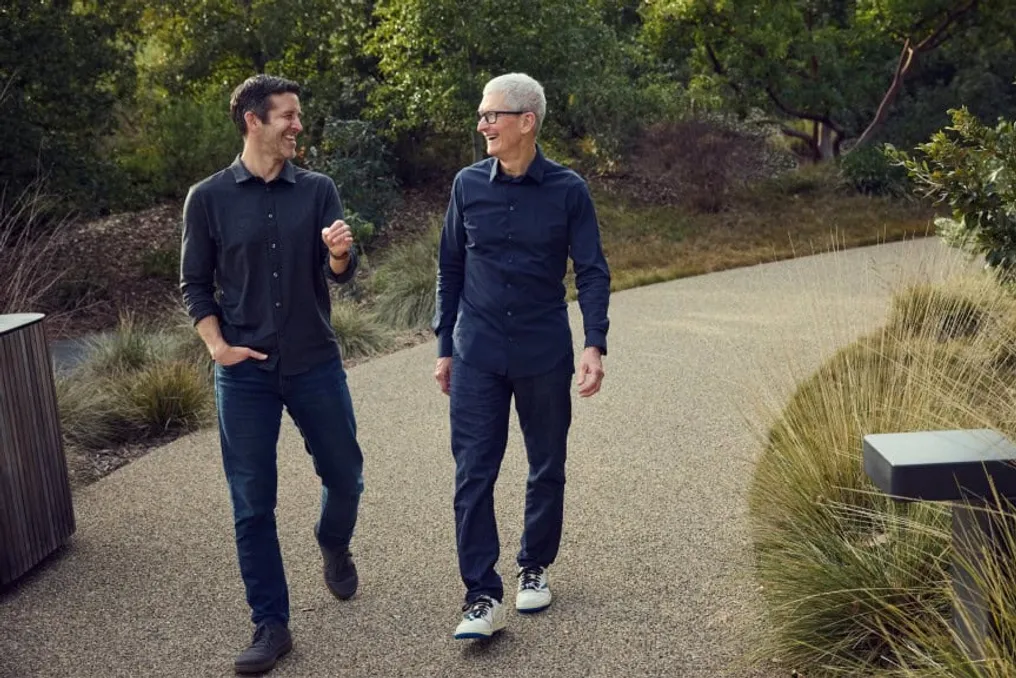
These results come amid Apple's experiments with several new ventures under the leadership of CEO John Ternus, who took office in September. After nearly two decades of releasing most new iPhones in September, Apple is stretching out release timelines this year: the iPhone Pro and Duo models are already on sale, while other models are expected next year.
This quarter, Apple also launched a range of new products unrelated to the iPhone, including its first touchscreen laptops and its first smart home hub. Analysts believe that the continuous release of new products is intended to smooth out Apple's annual revenue cycle, which for decades was characterized by sharp growth during the holiday season followed by a decline toward August.
In recent weeks, Apple has faced customer reports regarding cracks on the screens of the iPhone Duo, its first foldable phone, which sold out within hours online and caused queues in stores last month.
According to LSEG data, fourth-quarter sales reached $114.48 billion, surpassing analyst estimates of $113.39 billion. Profit stood at $2.10 per share, higher than the projected $1.99, even excluding five cents from tariff reimbursements.
In an interview, Ternus stated that only a 'very small percentage' of iPhone Duo devices were returned due to display issues, and Apple is working on replacing them. He noted that the company could not meet overall demand and did not provide timelines for catching up.
Ternus emphasized: 'Duo is limited for now. The launch is going well... but at the moment we cannot predict when supply and demand will equalize.' iPhone sales in the fourth quarter, which included the iPhone 18 Pro models but not the Duo, reached $57.58 billion, exceeding LSEG forecasts of $56.54 billion.
The phased launch strategy occurs against the backdrop of rising memory chip prices driven by artificial intelligence, which has benefited chip manufacturers like Samsung. This could undermine the margin growth Apple gains from selling memory upgrades.
Bob O'Donnell, lead analyst at Technalysis Research, commented: 'The main question for Apple in the future will be how well it can weather the significant increase in component costs, which has slowed its competitors in the PC and smartphone segments. The new iPhone Duo looks like a big success, but the company needs to resolve screen issues and scale up production capacity.'
With the release of the iPhone 18 Pro, Apple also raised the price of the iPhone 17 by $100 and increased the cost of some MacBook models, which helped cushion the blow from rising memory costs.
Ternus reported: 'We have indeed seen higher memory costs compared to the June quarter, which was partially offset by the benefit of inventory levels and lower costs for some non-memory components. These price increases provided some compensation.'
The fourth-quarter gross margin was 47.9%, exceeding LSEG forecasts of 47.5%. During the investor call, CFO Kevin Parekh stated that Apple expects memory costs to continue rising next year. COO Sabih Khan did not directly confirm a long-term supply agreement but said that Apple is closely collaborating with memory suppliers, and its purchasing commitments increased by $33 billion during the quarter.
Shares of chip manufacturer Micron rose by more than 1% after Monday's close, as did the shares of chip equipment manufacturers KLA and Applied Materials.
Apple also cited Siri AI, which partially operates on Google's cloud, as a factor affecting margins. The company plans to charge more for iCloud+ subscriptions to offset AI costs, although it has not yet announced prices.
Ternus stated during the call: 'There will be certain limitations on the use of features that depend on server models, including Siri AI and intelligent photo editing.'
MacBook sales totaled $10.79 billion, surpassing forecasts of $9.61 billion. Service revenue reached $31.57 billion, matching forecasts of $31.58 billion. iPad and wearables sales amounted to $6.23 billion and $8.30 billion, respectively, falling short of expectations. Sales in China reached $17.54 billion, below analysts' expectations of $18.58 billion, according to Visible Alpha data.