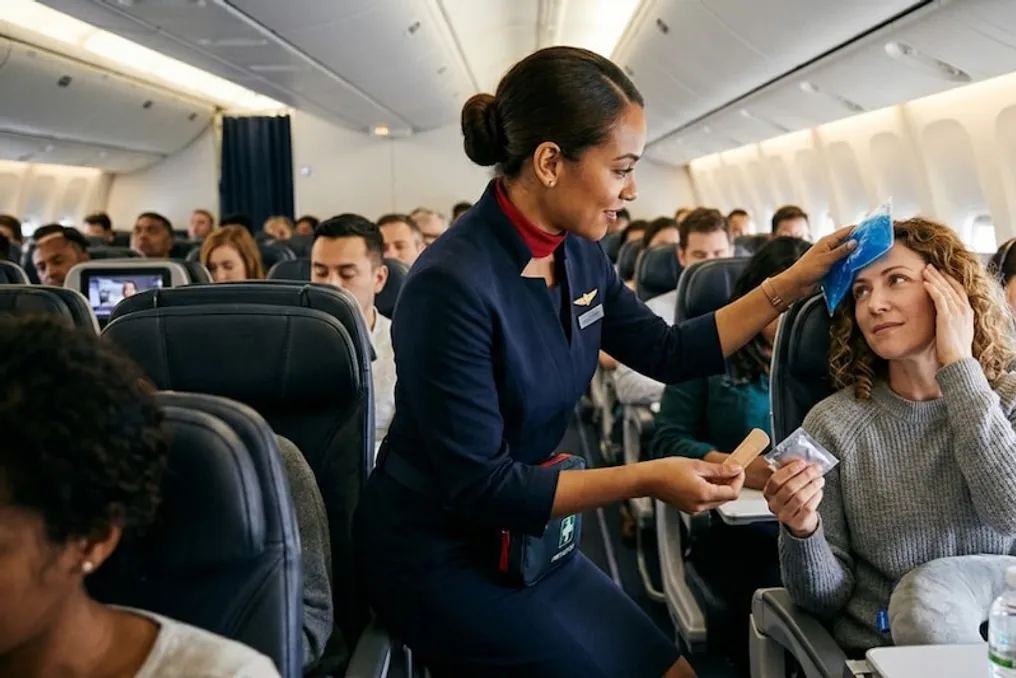
Aerotest tells which items passengers can request from flight attendants during a flight
Read more
Aaj Tak
www.aajtak.in

Aerotest tells which items passengers can request from flight attendants during a flight

During an air trip, passengers often assume that they only have access to the amenities originally placed in their seats. However, this is not the case. If a passenger experiences a headache, leg swelling, or sudden injury during the flight, they can ask the flight attendants for some necessary items.

Passengers can also ask for items such as sanitary pads, tampons, and painkillers. An experienced flight attendant shared information about six important things that many travelers do not know.

According to a report by the New York Post, Sil Ridel, a stewardess known on social media as 'Travel with Sil Ridel,' has been in the aviation industry for six years. She regularly shares tips related to air travel on TikTok and Instagram.

Every Tuesday, she provides passengers with new information. Recently, she talked about what items passengers can request on the plane if needed.

During a long flight, leg swelling or headaches often occur. In such cases, one can ask the flight attendants for an ice pack for a cold compress. This can help relieve pain or reduce swelling.

Sometimes blisters appear on the feet due to running between gates at the airport or prolonged walking. If you don't have a bandage, don't worry; you can ask the stewardess for a bandage or plaster. They may have the necessary supplies to solve such minor passenger problems.

For sudden headaches or stomach aches during a flight, passengers can also seek help from the crew members. Ridel noted that some passengers may be provided with a painkiller. However, the availability of medication can vary by airline and by flight, so there is no guarantee of receiving medicine.

This information may be useful for women. If menstruation unexpectedly starts during a flight and you do not have a sanitary pad or tampon, you can ask the flight attendant about it.

According to Ridel, some airlines place necessary items for women on their planes. However, this amenity is not guaranteed on all airlines.

She also advised not to try to search for these items yourself in the toilet drawers, as this could damage the contents. It is better to ask the cabin crew directly, as they can provide assistance.

Hot water can also be requested on the plane. If you bring a packet of tea or instant noodles, you can ask the crew members for hot water.

Furthermore, if you have nausea or vomiting problems during the flight, it is better to request a special sickness bag in advance rather than waiting for the discomfort to begin.

Ridel added that if the noise in the plane causes discomfort, earplugs can be requested. Passengers can also ask the crew members for extra water, to refill a bottle, or sanitary wipes.

She emphasized that passengers should not be shy about asking for help. Even if your need seems strange or embarrassing, the cabin crew has encountered similar situations before. Therefore, you should speak openly about your problem. She also mentioned that although not everything may be available on the plane, the crew members often have some solution.
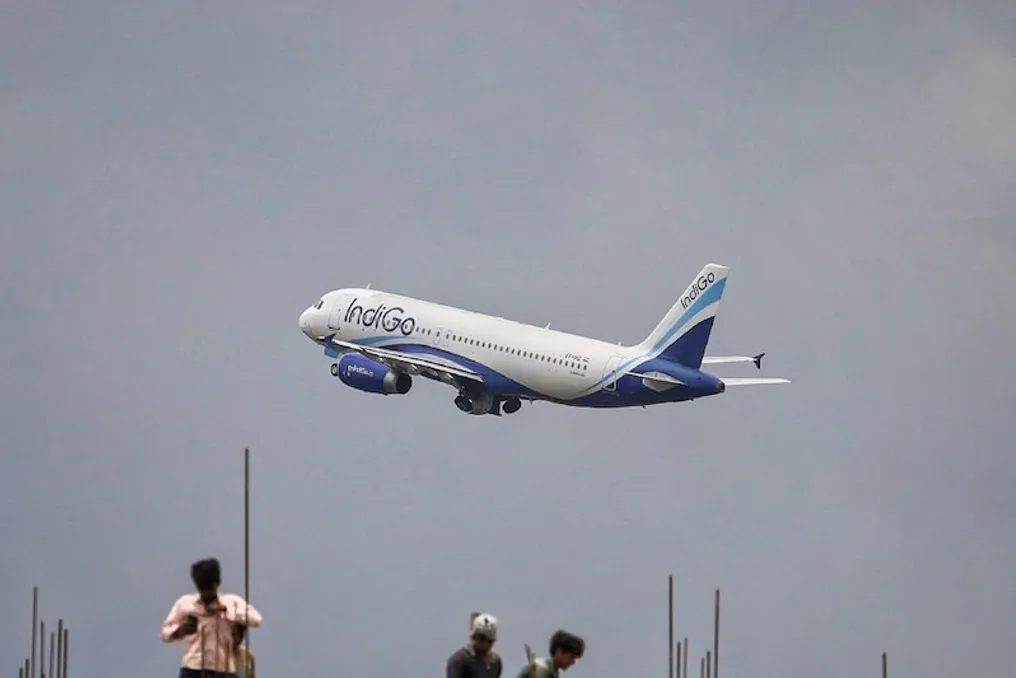

Similar stories

What are the maximum fares airlines can set in India?
Read more
www.aajtak.in

What are the maximum fares airlines can set in India?

In India, airlines do not have a fixed, permanent upper limit on fares for normal operations. Instead, ticket prices are determined dynamically based on the carrier's operating costs, demand, seat availability, and market conditions.

Airlines typically set prices based on demand, seat availability, booking time, and various fare classes. There is no rule that fixes the maximum price for an airline ticket. However, in special or emergency circumstances, the government may intervene in airline pricing.

While answering a question posed in Parliament, the Minister of State for Civil Aviation detailed this issue in February of this year. According to his explanation, airfares are not subject to government regulation. Airlines have the right to determine their own airfares based on their operational needs, while complying with Rule 135 of the Aircraft Act of 1937.

Airfares constantly change under the influence of economic factors such as supply and demand. Current seat availability, fuel costs, aircraft capacity, seasonal changes, and other related factors significantly affect ticket prices. Furthermore, the government generally does not control airfares to maintain market competition.

Nevertheless, the government monitors the situation and intervenes in exceptional circumstances, such as a pandemic, the Mahakumbh, or an attack in Pahalgam, to make air travel affordable for passengers. For instance, at the beginning of December 2025, considering serious flight disruptions and a sharp rise in fares by one domestic airline, the government issued a notification on December 6, 2025, temporarily limiting the maximum fare charged by domestic airlines depending on the distance.

Additionally, to ensure transparency in airfares, the DGCA has created a 'Tariff Monitoring Unit' (TMU). This unit conducts monthly spot checks of airfares on 78 specified routes through airline websites. The goal is to ensure that airlines do not charge more than the limit they have declared.

As stipulated in sub-clause (2) of Rule 135 of the Aircraft Act of 1937. When the government set an emergency limit on domestic airfares in December 2025, it was specified that the one-way fare for a route up to 500 km should not exceed 7500 rupees. For routes between 1000 and 1500 km, such as Delhi-Mumbai, the maximum fare was set at 15,000 rupees.

The government has now announced the introduction of the Indian Aviation Regulations 2026, which will come into force on January 1, 2027. Under the new rules, there is also no maximum limit on airfares on normal days. Airlines will determine fares taking into account operating costs and other relevant factors and must provide this information to the DGCA. The DGCA will oversee these fares. However, in exceptional circumstances, based on public interest, the central government may intervene in pricing.

The new rules also require that all information, such as fare, taxes, fees, and cancellation charges, be stated separately during ticket booking.

American airlines use Artificial Intelligence to optimize ticket pricing
Read more
olhardigital.com.br

American airlines use Artificial Intelligence to optimize ticket pricing

Airlines based in the United States are intensifying the use of artificial intelligence (AI) to monitor fares, assess competition, and refine the process of setting ticket prices. This technology has the potential to make fare adjustments more complex and help companies increase their revenue.

This technological advancement raises debates about the use of personal data and consumer habits to create personalized prices. American lawmakers have expressed concern about the implications of this approach for travelers.

Airlines already employ advanced systems to manage ticket costs. With the introduction of AI, they seek to expand their ability to analyze market data, track competitor pricing, and experiment with new applications in both pricing and operational management of flights.

The central purpose is to better capitalize on fluctuations in demand and general market conditions to determine the appropriate value for each ticket. Furthermore, the technology enables the adoption of more meticulous strategies that can take into account detailed information about consumer behavior.

It is precisely this possibility of individualized pricing based on personal data that causes apprehension among legislators in the United States. This raises questions about the ethical limits of this practice and its potential effects on passengers.

This discussion takes place against a backdrop of large investments by companies in tools capable of processing vast amounts of information to support their business decisions. As these systems become more sophisticated, scrutiny increases over the criteria used to set a ticket price.

Changes in fares do not only impact company tactics. The possibility of price variation after purchase has also spurred the emergence of services dedicated to monitoring tickets, aiming to identify savings opportunities for consumers.

Startups such as JetBack, Junova, and Refare use AI to track ticket prices and request the difference when a lower fare is detected. This practice has become viable because several American airlines suspended change fees for most non-refundable tickets during the Covid-19 pandemic.

For example, if a ticket purchased for US$ 500 (equivalent to R$ 2,625) is reduced to US$ 400 (R$ 2,100), the passenger may try to recover the difference of US$ 100 (R$ 525), following the airline's rules. However, the refund is not always in cash; compensation is often offered in the form of credit for a future purchase with the same airline.

Operational policies are also subject to changes. In early October, Alaska Airlines ceased handling fare adjustment requests through customer service, advising customers to cancel the ticket and make a new reservation according to the original ticket conditions. Thus, even if monitoring tools help passengers track fluctuations, it is the rules established by the airlines themselves that determine whether and how the difference can be recovered.

Popular