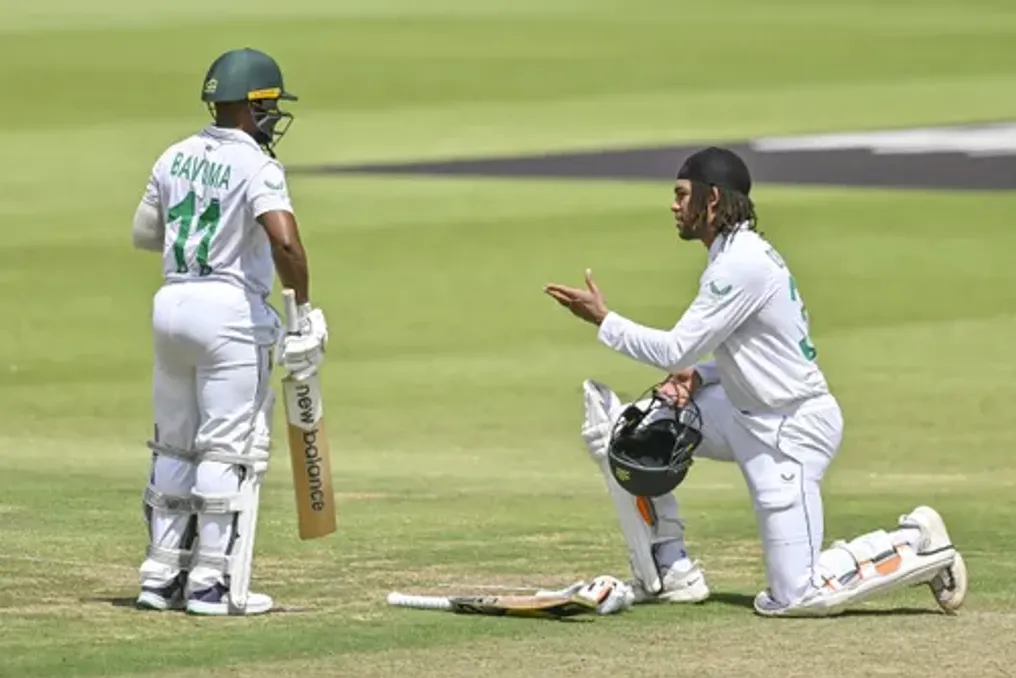
Discussion of Criticism Against Proteas Players: Comparing Thami Bavuma's Experience with Toni de Zorcy's Situation
Read more
IOL
iol.co.za

Discussion of Criticism Against Proteas Players: Comparing Thami Bavuma's Experience with Toni de Zorcy's Situation

The South African cricket fan community apparently constantly needs an object for negative emotions. For many years, Thami Bavuma was subjected to brutal attacks on social media, where criticism of his play often escalated into racist insults.

Now, Toni de Zorcy seems to have taken the unfortunate position of being the latest 'villain' in social media among Proteas players. The question is not whether these athletes should be criticized—certainly they should—but why the criticism so often turns into something much more personal and sinister.

The fact that they are leading Black players in South Africa cannot be a coincidence. De Zorcy has once again become a target of unfavorable comments after being included in the Proteas squad for the upcoming Test match against Bangladesh.

It is easy to forget that he missed the recent Australian series due to injury, having an average slightly below 40 in tests this year. The last time he played against Bangladesh, he achieved a career-best score of 177 runs.

The author admits to being surprised to see his teammate from the Western Province, David Bellingham, dropped, especially after he was offered a new role at number 3 against Australia. His failures in Newlands were subpar, but perhaps he still had potential for growth in that position.

A more important question was whether Matthew Britzke did enough, besides his score of 43 in the second innings in Cape Town, to retain a spot in the middle order after being called up mid-Australian series. This is a perfectly valid debate about the squad. What is unjustified is turning disagreements over player selection into personal attacks.

De Zorcy's situation brings back unpleasant memories of how Bavuma was treated in the early stages of his international career. The Langi player was repeatedly subjected to criticism that went far beyond his playing performance. Every time he failed, his selection was questioned; every time he experienced a slump, the issue of transformation was raised again, often accompanied by clear racial undertones.

Bavuma was repeatedly forced to defend his right to wear green and gold, instead of simply being judged as a cricketer. He spoke about the psychological burden of this persecution in a BBC interview in 2025: 'I would like to understand why it becomes much more viral when it is only me.'

These words should make some segment of the cricket public think. De Zorcy is a talented cricketer who has worked hard to earn his place. Before his debut call-up to Tests, he had an average above 48 in three out of four seasons and holds the highest first-class score of 304 not out, which remains the highest individual score in Newlands history.

Like any international player, he will have good days and bad days. His performances may be subject to close scrutiny, but this does not give anyone the right to humiliate or malign him. His experience as captain of the South Africa U-19 team at the 2016 World Cup also subjected him to criticism and abuse, which contributed to his withdrawal from the media.

Why should any player have to develop thick skin just to protect against the malice accompanying representing their country? Fans have the right to challenge selections, demand better results, and express disappointment. This is an inherent part of professional sport. However, there is a clear distinction between holding players accountable and subjecting them to personal attacks or racial bias.

Bavuma endured more than necessary. Becoming the first Black centurion in South African Tests and leading the country to the Test World Cup title, he could not completely silence his critics. It would be a sad indictment of our cricket culture if De Zorcy now had to go through a similar cycle of hostility.

The question is not whether De Zorcy deserves criticism. Every player deserves it. The question is whether we are so accustomed to online hatred that we stop recognizing when criticism crosses the line. Bavuma has already been through this. De Zorcy should not become the next example.
Similar stories

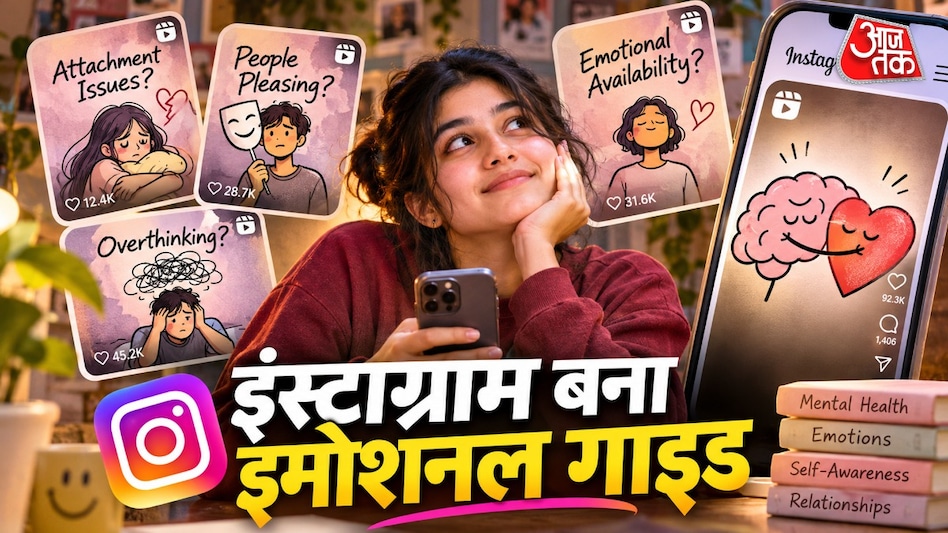
Generation Z uses social media and Reels for self-analysis and understanding their emotional state
Read more
www.aajtak.in

Generation Z uses social media and Reels for self-analysis and understanding their emotional state

For Generation Z, the process of understanding their own emotions is increasingly integrating into the sphere of social media. Previously, young people found answers to questions about their mood, preferences, and feelings by spending time alone or discussing them with close friends. However, many young people now turn to resources such as Instagram Reels, memes, and online posts to make sense of their experiences.

Sometimes watching a specific video evokes a feeling that it reflects a story from their own lives, and sometimes a post helps them understand the motives behind their behavior.

Recently, new terms related to relationships and feelings have been actively spreading on social media. These include concepts such as 'emotional availability,' 'people pleasing,' 'attachment issues,' 'overthinking,' and 'emotional baggage' or 'burnout.' Through these words, Generation Z attempts to interpret their behavior. They often feel that they are becoming too attached to someone or are prone to overanalyzing small details. In such situations, a video or post can offer a new perspective on their behavior.

On the Instagram platform, there are numerous videos describing states of inner sadness, the reason for preferring distance from people, or patterns of behavior in relationships. Generation Z finds reflections of themselves in these videos. Sometimes they send similar posts to friends to share what they are feeling. Thus, what is difficult to express in words becomes easier to explain through social media content.

Nevertheless, not all information obtained from social media is reliable. One cannot conclude a person's belonging to a certain emotional category based solely on a few seconds of a video. For example, feeling sad does not automatically mean a person suffers from depression. Similarly, the desire to keep distance from someone does not always indicate any specific attachment issue.

Although social media can provide new concepts and viewpoints, there is no quick way to understand one's feelings. It is extremely important to spend time alone, write down thoughts, and engage in dialogue with trusted people. If necessary, professional mental health help should be sought. Social media can help raise awareness of one's experiences, but the answer to every feeling will not be contained in some video. For self-knowledge, it is sometimes necessary to put the phone aside and listen to oneself.

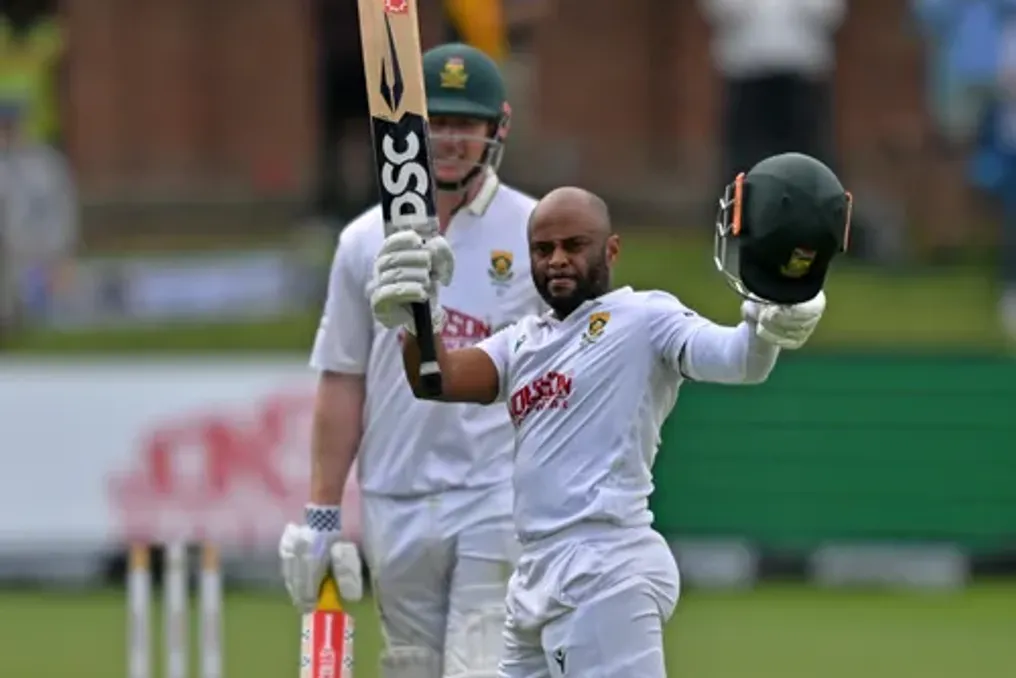
Temba Bavuma pulled Proteas out of crisis situations five times thanks to his resilience
Read more
iol.co.za

Temba Bavuma pulled Proteas out of crisis situations five times thanks to his resilience

Throughout his international career, marked by quiet determination and unwavering resilience, Temba Bavuma has established himself as an exemplary player capable of resolving crises for South Africa. When the Proteas team finds itself in a dire situation, the captain consistently demonstrates his best, most indomitable performances, turning potential defeats into significant victories.

Averaging over 54 runs as Test match captain, Bavuma actively succeeds in tense moments and refuses to give up under pressure. Thanks to his technical discipline and mental fortitude, which form the backbone of the Proteas team in Test matches, he has managed to transform complex situations in Asia into historic wins, while also battling physical injuries and aggressive bowling attacks on home soil.

Below are five examples where the Proteas captain delivered outstanding innings under extreme pressure, demonstrating the true value of his perseverance and unwavering leadership.

Magnificent 172 saving a collapse in Wanderers (2023)

Arriving at the crease when South Africa was in a difficult position of 8/2, which soon deteriorated to 103/5, Bavuma played a magnificent innings in Wanderers in March 2023, recording his second century in a Test match. This was his first hundred after his debut triumph against England in 2016. Facing intense public scrutiny early in his Test captaincy against the West Indies, he scored a superb 172. His masterful solo performance changed the course of the match, turning a potential catastrophe into a dominant victory.

Lone warrior with 70 on the Green Mamba in Durban (2024)

During a crucial home series where South Africa needed two wins against Sri Lanka to keep hopes alive for the Test World Cup final, the Proteas faced serious difficulties in the first innings of the first match in Kingsmead, being in a critical position of 113/7. Bavuma acted as a true lone warrior. He saved his team by scoring a brilliant 70 runs in the toughest playing conditions before scoring 113 in the second innings, leading to a Proteas victory in the Test match.

Historic 55 not out on the minefield at Eden Gardens (2025)

Bavuma delivered a decisive performance on Indian soil during South Africa's legendary tour in November 2025, ending a 25-year wait for a series win there. On the true minefield at Eden Gardens, where the ball bounced and spun heavily, he played with supreme discipline, scoring 55 runs without being dismissed off 136 balls. While teammates fell around him, his tenacious innings secured a tight 30-run victory, laying the foundation for a historic clean sweep of two matches.

Valiant innings in the WTC final alone (2025)

Bavuma showed incredible resilience in the highly significant Test World Cup final. Displaying immense courage, the captain fought despite severe physical pain, playing effectively on one leg after sustaining a hamstring injury during the second innings. His refusal to yield embodied his leadership qualities; he bolstered the second innings with a daring innings based purely on willpower. He helped reduce the pressure on Aiden Markram, who scored the winning 136 runs in the fourth innings.

Heroic 179 against Australia in Gqeberha (2026)

Saving South Africa from a dangerous position of 97/5, and an earlier 40/4, on the third day of the second Test match at St George's Park, Temba Bavuma played a match of his life against Australia in Gqeberha. Playing for over six hours and facing 334 deliveries, the resilient captain reached his best Test score—179. His mastery under immense pressure allowed him to handle the spinning ball and several short deliveries. He executed incredible shots, both along the ground and square of the wicket, and reached his fifth Test century with a glorious hook shot to the square leg boundary.

Popular