Chinese Opera Singer Performs in Italian Streets, Popularizing Chinese Music
Read more
CGTN
cgtn.com

Chinese Opera Singer Performs in Italian Streets, Popularizing Chinese Music

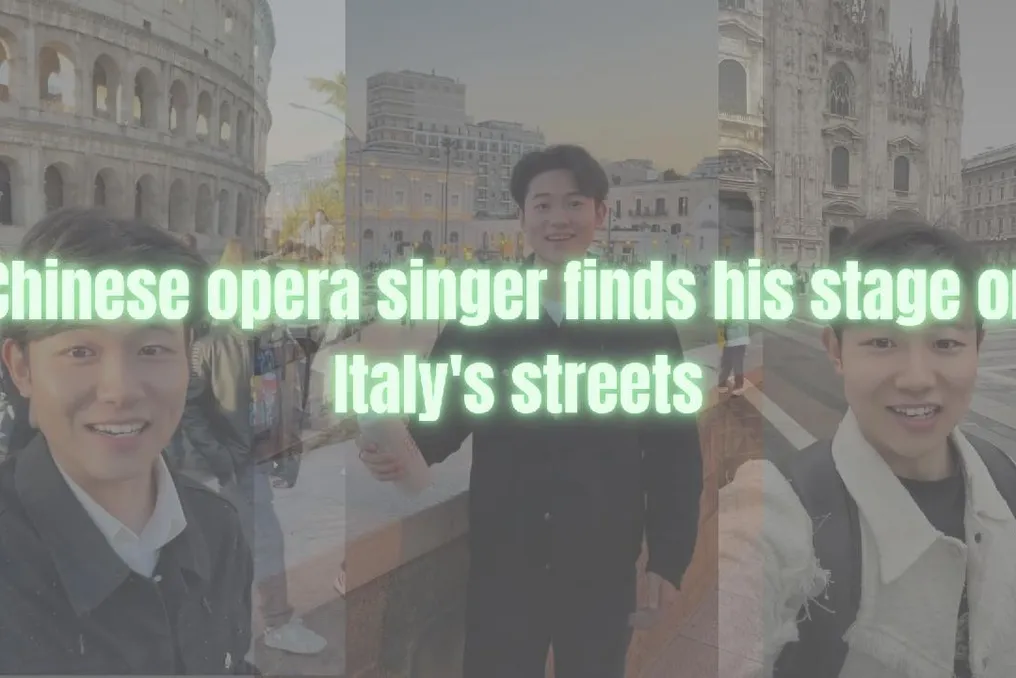
Italy, known as the birthplace of opera and home to renowned performers such as Luciano Pavarotti, Andrea Bocelli, and Cecilia Bartoli, traditionally reserves the art of operatic singing for large stages, and it rarely features in tourist itineraries. However, for 25-year-old Zou Yanzhe, public spaces have become his own stage.

In an interview with CGTN, he stated that his goal is to take opera out of the theater and make it accessible to the general public. This talented young singer from Jiangxi province in southeastern China, who currently lives in Milan, brings this art form to open areas, including squares, streets, and tourist attractions where anyone can listen.

Alongside excerpts from Italian and French opera, he performs beautiful Chinese melodies, striving to introduce the local audience to music they might otherwise never hear. Thus, a casual walk down the street can turn into an unexpected encounter with Chinese music.

His journey began long before street performances and online attention. Having developed an interest in singing in childhood, he began professional training during his teenage years and received systematic vocal coaching in China. He noted that he fell in love with the art form while studying opera.

During a trip to Italy, the cradle of opera, he refined his vocal skills. He then began experimenting with improvisation on the street, which became a very important stage in his creative development. Although he is still mostly a student, he organizes performances around his vocal lessons. The idea of performing outdoors arose after he observed Italian musicians performing in the streets.

He decided that he could bring Chinese vocal pieces to this open stage, which gave rise to the idea of spontaneous street concerts. Realizing this idea required courage and stepping out of his comfort zone. Initially, he felt nervousness and shyness, but he constantly reminded himself that he was there to share music. As soon as he started singing and focused on the music, the anxiety gradually faded, as the desire to share what he loved became more important than worrying about being watched.

The public reaction was warm: passersby watched with admiration, recorded videos, and applauded. When he performs Chinese pieces, locals show curiosity, and many approach to thank him for such beautiful music. Questions often follow about Chinese music, traditions, and daily life, and some listeners say they hope to visit China and experience the culture firsthand.

These street encounters are now extending far beyond Italy. His videos have garnered millions of views on social media. He initially started filming just to document his performances, but this brought new opportunities, including invitations to local cultural events and collaborations with musicians blending Western opera and Chinese music. Nevertheless, Zou views his performances and videos merely as a small window into Chinese culture, not as proof of any grand achievement.

Living alone in Italy while his family remains in China, he has faced difficulties related to language and cultural differences. He is now able to hold basic daily conversations in Italian and sings in Italian, French, and Chinese. He emphasizes the support of his family, who are proud of his online success and hope he will continue to spread Chinese art abroad, while reminding him to take care of himself. Zou plans to take his street performances to more European cities and beyond. For now, he is focused on improving his voice, and whether someone is listening in a public square or watching on their phone, his hope remains unchanged—to be a bridge between Chinese and Western art. His long-term goal is to allow a greater number of listeners worldwide to hear and appreciate the beauty of Chinese vocal music.

Similar stories

Studio3 Cia. de Dança's 'Travessia' performance features songs by Milton Nascimento in November
Read more
g1.globo.com

Studio3 Cia. de Dança's 'Travessia' performance features songs by Milton Nascimento in November

Studio3 Cia. de Dança is launching its fourth show in November as part of a tetralogy dedicated to composers of Brazilian music. This new work, titled 'Travessia', is based on the repertoire of Milton Nascimento.

After presenting works focused on the songbooks of Chico Buarque, Antonio Carlos Jobim, and Caetano Veloso, the company has scheduled three performances of 'Travessia' for November 5, 6, and 7, at the Sala São Paulo, located in the city of São Paulo (SP).

The show's program is built from 19 songs by Milton Nascimento, nine of which were composed by him in partnership with the Minas Gerais lyricist Fernando Brant. The musical arrangements were done by Rodrigo Morte, under the musical direction of Wagner Polistchuk.

In the performance, Studio3 Cia. de Dança collaborates with the Osesp Academic Orchestra and Choir. The choreographies were created by Anselmo Zolla, while the theatrical direction is handled by William Pereira.

'Travessia' uses dance to express the vast diversity of Milton Nascimento's songbook, addressing themes such as African ancestry, spirituality, fraternity, the traditions of Minas Gerais, and Latin American connections.

Mozart Meets Modern Beijing: A New Perspective on 'The Magic Flute'
Read more
cgtn.com

Mozart Meets Modern Beijing: A New Perspective on 'The Magic Flute'

At the 29th Beijing Music Festival, Chinese director Zhou Shuang presented Mozart's opera 'The Magic Flute' in a completely unexpected new setting.

CGTN conducted filming outside the stage to meet with the international cast and creative team. The goal was to uncover the secrets of this production and learn how Beijing is shaping the perception of Mozart's timeless opera.

China becomes a center of cultural exchange in the world of fashion at Jinshang Fashion Week event
Read more
cgtn.com

China becomes a center of cultural exchange in the world of fashion at Jinshang Fashion Week event

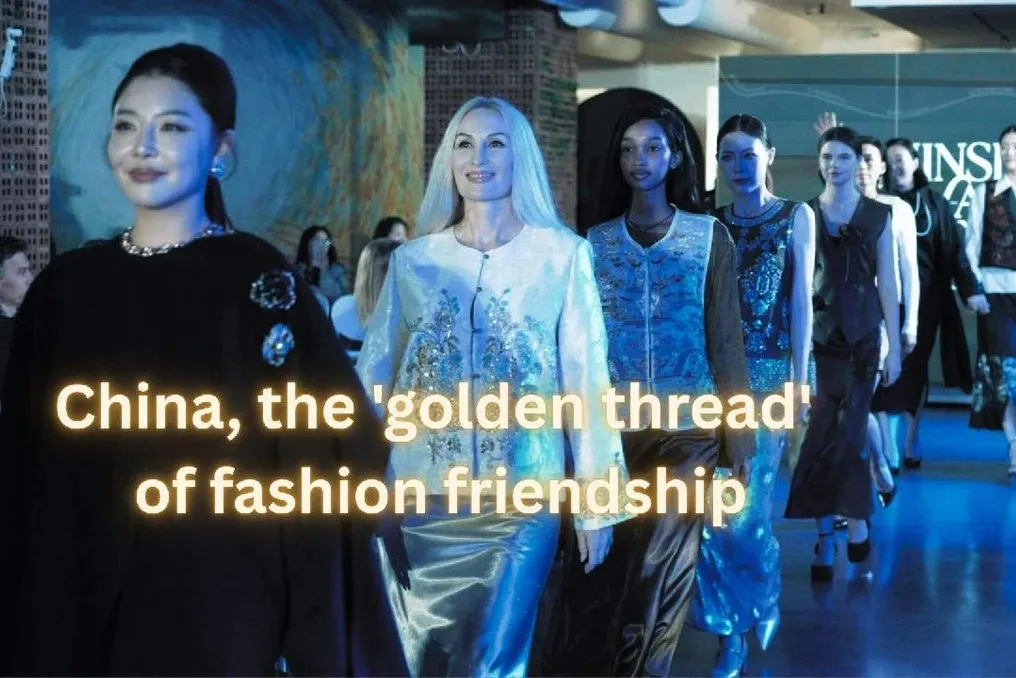
Despite the autumn chill and rain, many people gathered in Beijing as the city transformed into a venue for meetings in fashion, diplomacy, and cultural interaction. The Jinshang Fashion Week event, themed 'Golden Thread 2026,' attracted participants from over ten countries, representatives from more than thirty embassies, and fashion enthusiasts from across the city.

Since the opening of Jinshang Square in 2016, this was only the second fashion-related event to take place there. The ambition of the venue is to create a platform where culture and creativity can integrate into daily life.

Founder Lillian Tian, a native of Beijing, notes that the city has become both her hometown and a constant classroom, shaping her perspective and inspiring her desire to contribute to society. During an interview after the show, she stated: 'The heart shapes the environment, and the environment shapes the heart.'

Tian emphasized that fashion is a powerful expression of personality, and therefore deserves a space that stimulates creativity and meaningful connections. She added that Jinshang Square is a place created with great care and passion, bringing together artists, designers, entrepreneurs, and diplomats, providing opportunities for people from different walks of life to meet and exchange ideas.

Her connections with diplomats have developed over more than ten years, contributing to the organization of such events and positioning China as the 'golden thread' connecting dialogue. Thus, the event serves as both a fashion exhibition and a living demonstration of cultural diplomacy. Through textiles, craftsmanship, and inspired fashion, the diplomatic community of Beijing creates a space for the meeting of Eastern and Western traditions in a new format.

Lillian Tian noted that China is home to one of the world's greatest civilizations, whose cultural heritage spans five thousand years. She believes that this heritage is not limited to museums or historical books but lives in design, materials, traditions, and the details of daily life. She also stressed that true cultural exchange goes beyond fashion or art, occurring through lifestyle, shared experiences, and the daily existence of people, which transforms cultural differences into mutual understanding.

Every exquisitely designed piece presented on the runway served as an introduction to another culture—from Equatorial Guinea to Turkey, Ethiopia, Slovakia, Dominican Republic, and other countries. This sense of cultural significance extends beyond the runway. Tian believes that the Chinese audience is increasingly interested in international high fashion, which offers meaning alongside beauty. These consumers travel well, are confident in their culture, and are less interested in wearing logos merely for the logo's sake; instead, they want to know who created the item, why it was created, and what cultural story it carries.

She stated that people seek meaning as much as they seek beauty, demanding exceptional craftsmanship, a compelling story, and a unique creative vision. This emphasis on meaning and craftsmanship extends to sustainability issues. As China implements green development under Plan-5, Tian insists on the importance of creating fashion with greater responsibility and care. She argues that there is a natural link between traditional values and modern sustainability. Chinese traditions have long emphasized repair, reuse, passing down items through generations, and creating durable objects, reflecting respect for materials, craftsmanship, and the resources invested in creation.

Today, designers explore similar concepts through natural dyes, hand embroidery, thoughtful material selection, and slow production processes. When an item is created with meticulousness and designed to be valued for years rather than discarded after a season, it becomes part of a more responsible approach to fashion. For her, heritage and sustainability are closely linked: one stems from the wisdom of the past, and the other from the pressing priorities of the future.

This link between heritage and the future was supported by Christoph Manke, a German philosopher and visiting professor at Peking University specializing in aesthetics. He also told CGTN that contemporary fashion uses resources from both the past and the present to shape the future. He noted that combining different cultures is always a good idea, but he was most interested in how different cultures maintain productive relationships with themselves, not just with each other, and how they can use their traditions creatively and innovatively to not just repeat the past, but to look forward and redefine themselves.

Manke concluded that the ability to reinterpret one's own traditions for the future is relevant to any culture. He suggested that China does this daily and is very open to seeing how it works in other parts of the world—to learn from them, and also to encourage and unite them in a space where these various experiments can occur in parallel dialogue.

This same balance of heritage and innovation is transforming China's global fashion identity. Tian said that the country remains a major buyer, but she expects its influence as a host and trendsetter to grow. It is important to note that the exchange is becoming two-way: international houses are now coming to China not only to reach consumers but also to seek opportunities for collaboration with local creators. Tian believes that the next chapter of 'Made in China' should symbolize intention, originality, exceptional craftsmanship, and responsibility towards people, culture, and the planet. She concluded that the future of global fashion will be defined by such mutual exchange, where different cultures contribute equally and together create something new.

Popular