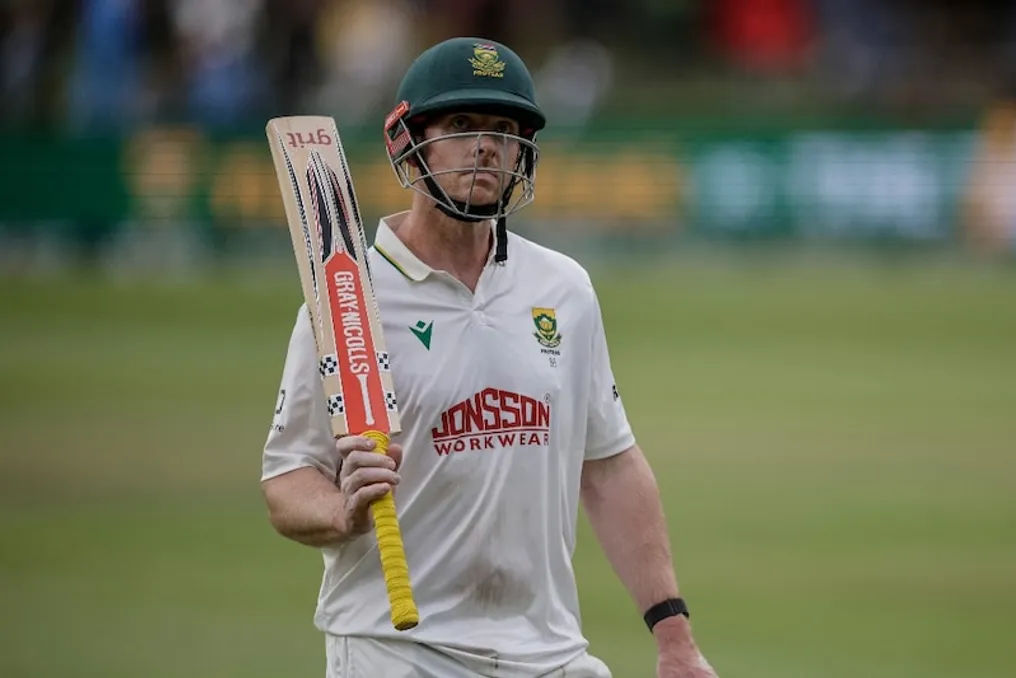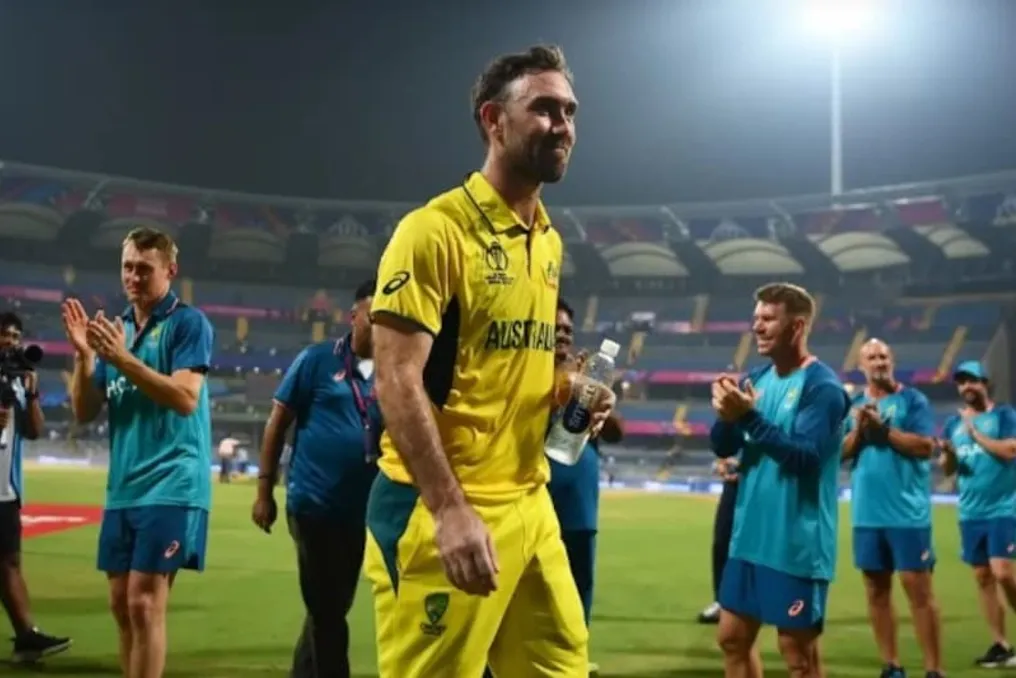
Glenn Maxwell Announces Retirement from International Cricket
Read more
Aaj Tak
www.aajtak.in

Glenn Maxwell Announces Retirement from International Cricket

Australian all-rounder Glenn Maxwell officially announced his departure from international cricket late on Monday. During his career for Australia, he played 286 international matches, scoring 7226 runs and taking 136 wickets. He was part of the Australian team that won the ODI World Cup in 2015 and 2023, and also participated in the team's victory in the 2021 T20 World Cup.

Announcing his decision during the 'Final World Podcast,' Maxwell noted that while this step brings some regret, it was expected. He stated that he is sad to say goodbye to international cricket, as well as the domestic 50-over and four-day formats for Victoria, but felt that leaving 'red ball' cricket would not surprise anyone.

Maxwell also shared that he had previously discussed his future with the Australian team management. Discussions about his further career took place after the T20 World Cup, but no pressure was put on him. The team management was preparing for the future by providing opportunities to young players. Young athletes were tested during the T20 series against Bangladesh and showed good results.

The highlight of Maxwell's career was his performance against Afghanistan during the 2023 ODI World Cup. The match, held at the Wankhede Stadium in Mumbai, looked doomed for Australia, which trailed the target of 292 runs by only 91 runs and had lost seven players. However, Maxwell managed to single-handedly change the course of the game.

He scored 201 runs off 128 balls without being dismissed, with his innings including 21 fours and 10 sixes. Notably, due to cramps, Maxwell could not run normally. Nevertheless, alongside captain Pat Cummins, he built a partnership in the eighth wicket that lasted until 202 runs without being dismissed. Cummins contributed 12 runs without being dismissed off 68 balls, and Maxwell's explosive innings secured an historic three-run victory for Australia. Australia achieved this win with 19 overs remaining. This innings by Maxwell is considered one of the most outstanding in ODI cricket history.

Before announcing his complete exit from international cricket, Maxwell had already bid farewell to ODIs in June 2025. His last ODI match was the World Cup semi-final in Dubai against India. Following this, Cricket Australia did not include him in the central contract list announced in April 2026.

In the current T20 World Cup, Maxwell played for the Australian side for the last time, after which the team was eliminated from the group stage. He was also subsequently not selected for the T20 series against Bangladesh.

Despite saying goodbye to international cricket and the domestic 50-over and four-day formats for Victoria, Maxwell has not closed the door on franchise cricket. Recently, he has participated in various T20 leagues around the world. In September, he represented Belfast Wolves in the first season of the European T20 Premier League. A few days later, he also played for Victoria in two ODI matches.

Maxwell shared that when he told his teammates about his decision after his last ODI match for Victoria, he was upset. He expressed gratitude to the players and staff of Victoria for their constant support throughout his career, and at that moment, his eyes welled up. He added that he now wants to focus more on his physical condition to stay fit for remaining tournaments.

Thus, he bids farewell to cricket as a player who gained recognition through aggressive batting, useful off-spin, and exceptional fielding. The 201-run innings against Afghanistan in the 2023 World Cup will forever remain in the memory of cricket fans.

Similar stories

Team management's decision to exclude Vaibha called into question Gautam Gambhir's aggressive strategy
Read more
www.aajtak.in

Team management's decision to exclude Vaibha called into question Gautam Gambhir's aggressive strategy

The Indian team under the leadership of Gautam Gambhir is supposed to play aggressively, dominate opponents, and leave no chance for the rival. However, the team management's decision in the fourth T20 match in Auckland called this philosophy into question. Former player Vaibha Suryawanshi, who created history with Abhishek Sharma by scoring 118 runs in the powerplay in the previous match, was excluded from the starting lineup.

Captain Shreyas Iyer stated the need to remain 'ruthless,' but facing a mountain of 260 runs, the Indian team's game turned chaotic: two wickets fell in the very first over, undermining hopes of victory. The question arises: what kind of aggressive strategy excludes the most explosive player?

When the fielding team New Zealand set a target of 260 runs, the Indian batsmen found themselves in a difficult position. The hosts secured a convincing victory by 87 runs, and India could not get close to the target score. The team, which hoped for a 4-0 win, was forced to accept a bitter defeat.

Gautam Gambhir prefers aggressive cricket, and his team is not afraid to pursue big goals. Batsmen are given the freedom to play openly, and players are expected to take wickets from bowlers. Nevertheless, there is a fine line between aggression and blind experimentation, which the team management may have forgotten to observe in Auckland.

India already had an undisputed advantage of 3-0 in the series. The fourth match provided an opportunity to solidify the success and take the lead at 4-0. However, Gambhir and his colleagues made a decision that caused the most surprise.

In the previous match, Abhishek Sharma and Vaibha Suryawanshi demonstrated excellent performance against the New Zealand bowlers, scoring 118 runs in 6 overs during the powerplay. This was the highest score in the powerplay for any team in T20 international matches. This figure was not just a record; it testified to the strength of the batsman combination that took the opponent out of the game in the first overs. Vaibha and Abhishek understood each other's game and attacked the bowlers.

However, in the next match, this pair was separated: Vaibha was excluded, and Ishan Kishan came in his place. The question is not about Ishan's ability, as he is also capable of winning a match. The question is why Vaibha had to be excluded? Does the record of the previous match hold so little value for the team management? Should a player have to prove their worth in every match, yet historical performance is insufficient to maintain a spot in the team?

Gambhir should ask himself: what was the basis for breaking up the batting pair that set the record?

During the toss, captain Shreyas Iyer stated: 'We don't want to leave any chances. We have already won the series, but I think our half of the job is done. It is important to remain ruthless.' The captain's words sounded impressive, but ruthless play is not achieved through statements alone; it requires clarity in decisions. If the team's goal is not to give the opponent any chances, then why was the opening pair that destroyed the opponent in the previous match broken up?

Iyer is the captain, and the responsibility for team selection decisions lies jointly with the coach and the captain. Therefore, the captain cannot avoid questions about this change. Did he support the decision to exclude Vaibha? Did he not feel that the pair that scored 118 runs should have been retained?

The captain's task is not only to choose between bowling or batting after the toss. He is also responsible for the team's on-field strategy and for trusting the players. When you talk about ruthless play, you must show the same clarity regarding your successful players.

New Zealand, batting first, scored 259 runs in 20 overs, losing 7 wickets. Glenn Phillips scored 107 runs off 49 balls, and Michael Bresshaw complicated matters for the Indian bowlers, scoring 65 runs off 25 balls.

India faced a target of 260 runs. It was a serious challenge, but not insurmountable. Based on how the Indian batsmen behaved when chasing big targets in previous matches, it was expected that the team would start aggressively again. However, Sanju Samson was dismissed after scoring 4 runs in the second ball. Ishan Kishan also returned to the dressing room without scoring a single run on the fifth ball. Abhishek Sharma (27) was dismissed in the fifth over.

The team that habitually scored 118 runs in the powerplay lost three major wickets already in the fifth over. Here arises the biggest question regarding Gambhir's strategy: if the team relied on aggressive play, why was the batsman who best executed this strategy excluded?

India's defeat was not only caused by the decision to exclude Vaibha. The Indian bowlers also failed to cope...

_
Vaibhavi Suryavanshi played an impressive innings in the T20 match against New Zealand but was dismissed
Read more
www.aajtak.in

Vaibhavi Suryavanshi played an impressive innings in the T20 match against New Zealand but was dismissed

In the third T20 International match against New Zealand, held on October 27, 2026, in Wellington, Vaibhavi Suryavanshi demonstrated an impressive attack. He scored 45 runs off 19 balls, hitting 4 sixes and 4 fours.

However, his aggressive play ended in the seventh over when he was dismissed while attempting a powerful shot against a ball bowled by Zachary Fisher. Vaibhavi appeared disappointed after his dismissal.

During the 7.1 over, Zachary Fisher bowled a delivery that was aimed outside the mid-stump line. Vaibhavi attempted to create space for a big hit, but the ball struck the lower part of the bat and went airborne. Glenn Phillips, positioned at long-on, lunged forward and caught the ball, thus ending Vaibhavi's innings of 45 runs off 19 balls. This moment marked Fisher's first wicket in T20 International.

At the time of Vaibhavi's dismissal, the Indian team's score was 133 runs for the loss of one wicket. Earlier, New Zealand, batting first, had scored 198 runs for the loss of three wickets. It is worth noting that in this match, Vaibhavi was given the opportunity to bat at the start, which he fully utilized. Previously, in a T20 match in Christchurch, when he was replaced by Ishaan Kishan, he scored only 4 runs off 8 balls. Before that, the Indian team had won both matches in Christchurch by a margin of 4-4 wickets.

Ultimately, the Indian team defeated New Zealand in the third T20 match by six wickets. The Indian team reached New Zealand's target of 199 runs, losing only 4 wickets in 13.2 overs.

South African bowler breaks Dale Steyn's 18-year record by hitting the ball
Read more
www.aajtak.in

South African bowler breaks Dale Steyn's 18-year record by hitting the ball

The South African off-spinner, Simon Harmer, achieved a remarkable feat in the second match of the series against Australia, entering history books. Harmer scored an impressive 82 runs, thereby breaking Dale Steyn's 18-year record.

He reached this result at a time when the South African team was in a difficult situation and desperately needed a big partnership. On Tuesday, the third day of the match played at Centurion Park in Gqeberha, Harmer faced 91 deliveries, scoring 10 fours and one six.

This figure is the highest for a South African batsman batting at number 9 or lower against Australia in Test matches. The previous record was 76 runs, set by Dale Steyn during a match in Melbourne in 2008.

In the first innings, South Africa lost six wickets for 110 runs. Following this, captain Temba Bavuma and Marco Jansen stabilized the game, adding 132 runs for the seventh wicket. Jansen departed after scoring 85 runs, after which Harmer supported Bavuma. Both players formed a crucial partnership on the eighth wicket, accumulating 183 runs.

This is the second-largest partnership on the eighth wicket or lower in South African history. The record is currently held by Marco Boucher and Pete Symcox, who scored 195 runs against Pakistan in 1998.

For his part, captain Temba Bavuma demonstrated exceptional patience and technique under pressure, scoring 179 runs off 334 balls, including 18 fours and one six. When the team score was only 12 runs with two wickets down on the first day, Bavuma took responsibility and prevented the innings from collapsing.

Simon Harmer had the opportunity to earn his first hundred in Test matches, but Marnus Labuschagne dismissed him. After South Africa fell victim to Mitchell Starc, they declared the innings closed at 425/9. By the end of the third day, Australia had scored three runs for the loss of one wicket. Kagiso Rabada dismissed Nick Maddinson, preventing him from scoring any runs.

Popular