
Huawei's Ascend 950 SuperPoD wins WIC award for leading technology; deployment count exceeds 1000
Read more
Pandaily
pandaily.com

Huawei's Ascend 950 SuperPoD wins WIC award for leading technology; deployment count exceeds 1000

Huawei's Ascend 950 SuperPoD has won the 'Leading Technology' award at the World Internet Conference (WIC) 2026. This was reported by Guangming Online on November 2. The awards ceremony took place in Uzhhen City, Zhejiang Province, where 20 projects were selected from over 430 applications submitted from 43 countries and regions.

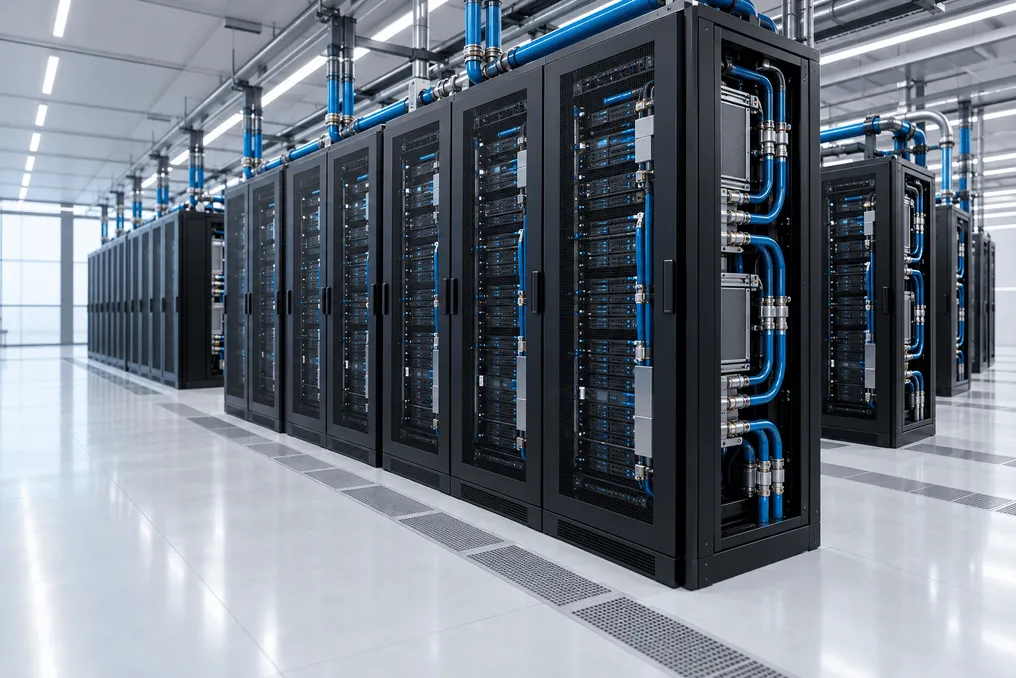
Accepting the award, Zhang Dishuang, president of Huawei's Ascend Computing division, stated that supernodes have become a widely accepted standard for artificial intelligence infrastructure. Huawei presents the Ascend 950 SuperPoD as the largest commercial supernode in the industry, built on the Lingqu interconnect protocol, also known as UnifiedBus. One node integrates 1024 NPUs, over 1300 Lingqu interconnect chips, and more than 4000 optical modules, utilizing high-speed, low-latency channels and unified memory addressing, which allows cards to access each other's data without retransmission.

The system is designed for training and serving models with trillions and tens of trillions of parameters. At the event, Huawei presented new performance metrics. It was stated that the SuperPoD with 1024 cards achieves 45% compute utilization during training, which is 1.8 times higher than the industry average, and inference latency can be as low as 5 milliseconds, targeting real-time tasks such as AI agents. Furthermore, the company announced that over 40 large models have completed their preliminary training on Ascend hardware. These data were also presented by Kuai Technology on November 3, but none of the metrics underwent independent testing.

Huawei also announced that Ascend SuperPoDs have been deployed in over 1000 sets among clients in the internet, telecommunications, finance, education, and energy sectors. Earlier this year, when the physical model of the Ascend 950 SuperPoD was first demonstrated, Huawei reported the commercial deployment of over 750 units of the previous generation Ascend 384 SuperPoD. The new figure covers the entire SuperPoD lineup, not just the 950 generation.

The award was received following the first operational deployment of the 950 generation: an Ascend 950DT SuperPoD cluster with 1024 NPUs, which began operating in Wuhan after about a month of assembly. Looking ahead, Zhang noted that Ascend will continue to evolve around the 'supernode plus supercluster' architecture, connecting multiple SuperPoDs into larger training clusters.
Similar stories

First SuperPoD cluster on Ascend 950DT with 1024 NPUs launched in Wuhan in just one month
Read more
pandaily.com

First SuperPoD cluster on Ascend 950DT with 1024 NPUs launched in Wuhan in just one month

The first computing cluster built on SuperPoD with 1024 Ascend 950DT cards from Huawei was activated in Wuhan. The launch took place on October 28 at the Huawei Artificial Intelligence conference for Hubei Province, which was part of the Huawei 2026 China roadshow.

The investment for this cluster was provided by the Hubei Provincial Science and Technology Investment Group, which is the provincial state investor. According to this group, the project implementation took only one month from the start of work to commissioning, which is a relatively short period for a system of this scale.

The deployment is a single liquid-cooled SuperPoD. One node is equipped with 1024 Ascend NPU accelerator cards. Both compute and interconnect cabinets are fully equipped with liquid cooling systems. The system is capable of providing 1 EFLOPS performance in FP8 format and has 256 TB of globally unified memory. Inter-card bandwidth reaches terabytes per second, and end-to-end latency is in the microseconds.

The design architecture is based on UnifiedBus, Huawei's internal connection architecture for SuperPoD. This technology allows each card in the cluster to directly access other cards, enabling the 1024 NPUs to function more like one large accelerator rather than many individual servers connected via a standard network. Huawei positions this setup for training trillion-parameter models and for running AI agent inference.

The main advantage of the SuperPoD approach is direct access. When training large models, a significant amount of time is spent moving data between chips. Maintaining unified memory across the pod and within its interconnect architecture reduces the volume of traffic that must pass through slower channels.

The cluster is designed to meet local needs. It aims to provide model developers and companies in Hubei with an accessible source of computing power for training large models, as well as for creating, configuring, and operating industry AI agents. Local sources note that this fills a gap in high-performance computing supply in the province.

The launch in Wuhan also marks the early practical implementation of the Ascend 950 generation. Earlier this year, Huawei demonstrated a physical SuperPoD based on Ascend 950 and reported that over 750 units of the previous generation Ascend 384 SuperPoD had already been commercially deployed. The 950DT cluster in Wuhan demonstrates the transition of the new SuperPoD design from demonstration equipment to regional AI computing centers.

Huawei did not disclose data on the cluster's power consumption or detailed utilization metrics; the numerical values mentioned above were stated at the launch event.

Number of ultra-rich in China reaches record driven by tech entrepreneurs
Read more
g1.globo.com

Number of ultra-rich in China reaches record driven by tech entrepreneurs

According to the Hurun China Rich List, released this Tuesday (28th), China has reached a new level, registering 1,529 individuals with net worth exceeding 5 billion yuan, which is equivalent to US$ 750 million or R$ 4 billion.

This number surpasses the previous record of 1,460 people, established in 2021. Among the 263 new members added to the list, the majority come from the artificial intelligence, robotics, and semiconductor segments.

Wenfeng's fortune increased after the launch of the R1 artificial intelligence model last year. Rupert Hoogewerf, lead researcher at the Hurun Research Institute and responsible for compiling the ranking, observed that the 2026 list mirrors a 'two-speed economy' in China: while technology-related goods are growing strongly, those in more traditional sectors are declining.

Among the top one hundred, 60% accumulated their wealth in areas considered strategic by the country. These regions are part of a plan initiated by China in 2015, aiming to achieve technological leadership in ten years.

Zhang Yiming, founder of ByteDance, regained the top position in the ranking after holding it in 2024. His wealth is estimated at US$ 99.7 billion, the highest amount ever recorded on the list, corresponding to about R$ 533 billion. He surpassed Zhong Shanshan, known as the 'King of Bottled Water' and founder of Nongfu Spring.

ByteDance, owner of TikTok and Douyin, faces increasing regulatory pressures in various nations. Nevertheless, its AI chatbot, Doubao, boasts nearly 420 million monthly active users, a significantly higher number than its Chinese competitors.

Other names among the top ten include Robin Zeng, founder of CATL; Pony Ma, of Tencent; William Ding, of NetEase; and Chen Tianshi, of Cambricon.

Additionally, DeepSeek is reportedly close to closing a new investment round of 100 billion yuan, the largest amount ever seen in the Chinese artificial intelligence industry. This transaction would raise the company's market value to nearly 500 billion yuan.

In the ranking of the richest women in China, compiled by Hurun, Zhou Qunfang, founder of Lens Technology, a manufacturer of touch-sensitive screens, holds the first place. Her fortune is estimated at US$ 18.9 billion, which represents approximately R$ 101 billion.

Lanxin Computing introduces supernode based on its LX500 RISC-V architecture inference chip
Read more
pandaily.com

Lanxin Computing introduces supernode based on its LX500 RISC-V architecture inference chip

Lanxin Computing, headquartered in Shenzhen, has released a so-called supernode for convergent computing. This product expands the RISC-V AI inference platform from a single chip and server level to a cluster system.

The product unveiling took place at the RISC-V Summit in China in 2026, where CTO Jia Xinxia delivered the keynote speech on the LX500 processor that underpins this system.

The core design concept aims to minimize data movement. In a standard inference server, the central processor and a separate accelerator card have their own memory, and model weights, activations, and context data are transferred between them via the PCIe bus. Lanxin's approach integrates general-purpose computing and AI computing onto a single die, allowing both to utilize a shared memory pool. The company claims this improves time-to-first-token, pre-processing, and long-context handling metrics.

According to the company, the LX500 is equipped with 48 RISC-V cores, divided into 32 high-performance and 16 energy-efficient cores. It also includes AI vector and matrix engines capable of performing 75 TOPS of INT8 operations. The chip supports precisions from INT4 to FP32, uses shared DDR5 memory, and supports CXL memory expansion. Previous company materials indicated that the chip conforms to the RVA23 profile and RVV 1.0 vector extension.

The supernode completes the product line that Lanxin has been building over the past year. The LX500 processor was launched in February, publicly demonstrated in April, and used in a universal prototype in May. In July, Lenovo's WR5219 G5 server model built on this chip was introduced, and in August, the company began supplying LX500 samples to industrial customers, some of whom have started small-batch testing.

The current product assortment ranges from the chip and server up to the universal LX5000 device and the new supernode. However, Lanxin has not disclosed the number of chips in the supernode or the types of interconnects, leaving the system's scale undefined.

Regarding software, the company reported adapting Qwen, DeepSeek, and Kimi models for various parameter sizes, precisions, and long-context settings. Work is currently underway on a unified hardware and software stack to simplify the deployment process. Target applications include private enterprise knowledge bases with augmented retrieval, office agents, financial compliance analysis, offline question answering in government agencies, and on-site industrial inspection where local processing and data security are critical.

The release of this product adds a system product to the growing collection of Chinese RISC-V developments focused on data centers, alongside recent announcements of server CPUs and core intellectual property from other domestic developers. Whether the approach will be scalable depends on the performance evolution of the chips, the support of the software ecosystem, and real-world adoption.

Popular