UAE Capital Markets Regulator Plans Investor Protection Fund and Strengthens Security Measures
Read more
Khaleej Times
www.khaleejtimes.com

UAE Capital Markets Regulator Plans Investor Protection Fund and Strengthens Security Measures

The UAE Capital Markets Authority (CMA) is developing a plan to establish an Investor Protection Fund and implement new precautionary measures for exceptional market situations. These steps aim to strengthen investor confidence and expand participation in national capital markets.

According to Khalid Saeed Al Awadi, CEO of the CMA, the proposed measures also include improvements in complaint submission, appeal, and amicable settlement procedures.

Furthermore, the regulator is studying a model for retail and fractional sukuk, which will allow residents to access fixed-income investments using smaller amounts of money.

Al Awadi emphasized that protecting retail investors requires more than just regulatory compliance; it involves ensuring investors have access to reliable information, understanding the risks they are taking, and having effective channels to voice concerns if problems arise.

During the first nine months of 2026, the CMA conducted 224 investor awareness activities, including five special campaigns aimed at improving financial literacy and helping investors identify potential market risks.

In the same period, 88 new financial influencers were registered, bringing the total number of registered influencers to 198 by the end of September. The authority also compensated clients with approximately 1.2 billion dirhams.

Alongside investor education and compensation, the regulator is intensifying supervision over market misconduct, such as manipulation, insider trading, misleading financial disclosures, and investment fraud.

Al Awadi reported that the financial penalties imposed by the CMA in the first nine months of 2026 reached 12.9 million dirhams. The CMA uses a Unified Risk-Based Supervision system to assess licensed firms across areas such as financial stability, corporate governance, market conduct, regulatory compliance, and operational efficiency. This approach allows for risk-based prioritization of supervision and earlier detection of potential compliance issues.

He added that the main goal is timely intervention, effective enforcement, and holding violators accountable, rather than simply increasing the number of fines imposed.

The CMA did not disclose the number of investigations or individual enforcement actions during the reporting period. Three main priorities for the authority in 2027 have been defined as investor protection, broader market access, and digital transformation.

In addition to the proposed Investor Protection Fund and additional precautionary measures, the regulator is advancing regulations concerning systemically important organizations, the separation of public joint-stock companies, and instant licensing. These draft provisions are expected to be finalized by the end of 2026.

In the technology sector, the CMA is simplifying licensing and regulatory services while exploring the application of artificial intelligence to enhance supervision, accelerate data processing, and enable earlier identification of emerging risks.

CMA is also working to create more opportunities for family businesses and small and medium-sized enterprises (SMEs) to raise capital through capital markets without compromising governance and disclosure standards. It is developing resolutions to regulate private placements of securities by private joint-stock companies and free zone enterprises. The proposed measures will expand financing options for companies not yet ready for a public offering, subject to final approval and implementation.

In 2027, the authority also intends to review rules governing the issuance of securities and issuers, including foreign issuers, as well as the types and classes of securities that can be issued. The goal of this review is to identify ways to improve market access and meet diverse financing needs.

Al Awadi noted that for family businesses and SMEs, the objective is to provide appropriate pathways for capital market financing while ensuring companies are prepared for public ownership obligations.

Similar stories

Eurasian Development Bank creates direct investment fund for Central Asia and the Caucasus
Read more
uzdaily.uz

Eurasian Development Bank creates direct investment fund for Central Asia and the Caucasus

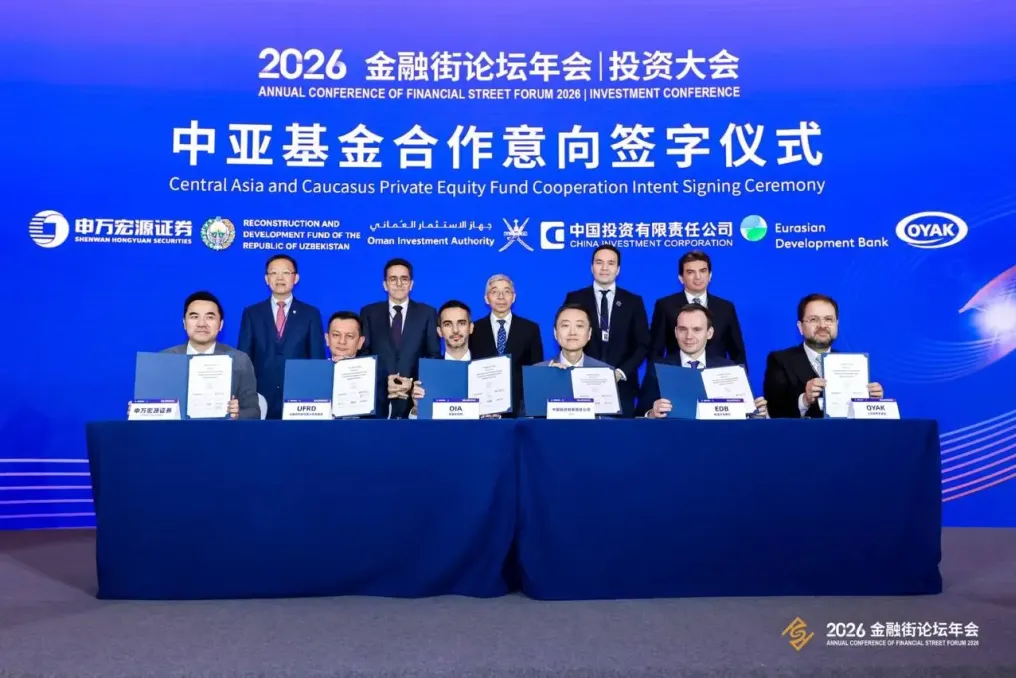
The Eurasian Development Bank (EDB), in collaboration with international financial institutions and investors, is preparing to establish the Central Asia and Caucasus Private Equity Fund (CACPEF). This initiative aims to attract long-term capital for promising companies in the region and support industrial development.

Participants include organizations such as China Investment Corporation (CIC), Oman Investment Authority (OIA), the Uzbek Fund for Reconstruction and Development (UFRD), the Turkish fund OYAK, EDB itself, and Shenwan Hongyuan Securities Co., Ltd. Sovereign wealth funds from Central Asian countries, regional development banks, pension funds, and other financial institutions are also invited.

CACPEF plans to invest in promising companies in Central Asia and the Caucasus. The fund participants intend to combine long-term capital with the industry expertise and business connections of investors in China, the Middle East, and the region itself.

According to the initiative's participants, deepening trade and economic cooperation between China and Central Asian countries opens up new investment opportunities. The fund is expected to help regional companies gain access to international capital, technologies, industry expertise, and new markets.

EDB stated that its participation aligns with the bank's Strategy for the period 2027–2031, which includes attracting international capital into member states, including through specialized investment funds. Daniyar Imanaliyev, Deputy Chairman of the EDB Board, noted that companies in Central Asia and the Caucasus require long-term capital to expand their businesses and enter new markets. He added that cooperation with partners from China, Oman, Uzbekistan, and Turkey will allow for the combination of international investment opportunities with regional knowledge, and EDB's involvement in preparing the fund is a way to attract additional resources to the economies of member states and support the growth of regional companies.

The initiative to create the fund is part of the bank's efforts to expand cooperation with partners in China and the Middle East. On October 6, 2026, EDB and the Ministry of Finance of Oman signed an agreement defining the terms of the bank's presence in the Sultanate, marking the first step in Oman's accession process to EDB.

The bank also has a presence in the Abu Dhabi Global Market (ADGM), which is an international financial center. In October 2026, EDB issued its debut dim sum bonds in Hong Kong. According to the bank, its total investment portfolio as of the end of June 2026 included 348 projects totaling $22.1 billion. Most of these investments are directed towards projects benefiting regional integration, such as transport infrastructure, digital systems, green energy, agriculture, industry, and mechanical engineering.

EDB operates as a multilateral development bank across Eurasia. As part of its Strategy for 2022–2026, the bank is implementing three megaprojects: the Central Asia Water and Energy Infrastructure Complex, the Eurasian Transport Network, and the Eurasian Commodity Distribution Network.

EADB and Partners to Establish Direct Investment Fund for Central Asia and Transcaucasia
Read more
podrobno.uz

EADB and Partners to Establish Direct Investment Fund for Central Asia and Transcaucasia

The Eurasian Development Bank (EDB) intends to form a new direct investment fund with several partners, which will be focused on the countries of Central Asia and the Transcaucasus. The goal of this fund will be to invest in promising enterprises in the region.

According to information provided by the bank's press service, the Central Asia and Transcaucasia Direct Investment Fund (CACPEF) is being formed with the assistance of organizations such as the China Investment Corporation, the Oman Investment Authority, the Uzbekistan Reconstruction and Development Fund, the Turkish fund OYAK, the EDB itself, and Shenwan Hongyuan Securities.

This fund will serve as a platform for consolidating the capital, accumulated experience, and business contacts of institutional investors from China, the Middle East, and Central Asia. Thanks to the fund, regional companies will be able to gain access to the technologies, market resources, and specialized expertise of their partners.

Daniyar Imangaliev, Deputy Chairman of the EDB Board, emphasized that enterprises in Central Asia and the Transcaucasus are in urgent need of long-term financing to scale up their activities and enter new markets. He added that participation in the creation of this fund will ensure the attraction of additional resources to the economies of the participating countries and support the development of local companies.

Furthermore, on Friday, October 23, President of Uzbekistan Shavkat Mirziyoyev held a meeting with Todd Boeli, head of the American investment holding company Eldridge Industries. During this discussion, priority areas for joint cooperation were determined, including mining, metallurgy, construction projects, and the integration of digital solutions into urban infrastructure.

Popular