Ban on mobile phone use in Mexican schools introduced; parents express concern
Read more
Aaj Tak
www.aajtak.in

Ban on mobile phone use in Mexican schools introduced; parents express concern

A rule prohibiting the use of mobile phones during classes has come into effect in Mexican schools starting Tuesday. The government claims this will help students focus on their studies and reduce dependence on mobile devices.

Nevertheless, some parents are opposing this decision. Their concerns are related to the fact that amid the growing level of violence in the country, they may lose contact with their children who are at school.

Experts have supported the initiative taken by the government of President Claudia Sheinbaum. They believe that excessive use of mobile phones can contribute to the development of stress, anxiety, and distractions in children. The government's goal is to protect children and adolescents from dependence on digital platforms.

According to the new regulations, the use of mobile phones and other electronic gadgets will be restricted throughout the entire school day in primary and secondary schools. However, they are allowed under the supervision of a teacher in case of an emergency, as well as to meet needs related to disability or health. Children can carry phones with them when arriving at and leaving school.

Parents express their anxiety, pointing to the increase in cases of violence in Mexico, which makes having a phone for family contact in case of necessity extremely important. Some parents also accuse the government of ignoring their concerns.

According to the organization REDIM, which works to protect children's rights in Mexico, one in ten children under 17 years old faced incidents related to organized crime in the first half of this year.

In parallel, the government plans to introduce new rules for digital platforms. These norms will require the removal of content containing hate speech, abuse, sexual violence, harassment, and cyberbullying from social networks and other digital platforms. Mexico's Minister of Education, Marido Delgado, stated that the government's goal is to shield children from problems and dependence caused by digital platforms.
Similar stories

Generation Z practices digital detox to reduce social media dependence
Read more
www.aajtak.in

Generation Z practices digital detox to reduce social media dependence

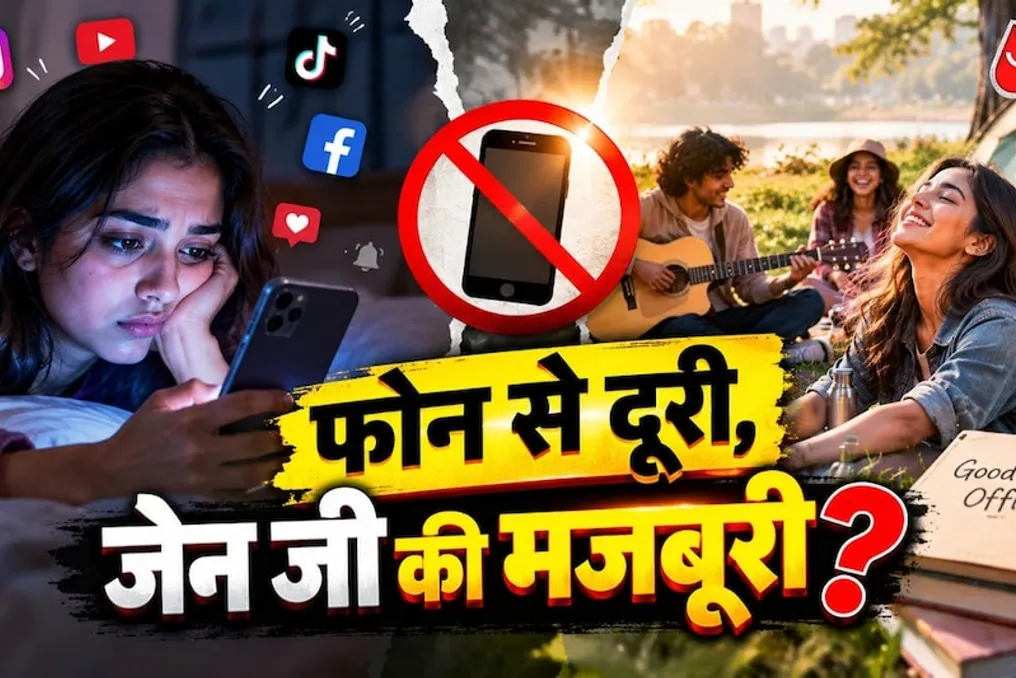
Modern Generation Z spends a significant amount of time on phones and social media, often without realizing how time passes from morning until late evening. The phone has become an integral part of this group's daily life. However, some members of Generation Z are trying to change this habit by distancing themselves from social networks and reducing the frequency of checking their phones, as they are tired of using applications for many hours.

This process is called digital detox. Digital detox implies a temporary break or reduction in the use of phones and social media. The goal here is not a complete abandonment of phone use, but rather minimizing the time spent on it and preventing mindless constant checking.

According to a Guardian report from October 27, 2026, 19-year-old Nelisa Mokaunzi used the Opal app to reduce screen time. This application blocks Instagram and other distracting apps, requiring the user to solve mathematical problems to regain access to them.

Furthermore, some young people are opting out of smartphones in favor of simpler phones that lack social media and other frequently used applications. The report mentions 23-year-old Kendall Shaw, who started using such 'light' phones that only provide essential functions like calls and messages.

Another example is 19-year-old Shreya Nallamotu, who developed a device called Brick. This device allows users to block selected applications on their phone using just eight dollars worth of NFC tags.

Some young people now prefer meeting friends in person instead of spending hours on social media. Applications like People Enjoy (P.I.E.) inform about upcoming concerts, events, and other local happenings. According to the report, the number of users of this application grew from 120 thousand in July to 300 thousand in August.

26-year-old Han Choi decided to delete his social media applications to dedicate more time to training and socializing with friends. This demonstrates Generation Z's desire not to spend all their time on screens; they want to use technology while controlling how much time they spend on their phones.

Study shows that banning phones in Icelandic schools has not changed the mental health of teenagers
Read more
nplus1.ru

Study shows that banning phones in Icelandic schools has not changed the mental health of teenagers

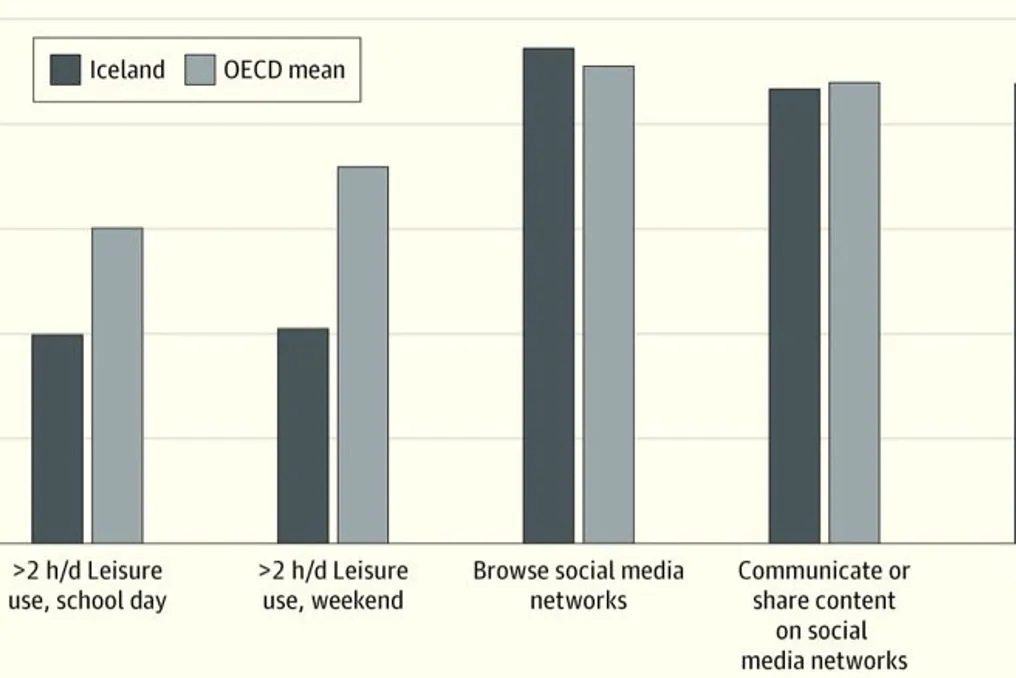
According to the results of a cross-study conducted by Icelandic scientists, the ban on using mobile phones in educational institutions in Iceland has not had a significant impact on the mental state of young people.

The study involved 23,938 adolescents from 70 different schools. Data analysis demonstrated that restrictions on gadgets did not lead to a decrease in the level of depressive and anxious symptoms, nor did they improve overall indicators of psychological well-being and hostility among children.

The results of this scientific analysis were officially published in the publication JAMA Network Open.

New School Access Rules Introduced in Gujarat: Ban on Unauthorised Entry and Restriction on Video Recording
Read more
www.aajtak.in

New School Access Rules Introduced in Gujarat: Ban on Unauthorised Entry and Restriction on Video Recording

The Government of Gujarat has issued a new circular regulating the access of outsiders to government schools. Under these rules, obtaining prior written permission from the director or head of the institution is now mandatory for any external person to visit the school premises. Furthermore, every visitor must record their full details in the visitors' log before entering.

The state's Ministry of Education approved these detailed directives for primary, secondary, and higher educational institutions to ensure the safety, protection, confidentiality, and well-being of students. However, authorized government officials performing their official duties are exempt from the requirement of prior written permission.

The circular emphasizes the state's special responsibility for children attending government schools, in accordance with the principle of 'In Loco Parentis' (in the role of a parent). The document also refers to Article 21 of the Constitution, which guarantees the right to life, dignity, and privacy, as well as a historical Supreme Court ruling in the case of K.S. Puttaswamy (retired) versus the Government of India, recognizing the right to privacy as a fundamental right. It also cites the policies and guidelines of the National Commission for Protection of Child Rights (NCPCR) regarding school safety.

According to the new provisions, no outsider is permitted to be on school grounds without the prior written consent of the director or head of the institution. Every guest must register their information in the visitors' log before entering the premises. Access to classrooms, laboratories, libraries, hostels, sports fields, toilets, and other areas where classes are held will only be granted with the written approval of the director and in the presence of the director, a teacher, or an authorized school staff member.

The circular completely prohibits any form of photography, video recording, interviews, audio recording, and live streaming related to students, teachers, or school activities without the director's written permission. Such actions can only be sanctioned for legitimate purposes. School officials are obliged to ensure that photos, videos, or personal information of students are not collected, published, or distributed in a manner that could compromise their confidentiality, dignity, or safety. Visitors are also prohibited from collecting or publishing a child's personal information or photographs without the director's written consent, especially if it does not serve the child's best interests.

If anyone enters the school without permission, refuses to leave the premises, attempts unauthorized photography or video recording, or disrupts the school atmosphere, the director must immediately notify the local police and the relevant District Education Officer (DEO), District Primary Education Officer, or administrative official. The director also has the right to deny entry to visitors whose presence may affect the safety, confidentiality, discipline, or educational environment of the school. The school administration may require any outsider to leave the premises and, if necessary, call upon local police assistance.

All inspecting officers are directed to ensure strict compliance with this circular. Depending on the circumstances of the case, legal action may be initiated under the Bharatiya Nyaya Sanhita (BNS) 2023, the POCSO Act 2012, the Juvenile Justice (Care and Protection of Children) Act 2015, the IT Act 2000, and other applicable laws.

Popular