Four NASA volunteers complete Mars mission simulation after 378 days of isolation
Read more
Olhar Digital
olhardigital.com.br

Four NASA volunteers complete Mars mission simulation after 378 days of isolation

Four NASA volunteers concluded a confinement experience last Saturday (the 31st) that lasted 378 days, replicating the conditions of a crewed mission to Mars. This group resided in a 158 square meter habitat located at the Johnson Space Center in Houston, USA, carrying out preparatory tasks for future journeys to the Red Planet.

This initiative is part of the Crew Health and Performance Exploration Analog (CHAPEA) program, which aims to investigate how humans would respond to the physical and psychological challenges inherent in a long-duration space expedition.

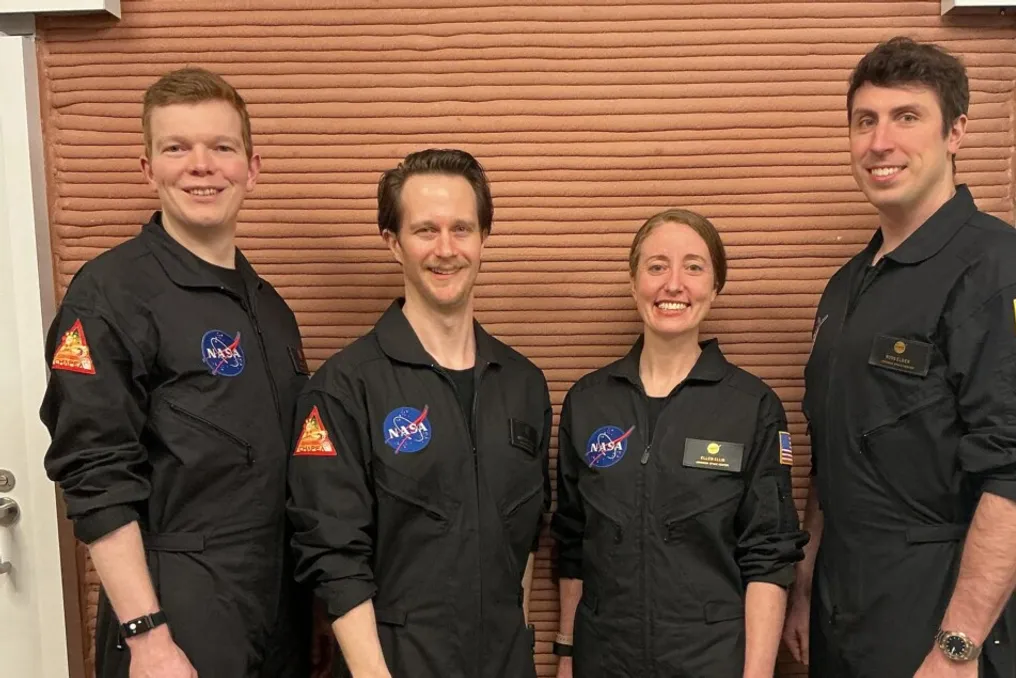
The second mission under this program began on October 19, 2025. The participants included Ross Elder, serving as commander; Ellen Ellis, responsible for medical affairs; Matthew Montgomery, designated as science officer; and James Spicer, flight engineer.

Ellen Ellis commented after leaving the habitat with the other members that it was a period of 'a year and a half, simulation astronauts living in captivity by free will.'

The primary focus of CHAPEA is to understand the impact that prolonged isolation, supply restrictions, and communication difficulties have on the health and performance of a space crew. The data obtained may assist researchers in developing methods to keep astronauts healthy, productive, and mentally fit during extended space missions.

Additionally, NASA plans to use these results to improve protocols for medical assistance, psychological support, nutrition, and the organization of activities in isolated environments.

After leaving the habitat, the four volunteers will begin a subsequent phase consisting of two weeks dedicated to post-mission evaluations and discussions with agency scientists, aiming to analyze team behavior and identify lessons applicable to future expeditions.

This is the second time NASA has conducted an experiment of this type. The first CHAPEA mission took place between 2023 and 2024, when another group of four people remained confined for the same period of 378 days.

NASA aims to conduct a crewed mission to Mars in the 2030s. Until reaching this milestone, the agency is focused on developing technologies and executing experiments aimed at mitigating the risks associated with such long journeys. The studies may also benefit lunar exploration plans, particularly those related to human presence on the Moon.

According to the director of the Johnson Space Center, CHAPEA experiences are crucial for paving the way for future missions, starting with the Moon and subsequently Mars.

Similar stories

First group of cosmonauts arrived at the International Space Station
Read more
www.aajtak.in

First group of cosmonauts arrived at the International Space Station

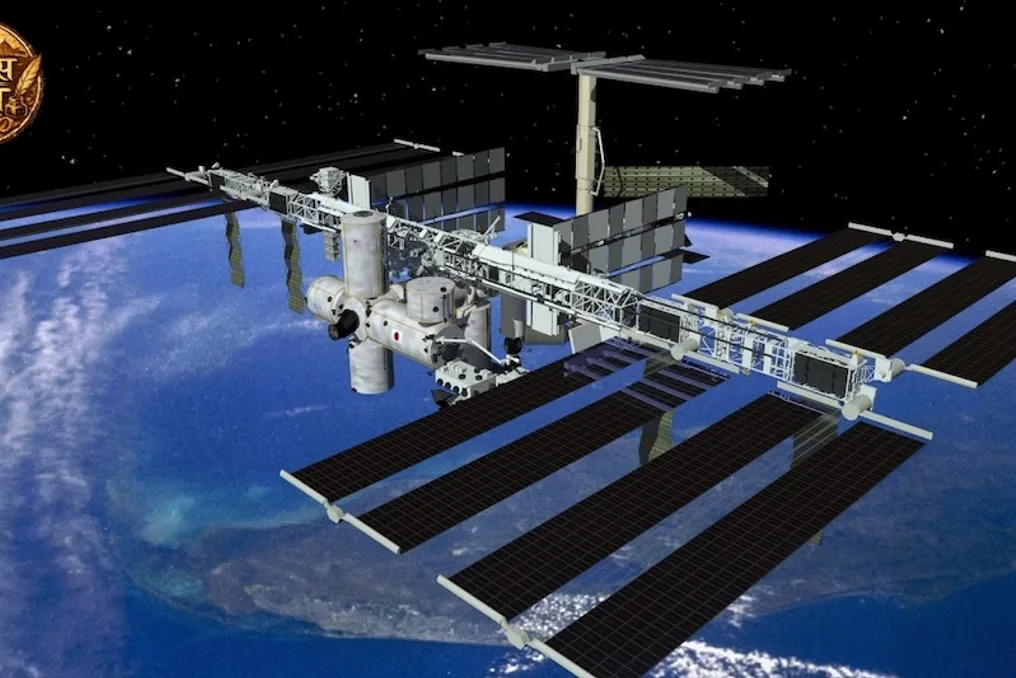
The first group of astronauts arrived at the International Space Station (ISS) on November 2, 2000. This mission was named Expedition-1 and marked the beginning of a new era of permanent human presence in space. This project became an example of international cooperation between many countries around the world.

In 1998, the space agencies of America, Russia, Canada, Japan, and Europe agreed to cooperate in the construction and operation of the International Space Station. In the same year, the first sections of the station were sent into space.

After that, various important parts of the station were delivered into space through five Space Shuttle flights and two unmanned Russian flights. These components were connected to form the initial structure of the station. However, at that time, the station was not yet fully ready, and many tasks remained to ensure human habitation.

On November 2, 2000, three astronauts were sent to the ISS using the Russian Soyuz rocket, which launched from Kazakhstan. This group included American astronaut Bill Sheffield, as well as Russian cosmonauts Yuri Gidzhenko and Sergey Krikalev.

The task of these three people was not only to live on the station. They also had to install various instruments, connect separate sections, and activate the station's systems. In other words, they needed to make their new home in space habitable.

Although this task may seem simple, special preparations are required for every small detail in space. This is evidenced by the fact that the group needed more than one day to start the food heating device on the station.

Life in space differs from life on Earth. There, gravity has a very weak effect, leading to muscle mass loss. To counteract this, astronauts have to exercise for at least two hours daily.

During their stay on the ISS, Sheffield, Gidzhenko, and Krikalev completed about 15.5 orbits around the Earth per day. During this period, they had to simultaneously monitor the station's maintenance and their own health.

During their stay, two unmanned Russian rockets and three Space Shuttle missions arrived. They delivered necessary supplies and equipment, including large solar panels that generate electricity from sunlight, covering most of the station's energy needs.

Japan plans mission to collect samples from Mars's Phobos, while Musk works on Mars colonization
Read more
www.aajtak.in

Japan plans mission to collect samples from Mars's Phobos, while Musk works on Mars colonization

Elon Musk is considering the possibility of creating human settlements on Mars and has already begun preparations for this. Meanwhile, NASA has landed nine spacecraft on Mars over the past five decades, and China achieved a landing in 2021. However, none of these missions have managed to bring back samples from Mars, and the idea of collecting soil from Mars's moons seemed like a distant dream. Now, Japan is taking on this task.

Japan has launched a special mission to collect soil and rock samples from Mars's moon Phobos. Scientists aim to determine how both of Mars's moons formed and what factors were behind this process. Japan has launched a space mission to bring soil and rock samples from Phobos back to Earth.

The mission, named Mars Moon Exploration (MMX) by the Japan Aerospace Exploration Agency (JAXA), involves sending a spacecraft to Mars. This spacecraft will land a small rover on Phobos to study the surface. The spacecraft will then collect at least 10 grams of soil and rock samples and return them to Earth. The mission aims to arrive on Earth by 2031.

Not only Japan but also the USA, France, Germany, and the European Space Agency are participating in this mission. Approximately 578 million dollars are allocated to this mission, and the spacecraft itself weighs about five tons. After reaching Mars, it will head to Phobos, where it will land a small rover called Idemix, jointly developed by France and Germany.

The Idemix rover is comparable in size to a microwave oven and is equipped with four wheels. It will operate on the surface of Phobos for about 100 days. Its task is to study the terrain and find a suitable landing site for the main spacecraft. Since the gravity on Phobos is very low, there is a risk that the rover will bounce after landing. Therefore, it is designed to right itself if it tips over. The rover will move very slowly, at a speed of about one millimeter per second, which will help it navigate the surface.

According to the mission plan, the main spacecraft will land on the surface of Phobos in 2028 or 2029. It will stay there for about two hours, during which time at least 10 grams of soil and rock samples will be collected using a drill and other equipment. After collecting the samples, the spacecraft will leave Phobos, fly past Mars's second satellite, Deimos, inspect it, and then return to Earth in 2030. The samples are planned to be delivered to the Australian desert in 2031.

Phobos is about 22 kilometers wide and resembles a potato. Scientists are trying to understand the formation mechanism of Phobos and Deimos. One hypothesis suggests that these moons formed from debris ejected after a large celestial body collided with Mars. Another possibility is that they were small celestial bodies captured by Mars's gravity. Scientists hope to find traces of Martian soil and rocks in the Phobos samples, which will help them understand the history of the moons' formation and possibly provide knowledge about the formation of other planets and their satellites.

In addition to Japan, China is also preparing a mission to collect samples from Mars. China plans to launch its mission in 2028, aiming to deliver samples to Earth by 2031. Furthermore, NASA is working on plans to return samples collected by its Perseverance rover on Mars. If Japan's mission is successful, scientists will be able to analyze the samples brought back from Mars's moons, which will help better understand the formation of Phobos and Deimos, as well as the history of Mars.

Japan launches MMX probe to collect samples from Mars' moons, Phobos and Deimos
Read more
olhardigital.com.br

Japan launches MMX probe to collect samples from Mars' moons, Phobos and Deimos

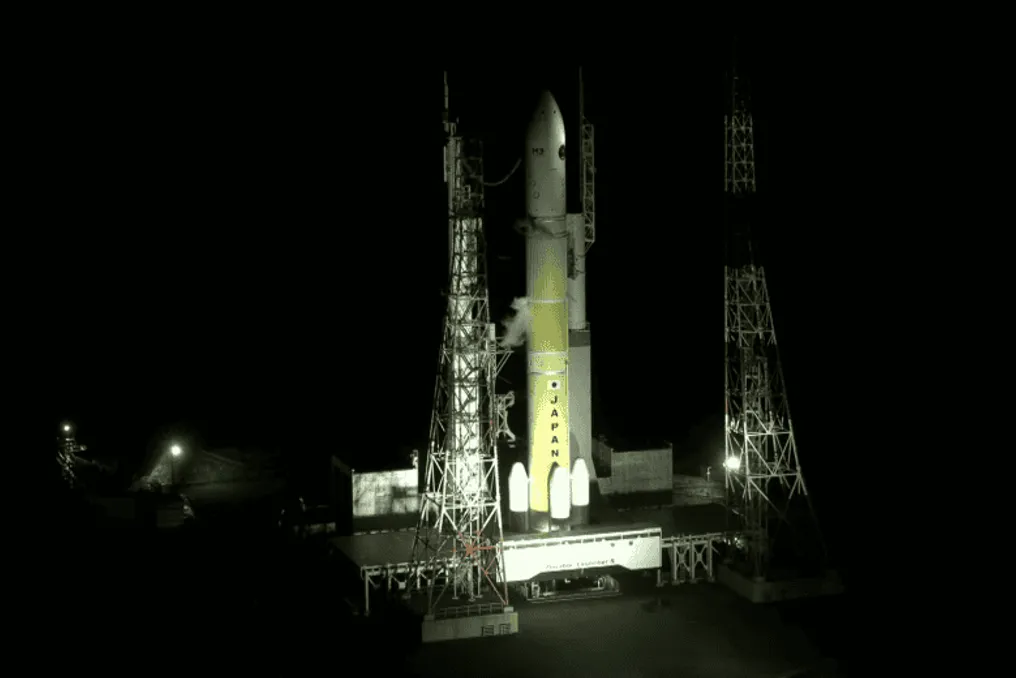
Japan began a space mission on Monday, the 19th, at 4:41 PM (Brasília time), with the launch of the MMX probe (Mars Moon Exploration). This mission aims to bring samples from one of Mars' moons back to Earth.

The MMX probe was launched aboard an H3 rocket from the Tanegashima Space Center in Japan. It is scheduled for a journey of about five years, with the purpose of investigating Phobos and Deimos, the two natural satellites of the red planet.

Under the leadership of the Japan Aerospace Exploration Agency (JAXA), the mission seeks to achieve an unprecedented feat: landing on Phobos, collecting material from its surface, and bringing it back to the planet. The goal is to obtain a minimum of ten grams of samples, which are expected to arrive on Earth in 2031.

This endeavor involves the participation of NASA and European space agencies, as well as various institutions and companies that provided essential scientific equipment and technologies for the mission.

One of the primary scientific focuses of MMX is to understand how Phobos and Deimos originated. There are two main theories to explain the genesis of these Martian moons. One suggests that the satellites resulted from material ejected into space after a large impact on the planet, where the fragments agglomerated to form the two moons.

The second hypothesis maintains that Phobos and Deimos are asteroids that approached Mars and were captured by the planet's gravitational force. The analysis of the collected samples will be crucial to differentiate between these possibilities. If the origin was an impact, the materials may contain traces of Mars mixed with debris from the impacting body. On the other hand, if they are captured asteroids, they may retain chemical characteristics of other areas of the Solar System.

The findings of this mission also have the potential to expand knowledge about the geological evolution of Mars and the formation of rocky planets. Additionally, MMX will investigate the viability of Phobos serving as a natural space station for future crewed missions to Mars.

MMX is part of a global effort aimed at better understanding the Martian environment and developing the necessary technologies for long-duration space exploration. JAXA plans to utilize accumulated experience from previous asteroid sample collection missions to conduct the operation on Phobos. NASA also supports the spacecraft, contributing scientific instruments, collection equipment, and communication systems.

If the mission is successful, it will enable the study in terrestrial laboratories of materials taken directly from a Martian moon. The detailed investigation of these materials may answer questions that remote observations have not yet been able to solve. The capsule containing the samples is expected to return in 2031, at which time scientists can begin analyzing the material gathered during the journey.

Popular