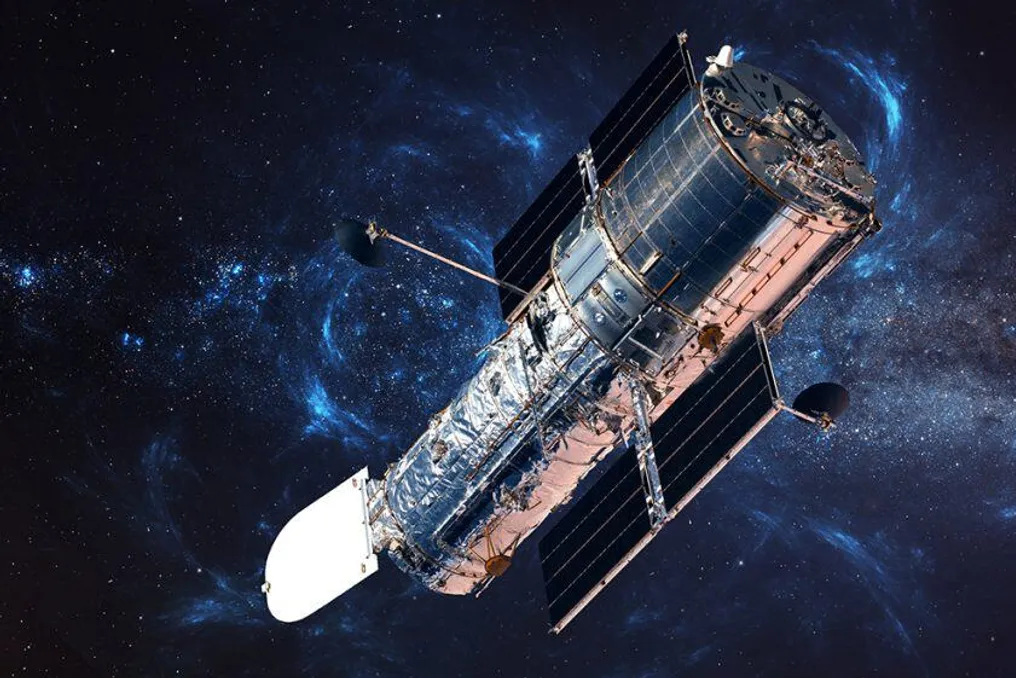
NASA has launched a new round of calls to the private sector with the aim of analyzing maintenance options for the Hubble Space Telescope. This initiative comes more than two years after the agency deemed previously examined commercial proposals too risky.
The Request for Information (RFI), released on October 29, invites companies to submit technologies and services that could be applied in a future mission to the observatory. The deadline for submitting proposals is November 30, although the consultation does not automatically guarantee the contracting of a mission.
Despite operating for over 36 years, Hubble continues to generate significant scientific discoveries. The last crewed maintenance mission took place in 2009, using the Space Shuttle. However, the telescope has faced technical issues, such as gyroscope failures, which are crucial for controlling its orientation.
The demand for observations exceeds the availability time by sevenfold. Furthermore, the observatory faces the challenge of progressive altitude loss; currently, Hubble orbits at about 470 km from Earth, but atmospheric drag decreases this height over time. NASA projections indicate a 10% probability of atmospheric re-entry by September 2032, rising to 50% by December 2033.
The new consultation outlines three potential paths that could be developed with commercial collaboration. The first option suggests sending a spacecraft to raise the telescope's orbit, from approximately 470 km to at least 600 km, which would mitigate the effects of atmospheric drag and extend its functionality. The second alternative combines this orbital adjustment with maintenance services, aiming to improve performance and increase operational capacity against technical problems. Finally, the third suggestion proposes a different approach: instead of extending its lifespan, a spacecraft would assist in directing Hubble to a controlled re-entry into the Earth's atmosphere.
NASA has already expressed interest in private partnerships to support the telescope. In September 2022, the agency established an agreement with SpaceX to investigate the use of a Crew Dragon capsule in a maintenance mission. This initiative also involved Jared Isaacman, who was then the agency's chief administrator and participated in the Polaris program, focused on private crewed spaceflights.
Three months later, NASA issued another request for information, receiving eight responses from various companies. Among them, Astroscale, a specialist in satellite removal and maintenance services, stood out, in collaboration with Momentus, a developer of orbital transfer vehicles. However, in June 2024, the agency decided not to proceed with any of the proposals. At that time, one of the three operational gyroscopes on Hubble failed, forcing the observatory to operate with only one component, which restricted certain observation possibilities.
Mark Clampin, then director of the agency's astrophysics division, emphasized that the risks involved could result in the premature loss of scientific data and entail technological challenges. He also clarified that the work conducted with SpaceX constituted a feasibility study, not a formal recommendation for mission execution. Later, Isaacman again defended the viability of a mission, stating that the previous study with SpaceX had reached a favorable recommendation for maintenance, which diverges from the assessment made by Clampin in 2024. The final report of this study was not fully disclosed, and a presentation obtained through a freedom of information request was almost entirely redacted.
In June of this year, Shawn Domagal-Goldman, the current director of NASA's astrophysics division, also signaled openness to reevaluating a robotic mission. According to him, the costs of these operations are below what was initially budgeted, which could contribute to reducing estimated operational expenses of nearly US$100 million annually. The final decision will depend on the proposals submitted by the private sector by the end of the deadline, solutions that may define the future of one of the most important instruments in the history of astronomy.