Rocket Lab launched Japanese satellite with radar capable of observing Earth through clouds
Read more
Olhar Digital
olhardigital.com.br

Rocket Lab launched Japanese satellite with radar capable of observing Earth through clouds

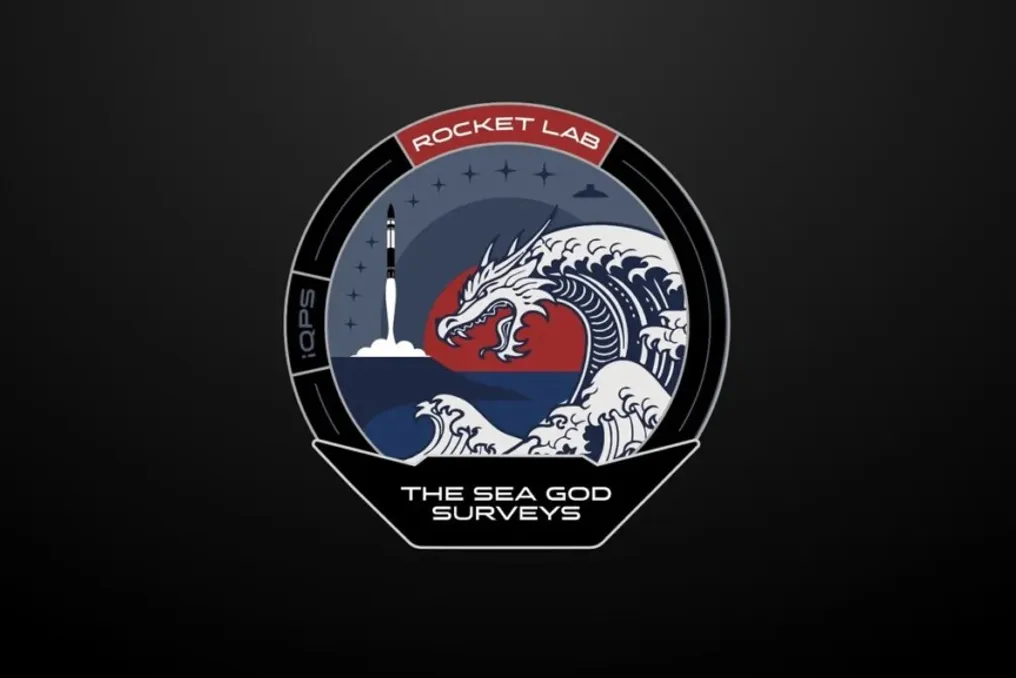
The aerospace company Rocket Lab conducted the launch of an Electron rocket on Monday (2), which carried a Japanese Earth observation satellite into space. This equipment, created by the company iQPS, uses radar technology that allows monitoring of the Earth's surface regardless of whether it is night or if there is cloud cover.

The mission, named The Sea God Surveys, began its takeoff at 1:41 PM, Brasília time, departing from the Rocket Lab base located in New Zealand. The satellite will be placed in low Earth orbit at an approximate altitude of 575 kilometers.

This launch constituted the ninety-ninth (99th) mission of Rocket Lab since the beginning of its activities. Additionally, it was the tenth flight executed by the company in collaboration with iQPS, which aims to establish a constellation composed of 36 satellites equipped with synthetic aperture radars (SAR).

The flight also represents a significant milestone for Rocket Lab, being the company's 99th mission and the 90th performed by the Electron rocket in its two-stage configuration. The vehicle is about 18 meters high and was specifically designed to carry small satellites into space on dedicated launches. With this launch, the Electron reached 17 flights conducted in the year 2026.

The other nine missions of Rocket Lab were conducted using HASTE, which is the suborbital version of the Electron and serves to test technologies in hypersonic flight scenarios. This model debuted in June 2023 and generally carries classified payloads.


Similar stories

NASA improves satellites and presents the most accurate record of atmospheric CO2
Read more
olhardigital.com.br

NASA improves satellites and presents the most accurate record of atmospheric CO2

NASA has implemented improvements to the system for monitoring carbon dioxide (CO2) in the Earth's atmosphere, utilizing a new version of the algorithms used to process data from two space instruments. This update has enabled the creation of a more precise global record, consolidating measurements taken since September 2014.

This set of instruments is based on observations from the Orbiting Carbon Observatory-2 (OCO-2) and OCO-3. Daily, these devices capture over one million records of sunlight reflected by the Earth's surface. Through the physics of light propagation in the atmosphere, algorithms convert this information into estimates of carbon dioxide concentration.

OCO-2 was launched in 2014 as an autonomous satellite, while OCO-3 was integrated into the International Space Station (ISS) in 2019. Together, the instruments provide essential worldwide coverage for scientists to study the carbon cycle, which describes the circulation of this element among the planet's various reservoirs.

One of the greatest advantages of this new arrangement is the ability to track the rate of carbon dioxide accumulation in the atmosphere monthly, instead of relying solely on annual comparisons. This higher frequency allows researchers to observe more quickly how extreme events impact the carbon cycle, including wildfires, drought periods, and climatic phenomena such as El Niño.

Additionally, the historical data can be useful for investigations into the behavior of carbon at different scales, ranging from urban areas to the planet as a whole. The updated record is already available to the public. Researchers indicate that this data has the potential to deepen the understanding of the carbon cycle and assist in evaluating the effectiveness of environmental policies.

Google tests artificial intelligence on satellite and advances in space data center projects
Read more
olhardigital.com.br

Google tests artificial intelligence on satellite and advances in space data center projects

Google succeeded in running an artificial intelligence (AI) model on a satellite, receiving a response generated from outside Earth. This test marks an experimental advancement of Project Suncatcher, a corporate initiative focused on exploring the feasibility of transporting AI data centers into Earth orbit.

In a statement released on the company's blog, Google detailed that it began using Tensor Processing Units (TPUs) installed on the space equipment. During the tests, the Gemma 4 model was run directly on the satellite and received an instruction to compose a haiku about the experience of being in space.

The AI generated poems addressing Earth viewed from space, data flow, and the brilliance of the stars. Furthermore, other experiments were conducted, such as creating limericks with space themes and responding to telemetry-related commands.

Additionally, Google is working to improve communication between devices operating in orbit. After the initial testing phases, the company plans to achieve a new goal in 2027: deploying two interconnected satellites.

The purpose of this goal is to validate whether the systems are capable of performing tasks consistently and exchanging data in the space environment. Such a demonstration would be crucial in determining the practicality of establishing an orbital computing infrastructure.

Currently, the test conducted with Gemma 4 only confirms that an AI model can process commands aboard a satellite and produce responses. The realization of space data centers still requires the completion of several technical stages and the execution of more experiments.

Japan launches MMX probe to collect samples from Mars' moons, Phobos and Deimos
Read more
olhardigital.com.br

Japan launches MMX probe to collect samples from Mars' moons, Phobos and Deimos

Japan began a space mission on Monday, the 19th, at 4:41 PM (Brasília time), with the launch of the MMX probe (Mars Moon Exploration). This mission aims to bring samples from one of Mars' moons back to Earth.

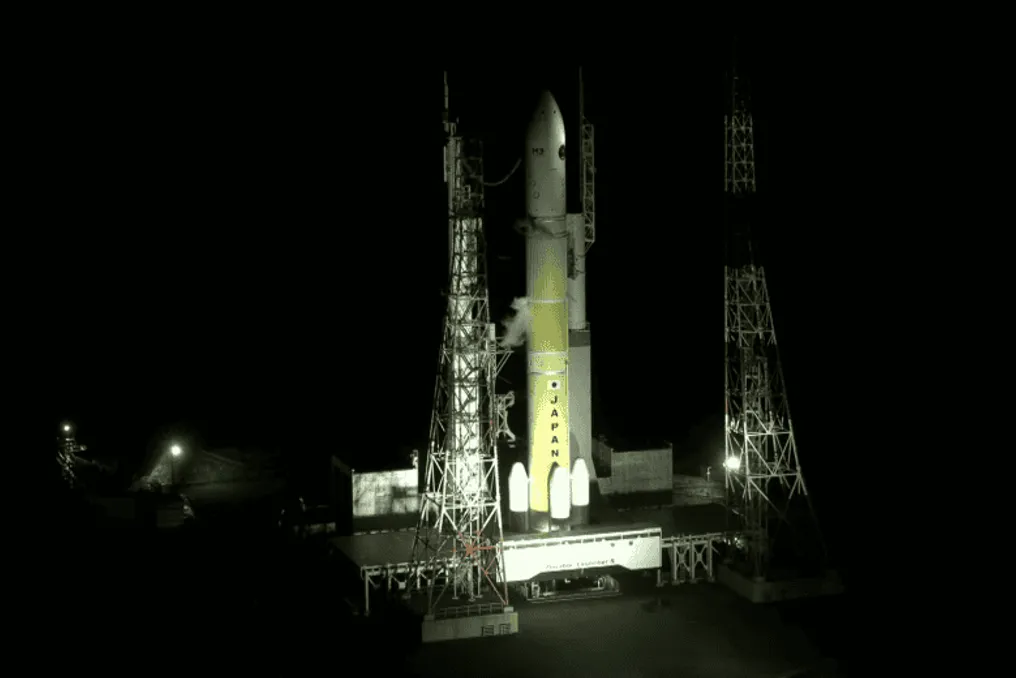
The MMX probe was launched aboard an H3 rocket from the Tanegashima Space Center in Japan. It is scheduled for a journey of about five years, with the purpose of investigating Phobos and Deimos, the two natural satellites of the red planet.

Under the leadership of the Japan Aerospace Exploration Agency (JAXA), the mission seeks to achieve an unprecedented feat: landing on Phobos, collecting material from its surface, and bringing it back to the planet. The goal is to obtain a minimum of ten grams of samples, which are expected to arrive on Earth in 2031.

This endeavor involves the participation of NASA and European space agencies, as well as various institutions and companies that provided essential scientific equipment and technologies for the mission.

One of the primary scientific focuses of MMX is to understand how Phobos and Deimos originated. There are two main theories to explain the genesis of these Martian moons. One suggests that the satellites resulted from material ejected into space after a large impact on the planet, where the fragments agglomerated to form the two moons.

The second hypothesis maintains that Phobos and Deimos are asteroids that approached Mars and were captured by the planet's gravitational force. The analysis of the collected samples will be crucial to differentiate between these possibilities. If the origin was an impact, the materials may contain traces of Mars mixed with debris from the impacting body. On the other hand, if they are captured asteroids, they may retain chemical characteristics of other areas of the Solar System.

The findings of this mission also have the potential to expand knowledge about the geological evolution of Mars and the formation of rocky planets. Additionally, MMX will investigate the viability of Phobos serving as a natural space station for future crewed missions to Mars.

MMX is part of a global effort aimed at better understanding the Martian environment and developing the necessary technologies for long-duration space exploration. JAXA plans to utilize accumulated experience from previous asteroid sample collection missions to conduct the operation on Phobos. NASA also supports the spacecraft, contributing scientific instruments, collection equipment, and communication systems.

If the mission is successful, it will enable the study in terrestrial laboratories of materials taken directly from a Martian moon. The detailed investigation of these materials may answer questions that remote observations have not yet been able to solve. The capsule containing the samples is expected to return in 2031, at which time scientists can begin analyzing the material gathered during the journey.

Popular