
Meta develops humanoid robot codenamed Max in partnership with Chinese startup
Read more
Tecnoblog
tecnoblog.net

Meta develops humanoid robot codenamed Max in partnership with Chinese startup

Meta is developing a humanoid robot, named Max, with the goal of integrating into domestic environments. This project arises in a scenario where Boston Dynamics is frequently associated with this type of robot.

According to information released by The Information, based on sources close to Meta, the Max robot would be about 1.5 meters tall and equipped with a head display capable of showing facial expressions. These sources also indicate that the work of Mark Zuckerberg's team is not isolated, as the development is taking place in collaboration with Fourier, a Chinese company specializing in robotics.

If the information is accurate, the Max project has reached an advanced stage of development. Meta employees spent approximately two months in China working side-by-side with Fourier, during which time they observed the materialization of a 1.5m robot weighing 48 kilograms and possessing five-fingered hands on each hand.

Max's ability to display facial expressions through its display suggests it was designed to interact with humans. This opens the possibility of the robot being used to perform specific tasks in homes, public spaces, or offices, as presumed.

Other elements reinforcing the idea of human interaction include the dexterity of the hands for handling small objects, the presence of five speakers on its body, and the fact that Max is built on the Jetson AGX Thor platform provided by Nvidia, which is aimed at humanoid robotics projects.

Additionally, rumors suggest that the project is progressing rapidly, to the point where a second model, named Max 2, is under development. This successor would have a redesigned upper body, enhanced hands, and sensors that would allow it to climb stairs.

It is important to note that no image of Max has been publicly released yet; the available photograph only serves as an illustration of Fourier's robots. The company itself has not confirmed details, stating that Max is an internal project, which makes its exact objectives uncertain.

Ultimately, Max may serve as a starting point for the advancement of other robotic technologies. It appears that Meta has a strong interest in definitively entering the humanoid robotics sector, especially after acquiring Assured Robot Intelligence (ARI) in May of this year, a startup focused specifically on this type of robotics.

Similar stories

Meta develops humanoid robot prototype with Chinese company Fourier
Read more
technode.com

Meta develops humanoid robot prototype with Chinese company Fourier

According to a report by The Information dated October 31, Meta has developed a humanoid robot prototype in collaboration with the Chinese robotics firm Fourier. Both companies are currently working on creating a second version of this device.

This project is part of Meta's broader efforts to create robots capable of performing household tasks. The first prototype, internally named Max, stands about five feet tall.

The robot's design includes speakers in the chest, a face capable of mimicking human expressions, and five-fingered hands that allow it to grasp small objects. Reports indicate that creating the first sample took the companies three months.

These prototypes are intended to support the further development of a future consumer robot. Meta has not set a release date at this time, and the existing models are used exclusively for research purposes, not for sale.

AI-equipped robot participates in religious rituals during Ayudha Puja festival in Coimbatore
Read more
www.aajtak.in

AI-equipped robot participates in religious rituals during Ayudha Puja festival in Coimbatore

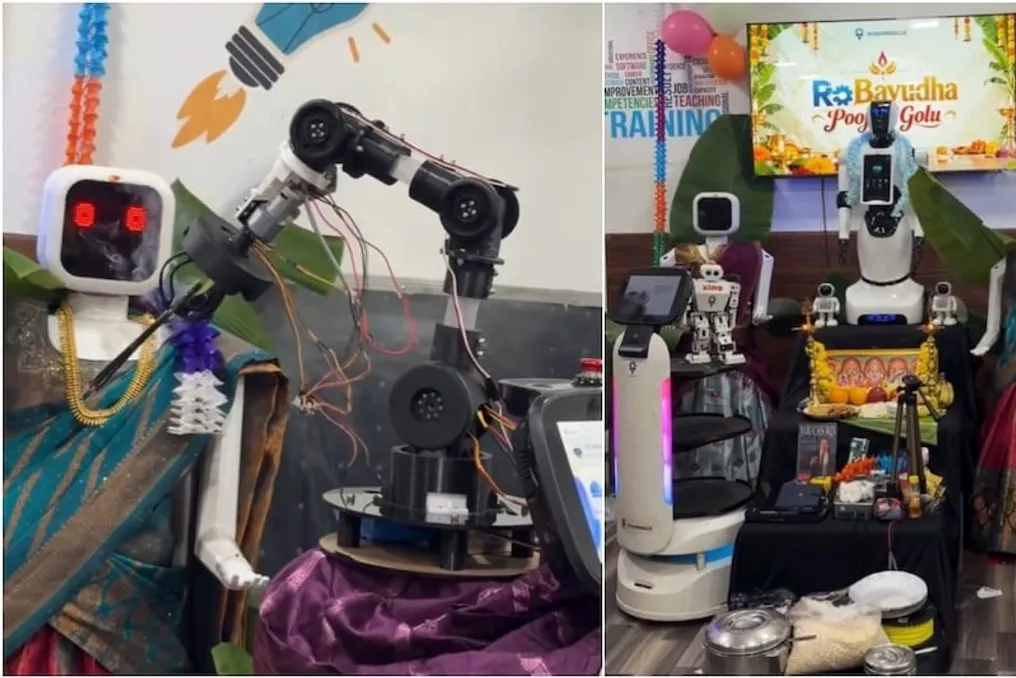
Robots are no longer limited to performing work tasks or providing information. In Coimbatore, Tamil Nadu, an unusual sight occurred: an artificial intelligence-equipped robot participated in a religious ritual, much like a human.

During the celebration of Ayudha Puja, the robot performed worship of the deities, lighting incense sticks (kappur), performing aarti, and displaying incense.

During the Ayudha Puja, the robot, which resembled a human externally, participated in the ritual. It used its hands to light the incense and present offerings before the deities.

Furthermore, individual spare parts of the robot were also included in this ritual. This event became a unique combination of traditional worship rites and modern AI-based technology.

Ayudha Puja is a significant festival celebrated in South India. On this day, people honor tools, machines, vehicles, and other items used in work. The purpose of this worship is to express respect for the means that help conduct daily activities or business.

In Coimbatore, this tradition received a new technological twist. Robots, which are usually used for educational purposes and awareness raising, became part of a religious event this time.

The main feature of this event was that new technologies were presented within the context of Indian traditions. Artificial intelligence and robotics are rapidly integrating into people's lives and industry.

Popular